 Skip to content
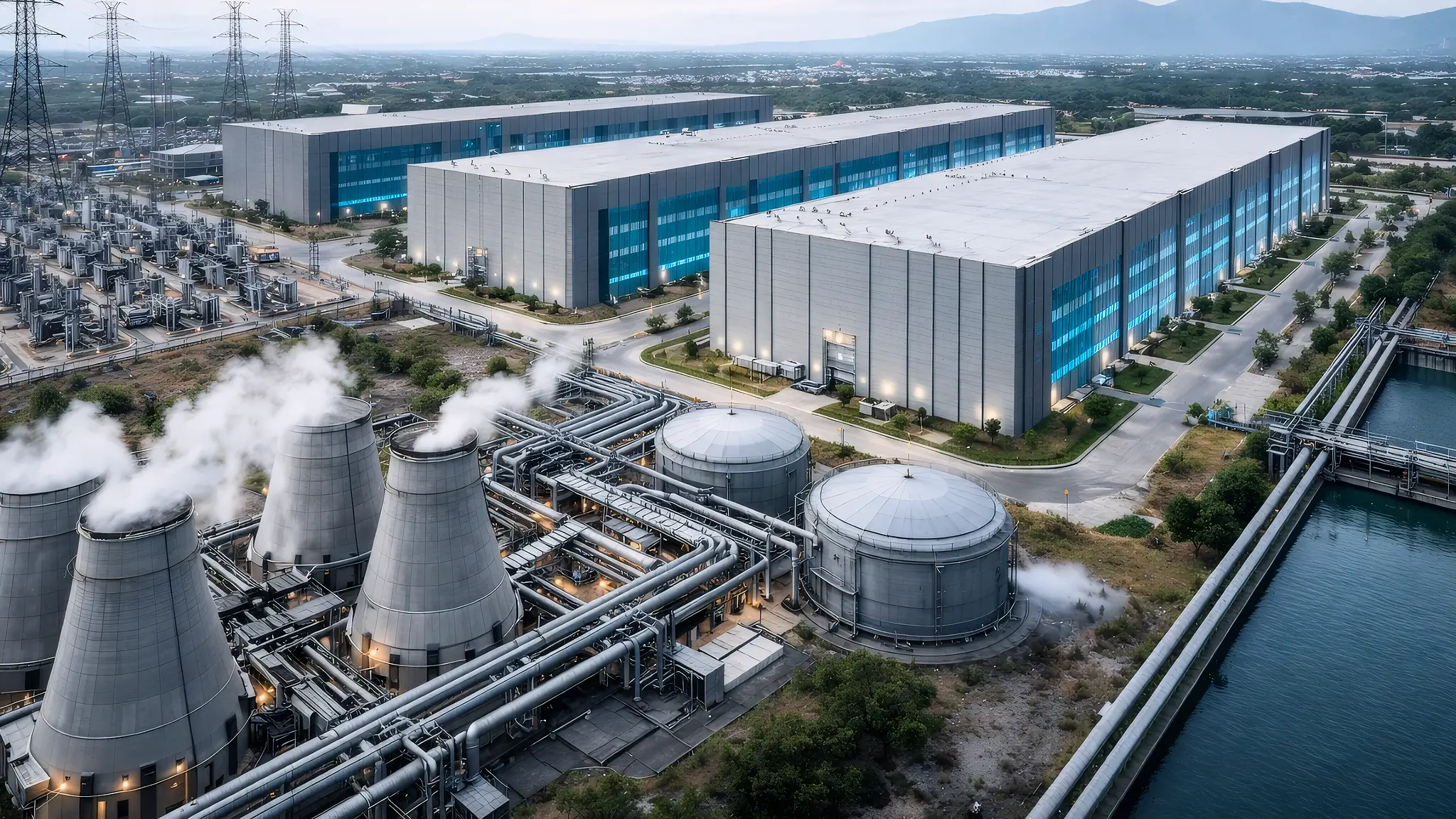
India’s digital economy is entering an infrastructure phase that few anticipated a decade ago. The explosion of cloud computing, artificial intelligence, and digital services is driving a massive build-out of server farms across the country. Government policy is actively encouraging the trend, positioning the country as a global hub for computing infrastructure.

But the surge in India data centres also raises a difficult question: whether the country is prepared for the environmental, infrastructural, and economic consequences that follow.
What looks like a straightforward bet on digital growth may, in reality, be a far more complex balancing act.
The Strategic Logic Behind India’s Data Centre Push
From a policy standpoint, the enthusiasm around data centres is understandable. India generates a significant portion of the world’s digital activity but still hosts only a small share of global data centre capacity. Expanding domestic infrastructure promises stronger digital sovereignty, faster services, and a chance to capture more value from the internet economy.
The economics also appear attractive. Building data centres in India can be significantly cheaper than in many Western markets, with capital costs estimated around $7 per watt compared with roughly $10 per watt in the United States. Tax incentives and electricity concessions offered by several states further reduce operational costs.
These advantages are drawing global hyperscalers and domestic conglomerates alike. Investments worth tens of billions of dollars are already flowing into the sector as firms race to establish AI-ready computing capacity across the country.

In policy terms, the strategy is clear: India wants to ensure that the next generation of digital infrastructure is built within its borders rather than elsewhere. Yet the same factors that make data centres attractive investments also raise questions about their long-term sustainability.
The Infrastructure Strain Beneath the Boom
At first glance, data centres may seem like relatively quiet pieces of infrastructure, buildings filled with servers quietly processing information. But the resources required to operate them at scale are immense.
Electricity demand alone illustrates the scale of the challenge. India’s data centres currently consume roughly 10–15 terawatt-hours of electricity annually, and projections suggest this could rise to 40–45 terawatt-hours by 2030 as AI workloads expand. That increase would push the sector’s share of national electricity consumption to around 2.5–3% by the end of the decade.
While that figure may appear modest, the concentration of facilities in certain states means the impact on regional grids could be far greater. Peak loads in technology hubs such as Maharashtra, Tamil Nadu, Karnataka and Telangana could increase significantly as new hyperscale facilities come online.
India’s electricity infrastructure is already under strain in many regions. Adding power-intensive AI clusters into that mix risks exposing weaknesses in transmission capacity and grid reliability. Water usage presents another less visible but equally pressing challenge.
The Water Footprint of Digital Infrastructure
Data centres rely heavily on cooling systems to prevent servers from overheating. In many designs, water plays a central role in that process. To understand the scale: a single megawatt of data centre capacity can require about 68,500 litres of water per day, meaning a 20-megawatt facility may consume 1.4 million litres daily. A single megawatt of data centre capacity can require about 68,500 litres of water per day, meaning a 20-megawatt facility may consume 1.4 million litres daily.
These numbers become particularly significant when facilities are built in water-stressed regions. Cities such as Bengaluru already face periodic shortages of drinking water, raising concerns about whether industrial water demand from digital infrastructure could intensify local scarcity.
Globally, water has become a growing point of contention in communities hosting large computing campuses. As data centre clusters expand in India’s major technology hubs, similar debates may become inevitable.
The Employment Question
Another commonly cited justification for data centre expansion is job creation.Large construction projects certainly create temporary employment during the building phase. But once operational, data centres typically require relatively small permanent workforces.
Many facilities employ between 20 and 100 people on average after completion. Compared with the scale of investment involved, the direct employment impact is limited. Studies of international projects have shown that thousands of jobs promised during project announcements often translate into only a few hundred long-term positions once operations stabilize. This raises an important policy question: if the goal is economic development and job creation, are data centres the most effective use of scarce land, water, and electricity?
The answer may depend on how the broader digital ecosystem evolves.
The Global Context: Why Expansion Is Accelerating
India’s data centre expansion is not happening in isolation. Worldwide, the rapid rise of artificial intelligence is triggering a new wave of infrastructure investment. AI models require enormous computing clusters to train and run advanced algorithms. As demand for AI services grows, companies are building ever larger facilities capable of supporting high-density GPU workloads.
India’s vast digital user base and growing internet economy make it an attractive location for these deployments. Global technology firms increasingly see the country as a strategic node in the worldwide network of computing infrastructure.But the speed of expansion has sparked debates elsewhere as well.
In several countries, local communities have pushed back against large data centre developments due to concerns over electricity demand, water usage, noise pollution, and land use. India has not yet seen that level of organized resistance, but the pressures that triggered those debates elsewhere are beginning to emerge here as well.
The Hidden Environmental Footprint
Beyond energy and water consumption, data centres create additional environmental challenges that rarely receive attention in policy discussions. One is electronic waste. Servers, batteries, and networking equipment typically need replacement every three to six years. Cooling systems and generators are replaced on longer cycles but still contribute to waste streams over time.
Research has suggested that global e-waste from data centre hardware could reach 1.2 to 5 million metric tons by 2030, driven partly by rapid upgrades to support more powerful computing systems.As AI accelerators and specialized chips evolve quickly, infrastructure operators may face even faster hardware turnover. Managing that waste responsibly will require new recycling and materials recovery systems that many countries, including India are still developing.
None of these concerns necessarily mean India should slow its investment in data centres. Digital infrastructure is increasingly central to economic competitiveness, and countries that fail to build sufficient capacity risk falling behind in the AI era. The challenge is not whether India should host data centres, but how it should design the next phase of the industry.
More efficient cooling technologies, renewable energy integration, and better water management systems could significantly reduce the environmental footprint of large computing campuses. Distributed computing models and smaller AI systems may also reduce the need for ever-larger hyperscale clusters.
The choices made today will determine whether the growth of India data centres becomes a sustainable pillar of the digital economy, or a source of long-term resource pressure.
The Real Question Behind the Boom
The rapid expansion of data centres reflects a deeper transformation underway in the global economy. Data is becoming the raw material of the digital age, and computing infrastructure is the factory that processes it. India’s ambition to host that infrastructure is understandable.
But as the country moves deeper into the AI era, the real challenge will be ensuring that the pursuit of digital power does not quietly undermine the physical systems water, energy, and land on which that digital future ultimately depends.












