Crafting a Durable Renewable Energy Future
India’s energy sector is at a pivotal junction. Rapid deployment of renewable energy (RE) sources, primarily solar and wind has positioned the country as a global leader in clean power capacity expansion. Yet, industry analysts caution that scaling renewable energy without a comprehensive energy storage framework could affect long-term system efficiency. A cohesive policy on power storage, coupled with strategies to sustain RE capacity, is now essential to support grid reliability and meet national climate commitments.
Experts highlight that renewable energy, by its very nature, introduces variability. Solar output fluctuates with daylight hours, while wind generation can swing dramatically over hours or days. Without sufficient energy storage, these fluctuations may increase operational complexity for the grid. India’s current storage infrastructure, largely limited to pumped hydroelectric projects, represents a relatively small share of overall generation capacity.
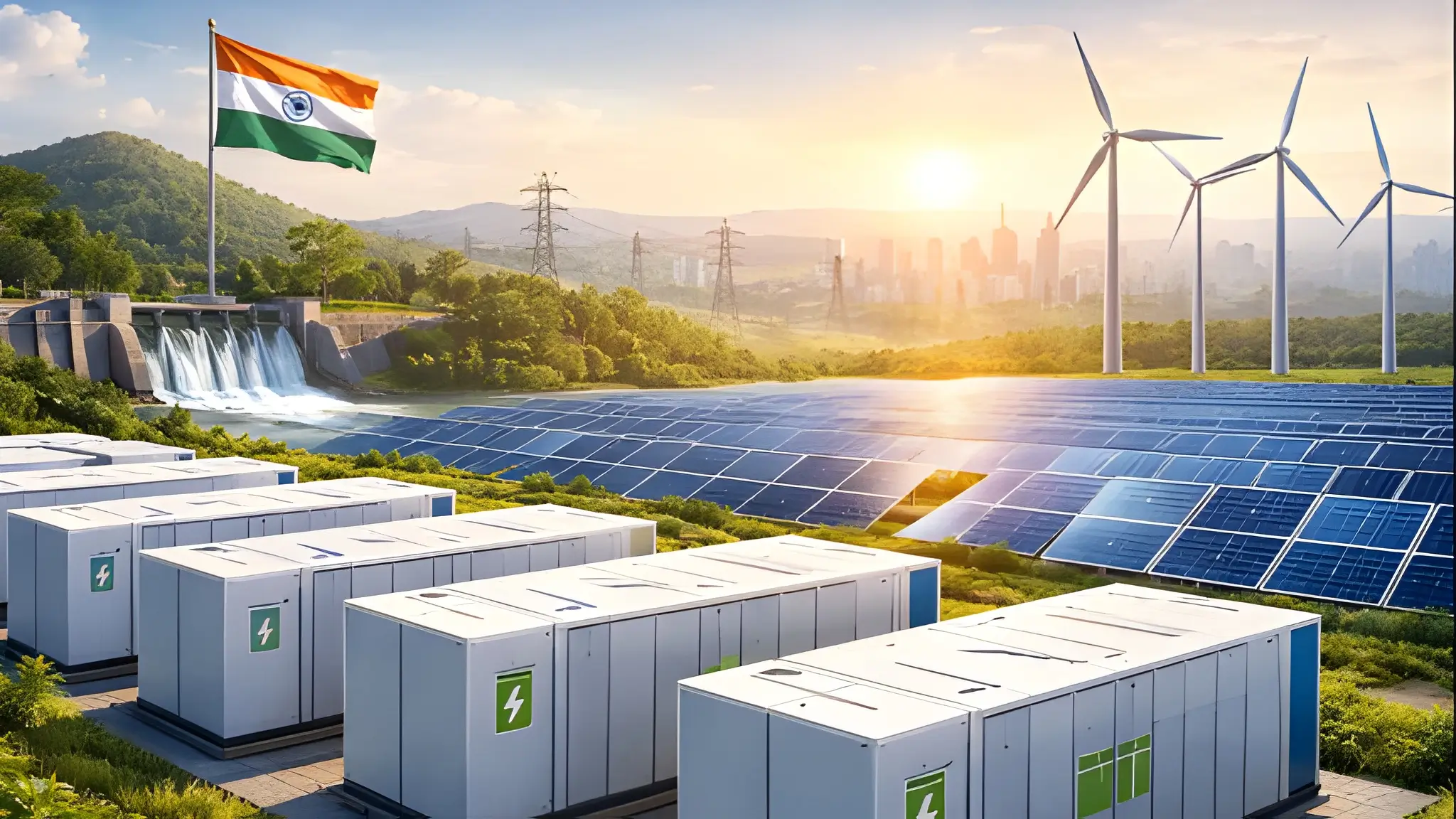
Recent analyses suggest that India will need to integrate gigawatts of battery and alternative storage technologies over the next decade to align with renewable expansion. Lithium-ion batteries, flow batteries, and emerging solutions like green hydrogen storage are being considered. Industry leaders stress that policy clarity is important. Incentives, procurement standards, and financing mechanisms could play a significant role in supporting investment in scalable storage solutions.
Storage Policies: Supporting Deployment
Although India has made notable strides in renewable capacity crossing 160 gigawatts as of 2025, the storage sector has primarily developed alongside broader renewable policies rather than under a dedicated national framework. The government has introduced measures such as transmission charge waivers and other incentives for energy storage projects, reflecting policy support for storage deployment. However, regulatory rules for storage are currently integrated within renewable energy programs rather than operating as a standalone roadmap.
“Storage is increasingly important as renewable capacity grows,” said a senior grid operations official. “Policies that provide clarity on incentives and grid integration help guide investment and deployment.”
Economic implications are also significant. Overbuilding generation capacity to compensate for intermittency can raise costs. Storage technologies can optimize asset utilization, reduce curtailment, and improve grid efficiency. Experts argue that continued development of supportive frameworks including procurement guidelines and financing pathways will strengthen the sector’s growth without assuming immediate grid instability.
Renewable Scale Durability
Beyond storage, India must focus on the durability of its renewable energy scale. Rapid expansion has been achieved largely through auction-based solar and wind projects. However, challenges such as land acquisition delays, supply chain bottlenecks, and grid integration constraints could affect deployment timelines. Durability requires not only consistent policy support but also system-wide planning that anticipates operational and technical challenges.
Grid operators emphasize that integrating large-scale renewables demands a holistic approach. Transmission upgrades, forecasting tools, and flexible backup generation must complement storage initiatives. In addition, operational standards for distributed energy resources, including rooftop solar and small-scale wind, help maintain stability across the system.
Financial durability is equally crucial. The renewable energy sector depends heavily on project financing from banks, insurance providers, and global investors. Stable policy frameworks and predictable revenue streams are necessary to maintain investor confidence. Efforts to integrate storage and optimize system efficiency further reinforce the economic sustainability of renewable energy growth.
Technology Innovation and Market Signals
Innovation in storage technologies is accelerating. Advanced lithium-ion systems, flow batteries, and hybrid storage models are increasingly being tested at scale. Companies are also exploring vehicle-to-grid and smart microgrid applications that can provide localized flexibility. Market mechanisms, such as ancillary services and emerging price signals, can help recognize storage’s value in balancing supply and demand.
India’s electricity markets continue to evolve, with state-specific rules and ongoing development of ancillary service frameworks. Analysts note that value streams for storage are still maturing, and evolving policies may expand market participation over time. These mechanisms support growth without relying on assumptions about current market inefficiencies.
Policy Alignment and Global Comparisons
Globally, successful renewable transitions are supported by policy alignment across storage, transmission, and market design. The United States has set targets for utility-scale battery deployment alongside renewable generation mandates. European nations are pairing storage incentives with mandatory grid integration standards. India’s policymakers can adapt lessons from these examples while accounting for local grid architecture, resource availability, and financing ecosystems.
Experts emphasize that policy clarity should include technical standards, safety protocols, and interconnection guidelines. Long-term durability of renewable energy scale relies on these operational and regulatory elements, ensuring that storage investments deliver expected system benefits without implying current system failure.
Toward a Reliable Power Transition
India’s clean energy ambitions are ambitious but achievable. Meeting net-zero targets by 2070 and increasing renewable penetration to over 50% of total generation will require both storage and sustainable scale. Without continued development of storage solutions and policies supporting durable deployment, the country may face challenges in optimizing renewable generation.
Industry observers note that integrating storage is not merely a technical challenge; it is an economic and strategic priority. Energy storage helps mitigate intermittency, reduce curtailment, optimize transmission utilization, and protect consumers from price volatility. Durability of renewable scale ensures that growth is sustained even in the face of operational or financial uncertainties.
In conclusion, India stands at a critical inflection point. The nation has proven it can deploy renewable energy at scale. The next phase requires deliberate policy frameworks that embed storage solutions, encourage durability, and provide regulatory certainty. The renewable energy storage scale is not only a technical measure, it is central to building a reliable, resilient, and economically sustainable energy future.