 Skip to content
Michigan Is Quietly Repositioning Itself Inside America’s AI Economy
The language surrounding artificial intelligence still revolves around software. Investors chase foundation models. Governments debate chips. Technology executives frame AI as a competition between platforms, assistants, and algorithms. Yet beneath that narrative, another contest is taking shape inside factories, logistics corridors, robotics labs, and industrial automation systems.

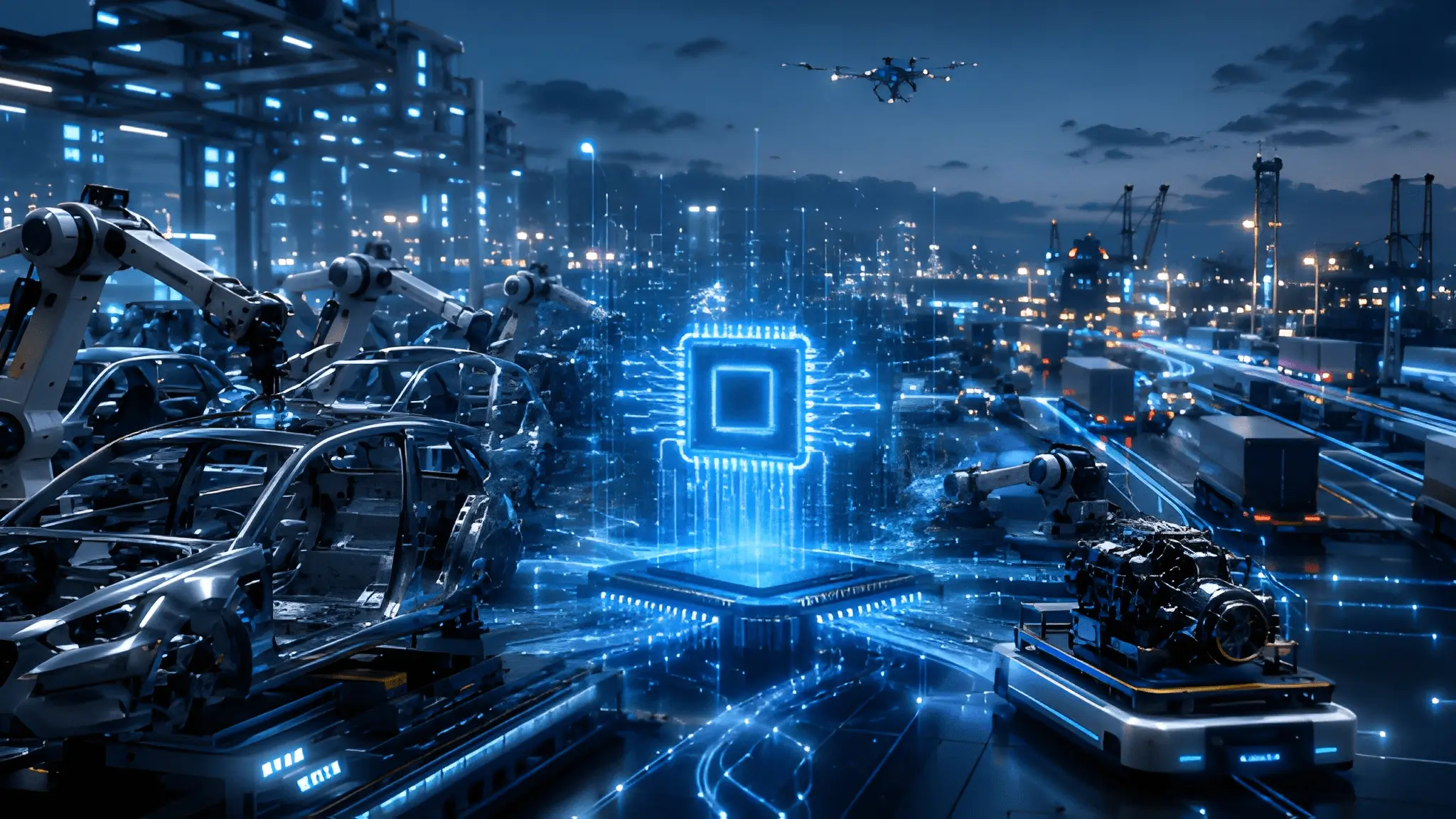
Michigan appears increasingly aware of that shift. The state’s expanding mobility and advanced manufacturing initiatives suggest a broader strategic repositioning. The objective no longer looks limited to preserving automotive relevance. The larger ambition appears tied to controlling the infrastructure layer of industrial AI, the physical systems that allow autonomous technologies to operate at scale.
That distinction matters because AI eventually collides with the real economy. Models require sensors, robotics, compute distribution, precision manufacturing, supply-chain orchestration, power management, and machine-driven production environments. Those systems cannot exist exclusively inside cloud interfaces or consumer applications.
Michigan’s emerging mobility strategy reflects an understanding that the next phase of AI commercialization may depend less on software interfaces and more on autonomous industrial ecosystems.

The state’s emphasis on mobility innovation, robotics, autonomous systems, industrial testing environments, and manufacturing modernization increasingly resembles a long-term attempt to reposition the Midwest as operational infrastructure for the AI era. That shift could carry broader implications for how the United States defines technological leadership.
Silicon Valley Built AI Software. Michigan Is Targeting AI Infrastructure
The modern technology economy rewarded software-first thinking for years. Digital platforms scaled faster than physical industries. Venture capital moved toward cloud systems, consumer applications, and data monetization. Manufacturing became politically symbolic but strategically secondary. AI may be reversing part of that hierarchy.
Large-scale automation creates dependencies that software alone cannot solve. Autonomous production systems require physical integration across sensors, machine vision, robotics, edge compute, industrial networking, and logistics coordination. AI systems operating inside factories must interact with unpredictable physical environments where latency, reliability, energy management, and hardware durability become operational priorities.
That reality changes the competitive landscape. Michigan’s manufacturing ecosystem already contains many of the structural components needed for industrial AI deployment: engineering talent, supply-chain density, testing facilities, mobility infrastructure, industrial land, and production expertise. The same automotive backbone once viewed as legacy infrastructure could become foundational for autonomous manufacturing systems.
This is where the commentary surrounding AI often misses the larger economic transition. Much of the investment narrative surrounding AI still centers primarily on software platforms and digital services. At the same time, industrial AI deployment increasingly depends on physical systems operating across manufacturing and logistics environments. Autonomous vehicles, robotics-driven warehouses, machine-run assembly lines, predictive maintenance systems, industrial digital twins, and AI-assisted logistics networks all depend on physical deployment infrastructure.
Factories themselves are becoming computational environments. That development places states like Michigan in a different strategic position than traditional technology hubs. Silicon Valley may dominate model development, but industrial regions could gain influence over implementation layers where AI generates measurable economic output.
The next competitive divide could increasingly separate regions capable of deploying autonomous production systems from those primarily focused on software development. It may separate regions capable of deploying autonomous production systems from regions dependent on importing them.
The AI Economy Is Becoming Increasingly Physical
Much of the public conversation still frames AI through consumer interaction. Chatbots dominate headlines because they remain visible to consumers and investors. Industrial AI receives less attention because its transformation occurs behind warehouse walls, factory floors, freight corridors, and production facilities. That imbalance creates a distorted understanding of where automation is headed.
Industrial AI systems influence sectors that move physical goods, energy, transportation, and critical infrastructure. Those environments generate direct productivity gains because automation reduces operational inefficiencies across manufacturing cycles, maintenance schedules, inventory management, and logistics planning.
The economics become difficult to ignore once AI begins optimizing production itself. Michigan’s mobility investments increasingly align with that trajectory. Autonomous systems, robotics development, connected infrastructure, and manufacturing modernization point toward a broader industrial strategy built around machine-operated environments rather than purely digital products.
The symbolism matters politically as well. The American technology economy historically concentrated wealth inside coastal software ecosystems while many manufacturing regions absorbed industrial decline. AI now threatens to deepen that divide unless industrial states successfully reposition themselves inside the automation economy.
Michigan’s strategy appears designed to avoid becoming a passive consumer of AI technologies built elsewhere. Instead, the state’s mobility initiatives increasingly align with sectors where autonomous systems intersect with manufacturing, transportation, logistics, and industrial infrastructure.
That approach may prove economically durable because physical AI systems cannot scale through software distribution alone. They require regional infrastructure, industrial partnerships, workforce adaptation, testing environments, and long-term capital investment. Those conditions favor manufacturing ecosystems over purely digital clusters.
Industrial Automation Could Reshape Regional Power
The political tension surrounding AI often centers on white-collar displacement. Yet industrial automation could reshape labor markets more aggressively inside production environments where repetitive operational tasks remain highly automatable. Machine-run manufacturing no longer exists as speculative theory.
AI-assisted robotics already perform quality inspection, predictive maintenance, warehouse coordination, and production optimization functions across industrial sectors. As those systems improve, manufacturers will likely push toward increasingly autonomous operational environments designed around efficiency, uptime, and supply-chain resilience.
That transition creates uncomfortable questions for policymakers. Industrial AI may generate economic growth while simultaneously restructuring workforce demand across manufacturing regions. High-skill engineering, systems integration, robotics maintenance, and AI operations roles could expand even as traditional production labor declines.
Michigan sits directly inside that tension. The state’s mobility and manufacturing initiatives promise modernization and competitiveness, but they also accelerate the transition toward automated industrial systems requiring fewer human-intensive processes. The political challenge will involve balancing economic competitiveness with workforce stability. That challenge extends beyond Michigan.
The broader AI economy may create a new divide between regions that operate autonomous infrastructure and regions limited to consuming AI-enabled services. Industrial states capable of attracting robotics, manufacturing automation, mobility infrastructure, and compute-intensive production systems could gain disproportionate economic leverage.
The outcome would represent a major reversal from the software-dominated technology cycle that concentrated influence inside digital platform ecosystems.
America’s AI Competition May Depend on Industrial Capacity
The United States still discusses AI primarily through the lens of innovation culture, venture funding, and software leadership. Michigan’s industrial repositioning suggests another possibility: AI competitiveness may ultimately depend on operational capacity.
That means factories, robotics deployment, mobility systems, semiconductor logistics, energy reliability, and manufacturing resilience become strategic technology assets rather than secondary industrial concerns. The implications extend into geopolitics.
Global competition around AI increasingly intersects with supply-chain control, industrial output, and infrastructure resilience. Autonomous systems require manufacturing ecosystems capable of supporting continuous hardware deployment and operational scaling.
Michigan’s manufacturing reset reflects that broader recalibration. The state’s mobility push increasingly resembles an acknowledgment that the future technology economy may reward regions capable of integrating AI into physical production environments rather than simply building software tools around them. That shift does not diminish Silicon Valley’s importance. It changes the balance of power surrounding how AI creates economic value.
The next stage of the AI economy may depend less on who builds the smartest chatbot and more on who controls the autonomous systems moving goods, managing logistics, operating factories, and sustaining industrial infrastructure. Michigan appears determined to ensure it remains part of that equation.












