 Skip to content
AI’s Infrastructure Crisis Is No Longer Staying on Earth
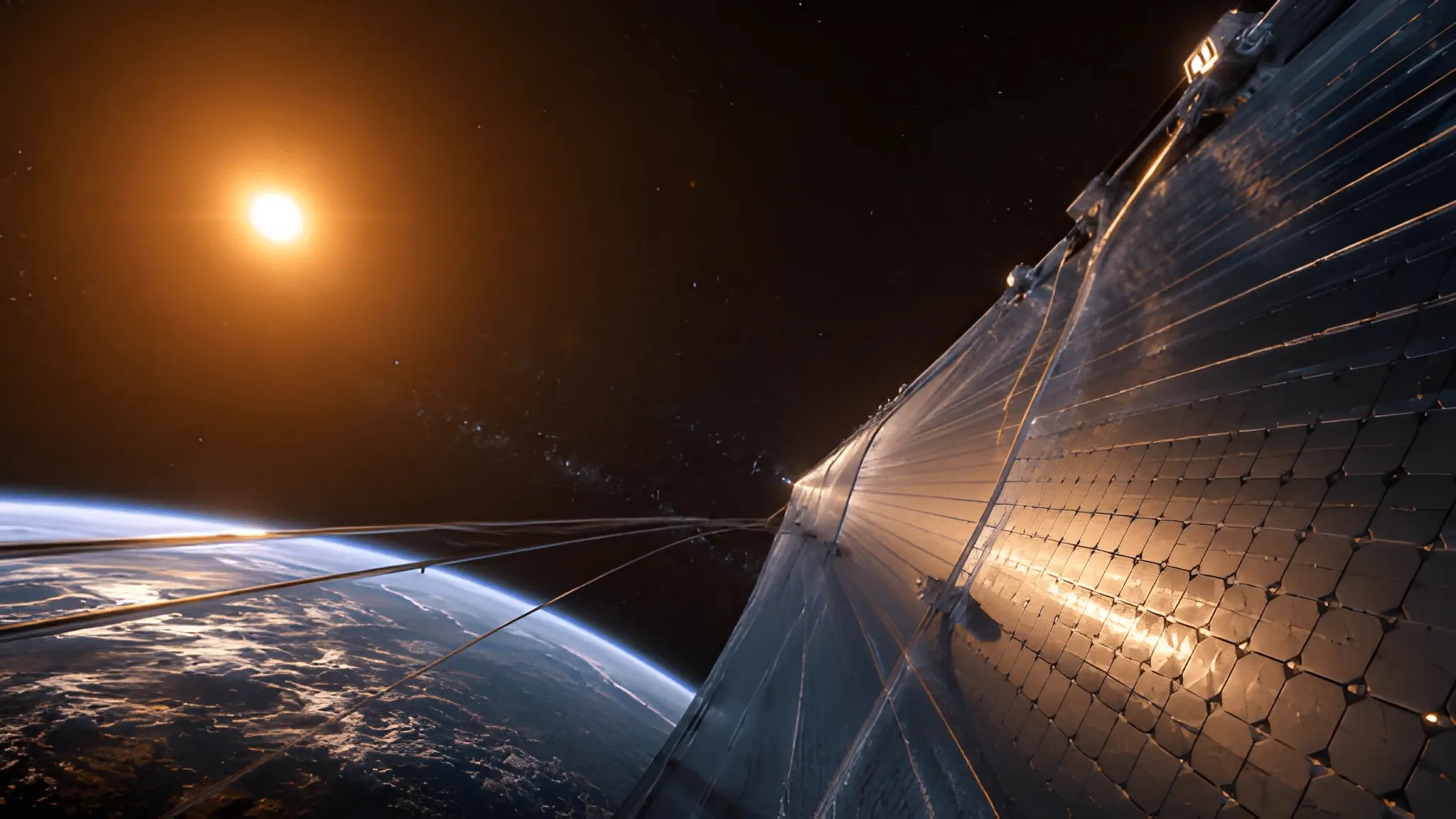
The idea once belonged to science fiction: hyperscale AI data centers orbiting Earth, powered by uninterrupted solar energy, cooled by the vacuum of space, and detached from terrestrial grids entirely. For years, the concept survived mostly in speculative engineering papers and billionaire futurism. Now, it is entering serious strategic conversation. That shift says less about humanity’s technological optimism than it does about the scale of AI’s infrastructure crisis.

Artificial intelligence has rapidly evolved from a primarily software-driven competition into a race increasingly shaped by physical infrastructure constraints.The industry’s dominant companies no longer compete only on models, chips, or talent. They compete on electricity access, cooling capacity, land acquisition, fiber routes, and geopolitical positioning. The AI economy increasingly resembles industrial expansion from earlier centuries, except the commodity now is computational power.
As generative AI systems scale, their infrastructure requirements continue to expand beyond what many regional power grids were designed to support. Utilities across several markets already face pressure from hyperscale demand forecasts tied to AI workloads. Water-intensive cooling systems have triggered community opposition in drought-prone regions. Land-use debates around large data center campuses have intensified in both urban and rural areas.
Against that backdrop, orbital infrastructure suddenly appears less absurd. The logic is straightforward, even if the implications are unsettling. Space offers near-continuous solar exposure, significant radiative cooling advantages, and potential insulation from some terrestrial grid constraints. A future orbital computing network could bypass many of the political and physical constraints slowing AI expansion on Earth.

That does not make the idea rational. It makes the pressures driving it impossible to ignore.
The AI Industry’s Infrastructure Model Keeps Escalating
The AI boom has exposed a deeper structural reality inside the technology industry: growth targets consistently outrun infrastructure limits.
Cloud computing companies expanded under the assumption that more energy, more land, and more water would remain obtainable at scale. AI accelerated that assumption into something closer to industrial urgency. Training advanced models now requires massive clusters of specialized processors operating continuously across energy-intensive environments. Inference demand, the computational cost of actually serving AI outputs to users adds another layer of sustained pressure.
The result is a sector increasingly constrained by physics rather than software. In previous eras, Silicon Valley framed technological progress as a process of dematerialization. Software would replace physical limitations. AI is producing the opposite effect. The digital economy increasingly depends on large-scale physical infrastructure again. It consumes electricity at industrial scale. It reshapes regional infrastructure planning. It influences energy policy. It alters real estate markets.
Orbital AI infrastructure represents the most extreme expression of that trajectory. Instead of reducing computational intensity, the industry appears increasingly focused on relocating the consequences of expansion. Space-based computing reflects growing concern within the industry that terrestrial infrastructure alone may struggle to support future AI expansion at scale. The message embedded within the concept is difficult to ignore: if terrestrial systems cannot sustain the next phase of AI scaling, the infrastructure will move elsewhere.
That raises uncomfortable questions about the industry’s long-term operating assumptions. Technology companies frequently frame AI expansion as a long-term strategic priority. Infrastructure therefore becomes a problem to solve rather than a system to question. If energy demand surges, new power generation follows. If communities resist hyperscale development, companies search for more politically accommodating regions. If environmental constraints tighten, engineers seek new physical frontiers.
Space enters the conversation not as fantasy, but as escalation.
Climate Anxiety and Techno-Capitalism Are Colliding
The orbital data center debate also reveals a growing contradiction within the AI economy’s public narrative. Technology companies continue positioning AI as essential to solving climate, healthcare, productivity, and scientific challenges. Simultaneously, the infrastructure supporting that vision is becoming increasingly difficult to reconcile with sustainability commitments.
AI systems require immense computational throughput. That throughput requires energy density. Even with renewable energy investments accelerating, infrastructure timelines remain constrained by transmission bottlenecks, permitting delays, and regional grid limitations. Cooling systems add further complexity, especially in areas already facing water stress.
As these tensions intensify, space-based infrastructure begins to function symbolically as much as technically. It reflects an industry attempting to preserve exponential growth while avoiding political resistance tied to environmental impact. Orbital infrastructure could reduce some of the visible terrestrial footprint associated with hyperscale AI expansion. No local residents protest launch corridors the way communities challenge hyperscale campuses. No municipal debates emerge over water withdrawals in orbit. No local grid operator negotiates transmission capacity with satellites.
The environmental burden does not disappear. It merely shifts. Rocket launches remain resource-intensive. Space manufacturing introduces new supply chain demands. Orbital debris risks continue growing. Yet the strategic appeal persists because current investment trends suggest the industry views continued computational expansion as strategically essential.
That framing matters. The question is no longer whether AI requires large-scale infrastructure. It clearly does. The deeper question is whether the technology sector has accepted any meaningful limits to computational growth at all. Orbital computing suggests the answer may be no.
Space Is Becoming the Next Corporate Territory
The rise of commercial space infrastructure adds another layer to the discussion. Space no longer belongs primarily to governments or scientific agencies. Private companies increasingly shape launch systems, satellite networks, communications infrastructure, and orbital logistics. AI could accelerate that privatization dramatically.
If future computational systems move partially into orbit, control over space infrastructure becomes economically strategic in entirely new ways. The companies operating launch capacity, orbital servicing, satellite manufacturing, and extraterrestrial energy systems would gain influence over the foundations of the AI economy itself. That possibility carries geopolitical implications far beyond technology markets.
Computational infrastructure already affects national competitiveness, military capability, financial systems, and intelligence operations. Orbital AI networks could further concentrate infrastructure influence among the limited number of companies capable of financing and operating large-scale space systems.
The transition would also blur distinctions between commercial infrastructure and strategic infrastructure. Satellites already occupy that ambiguous territory. AI systems could intensify it further.
Governments may eventually face a difficult balancing act: encouraging domestic AI competitiveness while preventing excessive privatization of space-based computational systems. Regulatory frameworks remain underdeveloped for that scenario. International norms remain fragmented. The commercial incentives, meanwhile, continue accelerating.
That imbalance creates fertile conditions for infrastructure extremism, the normalization of increasingly radical engineering projects in pursuit of technological dominance.
The Most Important Question Is Philosophical
The orbital AI conversation ultimately matters because of what it reveals about the trajectory of technological ambition. Previous industrial revolutions transformed Earth. This one increasingly appears willing to detach itself from Earth’s limitations altogether.
That does not mean orbital data centers will become economically viable tomorrow. Many technical, financial, and logistical barriers remain enormous. Latency challenges, launch economics, maintenance complexity, radiation exposure, and infrastructure reliability all complicate the concept substantially.
But the seriousness with which the idea is now discussed signals something larger than engineering experimentation. It signals an industry confronting the possibility that AI’s appetite may exceed the environmental, political, and infrastructural tolerance of the planet supporting it.
In that context, orbital computing stops sounding like science fiction and starts sounding like strategic inevitability. Not because humanity solved AI’s infrastructure crisis responsibly, but because the industry may be preparing to route around the constraints instead. That distinction could define the next decade of technological development.
The debate over space-based AI infrastructure is therefore not really about satellites or data centers. It is about whether society still believes technological progress should operate within planetary boundaries, or whether the next era of computing will treat those boundaries as obstacles to escape.












