
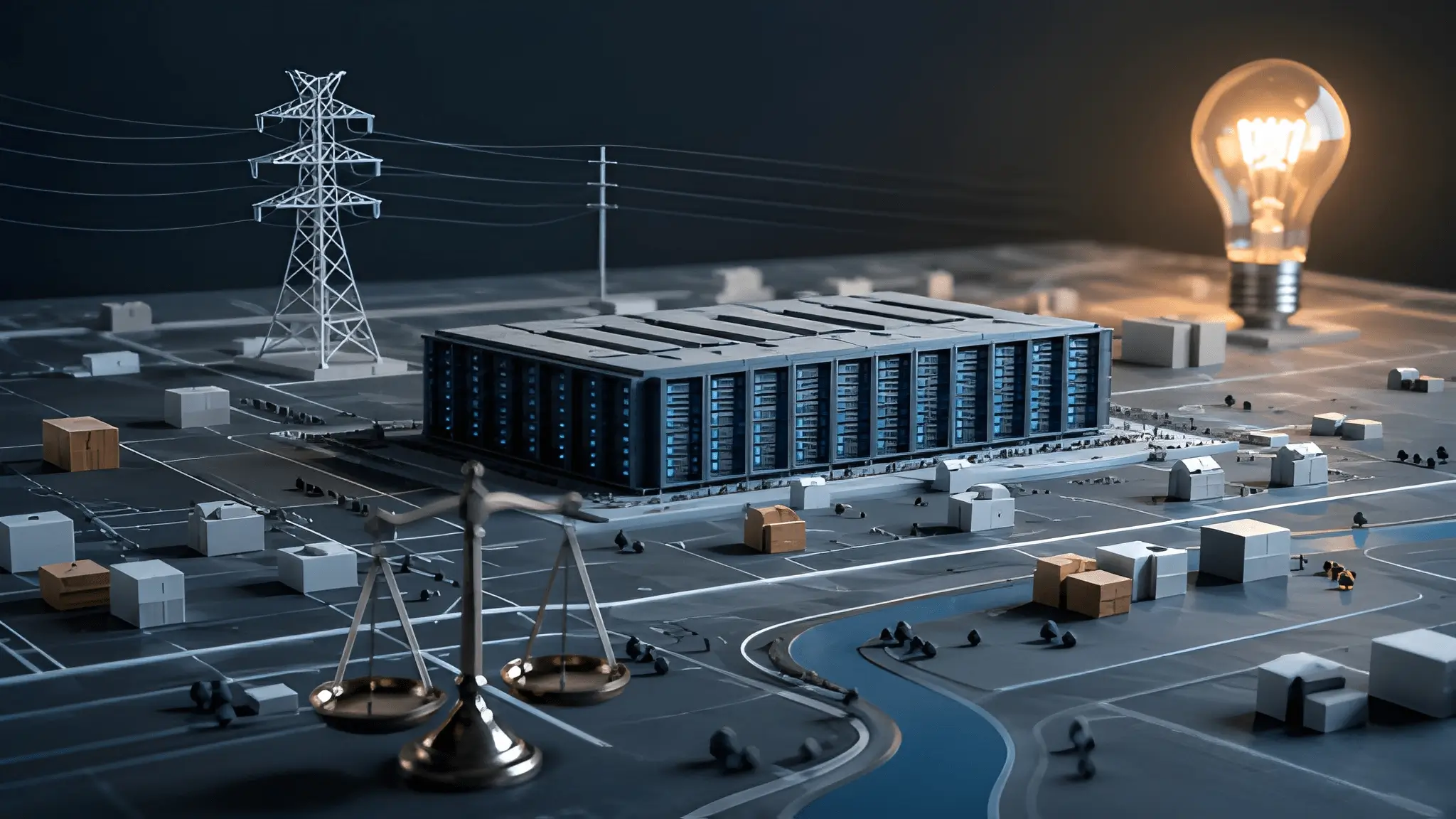
The AI infrastructure industry likes to measure progress in megawatts, GPU clusters, capital commitments, and construction timelines. Those metrics still matter. They no longer tell the whole story. Ames, Iowa, offers a timely reminder that another metric has entered the equation, and it cannot be purchased with larger financing rounds or faster procurement cycles. It is public trust. The proposed data center has evolved beyond a discussion about zoning approvals or economic development incentives. Residents have raised questions about transparency, land use, environmental impacts, electricity demand, and the speed of local decision-making. None of those concerns should surprise an industry that increasingly seeks to become part of everyday communities rather than isolated industrial corridors.

The debate deserves attention not because Ames represents an extraordinary dispute, but because it reflects an ordinary one. Similar conversations continue to emerge wherever large-scale AI infrastructure appears. Moreover, Communities are no longer treating data centers as invisible facilities operating behind security fences. They increasingly view them as long-term neighbors whose presence will shape local landscapes, infrastructure, and public resources. That shift changes the industry’s operating environment more than another generation of accelerators ever could.
The Industry Keeps Solving Technical Problems While Social Ones Multiply
Engineers know how to optimize cooling. Utilities know how to expand substations. Developers understand financing structures. Governments know how to streamline permitting. None of those capabilities automatically produces public confidence. The AI infrastructure sector often frames expansion as an unavoidable response to surging computational demand. From a technical perspective, that argument carries weight. AI workloads continue growing, enterprises require larger computing capacity, and cloud providers need additional regional infrastructure.
Communities, however, rarely evaluate projects through utilization forecasts or inference demand. Residents ask different questions. Who benefits? Who bears the costs? What changes after construction? How much power will the facility consume? How will local infrastructure adapt? Will promised economic benefits materialize five or ten years later? Those questions cannot be answered through engineering diagrams alone. The industry’s communication strategy frequently assumes that technical necessity translates into public acceptance. Increasingly, it does not.
Social License Has Become Infrastructure
The phrase “social license to operate” often appears in mining, energy, and heavy manufacturing. Data centers have largely escaped that conversation because they traditionally occupied industrial parks with relatively limited public attention. However, AI changes that equation. Hyperscale campuses demand unprecedented electricity, extensive transmission upgrades, larger land acquisitions, and long-term infrastructure planning. Their visibility has increased alongside their physical footprint. Communities notice. That attention transforms trust into infrastructure.
Without it, projects encounter prolonged hearings, legal challenges, political resistance, and reputational damage. None of those obstacles appear inside financial models until they begin delaying construction schedules. Developers often describe permitting as the primary bottleneck. Public confidence may become the larger one. Every delayed approval extends capital deployment timelines. Every contested hearing introduces uncertainty. Every unanswered question encourages additional skepticism. Consequently, trust now carries measurable economic value.

Bigger Campuses Create Bigger Expectations
The industry’s messaging frequently emphasizes jobs, tax revenue, digital competitiveness, and regional investment. Those outcomes remain important. Yet communities increasingly expect evidence instead of projections. That expectation reflects a broader change in public engagement rather than hostility toward technology. Residents have watched large infrastructure promises before. They understand that construction employment differs from permanent operations staffing. They recognize that economic forecasts involve assumptions. They want measurable commitments rather than optimistic presentations. Developers sometimes underestimate how sophisticated local audiences have become. Meanwhile, Information moves quickly. Utility filings become public. Environmental reviews circulate online. Power consumption estimates invite scrutiny. Community organizations compare projects across different regions. The information imbalance that once favored developers continues shrinking. Public meetings now involve residents who arrive with technical questions instead of general concerns. That evolution deserves respect rather than dismissal.
Many infrastructure projects still follow a familiar sequence. Developers negotiate privately. Plans mature. Permits advance. Public engagement arrives near the end. That approach may have worked when facilities attracted limited attention. AI infrastructure now operates under different expectations. Communities increasingly expect participation before key decisions appear finalized. When engagement begins only after major commitments have been made, consultation can appear procedural instead of meaningful. Perception matters. Residents often distinguish between being informed and being included. The difference influences trust more than another presentation explaining regional economic benefits. Early transparency also produces practical advantages. Developers identify concerns before they harden into organized resistance. Utilities gain opportunities to explain grid planning. Local governments reduce uncertainty around future approvals. Public conversations become more productive when they occur before positions become entrenched. Communication is no longer a public relations exercise. It has become project planning.
Ames Reflects a Global Transition
The AI industry has successfully convinced investors that infrastructure deserves unprecedented capital. The next audience will be harder to persuade. Communities evaluate infrastructure through lived experience rather than quarterly earnings. Residents notice transmission corridors, construction traffic, landscape changes, water availability, and electricity reliability. Those observations shape opinions more than investor presentations. That reality does not make communities anti-technology. It makes them stakeholders. Stakeholders expect accountability. The industry’s challenge is not explaining why AI requires more infrastructure. It is explaining why specific communities should embrace that infrastructure over decades. That distinction grows more important as campuses expand in size and resource requirements. Scale increases visibility. Visibility increases scrutiny. Scrutiny increases the value of credibility.
It would be easy to frame Ames as an isolated local dispute. That interpretation misses the larger trend. Across multiple regions, AI infrastructure increasingly intersects with public debates about energy systems, environmental priorities, regional development, and government transparency. The details differ. The underlying pattern remains remarkably consistent. Communities want clearer information before approving projects that reshape local infrastructure for decades. Developers want predictable timelines. Governments seek economic growth while maintaining public confidence. Utilities balance rapidly rising demand against long-term system reliability. Those objectives are not inherently incompatible. They simply require more deliberate engagement than the industry has often provided. Ames reminds the industry that AI infrastructure is no longer evaluated solely by technical excellence. It is judged by whether communities believe developers have earned the privilege to build alongside them.











