 Skip to content
AI Infrastructure Has Entered Its Physical Limits
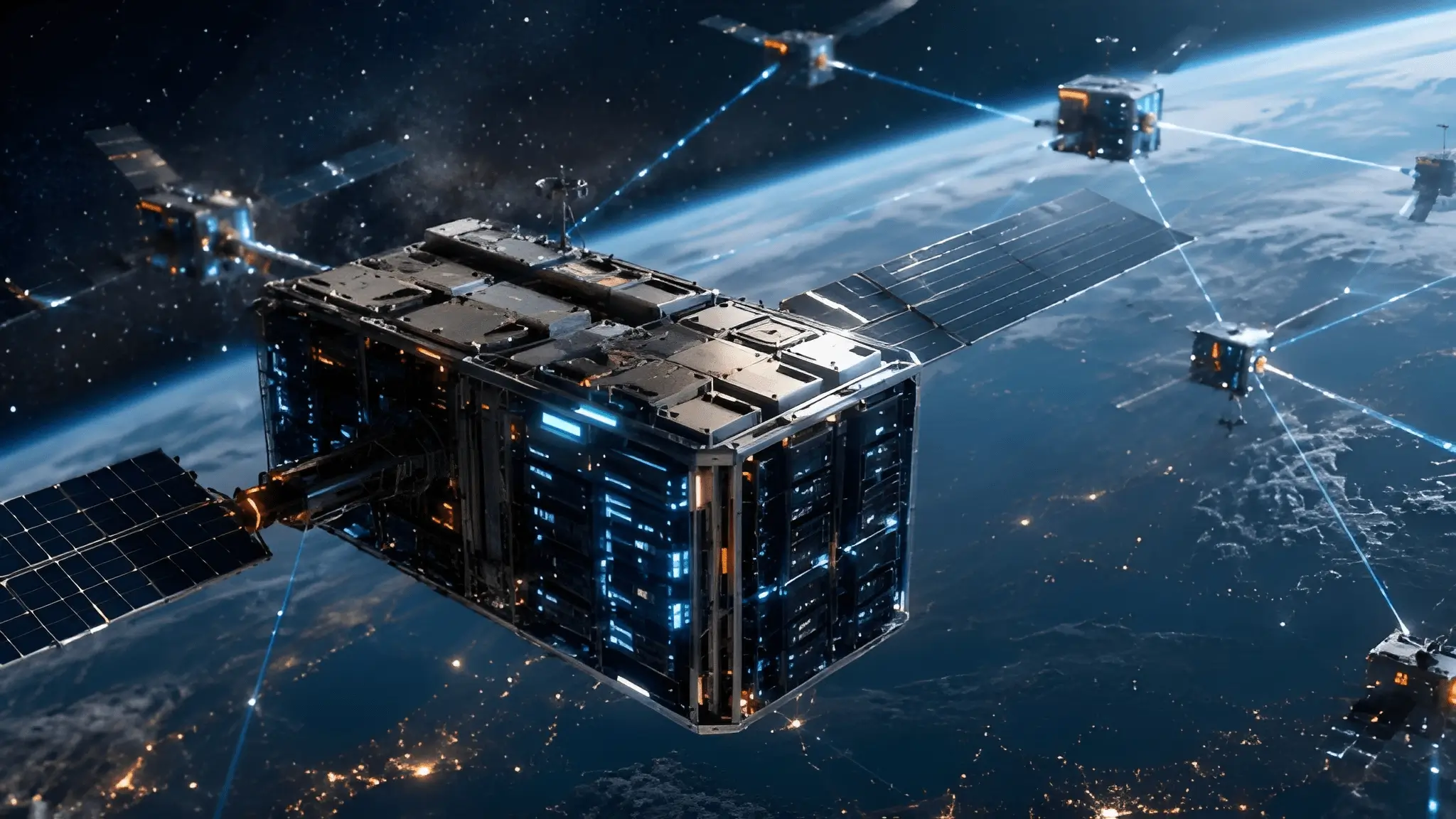
India’s AI ambitions are increasingly colliding with infrastructure reality. The constraint no longer sits inside models, chips or software ecosystems. It sits in power availability, cooling density, land acquisition and energy stability. Sarvam AI’s proposal to explore orbital data centres reflects that shift more clearly than most announcements emerging from the global AI sector.

The company’s interest in space-based AI infrastructure does not read like speculative futurism. It reads like escalation pressure from terrestrial systems that cannot expand fast enough to support accelerating compute demand.
That distinction matters.
For years, the AI industry framed scaling as a software challenge. Larger models required larger clusters, but the assumption remained straightforward: infrastructure would eventually catch up. Utilities would expand grids. Governments would accelerate approvals. Data centres would secure more land. Cooling technologies would evolve incrementally alongside compute density.
Instead, the opposite is beginning to happen.
Power bottlenecks are delaying projects across multiple regions. Cooling requirements are forcing operators toward liquid-based architectures faster than anticipated. Land suitable for hyperscale campuses is becoming politically and environmentally contested. Water consumption remains under scrutiny. Grid interconnection queues continue to lengthen. In that context, Sarvam AI’s orbital data centre discussions become less about ambition and more about infrastructure exhaustion.

The proposal effectively bypasses the constraints now shaping terrestrial AI expansion. Space offers uninterrupted solar exposure, reduced atmospheric cooling complications and geographic independence from local grid congestion. The idea removes several of the variables currently slowing hyperscale deployments on Earth. That does not make orbital infrastructure practical today. It does, however, expose the severity of the industry’s underlying problem.
The Industry’s Growth Model Is Starting To Break
AI’s physical footprint expanded faster than most infrastructure forecasts anticipated. Training clusters now demand enormous power density, sustained cooling performance and continuous uptime resilience. The economics increasingly resemble industrial-scale energy systems rather than conventional enterprise computing.
That transition changes the entire operating equation.
For decades, data centres functioned as distributed digital infrastructure. AI has transformed them into concentrated energy consumers. The difference is substantial. Traditional cloud workloads scale unpredictably but distribute relatively efficiently. Frontier AI systems compress extraordinary compute intensity into tightly packed environments that stress power delivery and thermal management simultaneously.
That pressure compounds quickly. A single large-scale AI deployment can reshape regional electricity planning. Utilities now negotiate directly with hyperscalers over long-term energy commitments. Governments increasingly evaluate AI campuses through the lens of national infrastructure strategy rather than commercial real estate development.
The industry still speaks about scaling as if it remains a normal technology cycle. The infrastructure signals suggest otherwise. Sarvam AI’s orbital positioning indirectly reinforces that conclusion. If companies begin evaluating space not as exploration but as operational infrastructure, the implication becomes difficult to ignore: terrestrial expansion may no longer scale at the pace AI economics demand.
That does not mean Earth has “run out” of capacity. It means the timeline for expansion, regulation, permitting and energy deployment may no longer align with AI’s acceleration curve. The gap between compute ambition and infrastructure readiness is widening.
Cooling Has Quietly Become AI’s Defining Problem
The AI industry spent years focusing on chips. Cooling is now emerging as the equally important variable.
High-density GPU systems generate thermal loads that conventional air-cooling architectures struggle to manage efficiently. Operators increasingly deploy liquid cooling, immersion systems and advanced thermal containment strategies to maintain performance stability. Those technologies work, but they introduce additional complexity, cost and resource dependency.
Heat is no longer a secondary engineering consideration. It has become a governing infrastructure constraint. That reality partially explains the growing interest in unconventional deployment environments. Orbital infrastructure proposals frequently emphasize thermal management advantages alongside solar energy access. The framing sounds futuristic, but the motivation remains fundamentally industrial.
AI systems consume extraordinary amounts of energy. Most of that energy eventually converts into heat. The industry cannot ignore that equation indefinitely. Current infrastructure strategies still assume continuous terrestrial expansion supported by larger campuses, denser racks and upgraded cooling systems. Yet every efficiency improvement creates another scaling opportunity, which drives additional compute demand. The cycle repeats faster than utilities and municipalities can adapt.
This dynamic increasingly resembles an infrastructure feedback loop rather than a conventional technology market.
Sarvam AI’s positioning reflects that pressure point. The company is not introducing orbital data centres because space suddenly became economically convenient. The proposal emerges at a moment when terrestrial AI infrastructure is becoming operationally difficult to scale without major trade-offs. That distinction reframes the conversation entirely.
Space Is Becoming A Serious Infrastructure Conversation
The AI sector has historically treated space as adjacent to communications, earth observation or defense technology. That boundary is beginning to shift.
Orbital compute discussions now appear alongside conversations about power resilience, sovereign AI capacity and next-generation infrastructure independence. The language has evolved from theoretical experimentation toward long-term strategic positioning.
That shift alone carries significance. Technology industries rarely explore radically expensive infrastructure alternatives unless existing systems show structural limitations. Space-based AI infrastructure remains technically and economically uncertain, but the willingness to discuss it seriously signals how aggressively compute demand is rising.
The deeper issue is not whether orbital data centres arrive in five years or twenty. The issue is what their emergence says about terrestrial infrastructure confidence. The industry increasingly behaves as though Earth-based expansion may not remain sufficient indefinitely.
That conclusion carries regulatory, environmental and geopolitical implications. AI infrastructure already competes for power allocation, industrial land and water access. As national AI strategies intensify, governments may face difficult prioritization decisions between economic growth, sustainability targets and digital competitiveness.
Orbital infrastructure enters that debate because it promises separation from terrestrial scarcity. Whether that promise proves viable remains unclear. Launch economics, maintenance complexity, radiation exposure and hardware lifecycle management present enormous barriers. None of those challenges disappear through ambition alone.
Still, the seriousness of the conversation matters more than its immediate feasibility. The AI industry no longer discusses space purely as innovation theatre. It increasingly frames orbital infrastructure as a potential response to constraints developing on Earth.
The Real Story Is Infrastructure Anxiety
Sarvam AI’s positioning ultimately reveals something larger than technological experimentation. It exposes growing anxiety around the sustainability of AI’s physical expansion model.
The industry still markets AI primarily through software capability, productivity gains and model performance. Behind that narrative sits an increasingly difficult infrastructure equation involving electricity, cooling, land, water and grid resilience.
Those pressures are no longer abstract. They shape project timelines, influence deployment geography and redefine competitive advantage. Access to reliable power may soon matter as much as access to advanced GPUs. Cooling architecture could become as strategically important as model optimization.
That reality changes how the next phase of AI development gets evaluated. The sector spent years asking how powerful AI systems could become. The more immediate question now concerns how physically sustainable those systems are at scale.
Sarvam AI’s orbital infrastructure interest does not answer that question. It amplifies it.
Because once space begins entering mainstream infrastructure conversations, the industry is no longer discussing future possibilities alone. It is acknowledging present limitations. And that may become the most consequential AI signal emerging this decade.












