 Skip to content
The current debate around orbital infrastructure reflects a familiar trend across the technology sector, where emerging computing demands often encourage increasingly ambitious infrastructure proposals. Many major computing transitions have historically been accompanied by larger hardware investments, from hyperscale cloud campuses to AI accelerator clusters. Artificial intelligence created demand for larger data centers. Grid constraints inspired discussions around floating facilities, nuclear-powered campuses and even orbital computing. Now, space data centers have emerged as the next ambitious vision. That vision deserves scrutiny.

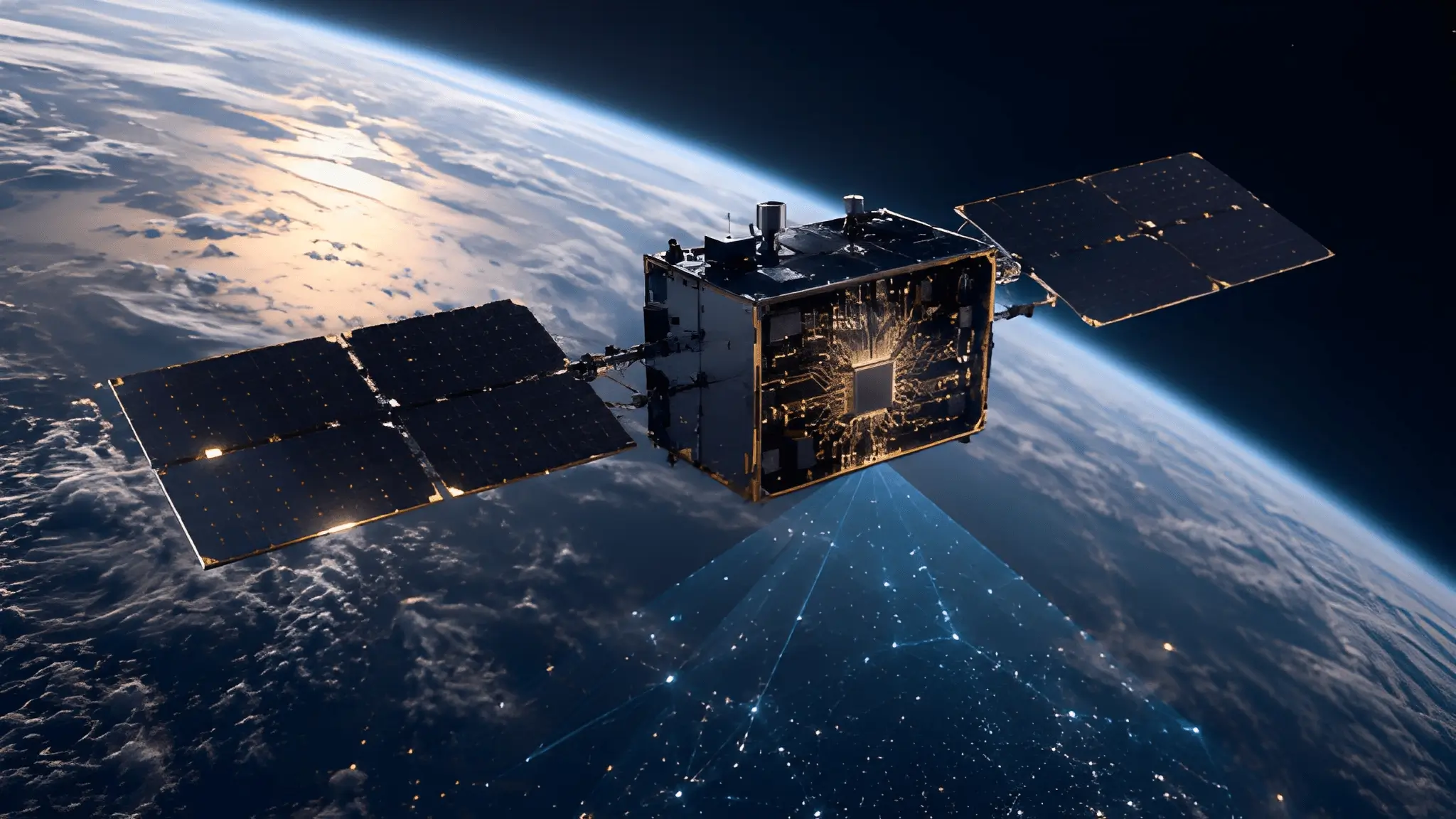
Some emerging proposals frame orbital data centers as the logical next step for expanding computing capacity beyond Earth. At the same time, another shift is gaining momentum inside satellites themselves as onboard AI capabilities continue to mature. Intelligence is moving closer to where data originates instead of building another remote cloud layer above Earth. This distinction matters because it changes the definition of infrastructure.
The industry’s instinct has often been to solve computing limitations by adding capacity. AI infrastructure is increasingly expanding along two paths simultaneously: larger centralized facilities for model training and more distributed intelligence for inference at the edge. As satellites gain the ability to process, interpret and prioritize information before transmitting it to Earth, they increasingly combine sensing with onboard computing, enabling greater operational autonomy for selected workloads. That possibility raises an uncomfortable question for companies promoting orbital data centers.
What if the future of space infrastructure is not bigger facilities in orbit but smaller systems capable of independent thought? Recent discussions around Orbital AI highlight why this architectural shift deserves closer attention. Rather than positioning satellites as passive collection devices feeding terrestrial or orbital data centers, emerging architectures envision spacecraft capable of performing inference, filtering information and collaborating autonomously before communicating with ground systems. That changes both the economics and the purpose of orbital computing. The industry may be placing greater emphasis on expanding computing capacity than on improving how computing is distributed across orbital systems.

Bigger Infrastructure Does Not Always Create Better Infrastructure
Technology markets have often associated larger infrastructure investments with technical progress, although the relationship is not always straightforward. Cloud computing initially rewarded hyperscale campuses because centralization reduced costs and simplified management. AI infrastructure introduced another wave of expansion as larger GPU clusters became essential for model training. Space presents an entirely different operating environment. Every kilogram launched into orbit carries financial, engineering and operational consequences. Cooling, maintenance, power generation, radiation tolerance and equipment replacement become dramatically more complex than terrestrial deployments. These realities make every additional server rack significantly more expensive than its Earth-bound equivalent. That does not automatically invalidate orbital data centers.
Certain workloads could eventually justify dedicated computing infrastructure in space. Earth observation, deep-space communications, scientific missions and defense applications may all benefit from localized processing under specific circumstances. The issue is timing. Much of today’s enthusiasm assumes that orbital data centers represent the inevitable next stage of cloud evolution. That assumption overlooks how rapidly edge AI is reducing dependence on centralized infrastructure altogether. If intelligence migrates directly into satellites, many workloads simply never require massive orbital facilities. The competitive advantage shifts from transporting enormous computing capacity into space to maximizing what each spacecraft already knows how to do.
Intelligence Changes The Economics Of Every Byte
Satellites have traditionally operated through a straightforward workflow. Collect data. Transmit data. Process data elsewhere. That model made sense when onboard computing remained relatively limited. Modern AI hardware and increasingly efficient inference models are changing that equation. Instead of transmitting every image, every sensor reading or every observation, satellites can increasingly determine what deserves transmission in the first place. For workloads that benefit from onboard processing, this approach can reduce bandwidth demands, improve local mission response times and decrease the amount of information that requires processing by ground infrastructure.
Bandwidth requirements decrease. Latency improves. Ground infrastructure processes smaller data volumes. Mission response becomes faster because decisions occur where events happen instead of waiting for terrestrial analysis. The value no longer comes from collecting more information. It comes from sending only the information that matters. That shift mirrors broader developments across edge computing, industrial AI and autonomous systems. Factories no longer send every sensor reading to distant clouds before responding to equipment failures. Vehicles increasingly process safety decisions locally instead of relying on continuous cloud connectivity. Orbital infrastructure appears to be moving toward the same destination. The satellite becomes both the observer and the analyst.
Space Does Not Need Another Cloud Region
One assumption quietly shapes much of today’s orbital infrastructure discussion. If computing moves into space, it should resemble today’s cloud architecture. That may be the wrong mental model. Cloud computing evolved around centralized resources connected through reliable terrestrial networks. Space operates under entirely different constraints. Communications experience interruptions. Power availability fluctuates. Physical maintenance remains extremely limited. Distributed intelligence may prove better suited to those operating conditions for many mission profiles, particularly where communication delays or bandwidth limitations influence operational decisions.
Rather than routing every workload toward centralized orbital facilities, future constellations could distribute selected decision-making across intelligent satellites capable of collaborating dynamically. That architecture introduces resilience alongside efficiency. A constellation of autonomous computing nodes can continue functioning even when individual satellites fail or communication pathways degrade. Intelligence spreads across the network instead of concentrating inside a single orbital facility. Ironically, the industry’s obsession with building data centers in space risks recreating the same centralization challenges cloud computing already faces on Earth. The opportunity may ultimately involve adapting computing architectures to the realities of space rather than directly extending terrestrial cloud models into orbit. It may require abandoning terrestrial assumptions altogether.
The Next Space Race May Be Software, Not Steel
Space infrastructure discussions frequently emphasize launch vehicles, orbital platforms and physical construction. Those remain essential. But software increasingly determines infrastructure value. AI models capable of autonomous reasoning, collaborative decision-making and efficient onboard inference could ultimately define competitive advantage more than the physical size of any orbital computing platform. That represents an important shift in investment priorities. Building larger orbital facilities demands enormous capital commitments, long deployment timelines and significant engineering risk. Developing smarter satellites creates a different innovation cycle.
Software evolves faster than orbital construction. Inference models improve continuously. Hardware efficiency advances with every new generation of specialized processors. The result is an infrastructure strategy driven less by physical expansion and more by computational capability. Across many technology markets, software innovation has frequently become a primary driver of long-term competitive differentiation alongside advances in hardware. Space may prove no different.
Orbital AI Points Toward A Different Infrastructure Future
The growing attention around Orbital AI reflects an emerging shift in how parts of the industry are beginning to view space-based computing. Rather than treating satellites solely as data collection platforms, some developers are exploring architectures that incorporate greater onboard intelligence. It represents a broader philosophical change in how orbital systems create value. Instead of viewing satellites primarily as endpoints connected to larger computing platforms, Orbital AI treats them as intelligent participants within distributed infrastructure. That subtle distinction carries significant implications. Satellites capable of analyzing imagery onboard, coordinating selected operations with neighboring spacecraft and responding more autonomously to changing mission conditions could reduce dependence on centralized processing for certain applications while improving operational responsiveness.
None of this eliminates the future need for orbital computing infrastructure. Some workloads will always benefit from concentrated computing resources. Scientific research, complex simulations, large-scale AI training and specialized mission support could still justify dedicated facilities in orbit as launch economics improve and technologies mature. The more immediate opportunity, however, appears considerably closer. Smarter satellites already address real infrastructure constraints without requiring entire data centers above the atmosphere. That makes Orbital AI less about replacing Earth-based infrastructure and more about preventing unnecessary infrastructure from being built in the first place.
The Industry May Be Solving Tomorrow’s Problem Before Today’s
Emerging technology markets often produce ambitious long-term infrastructure visions alongside practical near-term innovations. Some of those visions become transformational, while others evolve more slowly than anticipated as alternative technologies mature. Sometimes they distract attention from quieter innovations delivering immediate value. Space data centers have become one of the most visible concepts in discussions about the future of orbital computing. They offer an ambitious narrative that aligns with AI’s growing computational demands. Yet ambition should not become infrastructure strategy.
The more pressing competitive question may no longer be how much computing can reach orbit. It may be how much intelligence can remain there. If satellites increasingly understand their surroundings, prioritize information independently and cooperate across constellations, the rationale for transporting massive computing campuses into space becomes less obvious. Infrastructure generally delivers the greatest long-term value when it addresses practical operational constraints rather than simply extending familiar architectures into new environments. That may become the defining lesson of orbital AI.
The next generation of space infrastructure could revolve less around building cloud regions above Earth and more around ensuring every satellite becomes intelligent enough to act before asking permission. If that transition accelerates, the race to construct orbital data centers may not disappear. It may simply lose its position as the industry’s most important destination. If onboard AI capabilities continue advancing at their current pace, distributed intelligence could become one of the defining characteristics of orbital computing well before large-scale orbital data centers achieve widespread commercial deployment










