
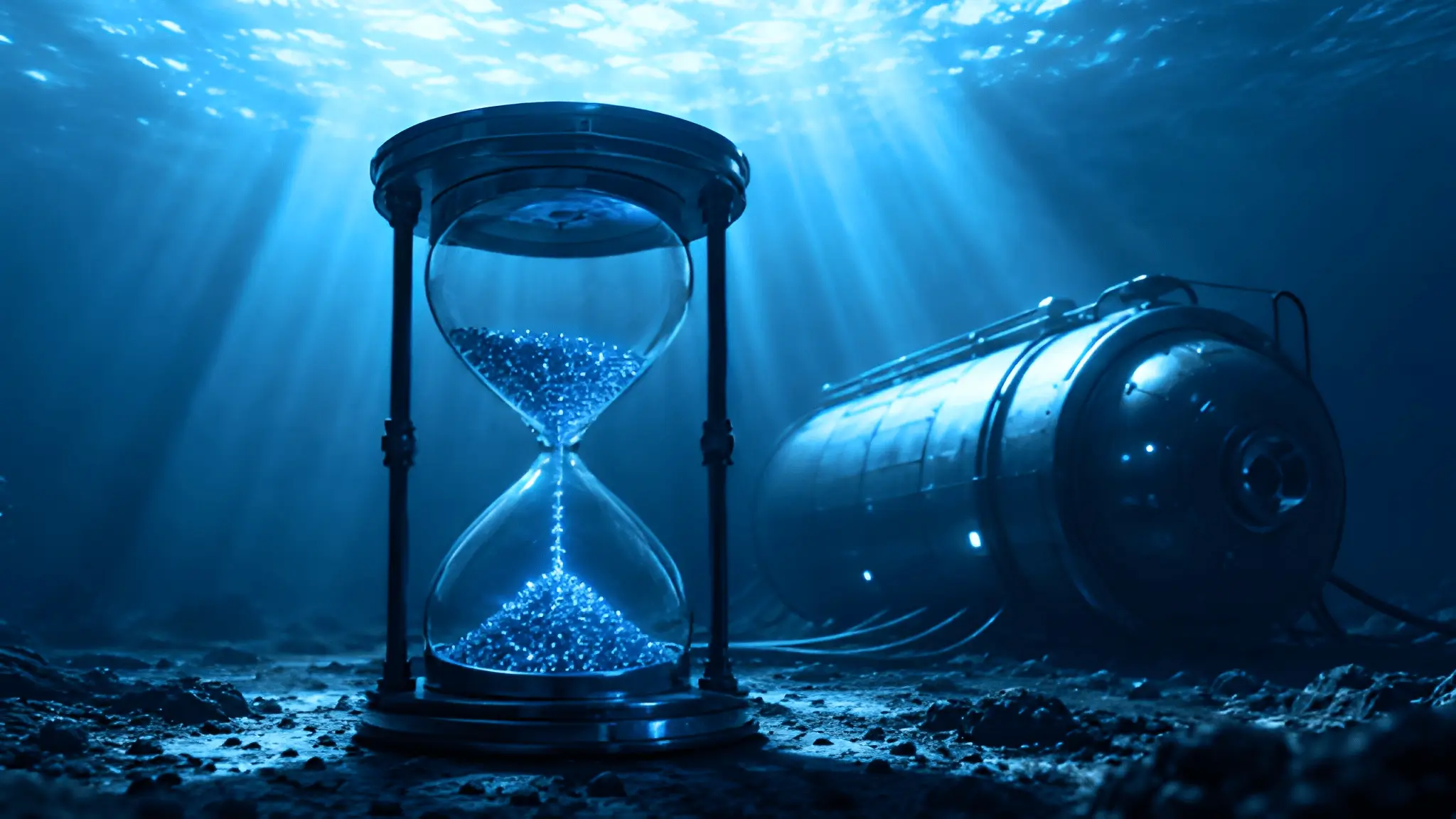
An AI server usually carries an implicit assumption that someone will eventually be able to replace it. That assumption becomes far less comfortable when the server sits inside a sealed module beneath the water. In that environment, installing or replacing an accelerator inside a sealed subsea module would require planning around the physical access constraints of the deployment, making hardware changes fundamentally different from routine maintenance in an accessible facility. The interesting consequence is not simply that maintenance becomes harder, but that hardware timing starts to matter differently.

An accelerator installed in a subsea system could remain deployed while newer generations enter the market, depending on the system’s planned operating and replacement cycle. That could force operators to evaluate AI hardware against a longer economic horizon than the industry typically uses for rapidly evolving workloads. The question then shifts from whether a machine can run the newest model to whether the machine can remain economically useful while the model ecosystem around it changes. Underwater deployment could therefore turn the AI hardware race into an unusually direct wager on time.
A Five-Year Machine May Need a Five-Year Business Case
This possibility could encourage a different approach to procurement. Instead of comparing processors primarily on current benchmarks, infrastructure teams could model how much useful computation each platform might deliver across an extended deployment window. Such a calculation could account for model growth, inference requirements, software optimization and changes in memory, networking and compute requirements across different workloads. A processor that looks expensive today might become attractive if it avoids premature obsolescence during a long deployment. Conversely, a cheaper configuration could become a poor investment if its workload suitability collapses after the next major AI architecture shift.
The physical constraints of a sealed underwater module could make those tradeoffs harder to reverse once the system enters service. That could encourage operators to deploy more conservative hardware combinations than they would choose for an easily accessible facility. It could also make modular architectures attractive if operators need to expand capacity without routinely opening individual subsea modules. The result would be an infrastructure strategy built around forecasting the useful life of compute, rather than simply maximizing its initial specification.
Software Could Become the Main Escape Route
That constraint could elevate software to a role that is easy to underestimate when discussing physical AI infrastructure. If hardware cannot change frequently, software could become increasingly important for extracting more value from the hardware already deployed. Compiler improvements, model compression, quantization, workload scheduling and inference optimization are established techniques that can improve the efficiency and utilization of deployed AI compute. The value of an underwater module could therefore depend partly on how effectively its software stack adapts to changing AI requirements.
A processor that performs poorly on one workload can remain useful for other workloads when software optimization improves utilization or changes the computational requirements. This creates an interesting inversion of the usual AI infrastructure cycle, where software often races ahead and hardware follows closely behind. Underwater systems could instead make software responsible for keeping older hardware relevant for longer. That does not eliminate the need for new processors, but it could change the threshold at which replacement becomes economically justified. The most valuable upgrade might sometimes be an algorithm rather than a physical component.

The Ocean Could Reward Compute That Ages Gracefully
The concept also introduces a broader design principle that could extend beyond subsea deployments. AI infrastructure is increasingly incorporating higher compute density and accelerated hardware, while those performance gains can create different considerations for equipment intended to remain deployed for longer periods. A sealed environment could make graceful aging a more explicit engineering objective. Hardware selection could place greater weight on predictable performance across a range of workloads alongside peak-performance characteristics. Network, storage and memory configurations could receive greater attention during initial design because physical changes to a sealed subsea module would be more constrained after deployment.
The result would resemble an industrial asset designed to remain productive rather than a technology platform expected to receive frequent physical refreshes. That distinction could become increasingly relevant as AI operators manage larger fleets of specialized infrastructure. Not every workload requires the newest accelerator, and not every deployment needs to chase the highest available performance density. Underwater systems could make that economic reality unusually visible because the cost of changing course would be built into the physical architecture.
Subsea Compute Could Become a Test of AI’s Patience
The most compelling question surrounding underwater data centers may therefore have little to do with whether the technology can scale beneath the sea. It is whether the AI industry can accept infrastructure that does not move at the same speed as the algorithms it supports. AI companies and infrastructure providers continually evaluate new generations of compute, while a sealed module could create a longer interval between physical hardware deployments. That difference could provide a useful test of how the economics of hardware refresh compare with the economics of sustained utilization.
It could also force operators to distinguish between technological novelty and genuine workload value. If a subsea system continues producing useful compute while newer hardware becomes available, its economics could differ from those of a facility designed for easier physical hardware replacement. If its workload becomes obsolete, however, the same physical durability could become a liability because a functioning machine would still represent stranded capacity. The ocean thus creates a particularly unforgiving test of whether AI infrastructure can remain valuable after its hardware stops being new.
The Strange Promise Is Not Isolation but Commitment
That may be the most useful way to interpret the underwater data-center experiment. The ocean does not necessarily offer AI a better place to put servers simply because it provides a different physical environment. A sealed subsea deployment creates physical constraints that can make infrastructure decisions harder to reverse once a module is in operation. That constraint could reveal which elements of an AI system actually need constant physical evolution and which can remain productive through several generations of software and workloads. It could push the industry toward architectures that treat compute as a long-lived asset instead of a continuously refreshed collection of components.
It could also make forecasting, software efficiency and workload flexibility central parts of hardware economics rather than secondary planning concerns. The strongest underwater systems may ultimately be those that do not need to compete with every new machine released above the surface. Their advantage would come from remaining useful after the excitement surrounding their original hardware has disappeared. In that sense, the ocean could give AI infrastructure something the industry rarely gets: a forced experiment in whether compute can retain value without constantly becoming new.











