
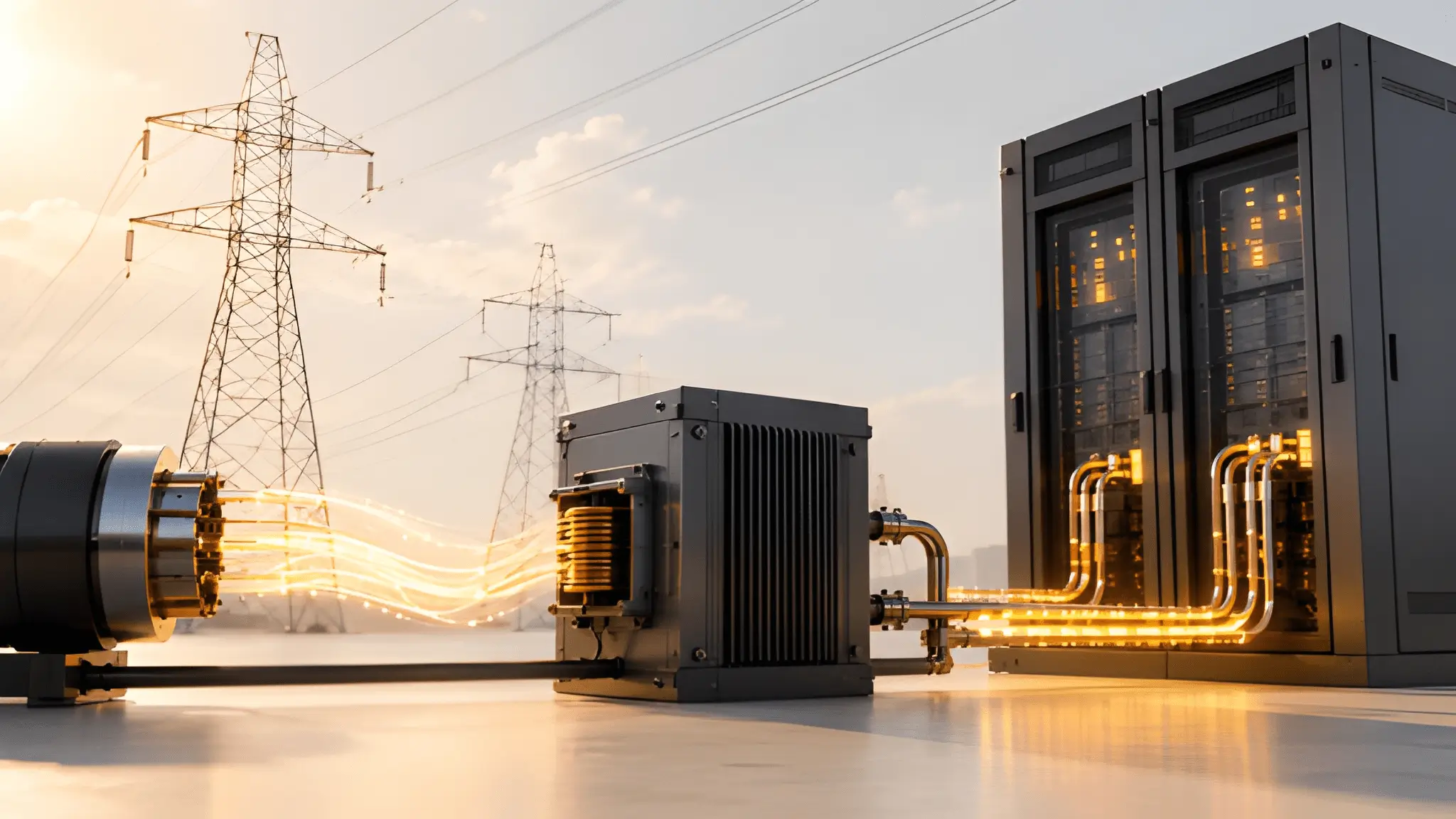
Artificial intelligence is creating growing infrastructure challenges for universities, utilities and technology companies as data centers require increasingly large amounts of electricity: growing AI computing demand is increasing the need for power infrastructure capable of supporting high-density data-center loads. The University of California San Diego now wants to test whether data centers can respond to that pressure with smarter power architecture rather than simply adding more electrical capacity. The university’s San Diego Supercomputer Center, or SDSC, will host an $8.48 million project funded by the California Energy Commission that brings power electronics, AI workload management and grid planning into one operating environment. The project places SDSC among the early operational AI facilities in the US to test an architecture intended to reduce energy losses while improving the way large computing loads interact with the electric grid.

The scale of the challenge helps explain why the university is pursuing a different approach to power delivery. AI servers now demand substantially more electricity than conventional enterprise computing systems, with a single AI hardware rack capable of consuming as much as 50 times the power of a traditional server rack installed only a few years ago. That increase raises the infrastructure requirements for AI data centers, including the power equipment and physical systems needed to support increasingly dense computing loads. A conventional facility typically moves electricity through several conversion stages before it reaches processors and other computing equipment, and every conversion introduces another opportunity for energy loss. The project therefore targets a reduction in energy losses associated with the power-conversion chain as it prepares to support a two-megawatt AI computing load.
UC San Diego Builds a New Power Testbed
At the center of the project sits a power architecture designed to shorten that journey. San Diego-based Alderbuck Energy is developing the system, including a bidirectional solid-state transformer that can convert medium-voltage alternating current directly into 800-volt direct current through a single compact device. The architecture could eliminate several conversion stages that traditional data-center power systems depend on, reducing the equipment needed between the grid connection and high-density computing hardware. The project targets two megawatts of AI computing load while seeking to cut the footprint of power equipment by more than 50% and deliver projected energy savings of about 25%. Those targets matter because power infrastructure increasingly competes with computing hardware for capital, floor space and deployment time as AI facilities grow. The test at SDSC will provide an operating environment in which those claims can move from engineering projections toward measured performance.
“This research has the potential to fundamentally transform how AI data centers interact with the electric grid,” said Chancellor Pradeep K. Khosla. “By cutting costs and shrinking our environmental footprint, it paves the way for sustainably scaling this critical technology.” Alderbuck’s technology also changes the strategic question surrounding data-center power. Rather than treating electrical infrastructure as a static delivery mechanism, the project connects power conversion with intelligent control and computing orchestration. Brian Balderston, director of infrastructure and data centers for SDSC’s Research Data Services Division, described that shift in terms of the changing role of large electricity users. “Data centers are no longer just consumers of electricity, as they can be active participants in grid stability,” he said. The project therefore examines whether a large AI facility can manage its electrical behavior while continuing to meet the demands of research and production workloads.
AI Workloads Could Become Grid Resources
The software layer provides the second major piece of the architecture. Emerald AI will integrate its Emerald Conductor platform with Alderbuck’s grid-management controller, creating a system that connects computing behavior with electrical conditions. Emerald Conductor can adjust AI workloads by slowing, shifting or briefly pausing batchable jobs while protecting workloads that cannot tolerate interruptions. That capability gives operators a mechanism for adjusting eligible AI workloads in response to changing grid conditions while protecting workloads that cannot tolerate delay. The project is designed to demonstrate controllable AI demand while generating data that can support utility and policymaker planning for large flexible loads. In that framework, computing flexibility becomes an infrastructure asset rather than an operational inconvenience.
The concept already has a track record outside San Diego. A peer-reviewed study involving Emerald AI, NVIDIA, Oracle, Salt River Project and the Electric Power Research Institute demonstrated a 25% reduction in the power draw of a live AI cluster in Phoenix for three hours without breaching performance commitments. Emerald AI has since completed five live demonstrations at commercial data centers across Arizona, Illinois, Virginia, Oregon and the United Kingdom. A recent London demonstration at Nebius’s AI Factory with National Grid showed that high-performance AI infrastructure could reduce electricity demand by as much as 40% without performance loss. “This project shows us what a better path looks like in practice and will produce the real-world evidence that moves this architecture from promising to proven,” Balderston said.

Utilities Gain a New Planning Model
SDG&E will participate as the utility technical advisor and grid integration partner, giving the project access to expertise in utility operations, communications standards, grid integration and data-center load characteristics. The utility will help the research team understand typical load profiles and determine how those patterns should appear in modeling tools used for grid planning. UC San Diego will lead the development, testing and evaluation of the technologies, while SDG&E will contribute utility perspectives and operational insights throughout the project. That division of responsibilities matters because a system that works inside a laboratory still needs to fit the technical and operational requirements of an actual utility network. The project consequently links laboratory validation with the practical questions utilities face when large electricity users request new connections. Moreover, the resulting data could give planners a more granular view of AI loads than a single maximum-demand number can provide.
For California, the project comes as utilities and policymakers evaluate how large new electricity users, including AI data centers and EV fast-charging facilities, can be integrated into the grid. The project is intended to give utilities additional information about data-center load characteristics as they evaluate the integration of large electricity users into the grid. The project’s flexible-load capacity tool is intended to help planners evaluate how large electricity users can be represented in grid models according to their load characteristics and available flexibility. Meanwhile, operators could use that flexibility to reduce exposure to grid constraints while maintaining performance for priority workloads. The value would come from making large loads more predictable and controllable rather than simply making them smaller. If the approach works at SDSC, California utilities could gain a framework for evaluating flexible data-center capacity as part of future interconnection decisions.
AI Infrastructure Needs More Than More Power
The broader significance of the project lies in what it says about the next phase of AI infrastructure. As AI workloads push facilities toward higher power densities, the project is testing whether more efficient power delivery and flexible computing can provide additional approaches to managing large data-center loads. UC San Diego is testing a different proposition: improve the electrical path, make workloads more flexible and give utilities better information about how computing facilities actually behave. The project also connects three infrastructure layers that have often developed separately—power conversion, software-controlled compute and utility planning. Ultimately, success would mean more than reducing electricity consumption inside one supercomputing facility; it would demonstrate a repeatable model for making AI growth compatible with grid reliability.
The UC San Diego project arrives at a moment when the AI industry’s biggest infrastructure constraint may no longer be access to processors alone. Electricity availability, power conversion efficiency and the ability to coordinate flexible computing loads increasingly shape where AI capacity can operate and how quickly new facilities can come online. The UC San Diego demonstration brings advanced power electronics, AI workloads and grid interactions into a single operational test environment. Its workforce-development component aims to create career pathways for residents of disadvantaged communities into jobs in high-power, grid-interactive data-center operations. If the project validates its projected efficiency and footprint improvements, it could strengthen the case for treating data centers as active components of the power system rather than oversized passive customers.











