
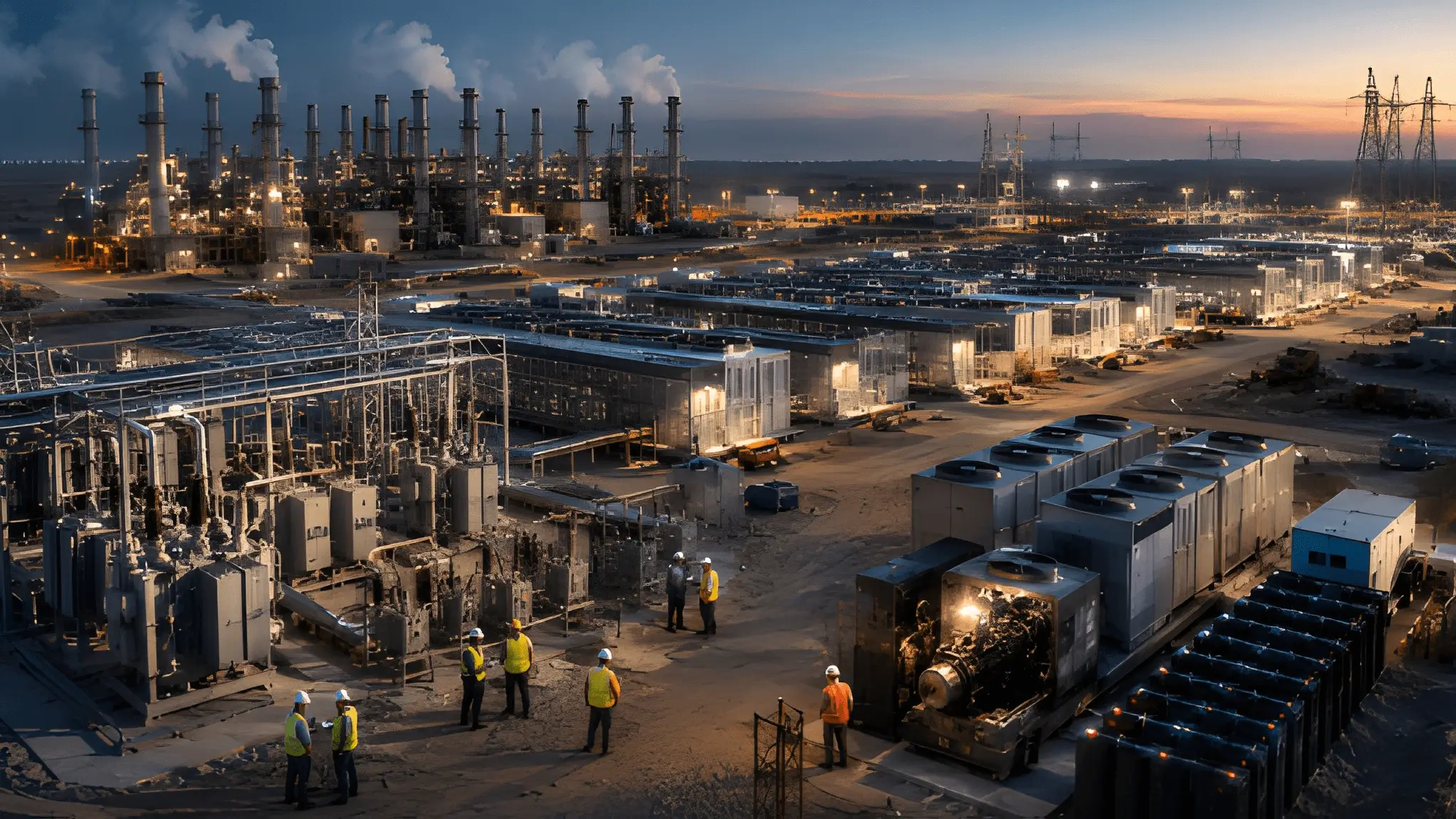
Enterprise demand for large-scale AI infrastructure has changed the economics of power procurement faster than many governance frameworks can adapt. Capacity commitments that once depended on utility-backed service now increasingly rely on dedicated generation assets built directly beside compute campuses. Developers promote these arrangements as a way to provide dedicated power supply for rapidly expanding AI workloads while maintaining greater control over infrastructure deployment schedules and energy availability. Yet the commercial discussion often concentrates on megawatts delivered rather than obligations triggered when those megawatts suddenly disappear. Directors reviewing multi-hundred-megawatt lease agreements therefore evaluate considerations that extend beyond conventional service-level commitments, including operational resilience, energy dependency, and contractual accountability. Several recent campus developments in Texas have brought this governance challenge into sharper focus because on-site generation shifts reliability responsibilities away from traditional utility structures and into private contractual arrangements.

Crusoe’s recently announced 900 MW expansion in Abilene illustrates how rapidly this model is scaling across the AI infrastructure sector. The project combines dedicated compute facilities with an on-site power plant designed to support large-scale workloads while reducing dependence on external grid timelines. That approach creates operational advantages because developers gain greater control over construction sequencing and energy availability. At the same time, it introduces legal and governance questions that remain largely absent from traditional colocation agreements. When a utility outage occurs, responsibility pathways are usually well understood across regulators, operators, and customers. A failure inside a privately controlled energy ecosystem creates a different chain of accountability that boards cannot afford to overlook during contract review.
Source:
The Silent Clause That Shifts Outage Fallout
Commercial lease negotiations frequently emphasize uptime guarantees, power availability commitments, and service-credit structures. Legal language buried deeper in agreements often receives less scrutiny despite carrying significant financial implications during a major disruption. Force-majeure provisions traditionally protect parties from events beyond reasonable control such as extreme weather, natural disasters, or government actions. Behind-the-meter environments introduce a more complex scenario because generation assets sit within a privately managed operational boundary. Contractual treatment of utility-supplied power and customer-controlled energy infrastructure can vary significantly, making liability allocation a critical area of legal review during lease negotiations. Directors evaluating lease commitments should therefore examine whether outage protection extends equally across all power sources supporting the facility.
Island-mode operation presents a particularly sensitive governance challenge for large AI campuses. During islanded conditions, facilities rely on local generation and operational controls instead of broader grid support mechanisms. IIf generation assets experience mechanical, fuel, or control-system failures during that period, the resulting commercial obligations will depend on the specific remedies and responsibilities defined within the governing agreements. Exposure can extend beyond lost compute time because downstream customer obligations often continue regardless of infrastructure ownership arrangements. Board committees responsible for enterprise risk management increasingly need visibility into these clauses before approving long-term capacity agreements. Careful legal review can clarify how reliability commitments, performance guarantees, and available remedies apply during generation-related disruptions.
Crusoe’s 900MW Texas Blueprint Exposes Blackout Liability Gaps
The Abilene expansion represents one of the clearest examples of the industry’s movement toward integrated energy and compute development. Crusoe has announced a dedicated 900 MW campus supported by an on-site power plant intended to serve large-scale AI workloads. TThe model provides developers with dedicated energy infrastructure that can be planned and deployed alongside compute capacity as part of a single integrated project. Developers gain a pathway to accelerate capacity delivery while maintaining greater control over operational dependencies. Investors generally view this structure as a practical response to escalating demand for AI infrastructure. Nevertheless, acceleration benefits do not automatically resolve liability questions associated with power interruptions.
Utility-operated power systems generally function within established regulatory frameworks that define operational responsibilities and outage-management procedures. Private energy ecosystems operate under a different framework because contractual arrangements often determine responsibility after a disruption. IIf a major service interruption occurs within a privately operated infrastructure environment, contractual agreements determine the rights, obligations, and remedies available to participating parties. Contract wording ultimately determines where financial exposure lands. However, governance teams often discover allocation details only after a disruption has occurred. Consequently, organizations commonly include outage liability assessments within broader due-diligence and risk-management reviews before executing large infrastructure agreements.

When Capacity Markets Penalize Self-Generation Downtime
Electricity markets increasingly focus on resource adequacy and the reliable availability of committed capacity. Policymakers evaluating future procurement frameworks generally seek mechanisms that reward dependable resources while discouraging unavailable capacity during periods of system stress. This direction has implications for large privately powered campuses because reliability performance may become a measurable market consideration. Resource adequacy frameworks generally evaluate the availability and reliability characteristics of generation resources used to support electricity demand. Market evolution does not automatically target AI campuses, yet the principles underlying capacity accreditation increasingly emphasize demonstrated reliability. That trend warrants attention from executives negotiating long-duration infrastructure commitments.
India’s ongoing discussions around resource adequacy and capacity planning add another dimension to the conversation.Resource adequacy discussions in India increasingly emphasize the importance of reliable and available capacity to support future electricity demand growth. Commercial infrastructure agreements commonly define performance obligations, service levels, and available remedies associated with service disruptions. Risk therefore extends beyond physical power restoration because financial consequences can continue long after service resumes. Boards evaluating expansion strategies should model these scenarios using the same rigor applied to cybersecurity or supply-chain disruption assessments. Structured contingency planning provides a stronger defense than relying solely on service-credit provisions.
Directors Are Personally on the Hook for Reliability Filings
Corporate governance expectations continue expanding as critical infrastructure becomes more closely tied to economic activity and digital services. Regulators increasingly expect organizations to demonstrate oversight of material operational risks through documented governance processes. Energy reliability now occupies a more prominent place within that discussion because large compute environments depend on uninterrupted power availability. Captive and dedicated energy arrangements create additional oversight obligations because enterprises exercise greater influence over infrastructure decisions. Directors who approve major infrastructure commitments are expected to exercise appropriate oversight, diligence, and risk assessment consistent with their governance responsibilities. Governance practices that once focused primarily on financial exposure now require deeper technical evaluation.
Large energy-intensive facilities already attract significant attention from regulators, investors, and auditors seeking evidence of resilience planning. Resource adequacy frameworks focus on ensuring sufficient electricity resources are available to meet forecast demand while maintaining system reliability. Large energy-intensive facilities typically maintain documented operational risk controls and resilience planning because power availability remains a critical business dependency. Board committees should ensure technical assumptions receive independent validation before contractual commitments become binding. Moreover, governance records should clearly document how outage scenarios were assessed during approval processes. Robust documentation often becomes as important as technical performance when stakeholders review decision quality after an incident.
The Reputational Cascade of a Campus-Wide Dark Event
A widespread outage affects more than computational availability because it immediately triggers questions about operational resilience. Enterprise customers increasingly evaluate infrastructure providers through a lens that combines technical performance, governance maturity, and risk management capability. Extended service interruptions can undermine confidence in all three areas simultaneously. Recovery timelines matter, yet stakeholder perception often forms long before systems return to normal operation. Investor relations teams may encounter difficult questions regarding infrastructure concentration, energy strategy, and contingency planning. Reputation therefore becomes another asset exposed by failures occurring within privately powered campus environments.
Customer retention pressures can emerge quickly when workloads support mission-critical business functions. Procurement teams responsible for cloud and AI spending increasingly compare providers on reliability metrics alongside performance characteristics. Rating agencies and sustainability evaluators may also examine outage management practices when assessing operational resilience and governance effectiveness. Financial markets rarely respond only to the outage itself because they also evaluate how leadership anticipated and managed foreseeable risks. Furthermore, public disclosures issued after a disruption frequently shape stakeholder confidence more than technical root-cause details. Organizations that establish governance discipline before deployment generally navigate these situations more effectively than those relying on reactive communication strategies.
Redrawing the Risk Map Before Signing Megawatt Deals
The rapid expansion of dedicated energy infrastructure alongside AI campuses reflects a practical response to growing power constraints. Projects such as Crusoe’s Abilene development demonstrate how developers can accelerate deployment by integrating generation assets directly into campus design. Strategic advantages remain significant because enterprises gain access to large-scale capacity without waiting for lengthy utility timelines. Even so, governance frameworks must evolve at the same pace as infrastructure architecture. Boards cannot assume traditional utility accountability models apply within privately powered environments. Contractual risk allocation represents an important component of infrastructure planning alongside compute density, cooling design, and energy economics.
Three structural changes deserve priority before organizations commit to large-scale capacity agreements. First, lease negotiations should include explicit allocation of liability for generation-related outages under all operating conditions. Second, audit committees should require independent reliability reviews covering operational, legal, and financial exposure scenarios. Finally, governance processes should establish documented reporting pathways that connect infrastructure resilience assumptions directly to board oversight responsibilities. Clear contractual provisions, documented governance processes, and independent risk reviews help organizations establish defined accountability frameworks before disruptive events occur. As behind-the-meter deployments become more common, organizations that address accountability early will enter future infrastructure partnerships with stronger protection and clearer expectations.











