Skip to content
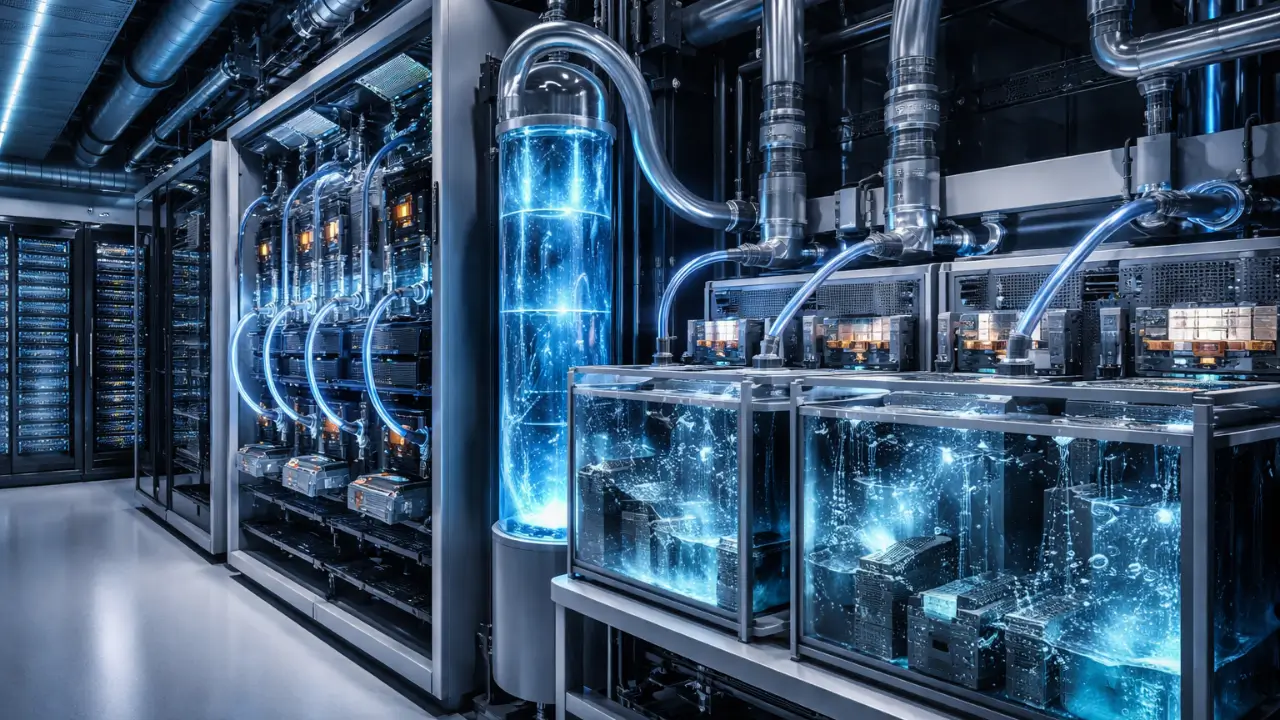
In earlier eras of computing, heat remained a manageable byproduct. Today, it sets the boundaries of deployment. Data centers now operate at thermal thresholds that leave little margin for inefficiency, forcing operators to reconsider how heat is removed at every level of design. The resulting examination of air vs. liquid vs. cold plate cooling reflects a broader recalibration underway, one driven by denser compute, constrained power availability, and the physical limits of traditional airflow-based systems.
This blog narrates the air vs. liquid vs. cold plate cooling through performance, efficiency, scalability, and operational realities. The discussion reflects current industry conditions without prediction or preference. Each method operates within defined physical limits, responds differently to modern workloads, and carries implications that extend beyond temperature control. Understanding those distinctions has become essential for anyone assessing today’s digital infrastructure.

Air Cooling Systems Still Shape Baseline Infrastructure
Air cooling remains the most widely deployed thermal management approach across global data centers. Its dominance stems from decades of refinement, predictable behavior, and compatibility with existing facility designs. In air-cooled environments, chilled or conditioned air flows through server aisles, absorbs heat from components, and exits through return paths toward cooling units.
The simplicity of air cooling supports rapid deployment and operational familiarity. Technicians understand airflow dynamics, containment strategies, and failure modes. Spare parts and expertise remain broadly available across regions. For facilities operating at moderate rack densities, air cooling continues to meet reliability thresholds without extensive retrofitting.
However, physics imposes constraints. Air carries less heat than liquid, which limits its effectiveness as power densities increase. As processors draw more energy, fans spin faster, acoustic loads rise, and energy consumption grows. Facilities compensate through hot-aisle containment, raised-floor optimization, and higher airflow volumes, yet diminishing returns emerge as thermal loads intensify.

Why Air vs. Liquid vs. Cold Plate Cooling Became Central
The renewed focus on air vs. liquid vs. cold plate cooling reflects a structural shift in computing rather than a transient trend. Artificial intelligence training, high-performance computing, and accelerated workloads concentrate heat in smaller footprints. Traditional air pathways struggle to remove heat efficiently from densely packed components.
Liquid-based approaches address this limitation by placing cooling media closer to heat sources. Instead of cooling entire rooms, these systems target processors directly or immerse hardware within thermally conductive fluids. As power densities climb beyond historical norms, the debate has sharpened around which approach aligns best with operational, economic, and environmental constraints.
Each cooling method answers a different question. Air cooling prioritizes simplicity and familiarity. Liquid cooling emphasizes thermal efficiency. Cold plate cooling attempts to balance both by integrating liquid pathways without abandoning conventional server architectures.
Liquid Cooling Systems Address Density Head-On
Liquid cooling systems remove heat by circulating coolant through or around heat-generating components. Liquids absorb and transfer thermal energy more effectively than air, which allows systems to support significantly higher power densities. Two primary models dominate deployment: direct liquid cooling and immersion cooling.
Direct liquid cooling routes coolant through cold plates or manifolds attached to processors. Immersion cooling submerges entire servers in dielectric fluids, eliminating air as a heat transfer medium altogether. Both approaches reduce reliance on high-speed fans and lower the energy required for heat removal.
Operationally, liquid cooling introduces new considerations. Facilities must manage fluid integrity, leak detection, and maintenance protocols unfamiliar to air-cooled environments. Supply chains for compatible hardware remain narrower, and standardization continues to evolve. Despite these challenges, liquid cooling increasingly appears in new builds designed for high-density workloads.
Efficiency gains often drive adoption. Reduced cooling energy consumption supports sustainability goals while enabling denser compute deployment within constrained footprints. These attributes position liquid cooling as a practical response to workloads that exceed air cooling’s physical limits.
Cold Plate Cooling Bridges Familiarity and Performance
Cold plate cooling occupies a middle ground within the air vs. liquid vs. cold plate cooling spectrum. This approach attaches liquid-cooled plates directly to high-heat components, typically CPUs or GPUs, while maintaining air cooling for ancillary parts. Heat transfers from the processor into the cold plate, then into circulating coolant.
By localizing liquid cooling, cold plate systems preserve much of the existing server and facility architecture. Airflow still manages residual heat, while liquid loops handle the most intense thermal loads. This hybrid model reduces overall airflow demands without requiring full immersion or extensive redesigns.
Cold plate cooling aligns well with incremental infrastructure upgrades. Operators can deploy higher-density servers within air-cooled facilities by supplementing, rather than replacing, existing systems. Maintenance processes remain closer to established practices, easing workforce transitions.
Limitations persist. Cold plate systems require precise installation and careful monitoring to prevent leaks or uneven cooling. Thermal efficiency improves compared to air-only approaches, yet falls short of full immersion methods. Even so, cold plate cooling continues to gain traction as organizations seek balanced solutions.
Evaluating Efficiency Across Cooling Architectures
Efficiency comparisons within air vs. liquid vs. cold plate cooling depend on how effectively each system removes heat relative to energy input. Air cooling relies heavily on fans and large volumes of conditioned air, which increases power usage as thermal loads rise. Liquid systems, by contrast, transport heat with less energy expenditure due to higher thermal conductivity.
Cold plate cooling improves efficiency by reducing the volume of air requiring conditioning. Liquid loops absorb concentrated heat, allowing air systems to operate at lower intensities. This reduction translates into measurable energy savings without fully abandoning air-based designs.
Facility-level efficiency also reflects integration with power and water infrastructure. Liquid cooling may enable higher coolant temperatures, supporting heat reuse or reduced chiller dependence. Air systems often require lower supply temperatures, which increases mechanical cooling demand.
Infrastructure Compatibility and Deployment Realities
Cooling choices rarely occur in isolation. Existing building layouts, regional climate conditions, and regulatory frameworks shape feasibility. Air cooling fits seamlessly into legacy facilities, making it the default for retrofits. Liquid and cold plate systems favor purpose-built environments or carefully planned upgrades.
Supply chain maturity influences adoption. Air-cooled components benefit from extensive vendor ecosystems. Liquid-cooled hardware availability has expanded, yet compatibility considerations persist. Cold plate solutions often require coordination between server manufacturers and cooling vendors.
Operational expertise also matters. Technicians trained on airflow management may require additional skills to maintain liquid systems. Training programs and safety protocols continue to evolve as liquid adoption increases globally.
Reliability and Risk Management Considerations
Reliability assessments differ across cooling methods. Air cooling failures often manifest gradually through rising temperatures or fan degradation. Liquid system failures can introduce immediate risks if leaks occur, although modern designs incorporate safeguards and monitoring.
Cold plate cooling mitigates some risk by limiting liquid exposure to targeted components. Air remains responsible for secondary cooling, providing redundancy. This layered approach appeals to operators prioritizing reliability during transitional phases.
Across all systems, monitoring and automation play critical roles. Sensors, controls, and analytics increasingly govern cooling performance, regardless of medium.
Economic Implications in the Current Market
Capital and operational expenditures influence cooling decisions. Air cooling typically offers lower upfront costs, especially within existing facilities. Liquid and cold plate systems may demand higher initial investment but can reduce long-term operating expenses through efficiency gains.
Market conditions affect cost calculations. Rising energy prices amplify the value of efficient cooling. Supply constraints and component pricing influence deployment timelines. These variables ensure that no single cooling approach universally dominates.
Global Adoption Patterns and Regional Factors
Geography shapes cooling strategies. Regions with cooler climates benefit from air-side economization, extending the viability of air cooling. Warmer climates often push facilities toward liquid or hybrid systems to manage thermal loads efficiently.
Regulatory pressures related to energy consumption and water use also factor into decisions. Liquid cooling’s ability to support higher efficiency aligns with sustainability mandates emerging worldwide.
Cooling Choices Reflect Workload Realities
Workload characteristics ultimately drive cooling selection. General-purpose computing often remains compatible with air cooling. High-density, accelerator-driven workloads increasingly require liquid-based approaches. Cold plate cooling accommodates transitional environments where mixed workloads coexist.
The air vs. liquid vs. cold plate cooling discussion reflects these workload-driven realities rather than technological rivalry. Each method addresses specific constraints within the broader infrastructure ecosystem.
Thermal management also intersects with grid behavior and power provisioning. Cooling loads influence peak demand profiles, which in turn affect how facilities interact with utilities. Air-cooled environments often experience sharper load fluctuations during temperature spikes, while liquid-based systems can stabilize demand through higher thermal tolerance. This distinction has drawn attention from planners evaluating grid interdependence and resilience.
Design flexibility has emerged as another differentiator. Air cooling constrains rack layouts and aisle geometries. Liquid and cold plate systems offer more freedom in spatial planning by reducing airflow dependencies. That flexibility supports modular construction and phased expansion strategies increasingly favored in large-scale deployments.
Standardization remains uneven across the cooling landscape. Air cooling benefits from mature standards and well-defined best practices. Liquid and cold plate technologies continue to converge around emerging norms, yet variations persist across vendors and regions. This lack of uniformity shapes procurement decisions and deployment timelines.
Cooling decisions now reflect long-term operational strategy rather than short-term necessity. Operators assess not only present thermal loads, but also how future workloads may alter requirements. Cooling, once reactive, has become anticipatory infrastructure.
Where the Industry Stands Today
Cooling no longer functions as a background utility. It shapes site selection, architecture, and long-term viability. Air cooling persists as a foundational technology. Liquid cooling expands where density demands escalate. Cold plate cooling bridges operational familiarity and performance needs.
Together, these systems form a spectrum rather than a hierarchy. The current landscape favors informed selection based on physics, economics, and operational context. As compute continue to evolve, cooling strategies will adapt accordingly, grounded in the same thermodynamic principles that define infrastructure today.