 Skip to content
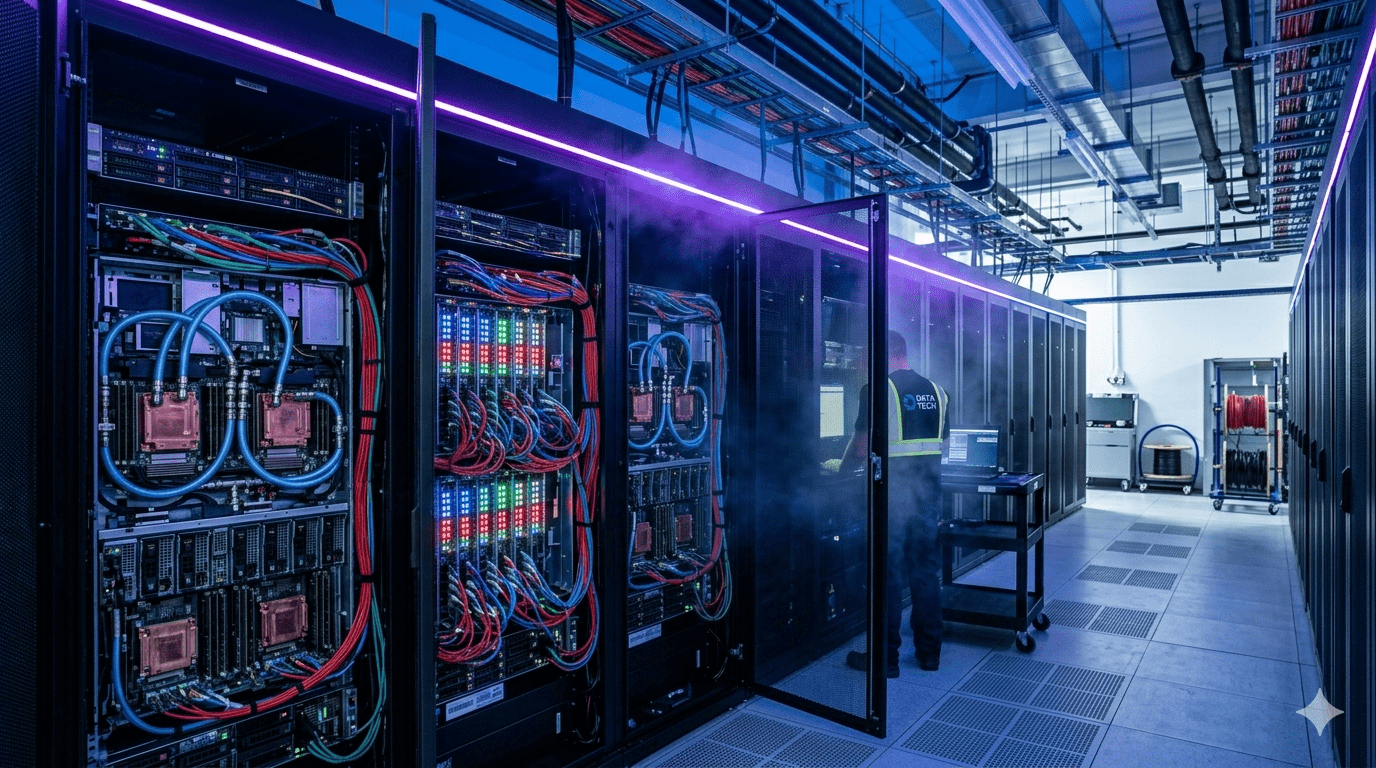
The standard data center lease was designed for a stable world. A tenant signs a 10 to 20-year agreement to occupy a defined amount of space drawing a defined amount of power at a defined maximum density. The operator builds the facility to those specifications, finances it against the contracted cash flows, and recovers the capital investment over the lease term. The model works because conventional enterprise IT workloads are predictable. A database server draws roughly the same power week after week. A storage array does not spike to 10 times its average draw during a training run and then drop back to baseline. The physical and commercial assumptions baked into standard data center lease structures reflect decades of experience with workloads that behave nothing like what AI infrastructure actually does.

The collision between standard lease frameworks and AI workload realities is now visible across every segment of the market. Racks that conventional leases were written for drew an average of 8 to 12 kilowatts. A single Nvidia GB200 NVL72 rack draws 120 to 140 kilowatts. A training cluster connecting tens of thousands of GPUs in tightly coupled synchronised operations introduces load spikes that ripple all the way back to the power plant, as Nvidia’s distinguished engineer for energy systems Sean James described at Data Center World 2026. Inference workloads are continuous and distributed but highly variable based on real-time user demand. Neither training nor inference looks anything like the stable baseline load profiles that standard lease power capacity commitments assume.
Furthermore, JLL reported that rental rates for high-density AI-grade deployments increased 13 to 37% year over year in 2025, reflecting market recognition that the risk profile of AI tenants is fundamentally different from conventional enterprise tenants.
The Power Commitment Problem
The power commitment structure of conventional data center leases assumes that a tenant will draw somewhere between their contracted minimum and their contracted maximum, with the operator designing the facility’s power infrastructure to serve the contracted maximum reliably. That assumption breaks for AI training workloads, which alternate between periods of near-maximum draw during active training runs and periods of dramatically lower draw during checkpointing, evaluation, and idle periods. The facility must be designed to the peak, but the operator cannot rely on the tenant drawing anywhere near that peak consistently. The revenue model and the capital recovery model both depend on assumptions about average utilisation that AI workloads structurally undermine.

The problem compounds at the portfolio level. An operator with multiple AI tenants in the same facility faces a situation where the coincident peak demand of those tenants, if they happen to be running intensive training jobs simultaneously, could exceed the facility’s total power capacity. Conventional enterprise tenants rarely hit their contracted peaks simultaneously because their workloads are independent and varied. AI training clusters are different. Their peaks are scheduled, intensive, and clustered around model release cycles that create industry-wide demand spikes. The power infrastructure planning assumptions that work for a conventional multi-tenant colocation facility do not translate to a facility densely populated with AI training clusters. As covered in our analysis of the time-to-power crisis as AI’s hidden scaling ceiling, the power delivery constraints on AI infrastructure are structural rather than cyclical, and they interact with lease structures in ways the industry is still working through.
The Hardware Refresh Cycle That Leases Cannot Accommodate
The second structural mismatch between standard leases and AI workloads is the hardware refresh cycle. A conventional enterprise IT lease assumes that the tenant’s hardware will remain broadly compatible with the facility’s infrastructure over the lease term. Operators replace servers over time, and their power and cooling requirements evolve gradually enough that existing facility infrastructure can support successive generations without major modification. AI GPU infrastructure does not behave this way. The transition from Nvidia H100 to B200 to the forthcoming Vera Rubin architecture involves not just performance improvements but changes in power density, cooling requirements, and rack form factors that can require significant facility modifications between generations.
A tenant who signed a lease in 2023 for a facility designed around NVIDIA H100 specifications may find that running NVIDIA B200 clusters at the same site requires power density upgrades, cooling infrastructure modifications, and structural reinforcements that the original lease did not contemplate. Sophisticated operators have begun adding technology-proofing clauses that let tenants install next-generation cooling systems and draw higher power densities over time, while defining how both parties share upgrade costs. However, the market has not yet standardised these clauses, and many AI tenants now discover mid-lease that their hardware evolution has already outpaced their facility infrastructure.
Additionally, the 18 to 24-month GPU refresh cycle that characterises frontier AI development is dramatically shorter than the 10 to 20-year lease terms that govern the facilities housing that hardware, creating a structural mismatch between the timescale of hardware economics and the timescale of real estate economics that has no good precedent in earlier infrastructure leasing cycles.
What the Market Is Doing About It
Market responses to the mismatch between standard leases and AI workloads are becoming clear in how operators structure the largest deals. Applied Digital structured its 15-year, $7.5 billion lease with a hyperscaler at the Delta Forge 1 campus specifically around AI and HPC workload requirements, integrating high-capacity power and cooling infrastructure to support sustained large-scale deployments. This purpose-built approach sidesteps the retrofit problem by designing the facility around the AI workload profile rather than forcing a conventional facility to accommodate it. However, only tenants with sufficient scale and capital can access purpose-built AI campuses. Meanwhile, enterprise AI deployments and mid-size operators must navigate this mismatch within conventional colocation frameworks that do not suit this use case.
Colocation operators are responding with tiered lease structures that separate the power commitment from the space commitment, allowing tenants to flex their power draw within a defined range while paying for committed capacity rather than for space alone. Power purchase agreements embedded within colocation leases, modelled on the energy industry’s own PPA structures, are beginning to appear in the market as operators seek to give AI tenants the power price certainty that multi-year training and inference investment decisions require. None of these innovations fully resolves the fundamental tension between lease terms designed for stable workloads and AI workloads that are dynamic, dense, and hardware-refresh dependent. However, they represent the market’s pragmatic adaptation to a mismatch that the industry did not design for and cannot easily design away.












