 Skip to content
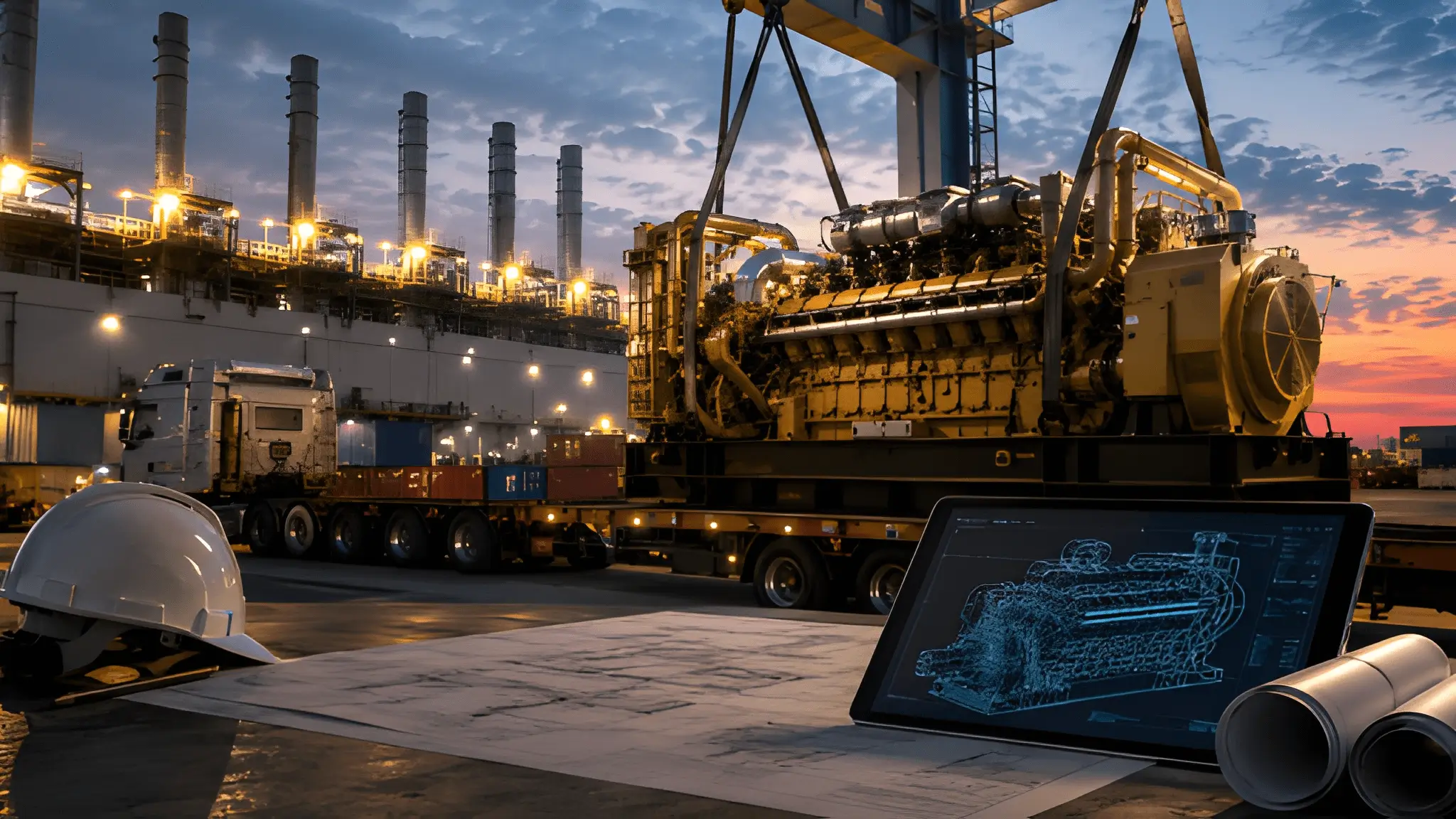
Project teams no longer evaluate large gas engines as optional resilience equipment because procurement timing now shapes the entire infrastructure schedule long before electrical construction begins. Equipment that previously entered discussions after utility negotiations increasingly determines whether a development can reach financial close within the intended investment window. Reciprocating engine manufacturers therefore occupy a position that traditionally belonged only to transmission providers and switchgear suppliers. Developers once believed distributed gas generation offered a practical path around constrained utility delivery schedules, yet manufacturing capacity gradually became another limiting factor instead of a solution. Investment committees now examine production availability with the same attention they once reserved for interconnection milestones because delayed equipment changes financing assumptions across every construction phase. Those changes indicate that manufacturing capacity has become an infrastructure constraint rather than merely an industrial consideration.
Why The Industry Pivoted From Large Turbines To Reciprocating Engines
Large industrial gas turbines traditionally served facilities requiring continuous high-output generation, although extended manufacturing schedules gradually reduced their attractiveness for fast-moving digital infrastructure projects. Developers increasingly discovered that turbine procurement timelines stretched beyond acceptable investment horizons as global industrial demand expanded across multiple sectors. Smaller reciprocating engines appeared attractive because manufacturers could assemble modular units in parallel while allowing phased deployment instead of waiting for one large machine. Individual engine packages also simplified transportation, site preparation, commissioning, and incremental expansion without requiring every megawatt to arrive simultaneously. Financial models increasingly incorporated modular engine fleets because phased deployment and staggered equipment deliveries offered greater scheduling flexibility during project execution. Decision makers increasingly incorporated equipment delivery schedules into procurement planning because publicly reported manufacturing lead times became a more significant consideration during project development.
Manufacturers including INNIO promoted reciprocating engine platforms capable of supporting scalable distributed generation where phased installation aligned more naturally with expanding computing demand. Rather than waiting for a single turbine delivery several years into the future, developers could theoretically commission capacity as successive engine groups arrived from production lines. That flexibility initially distinguished reciprocating technology from traditional utility-scale turbine procurement because construction sequencing became considerably easier to manage. However, growing demand from hyperscale infrastructure rapidly consumed available manufacturing slots across multiple production facilities before additional factory capacity entered operation. Lead-time advantages therefore narrowed as order books expanded faster than industrial manufacturing networks could respond. The expected shortcut eventually encountered the same supply limitations that developers originally attempted to avoid through technology selection.
Inside The 3.5x Backlog And The 24 to 30 Month Delivery Window
Manufacturing availability became significantly more constrained after Caterpillar disclosed substantial growth in backlog for its large reciprocating engine business during investor communications across 2024 and into 2025. Company executives explained that demand continued exceeding production despite ongoing investments intended to expand manufacturing capability for large engine platforms. Public disclosures indicated backlog levels increased approximately three-and-a-half times compared with January 2024, reflecting exceptionally strong order activity rather than temporary purchasing behavior. Early orders placed during 2026 increasingly translated into expected deliveries during 2028, fundamentally changing assumptions surrounding project energization schedules. Infrastructure developers therefore faced procurement decisions requiring commitments years before mechanical installation could realistically begin. Equipment ordering consequently evolved into a long-duration capital planning exercise instead of a routine procurement activity.
Those delivery windows carry practical implications beyond procurement because every downstream construction milestone depends upon confirmed mechanical equipment availability. Civil engineering teams cannot confidently sequence permanent installation without dependable manufacturing schedules that align with broader infrastructure delivery objectives. Financing institutions likewise examine production commitments because delayed engine arrivals may postpone revenue generation and extend construction financing periods beyond original expectations. Consequently, project sponsors increasingly integrate manufacturing commitments into investment approvals rather than treating purchase orders as administrative milestones completed after design decisions. Equipment suppliers therefore influence development timelines long before commissioning activities begin because factory allocation directly affects construction sequencing. Manufacturing backlog has effectively become another scheduling variable requiring continuous executive oversight throughout project development.
How Multi-Gigawatt Orders Rewired Factory Allocation
Manufacturing allocation changed noticeably once individual customers began placing orders measured in gigawatts instead of individual generating plants. VoltaGrid announced agreements that expanded from approximately 2.3 GW to 3.8 GW of INNIO Jenbacher gas engine capacity, creating one of the largest publicly disclosed reciprocating engine procurement programs supporting distributed power infrastructure. Those agreements demonstrated that production capacity increasingly became reserved through long-term strategic partnerships rather than short-term transactional purchasing. Large commitments provided manufacturers with predictable production schedules while giving buyers greater certainty over future equipment availability across multiple deployment phases. Factory planning therefore shifted toward servicing committed production pipelines instead of preserving flexible inventory for the broader industrial market. Procurement strategy consequently became an exercise in securing manufacturing allocation several years before physical installation entered construction schedules.
The same allocation dynamic appeared elsewhere as large-scale infrastructure operators committed to hundreds of generator packages within coordinated development programs instead of purchasing equipment project by project. Vantage Data Centers disclosed plans involving approximately 620 backup generator units supporting hyperscale campuses across Texas, illustrating how equipment demand increasingly concentrates into fewer but substantially larger procurement decisions. Orders of that magnitude influence factory scheduling because manufacturers must dedicate production resources over extended periods to satisfy contractual delivery obligations. Publicly reported backlog growth indicates that equipment delivery timelines have lengthened across the market, requiring developers to place orders substantially earlier than in previous procurement cycles.. Meanwhile, manufacturers continue fulfilling production according to established order books while investing in additional capacity to support sustained customer demand. Extended order backlogs reduce the availability of near-term delivery slots, making advance procurement increasingly important for projects operating on fixed construction schedules.
Why Tripling Production Capacity By 2029 Does Not Solve 2026
Announcements describing expanded manufacturing capacity often create the impression that supply constraints will disappear rapidly once investment decisions receive executive approval. Industrial production rarely follows that timeline because engine manufacturing requires specialized machining, precision assembly, supplier qualification, workforce expansion, testing infrastructure, and regulatory certification before incremental output reaches commercial customers. Every additional production line depends upon upstream suppliers capable of delivering castings, forgings, crankshafts, fuel systems, electronic controls, and numerous precision-engineered components at comparable scale. Factory expansion therefore represents a coordinated industrial ecosystem rather than construction of a single manufacturing building. Capacity commitments announced today frequently improve medium-term supply conditions while offering limited relief for projects already competing within existing production schedules. Manufacturing economics consequently operate according to physical implementation constraints instead of financial commitment alone.
Production expansion plans extending toward 2029 should therefore be interpreted within the context of industrial implementation rather than immediate market correction. Developers planning projects during 2026 remain dependent upon manufacturing capacity that already exists because future facilities cannot deliver engines before construction, commissioning, workforce preparation, and supplier integration conclude successfully. Investment announcements unquestionably improve long-term resilience across the supply chain, yet they do not immediately reduce existing order queues already occupying current production capacity. Therefore, executive planning increasingly distinguishes between announced manufacturing investment and commercially available production because those milestones occur years apart. Infrastructure schedules must account for that structural lag if procurement strategies are expected to remain credible throughout construction and financing. Manufacturing expansion ultimately strengthens future optionality without materially changing near-term delivery mathematics already established through existing backlog commitments.












