
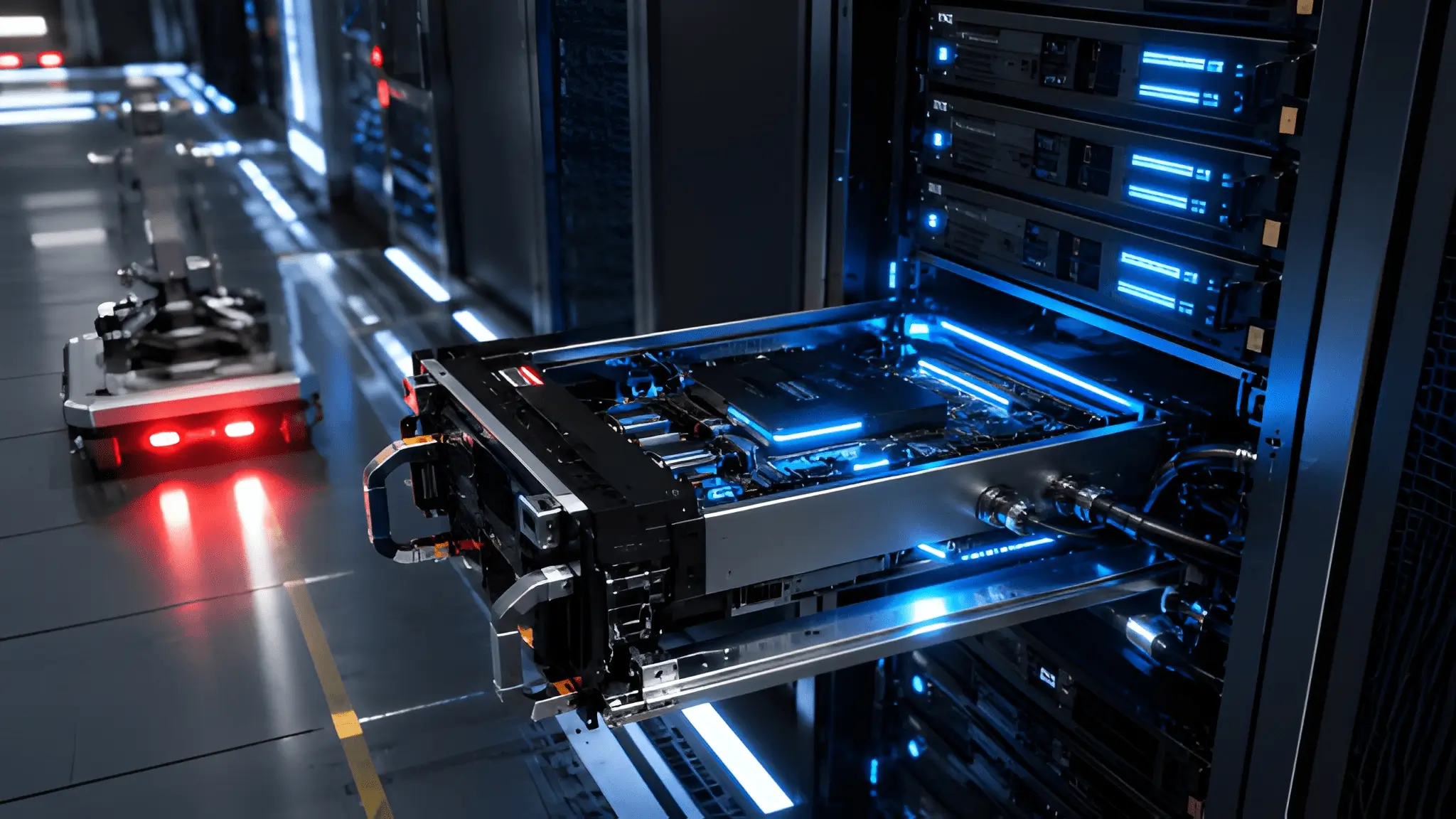
AI infrastructure doesn’t slow down just because a maintenance window shows up on the calendar. Training clusters keep pulling power, pushing memory bandwidth, and generating heat around the clock. At today’s scale, taking GPU fleets offline affects far more than the power bill, it can ripple into slower inference, missed customer commitments, and delays in getting new models into production. Operators managing these facilities increasingly view maintenance delays as operational liabilities instead of routine engineering inconveniences. Traditional service models built around extended inspection windows are becoming less effective for facilities supporting continuous AI computation at hyperscale density. The rhythm inside modern AI halls now resembles coordinated motorsport operations where technicians, monitoring systems, and thermal engineers work against extremely compressed response expectations. Many infrastructure teams have started redesigning workflows around rapid intervention principles that prioritize service velocity alongside compute reliability.

Downtime Is Becoming the New Infrastructure Failure
AI training environments create operational pressure because distributed workloads often span thousands of interconnected accelerators that depend on synchronization stability across the entire cluster. Data center operators now treat downtime as a direct threat to computational continuity rather than an isolated equipment event. Long maintenance windows once tolerated inside enterprise environments increasingly create unacceptable performance consequences in modern AI facilities. Hyperscale operators continue investing in predictive monitoring systems that identify abnormal thermal behavior, coolant pressure fluctuations, and voltage inconsistencies before infrastructure reaches failure conditions. Service teams now prepare intervention plans in advance so technicians can execute targeted replacements without placing large compute environments into extended offline states.
The economics behind AI infrastructure amplify the operational consequences of delayed servicing because advanced accelerators represent extremely high capital concentration within compact physical footprints. Facilities supporting large-scale AI inference also face constant availability expectations from enterprise customers deploying real-time applications and automated decision systems. Operational leaders increasingly measure maintenance performance using restoration speed instead of traditional repair completion metrics. This shift has changed staffing structures inside many facilities because engineering teams now maintain around-the-clock escalation readiness similar to mission-critical industrial environments. Remote diagnostics platforms continuously analyze telemetry streams from pumps, power distribution units, and networking hardware to reduce manual troubleshooting delays. As a result, service workflows increasingly revolve around identifying failing infrastructure early enough to swap components before compute degradation spreads across adjacent systems.
The Rise of the “Swap-in Seconds” Data Hall
Many modern AI facilities are gradually shifting away from repair-first operational philosophies because component-level troubleshooting can consume valuable time inside high-density compute environments. Technicians now replace entire modules, liquid cooling manifolds, GPU trays, and interconnect assemblies during live operational windows whenever architecture permits rapid isolation. The operational objective focuses on restoring compute capacity immediately while defective hardware undergoes secondary analysis outside the production environment. Many facilities have redesigned rack structures around modular accessibility so replacement operations can occur without dismantling neighboring systems. Quick-disconnect liquid cooling interfaces and standardized compute sleds now support faster intervention sequences inside densely packed AI halls. These infrastructure changes continue pushing data centers toward service cultures that resemble coordinated pit stop operations rather than traditional maintenance departments.

Rapid-swap operational models also influence spare inventory management because facilities now maintain localized reserves of critical hardware components near production zones. Engineers cannot wait for external logistics cycles when thousands of accelerators depend on immediate thermal and electrical continuity. Some operators position mobile service carts stocked with replacement pumps, connectors, hoses, and compute modules directly inside restricted service corridors to reduce retrieval delays. Technicians receive increasingly specialized training focused on speed, sequencing discipline, and procedural coordination during live infrastructure interventions. Meanwhile, AI-driven monitoring platforms help prioritize which systems require immediate attention by correlating sensor anomalies across power, thermal, and networking layers. The physical design of the data hall increasingly supports motion efficiency so technicians can move through service zones without creating unnecessary disruption around operational clusters.
AI Data Centers Are Starting to Operate Like Emergency Response Zones
Operational urgency inside AI facilities has intensified because compute interruptions now affect downstream model training schedules, enterprise application performance, and cloud service commitments simultaneously. Monitoring centers inside advanced facilities increasingly operate with response structures similar to emergency coordination environments where specialists evaluate telemetry anomalies in real time across entire infrastructure ecosystems. Escalation chains now activate within minutes whenever thermal irregularities, coolant flow deviations, or abnormal network latency patterns emerge inside production clusters. Engineers no longer wait for scheduled inspection periods because rapid response protocols aim to contain infrastructure instability before workloads experience measurable degradation. Many operators conduct simulated failure exercises that train personnel to isolate faults and restore operational capacity under compressed timelines. These procedural changes continue transforming data centers into environments driven by immediate response discipline instead of conventional maintenance pacing.
Always-on observability platforms have become foundational to these operational models because human teams cannot manually track every variable across modern AI deployments. Facilities increasingly deploy dense sensor networks that measure airflow behavior, liquid temperature variation, rack vibration patterns, and electrical irregularities at granular intervals. Data streams from these systems feed predictive analytics engines capable of identifying abnormal operational signatures before failures become visible to technicians. Response teams then coordinate interventions using centralized operational dashboards that prioritize service urgency based on workload sensitivity and infrastructure dependency mapping. Consequently, service restoration now depends as much on data interpretation speed as physical repair capability inside the facility itself. Operators increasingly compete on how quickly they can diagnose emerging infrastructure instability and redeploy affected compute resources without disrupting broader operational continuity.
The Technician Role Inside AI Data Centers Is Rapidly Changing
The responsibilities assigned to modern data center technicians now extend far beyond routine hardware inspections because AI infrastructure environments demand constant operational awareness and rapid intervention capability. Engineers increasingly interact with sensor-rich ecosystems that deliver continuous telemetry from thermal systems, electrical infrastructure, and compute hardware simultaneously. Modern service personnel often rely on augmented diagnostics platforms that identify abnormal conditions before physical inspection even begins. Some facilities supporting advanced AI deployments are beginning to incorporate robotics-assisted monitoring systems capable of scanning rack conditions and environmental metrics across restricted operational zones. Technicians therefore spend more time coordinating response actions and interpreting infrastructure intelligence instead of manually locating equipment failures. This transition continues redefining technical operations as a blend of systems analysis, workflow orchestration, and high-speed service execution.
Training expectations for infrastructure personnel have also evolved because liquid cooling architectures, high-density compute environments, and predictive analytics systems require multidisciplinary operational understanding. Service teams increasingly need familiarity with thermal engineering principles, networking dependencies, automation frameworks, and remote diagnostics platforms within the same operational workflow. Facilities now emphasize procedural precision because rapid intervention environments leave limited tolerance for servicing errors or delayed escalation decisions. Some operators already use digital twin environments to simulate infrastructure failures and train technicians on coordinated restoration sequences before incidents occur in production settings. Furthermore, remote operational support allows specialists from different geographic regions to assist local teams during complex maintenance events through live telemetry analysis and guided intervention procedures. Human expertise remains essential inside these facilities, although the surrounding operational environment increasingly depends on automation-assisted decision frameworks and continuous data interpretation.
Why AI Infrastructure Is Moving Toward “Serviceability by Design”
Infrastructure architects increasingly design AI facilities around maintenance accessibility because operational velocity now influences long-term compute competitiveness. Traditional layouts often prioritized density and cable consolidation without considering how rapidly technicians could access failing hardware during live operational conditions. Modern facilities instead incorporate front-access servicing paths, modular containment systems, and movable rack configurations that simplify intervention workflows. Hardware manufacturers also continue introducing tool-less component systems that reduce replacement complexity during time-sensitive service operations. These design philosophies aim to minimize physical friction during maintenance activities so restoration procedures consume fewer operational resources. The physical structure of the facility itself now plays a direct role in determining how quickly infrastructure teams can stabilize compute environments after equipment failures emerge.
Liquid cooling adoption has accelerated these serviceability priorities because advanced thermal systems introduce additional operational dependencies involving manifolds, pumps, connectors, and coolant distribution pathways. Engineers now design service corridors that separate maintenance movement from active compute zones to reduce disruption risks during component replacement procedures. Modular thermal distribution units also allow technicians to isolate localized cooling issues without shutting down broader rack environments supporting production AI workloads. Many facilities increasingly standardize infrastructure interfaces because interchangeable hardware systems reduce diagnostic uncertainty and simplify replacement sequencing. Nevertheless, serviceability strategies extend beyond hardware because operational software platforms now integrate maintenance orchestration directly into facility management systems. AI infrastructure therefore continues evolving toward environments where every architectural decision supports faster diagnosis, simplified intervention, and reduced operational interruption across compute-intensive deployments.
The Fastest AI Facilities May Soon Win the Compute Race
Competitive advantage inside the AI infrastructure sector increasingly depends on operational responsiveness alongside hardware scale because uninterrupted compute availability now carries growing strategic value across the industry. Facilities capable of restoring failed systems within minutes can protect training continuity, maintain inference stability, and preserve service commitments more effectively than slower operational environments. Infrastructure operators therefore continue investing heavily in predictive monitoring, modular servicing frameworks, and maintenance-first architectural strategies designed around rapid recovery principles. The operational culture surrounding AI facilities now rewards coordination speed, diagnostic accuracy, and intervention discipline at levels rarely associated with traditional data center management. Facilities that combine dense compute capacity with ultra-fast service workflows may ultimately deliver greater long-term performance resilience than competitors relying solely on hardware scale. The future of AI infrastructure increasingly belongs to organizations capable of treating operational velocity as a foundational engineering capability rather than a secondary maintenance objective.











