 Skip to content
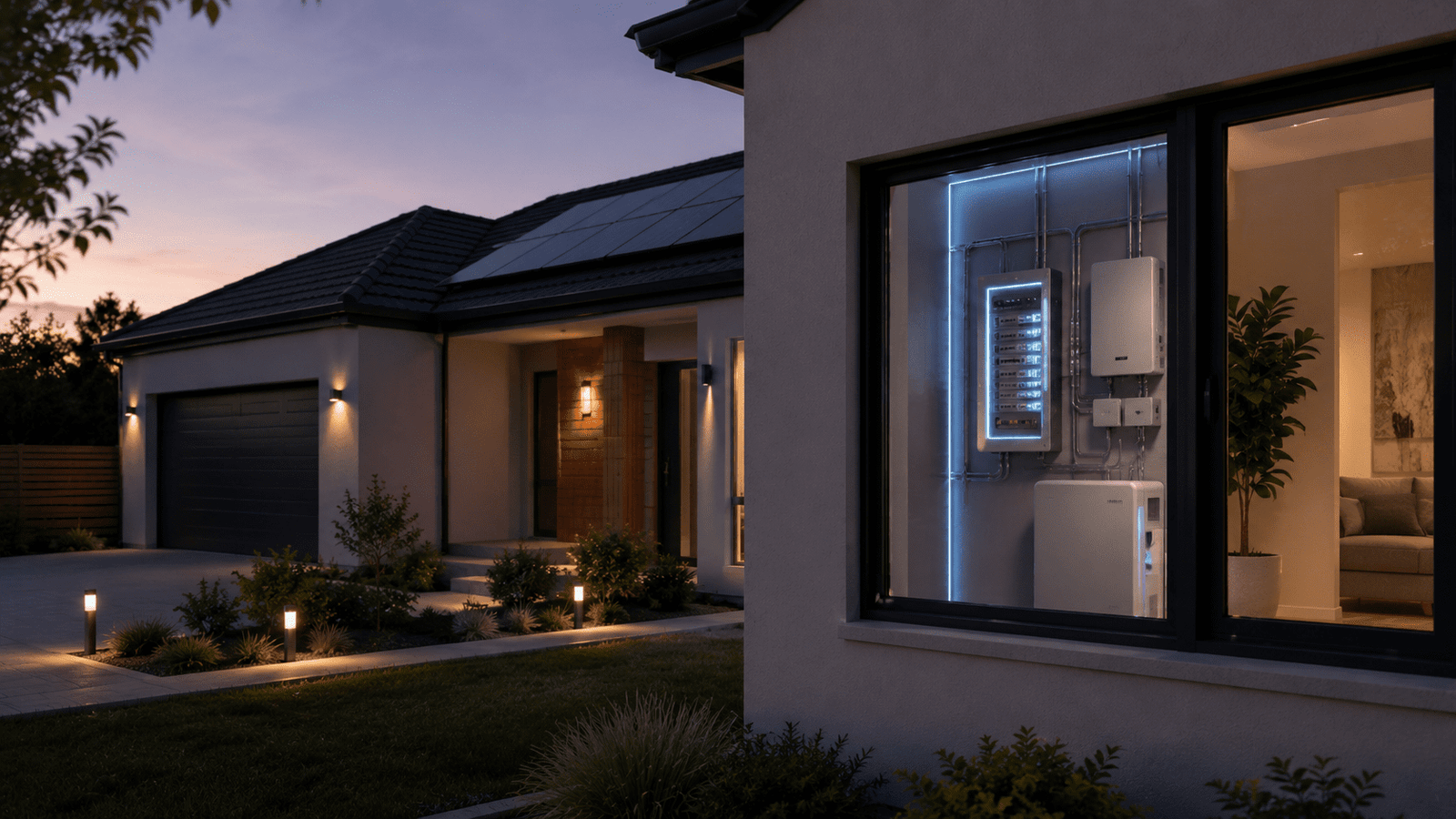
The home data center idea resurfaces every few years, and each time the question is slightly different. It surfaced during the crypto mining boom, and again when edge computing became a genuine enterprise priority. Now it surfaces again, as AI infrastructure constraints have become acute enough that people are seriously asking whether residential compute can absorb some of the load. But the persistence of the question is, however, telling. The answer is, mostly, no. The question keeps returning because it is pointing at something real.

PulteGroup and California-based startup Span have announced a pilot programme that installs smart electrical panels in new homes capable of managing AI compute workloads alongside standard residential electricity. Heata, a UK startup, has been installing servers in people’s homes for several years, channelling the heat output into domestic hot water systems. The model is, specifically, simple. A third party owns the equipment. The homeowner gets reduced energy bills. The compute runs batch workloads that do not require the low latency or high density of a hyperscale facility.
Why Residential Compute Has Real Limits
The case against home data centers is, however, worth stating clearly. Residential environments lack the power density, redundancy, physical security, and environmental controls that serious AI workloads require. A hyperscale training cluster running at hundreds of kilowatts per rack cannot be distributed across basements and utility rooms without fundamentally changing what the workload is doing. Deterministic network latency and 99.999% uptime are simply not available in residential environments. The power infrastructure of a typical home is not designed for sustained high-density compute loads. WiFi is not InfiniBand.
The more substantive version of the argument is, however, not about training. It is about inference. Real-time inference for low-latency AI applications, specifically, including local AI assistants, smart home processing, and edge AI for privacy-sensitive workloads, is a genuinely viable residential use case. It does not require the power density or network performance of hyperscale infrastructure. As we have covered in our analysis of AI campuses built for training being the wrong infrastructure for inference, the infrastructure requirements for inference are, specifically, different from training in ways that open up deployment options that training environments cannot use.

Why the Idea Keeps Returning
The persistent return of the concept is not, in other words, really about homes. It is, rather, what the idea reveals about the gaps in the current hyperscale-first approach.
Communities that oppose large data centers are, however, not opposed to AI. They are opposed to the specific cost distribution, environmental impact, and lack of local benefit that the current development model produces. A distributed model addresses those objections differently than better permitting processes do. It puts compute closer to communities, returns waste heat to residents, and avoids the grid stress of gigawatt campuses. Whether that alternative model can develop at meaningful scale is the real question.
The first is, specifically, the heat problem. Heata’s model of channelling server waste heat into domestic hot water is, consequently, one of the most sensible distributed compute applications that actually exists. It works. The obstacle is scale and coordination, not technical feasibility.
The second is, in turn, the concentration problem. Hyperscale AI infrastructure is concentrating in a small number of markets, creating grid stress, community opposition, and resilience risks that distributed alternatives could partially address. The argument for distributed compute is not that homes should run training clusters. Rather, the aggregate of residential, commercial, and community-scale infrastructure could reduce the burden on primary markets in ways the current hyperscale-only model does not.
The third is, arguably, the community acceptance problem. As we have covered in our analysis of the data center industry losing the public consent battle, the industry’s relationship with host communities is under significant stress. Residential compute models, whatever their limitations, are one signal that the industry is at least exploring alternatives to the approach that is generating that opposition. Whether those alternatives can scale to relevance is, however, a different question.
What Residential Compute Can Actually Do
Gerald Ramdeen of Luxcore put it clearly: homes are not going to replace hyperscale data centers for large AI training clusters. But that framing sets the bar in the wrong place. The more interesting question is whether distributed residential and community-scale compute can become a genuine layer of the AI infrastructure stack. The relevant test is whether it can serve workload types that do not require hyperscale conditions.
The answer is, probably, yes. In limited ways, on limited timelines.
Near-Term Applications That Actually Make Sense
Low-latency inference at the edge, privacy-sensitive local AI processing, and heat recovery integration are all real near-term applications. None of them will reduce the demand for hyperscale training infrastructure. The total compute requirement for AI development is, in fact, growing too fast for edge efficiency gains to offset centralised training demand on any meaningful timescale.
The more consequential near-term signal is not the residential model itself.
It is, rather, what the idea reveals about the gaps in the current hyperscale-first approach.
The Operators Already Building This Layer
The operators and startups building that niche layer now are, consequently, not competing with hyperscalers. They are building the infrastructure layer below them, handling the workloads that hyperscale conditions make unnecessarily expensive or environmentally costly. That is a real and growing market, even if it is not the one the headline version of the home data center idea describes. The current evidence suggests it can develop at niche scale, serving specific workload types, in specific markets, on specific timelines. The operators and startups building that niche layer now are, consequently, not competing with hyperscalers. They are building the infrastructure layer below them, handling the workloads that hyperscale conditions make unnecessarily expensive or environmentally costly. That is, notably, not nothing. As we have covered in our analysis of decentralized energy systems and the rise of distributed power, the infrastructure stack is becoming more layered and more heterogeneous. The home data center is not, however, the future of AI compute. It is, however, an early indicator of a more distributed infrastructure architecture that is already beginning to take shape.












