
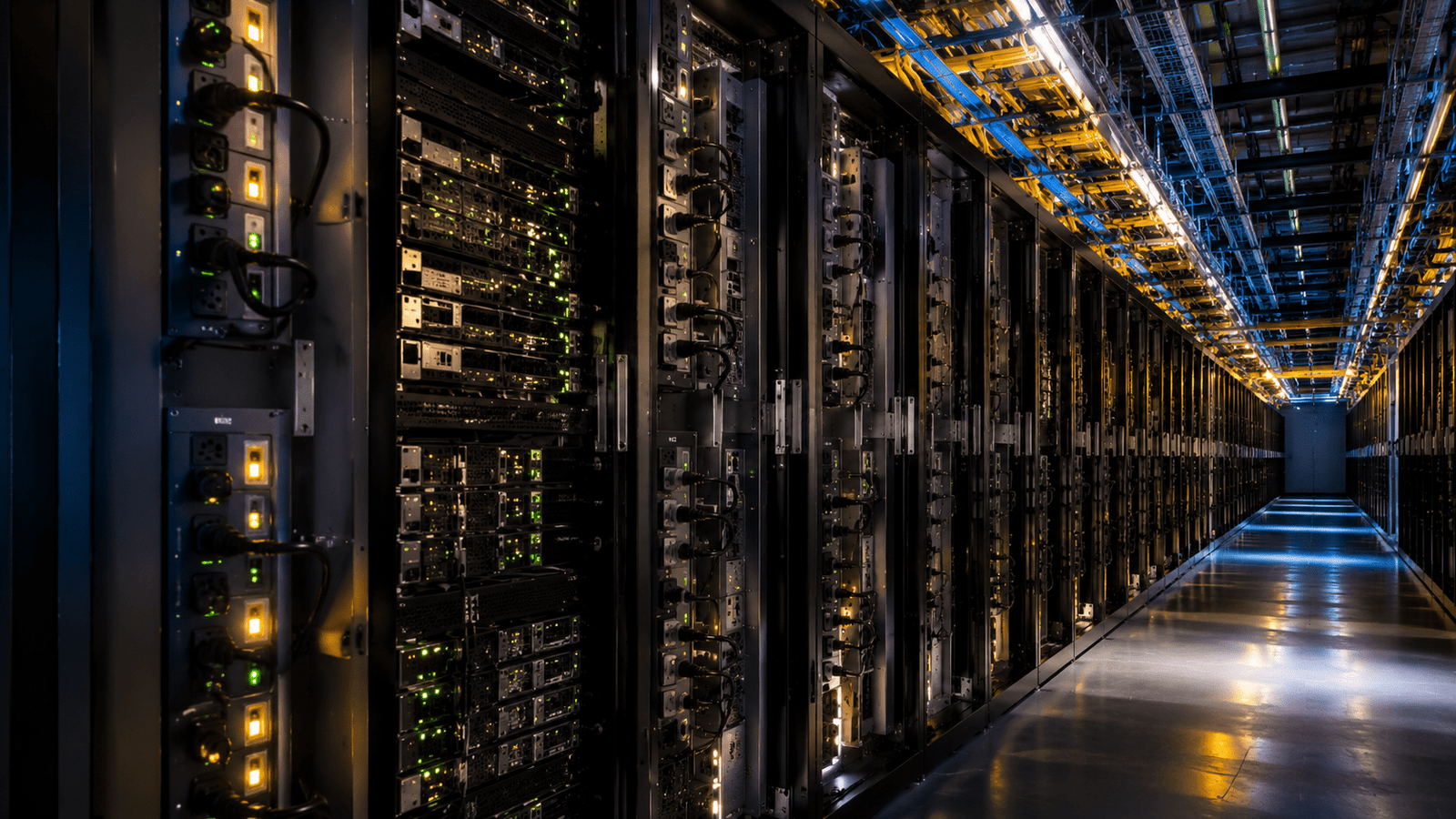
The neocloud narrative has always been about GPUs. Who has the most H100s. Who landed the first GB200 cluster. Which operator signed the biggest hyperscaler contract. Power has been treated as a footnote, a cost of doing business that the revenue model absorbs. That assumption is, however, quietly unravelling. Power is not a footnote in neocloud economics. It is, in many cases, the single largest variable cost on the income statement. It is, also, rising faster than the GPU rental rates that are supposed to cover it.

The fundamental arithmetic is straightforward. A modern AI training cluster drawing 100 kilowatts per rack across a 10,000-rack deployment pulls one gigawatt of power at full utilisation. At US commercial electricity rates of $0.07 to $0.12 per kilowatt-hour, that translates to between $61 million and $105 million in annual electricity costs. That is before cooling overhead. Air-cooled infrastructure typically runs at a PUE of 1.4 or above. Add that overhead and the real annual power cost lands between $85 million and $147 million. That is, specifically, just the electricity bill. It excludes capital depreciation, staffing, connectivity, and the financing costs on the GPU fleet itself.
Why Power Costs Are Rising Faster Than Revenue
The problem is not static. It is, in fact, getting worse. Power costs for neoclouds are rising for structural reasons that are, notably, not temporary. Grid electricity prices in primary AI infrastructure markets have increased significantly over the past two years. Demand from data centers has pushed utilities toward higher-cost generation sources. That infrastructure investment gets, in turn, passed through to commercial customers. In Northern Virginia, which remains one of the largest AI compute concentrations in the world, commercial power rates have moved materially higher. Dominion Energy has had to invest in generation and transmission capacity to serve the load that AI infrastructure has created.
Behind-the-meter generation, which many larger data center operators are adopting to bypass grid constraints, is not necessarily cheaper. Natural gas-fired reciprocating engines running continuously produce power at between $0.06 and $0.10 per kilowatt-hour when fuel, maintenance, and capital costs are fully loaded. That range overlaps with grid pricing in many markets but removes the grid constraint problem. It does not, however, remove the cost problem. Neoclouds that built their financial models on 2022 and 2023 power rate assumptions are, consequently, finding that actual operating costs are running ahead of forecast. The Blog NeoClouds and the Rise of Energy-Optimised AI Infrastructure identified this dynamic early. The direction it pointed to has, in turn, become more pronounced since.

The Competitive Asymmetry Nobody Talks About
The power cost problem does not affect all neoclouds equally. That asymmetry is, specifically, where it becomes a competitive strategy issue rather than just an operational one. Hyperscalers have long-term power purchase agreements at rates that most neoclouds cannot access. They have direct relationships with utilities that give them priority in capacity allocation and, often, preferential pricing structures. They have the scale to invest in behind-the-meter generation infrastructure and to absorb the capital cost over depreciation periods that a smaller operator cannot justify. A neocloud on spot or short-term commercial rates is, consequently, competing against hyperscaler internal compute that may run on power costs 30% to 50% lower per kilowatt-hour.
That gap matters enormously when GPU rental rates are under pressure. The neocloud pricing model works when GPU scarcity keeps rental rates elevated. When supply catches up to demand, pricing power erodes, and the operators with the lowest cost structure survive the compression. The operators with the cheapest power will, consequently, be the ones who maintain margins when GPU rental rates normalise. Geography, long-term contracting, and behind-the-meter generation are the three routes to get there. The Article Why the Neocloud Margin Problem Is Getting Harder to Ignore laid out the margin structure problem clearly. Power is, specifically, the variable within that structure moving in the wrong direction fastest.
What the Smart Operators Are Doing Differently
The neoclouds managing power cost well are, notably, not waiting for GPU pricing to save them. They are treating power procurement as a strategic function rather than a procurement afterthought. The most effective approach is geographic arbitrage: deploying infrastructure in markets where power is structurally cheap rather than where GPU customers are concentrated. Nordic markets offer hydroelectric power at rates 40% to 60% below US commercial pricing. Quebec, as the Goldman Sachs acquisition of QScale demonstrated this week, offers a similar structural advantage. The trade-off is latency and connectivity. For training workloads where real-time responsiveness is not a requirement, the power cost saving can, in turn, more than compensate.
Long-term power purchase agreements are the second lever. A neocloud that locked in five or ten-year fixed-price power contracts before rates moved higher holds a significant structural cost advantage. Competitors buying power at current market rates cannot, consequently, close that gap quickly. The third lever is efficiency. A liquid-cooled deployment running at a PUE of 1.05 uses, specifically, 25% less power per unit of compute than an air-cooled deployment at PUE 1.4. At the scale that meaningful AI training infrastructure operates, that efficiency difference translates directly into tens of millions of dollars in annual operating cost savings. Thermal management directly affects both performance and operating economics, a dynamic examined in the Blog More GPUs, Less Performance? The Paradox of Heat-Dense Clusters. Operators who invested in liquid cooling infrastructure early are, in turn, now benefiting from a cost structure that their air-cooled competitors cannot quickly match.
Power is, ultimately, the cost that the neocloud industry has been underpricing in its public narratives and its financial models. The GPU rental rate conversation will, however, eventually force a reckoning with what it actually costs to run the infrastructure that generates that revenue. The operators who have already done that work are, consequently, better positioned for the market conditions ahead than those still treating power as a secondary consideration.











