
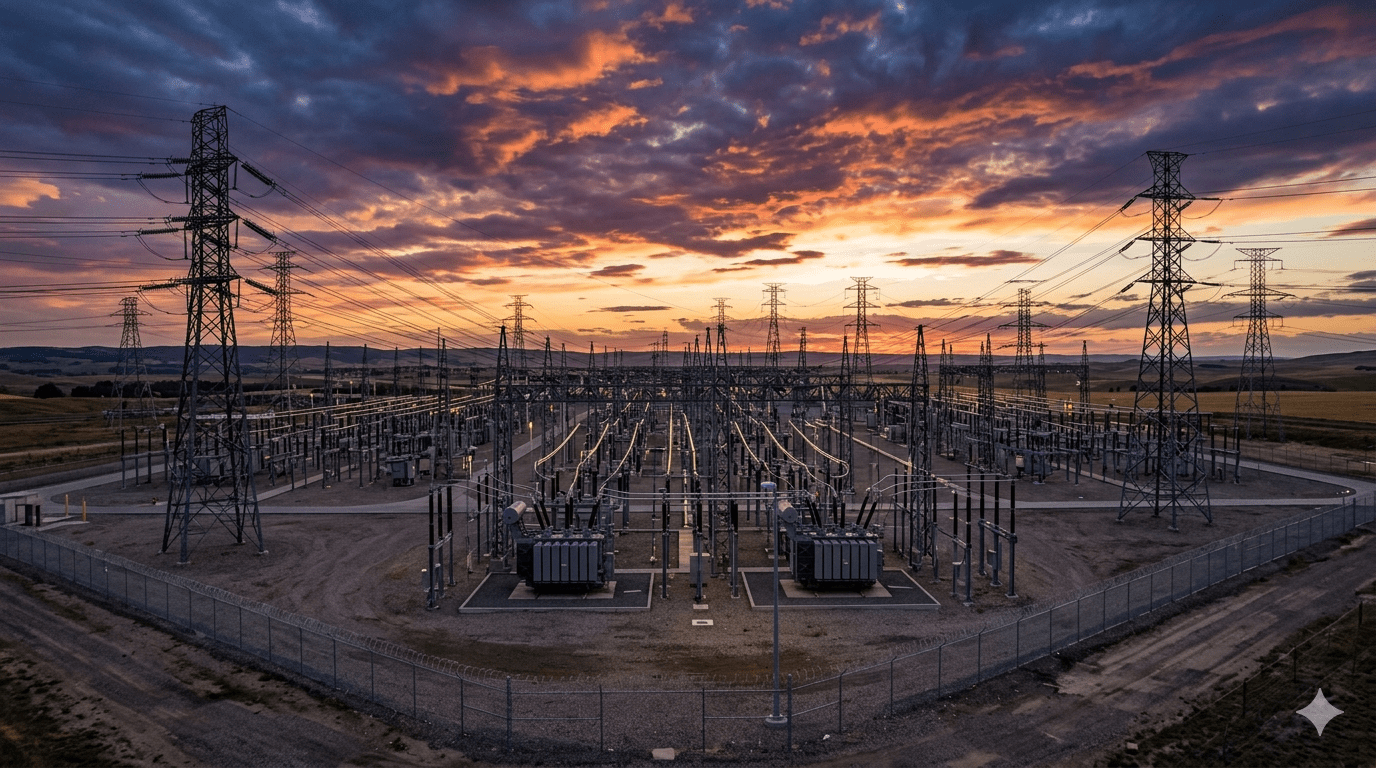
On April 21, the North American Electric Reliability Corporation (NERC) published an alert on data center load stability that has received almost no coverage outside specialist grid circles. NERC’s warning focuses on the risk of sudden, large-scale load losses from data centers. The specific concern is a major AI campus tripping offline unexpectedly, withdrawing hundreds of megawatts from the grid in seconds. The concern is not that data centers consume too much power. That story is, indeed, well covered. The concern is what happens to grid stability when they suddenly stop consuming it.

Grid operators, specifically, design frequency regulation around anticipated load behaviour. A large industrial load that disconnects without warning creates a frequency excursion that the grid must absorb in real time. At conventional industrial scales, the grid has sufficient inertia and reserve generation to manage those events. However, at the scale of modern AI campuses, that assumption is being stress-tested. NERC’s engineering teams consider that stress serious enough to warrant a formal alert. The industry has not responded publicly. That gap is, consequently, worth examining.
Why Sudden Load Loss Is a Different Problem Than High Consumption
The public conversation about data centers and grid stress focuses almost entirely on the demand side. Data centers consume more power. Utilities must generate and transmit that power. The grid, moreover, must expand to accommodate it. All of that is true and consequential. However, it addresses a different engineering problem than the one NERC identified in its April 21 alert.
The Frequency Problem Conventional Grids Were Not Built For
When that balance breaks, frequency deviates from its nominal value. If the deviation is large enough and fast enough, protective relays begin disconnecting equipment. In the worst case, that cascade of disconnections becomes a blackout. Grid operators design reserve generation and demand response resources to absorb these events. Those reserves, however, are sized against historical load behaviour. A 500-megawatt AI campus tripping offline without warning is a frequency event that most regional grids were not designed to manage from a single source.

The Engineering Reality Behind the Alert
NERC’s alert identifies several specific scenarios that elevate the risk of sudden large NERC data center load losses. The first is behind-the-meter generation failure. Data centers that rely on on-site generation as their primary power source face a specific risk. A generation failure forces them to either draw from the grid at massive scale instantaneously or shut down entirely. Either outcome creates a grid stability event.
The second scenario involves coordinated UPS failures across multiple facilities in the same balancing authority area. A software fault, a firmware update, or a common-mode failure in UPS management systems could simultaneously affect multiple sites. The aggregate load loss is, consequently, larger than any single facility event and more difficult for grid operators to manage. As we have covered in our analysis of the mismatch between grid response times and AI demand, the fundamental problem is that grid infrastructure operates on physical timescales measured in cycles, while software-driven failures in data center systems can propagate in milliseconds.
What NERC Is Actually Asking Operators to Do
NERC’s alert is not a regulation. It is, rather, a formal notice that the organisation considers the risk material enough to require attention. The practical requests embedded in the alert, however, fall into three categories. Notification is the first. NERC is asking large data center operators to notify their balancing authority before planned maintenance involving significant load reductions. Operators should also have protocols in place for notifying grid operators during unplanned outages.
The second request concerns coordination with grid operators on protection settings. NERC is asking operators to review those settings with their grid operators. The goal is ensuring that disconnection thresholds align with the grid’s ability to absorb the resulting frequency event. The third request is for operators to participate in demand response programmes that give grid operators a tool for managing large loads before a stability event escalates. As we have covered in our analysis of the demand response opportunity AI data centers keep refusing to take, most large AI infrastructure operators have not engaged meaningfully with demand response. NERC’s alert makes clear that position is no longer sustainable.
The Regulatory Trajectory This Alert Signals
NERC alerts are typically precursors to more formal regulatory action. The organisation’s standard-setting process is slow by design, but alerts create a documented record of known risks that informs both standards development and enforcement. NERC’s alert is, therefore, not simply a technical notice. Data center load behaviour will, as a result, almost certainly become subject to reliability standards that do not currently exist.
That trajectory has, consequently, significant implications for how AI infrastructure operators plan and operate their facilities. The costs of future reliability standards compliance are not currently priced into most data center development models. Those standards will likely include monitoring requirements, notification protocols, and potentially curtailment obligations. Operators who engage with grid operators now and participate in demand response programmes are building relationships that will matter when formal standards arrive. Those who proactively implement NERC’s coordination requests are, consequently, ahead of those who wait. The cost of that head start is modest compared to the cost of mandatory compliance later. As we have covered in our analysis of how data centers cannot self-regulate the grid crisis away, the regulatory window for voluntary action is open but will not remain open indefinitely.
Why the Industry’s Silence Is Itself a Risk
The absence of public response from the data center industry to NERC’s April 21 alert is, indeed, notable and in some respects predictable. Large AI infrastructure operators have legal and communications teams. Those teams advise against responding publicly to regulatory alerts in ways that could be interpreted as acknowledging risk. That instinct is understandable from a liability perspective. It is, however, counterproductive from a regulatory relationship perspective.
Grid operators and reliability organisations have, notably, long memories. An industry that engages constructively with reliability concerns, works with grid operators, and demonstrates operational accountability builds a regulatory relationship that produces workable outcomes. An industry that stays silent until standards are imposed, and then lobbies against them, builds a different kind of relationship. As we have covered in our analysis of dynamic load negotiation between data centers and the grid, the operators who treat the grid relationship as a strategic asset rather than a regulatory constraint are building durable competitive advantages. NERC’s April 21 alert is, ultimately, precisely the kind of moment that separates those two approaches. The industry’s response to this alert will be remembered.











