
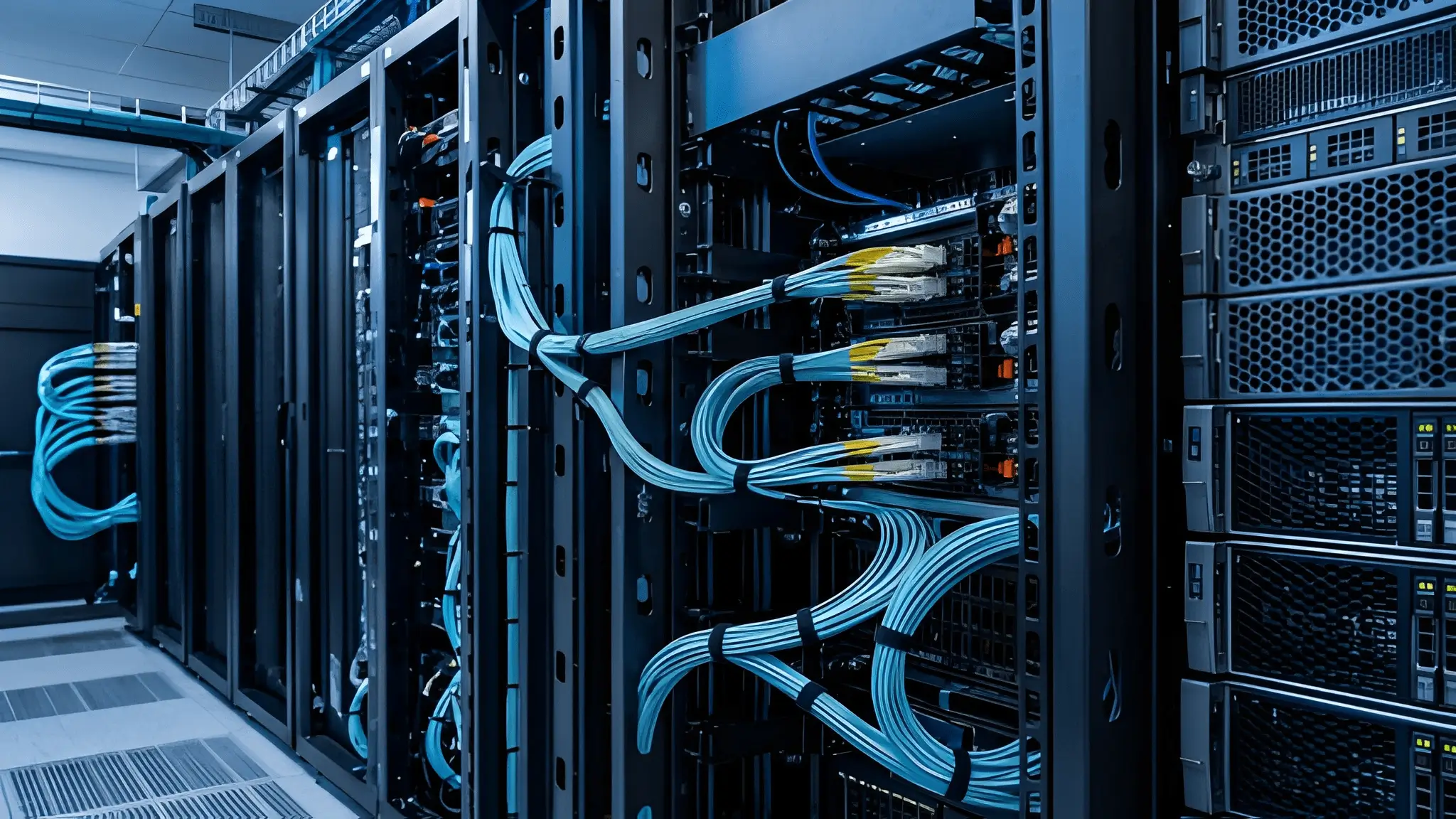
The AI infrastructure race no longer stops at accelerator density, switching capacity, or training scale because physical infrastructure has entered the performance equation in a much deeper way. Inside modern AI halls, operators now pack enormous switching layers, optical trunks, liquid cooling assemblies, and high-bandwidth interconnects into cabinet footprints that leave very little tolerance for routing mistakes. Installation teams once treated cable management as a secondary operational task, yet current deployment models expose every routing decision directly to workload stability. A small deviation in optical handling can now ripple across synchronized training environments where latency consistency matters as much as throughput. GPU fabrics operating at massive scale depend on stable optical transmission paths that remain mechanically protected under constant thermal and operational pressure.

The pressure to deploy faster has also reduced the amount of validation time available during rack commissioning, creating infrastructure conditions where hidden physical stress often survives long after systems enter production. Large AI deployments now resemble compressed industrial ecosystems rather than traditional enterprise environments because every rack contains multiple layers of optical dependency. Dense switching architectures force installers to route thousands of fibers through shrinking pathways that sit beside cooling manifolds, power assemblies, and service access corridors. Operators once focused primarily on logical network efficiency, but current environments increasingly expose physical-layer constraints that software cannot correct after degradation appears. Signal integrity problems rarely begin as catastrophic failures because optical strain usually develops gradually through repeated bending, tension loading, or constrained routing. Maintenance teams often detect the first symptoms through inconsistent communication behavior rather than visible hardware alarms, which makes diagnosis far more difficult inside large distributed clusters.
When Tight Rack Designs Start Crushing Fiber Paths
AI rack density has accelerated far beyond the design assumptions used in many earlier optical deployment strategies because modern cabinet layouts prioritize hardware concentration over serviceability margins. Fiber trunks now move through extremely narrow pathways behind GPU trays, side-channel cooling assemblies, and vertically stacked switch layers where physical clearance continues shrinking with every hardware generation. Routing pressure increases significantly when installers attempt to preserve airflow efficiency while simultaneously managing massive optical counts within confined cabinet structures. Excessive bending introduces microscopic deformation inside optical fibers that alters light propagation characteristics and gradually reduces transmission stability under sustained operational load. High-bandwidth optical systems operating at advanced signaling rates show far lower tolerance for mechanical irregularities because even minor physical distortions can amplify attenuation and reflection behavior across interconnected fabrics. Infrastructure teams increasingly encounter situations where rack architecture itself contributes directly to long-term optical instability rather than simply housing the networking environment.
Mechanical stress rarely appears immediately after installation because optical degradation often develops through cumulative pressure cycles created by cabinet access, thermal expansion, and repeated maintenance activity. Fiber bundles compressed against cabinet frames or cooling hardware gradually lose structural consistency as tension and curvature accumulate over time inside restricted pathways. Optical strain becomes particularly dangerous in synchronized GPU environments where collective communication operations depend on extremely predictable transport behavior between nodes. High-density deployments also increase the probability of accidental microbending during hardware replacement procedures because technicians frequently operate within severely constrained physical access zones. Service teams sometimes reroute temporary slack through unsafe paths during accelerated deployment schedules, which introduces hidden instability that remains invisible during initial validation cycles. Dense AI infrastructure therefore creates operational conditions where improper fiber handling evolves from a maintenance concern into a persistent performance reliability issue.

The Silent Packet Loss Problem Inside AI Fabrics
Optical degradation inside AI fabrics rarely produces dramatic outages because most modern networking environments compensate for transmission irregularities through layered correction mechanisms that mask early-stage physical failures. Forward error correction systems can absorb portions of degraded optical behavior, yet persistent correction activity still increases latency inconsistency across distributed GPU communication patterns. Packet retransmissions generated by unstable optical paths often remain buried beneath higher-level workload telemetry, making root-cause identification extremely difficult during large training operations. AI environments depend heavily on synchronized data exchange between accelerators, so even intermittent transport instability can reduce cluster efficiency during collective communication stages. Engineers increasingly observe situations where application slowdowns correlate with elevated optical correction metrics rather than switching hardware faults or software-level congestion. Physical-layer strain has therefore become a growing operational concern because degraded routing conditions can silently erode performance long before administrators detect visible failures.
Network telemetry now reveals that inconsistent optical performance frequently manifests as fluctuating latency behavior instead of traditional link-down events because advanced fabrics maintain operational continuity despite transmission instability. High-speed interconnect environments operating across massive east-west traffic patterns expose every small optical inconsistency through amplified synchronization delays between distributed GPU resources. Training environments processing large model workloads depend on deterministic communication timing, which means packet correction activity can influence iteration efficiency even when throughput measurements appear acceptable. Infrastructure teams often focus on switch counters and traffic engineering while overlooking the physical cable environment responsible for hidden retransmission behavior. Accelerated deployment timelines have also reduced the depth of physical inspection performed during expansion projects, allowing strained cable paths to survive inside production fabrics without immediate remediation. Consequently, operators now require far more detailed optical telemetry and validation practices to identify infrastructure conditions that traditional monitoring approaches fail to capture.
AI Data Centers Are Running Out of “Safe” Cable Space
Modern AI halls now contain unprecedented optical density because large accelerator clusters demand enormous east-west connectivity volumes between racks, switching layers, and storage infrastructure. Routing pathways that once supported moderate enterprise traffic now carry extremely dense fiber assemblies positioned beside liquid cooling pipes, power distribution units, and high-capacity airflow management structures. Physical separation between optical infrastructure and surrounding mechanical systems continues shrinking as operators attempt to maximize deployment efficiency within fixed facility footprints. Installation teams frequently encounter routing conflicts where maintaining proper bend geometry becomes increasingly difficult due to overlapping infrastructure demands inside crowded cabinet rows. The introduction of direct-to-chip liquid cooling systems has intensified these challenges because coolant distribution hardware occupies space previously reserved for structured cable management pathways. AI facilities therefore face a growing infrastructure reality where available routing space no longer aligns comfortably with the physical requirements of modern optical environments.
Rapid deployment schedules further complicate optical routing integrity because hyperscale AI projects often prioritize operational activation timelines over long-term cable discipline standards. Contractors working within compressed installation windows may introduce excessive slack accumulation, unsupported bundle tension, or improvised routing paths that later create maintenance and stability complications. Fiber trunks routed through partially obstructed pathways frequently experience localized pressure points that remain hidden until thermal expansion or cabinet servicing increases mechanical stress. Expansion activity inside live AI environments also introduces additional routing complexity because new optical pathways must coexist with already saturated infrastructure corridors. Serviceability deteriorates sharply when cable density exceeds manageable thresholds because technicians lose the physical access required to preserve safe handling procedures during repairs or upgrades. AI infrastructure operators increasingly recognize that routing capacity itself has become a strategic limitation within next-generation deployment planning.
Why Optical Health Can No Longer Be a Post-Deployment Check
Traditional data center validation models treated optical certification as a commissioning task performed before production activation, yet AI infrastructure now requires continuous physical-layer visibility throughout operational lifecycles. High-bandwidth fabrics operate under sustained traffic intensity that exposes small optical irregularities far more aggressively than conventional enterprise workloads. Mechanical strain conditions can evolve after deployment through thermal cycling, cabinet vibration, maintenance intervention, or incremental hardware expansion that alters cable positioning over time. Infrastructure teams increasingly deploy telemetry-driven monitoring systems capable of tracking optical power variation, error correction trends, and link-quality instability before application performance deteriorates. Continuous validation practices now extend beyond simple pass-fail testing because operators require deeper visibility into gradual degradation patterns developing inside live production environments. Preventive optical maintenance has therefore become essential for preserving stable communication behavior across large distributed AI systems.
Real-time optical analytics also support operational planning because administrators can identify stressed pathways before maintenance activity or workload expansion amplifies existing infrastructure weaknesses. AI clusters operating at extremely high utilization levels provide very little tolerance for unexpected transport instability during synchronized training operations. Facilities teams increasingly integrate optical telemetry into broader infrastructure observability platforms so physical-layer conditions receive the same operational attention as thermal metrics and network utilization data. Continuous monitoring allows engineers to correlate retransmission spikes, latency irregularities, and correction activity directly with specific cable segments or routing zones inside large deployments. Structured validation workflows additionally improve installation accountability because teams can verify whether newly deployed pathways maintain acceptable mechanical conditions after activation. Meanwhile, infrastructure operators now view optical health management as an ongoing operational discipline rather than a final commissioning checklist item.
The New AI Infrastructure Risk Hidden Behind Rack Doors
Many AI infrastructure failures now originate from ordinary installation shortcuts rather than advanced hardware defects because rushed deployment activity often weakens physical-layer reliability before workloads even begin running. Unmanaged slack loops, compressed fiber bundles, and unsupported cable transitions create hidden mechanical pressure zones that gradually destabilize optical transmission behavior inside dense rack environments. Cabinet interiors frequently contain overlapping power feeds, cooling hardware, and optical trunks positioned within extremely limited service space, increasing the likelihood of accidental strain during maintenance procedures. Engineers servicing GPU hardware sometimes disturb tightly packed fiber assemblies simply because safe access pathways no longer exist inside overcrowded cabinet layouts. Repeated cabinet access compounds these conditions over time because every intervention introduces additional movement, friction, and handling pressure across already stressed optical pathways. Infrastructure reliability increasingly depends on disciplined physical organization practices that reduce mechanical risk before instability reaches production traffic.
Operational teams now treat cable governance as a reliability engineering concern because unmanaged physical infrastructure directly influences communication consistency across distributed AI environments. Poor labeling discipline and undocumented rerouting activity make troubleshooting significantly harder when optical instability emerges inside large clusters containing thousands of interconnect pathways. Accelerated expansion projects often introduce mixed installation standards across deployment phases, which creates inconsistent routing quality throughout the same facility environment. AI operators also face growing pressure to minimize service interruption windows, causing some maintenance activities to occur within partially energized infrastructure corridors where careful optical handling becomes more difficult. Dense optical assemblies positioned near liquid cooling infrastructure add another layer of operational risk because maintenance access frequently requires navigating around mechanically sensitive routing zones. Physical-layer discipline has therefore evolved into a strategic operational requirement rather than a secondary facilities management responsibility.
AI Scale Will Depend on Physical-Layer Discipline
The next phase of AI infrastructure growth will depend heavily on how precisely operators manage optical environments inside increasingly dense deployment architectures. Hardware capability alone cannot guarantee stable large-scale training behavior when routing strain, unmanaged cable pressure, and installation shortcuts quietly degrade transport consistency across interconnected GPU fabrics. Facilities teams now face infrastructure conditions where mechanical precision carries direct operational consequences for synchronization stability, latency behavior, and long-term reliability. Structured cable pathways, disciplined bend management, and continuous optical validation practices will become foundational requirements for sustaining advanced AI environments at scale. Future deployment strategies must account for physical-layer sustainability during initial design stages rather than attempting corrective remediation after instability appears in production systems. AI infrastructure maturity increasingly depends on operational rigor surrounding optical installation quality, routing governance, and long-term mechanical integrity.
Large-scale AI environments will continue pushing optical infrastructure toward higher density and tighter operational tolerances as interconnect requirements expand across next-generation accelerator architectures. Organizations investing heavily in advanced GPU fabrics must therefore recognize that infrastructure reliability begins inside the physical pathways carrying those optical signals throughout the facility environment. Maintenance strategy, installation discipline, and routing validation now influence operational outcomes just as strongly as switching architecture or accelerator density within modern AI halls. Physical-layer oversight can no longer remain isolated within facilities management because communication stability increasingly depends on coordinated visibility across infrastructure, networking, and operational engineering teams. Long-term resilience will come from environments that treat optical integrity as a continuously managed operational parameter instead of a static deployment milestone. The future stability of large AI clusters may ultimately depend less on hardware scale and far more on the precision applied behind every rack door.











