
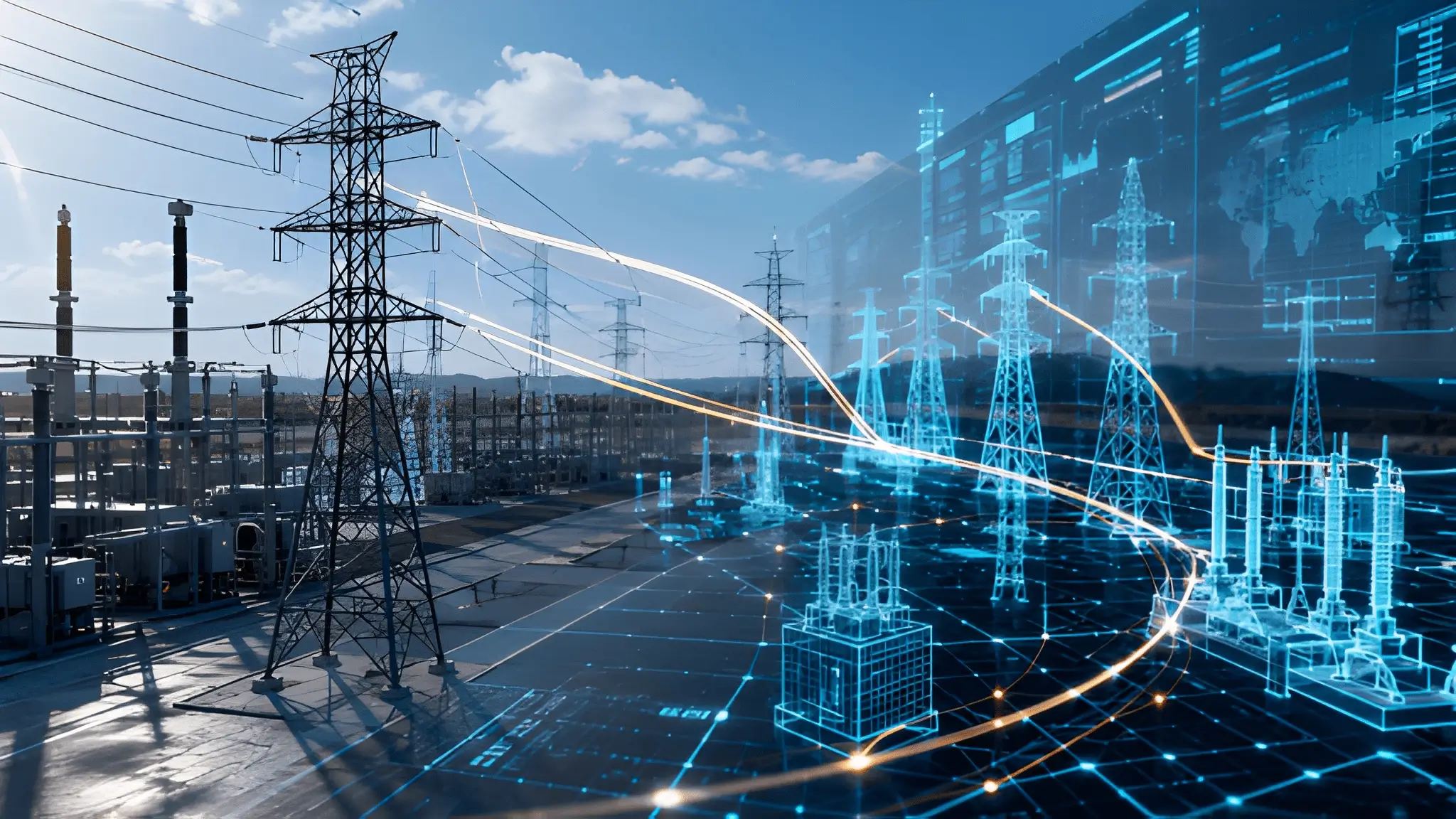
A utility planner reviewing a proposed multi-gigawatt campus faces a challenge that extends far beyond identifying available land or securing transmission access. Large-scale computing facilities introduce highly concentrated demand profiles that can alter voltage stability, thermal loading, fault currents, and regional power flows across multiple transmission zones. Traditional transmission planning processes often rely on long-term load forecasts and sequential infrastructure assessments, yet new infrastructure proposals can introduce several gigawatts of demand within a single development cycle. That shift places significant pressure on interconnection teams, transmission operators, and developers attempting to determine whether a project can operate reliably before substantial capital commitments occur. Digital replica environments now provide a way to evaluate those questions before physical construction begins. These environments combine grid physics, operational telemetry, and advanced computational models to examine how future infrastructure may behave under thousands of operating conditions.

Utilities increasingly rely on advanced simulation platforms because the financial consequences of inaccurate assumptions continue to rise. A transmission upgrade can require years of permitting and construction, while an incorrect demand forecast can leave regional infrastructure underprepared for future loading conditions. Virtual system models allow planners to test network behavior under realistic operating scenarios rather than relying solely on static engineering snapshots. By integrating detailed representations of substations, transmission corridors, generation resources, and load behavior, planners can evaluate the consequences of proposed developments with much greater precision. These capabilities have become especially valuable when assessing projects that may introduce several gigawatts of demand into already constrained regional networks. As a result, sophisticated simulation workflows are moving from research environments into mainstream utility planning processes.
The 18-Month Queue Problem Digital Twins Are Quietly Solving
Interconnection studies have become one of the most significant bottlenecks facing large-scale energy consumers and infrastructure developers. Regional transmission organizations and utilities must evaluate whether new projects can connect without creating reliability concerns, yet growing volumes of applications have expanded study queues considerably. Developers proposing several gigawatts of demand often wait many months before receiving detailed engineering assessments that identify required upgrades and associated costs. During that period, project economics remain uncertain because network reinforcement obligations can materially alter total investment requirements. Conventional workflows frequently require engineers to build multiple study cases manually and evaluate a wide range of contingency scenarios sequentially. Digital modeling platforms can automate scenario generation, data integration, and model management tasks while preserving engineering rigor and traceability.
Large-scale simulation environments provide planners with the ability to examine thousands of operational permutations within compressed timeframes. Instead of relying exclusively on isolated load-flow cases, engineers can evaluate dynamic interactions across broader portions of the network while maintaining consistency with established reliability frameworks. Detailed system representations enable rapid testing of equipment ratings, voltage performance, protection coordination, and contingency responses without repeatedly rebuilding models from scratch. Project teams gain earlier visibility into infrastructure limitations, allowing them to identify mitigation strategies before formal studies reach advanced stages. Utility operators also benefit because resources can focus on validating results rather than generating every scenario manually. Consequently, these workflows allow planners to evaluate larger numbers of scenarios more efficiently while compliance requirements established through reliability standards remain incorporated into the assessment process.

Physics-Informed AI vs. Spreadsheet Assumptions: Where Accuracy Compounds
Large demand additions often expose limitations that remain hidden within traditional planning assumptions. Static engineering spreadsheets can estimate equipment loading and forecast aggregate demand growth, yet they rarely capture the dynamic interactions that occur when multiple system variables change simultaneously. Advanced computational environments evaluate transmission constraints, reactive power requirements, generation dispatch patterns, and protection system responses within a unified framework. This broader analytical scope allows planners to identify emerging reliability issues before they become embedded in project designs. Detailed representations of network topology also improve visibility into how localized infrastructure changes can influence conditions across an interconnected transmission system. As planning complexity increases, higher-fidelity modeling becomes a practical necessity rather than an analytical enhancement.
Fault behavior represents another area where detailed computational models deliver meaningful advantages. Large demand centers can alter fault current levels, affect breaker duties, and influence protection system performance across multiple network segments. Traditional approaches often evaluate these conditions through discrete study cases that examine specific operating points independently. Advanced simulation platforms assess a broader range of operating states while preserving adherence to established electrical principles. Engineers can observe how equipment responds during abnormal events and determine whether protection schemes continue to perform as intended under changing network conditions. This level of insight strengthens infrastructure planning and supports more informed investment decisions across transmission portfolios.
Simulating the Unbuilt: Stress-Testing Hypothetical Campuses at 120% Peak
Infrastructure developers increasingly seek answers before construction activity begins because uncertainty surrounding grid readiness can significantly influence project viability. Virtual planning environments enable engineers to create detailed representations of proposed facilities and evaluate their interactions with surrounding transmission infrastructure. These models can incorporate expected demand profiles, equipment configurations, backup generation resources, and operational schedules without requiring physical assets to exist. Engineers then subject those virtual facilities to a wide range of operating conditions designed to reveal potential vulnerabilities. Such analysis provides stakeholders with a deeper understanding of infrastructure requirements before major capital commitments occur. Planning decisions therefore become grounded in evidence generated from realistic system behavior rather than theoretical assumptions alone.
Testing facilities beyond expected operating limits provides additional value during development planning. Engineers frequently examine performance under conditions that exceed anticipated peak demand in order to evaluate infrastructure resilience and operational flexibility. Simulated overload conditions can expose thermal constraints, transformer limitations, voltage regulation challenges, and transmission bottlenecks that might not appear during normal operating scenarios. Contingency studies can also assess how the network responds when critical equipment becomes unavailable because of maintenance activities or unexpected outages. Decision-makers gain visibility into weaknesses that may otherwise remain undiscovered until after commissioning. Identifying those issues early allows mitigation measures to be incorporated into project designs before costs escalate significantly.
Time-Series Reality: Why Static Snapshots Miss AI’s Volatile Power Draw
Traditional planning studies frequently rely on representative operating snapshots that capture system conditions at specific moments in time. While these snapshots remain useful for evaluating certain engineering questions, they may not fully represent rapidly changing demand characteristics associated with large computing environments. High-performance computing workloads can shift significantly within short intervals as processing tasks begin, conclude, or migrate between facilities. These fluctuations create electrical behaviors that differ materially from conventional industrial demand profiles. Engineers therefore require analytical methods capable of examining how infrastructure responds across continuous operating periods rather than isolated moments. Time-series simulation provides that perspective by evaluating system performance through detailed chronological analysis.
Voltage quality considerations represent another area where time-based simulation provides meaningful insight. Rapid changes in demand can create localized voltage fluctuations that affect equipment performance and system stability. Traditional planning studies may identify broad voltage concerns, yet they often lack sufficient temporal granularity to evaluate short-duration disturbances comprehensively. Chronological simulation environments allow engineers to examine how infrastructure responds during rapid transitions and determine whether mitigation measures are necessary. Detailed visibility into transient behavior supports more effective planning for substations, transmission equipment, and voltage regulation resources. Consequently, organizations can address potential reliability concerns before they affect operational performance.
Regulatory Leverage: Turning Simulation Data Into Faster Interconnect Approval
Regulatory review processes depend heavily on technical evidence that demonstrates a proposed project can operate without compromising system reliability. Utilities, transmission operators, and market administrators require extensive engineering documentation before approving major interconnections. Advanced simulation platforms provide planners with detailed scenario-based datasets that complement conventional study approaches. Detailed scenario analysis allows stakeholders to examine infrastructure performance across a broad range of operating conditions and contingency events. Decision-makers receive greater visibility into potential risks as well as mitigation strategies designed to address identified concerns. More comprehensive evidence can improve the efficiency of technical review processes while maintaining rigorous engineering standards.
Project developers also benefit when simulation results support earlier engagement with utilities and transmission organizations. Engineering teams can identify likely infrastructure requirements before formal studies advance through lengthy review cycles. This visibility enables developers to refine project configurations, evaluate alternative connection strategies, and estimate upgrade obligations with greater confidence. Utility planners receive better-quality information at earlier stages of the process, which can reduce uncertainty during technical evaluations. Improved transparency strengthens collaboration between stakeholders responsible for delivering large infrastructure projects. Moreover, planning discussions become more productive when all participants rely on detailed analytical evidence generated from common system models.
The New Diligence Standard: What a 5GW Site Looks Like When the Twin Says ‘Go’
A favorable outcome within a virtual planning environment can provide important technical input during the development lifecycle of large energy-intensive facilities. Engineers evaluate whether transmission capacity, voltage performance, equipment ratings, contingency resilience, and operational flexibility satisfy predefined planning objectives. Successful assessments indicate that the surrounding network can support expected demand without introducing unacceptable reliability risks. Financial stakeholders also gain greater confidence because infrastructure requirements become more visible before major expenditures occur. Technical diligence increasingly depends on evidence generated through comprehensive simulation rather than assumptions derived from limited datasets. Project readiness therefore begins long before construction equipment arrives on site.
Investment decisions benefit substantially from greater visibility into future infrastructure performance. Detailed simulation results allow developers to estimate upgrade requirements, operational costs, and project timelines with improved accuracy. Utilities gain insight into transmission expansion needs while evaluating how proposed developments align with broader network planning objectives. Engineering teams can prioritize mitigation measures based on quantified system impacts rather than generalized risk assessments. These capabilities support stronger capital allocation decisions across both public and private infrastructure portfolios. Reliable planning data ultimately reduces uncertainty throughout the project development process.
Ultimately, infrastructure development increasingly begins inside sophisticated software environments rather than exclusively within engineering drawings and construction schedules. Comprehensive virtual representations allow planners to evaluate technical feasibility, economic implications, and operational resilience long before physical assets are deployed. Organizations can test assumptions, identify vulnerabilities, and refine project designs using evidence generated through realistic system behavior. Yet the value extends beyond risk reduction because these capabilities also improve collaboration between utilities, developers, regulators, and investors. Planning decisions become more informed when stakeholders share a common understanding of future infrastructure performance. For multi-gigawatt projects, the decision to break ground now depends as much on virtual validation as it does on physical site preparation.











