
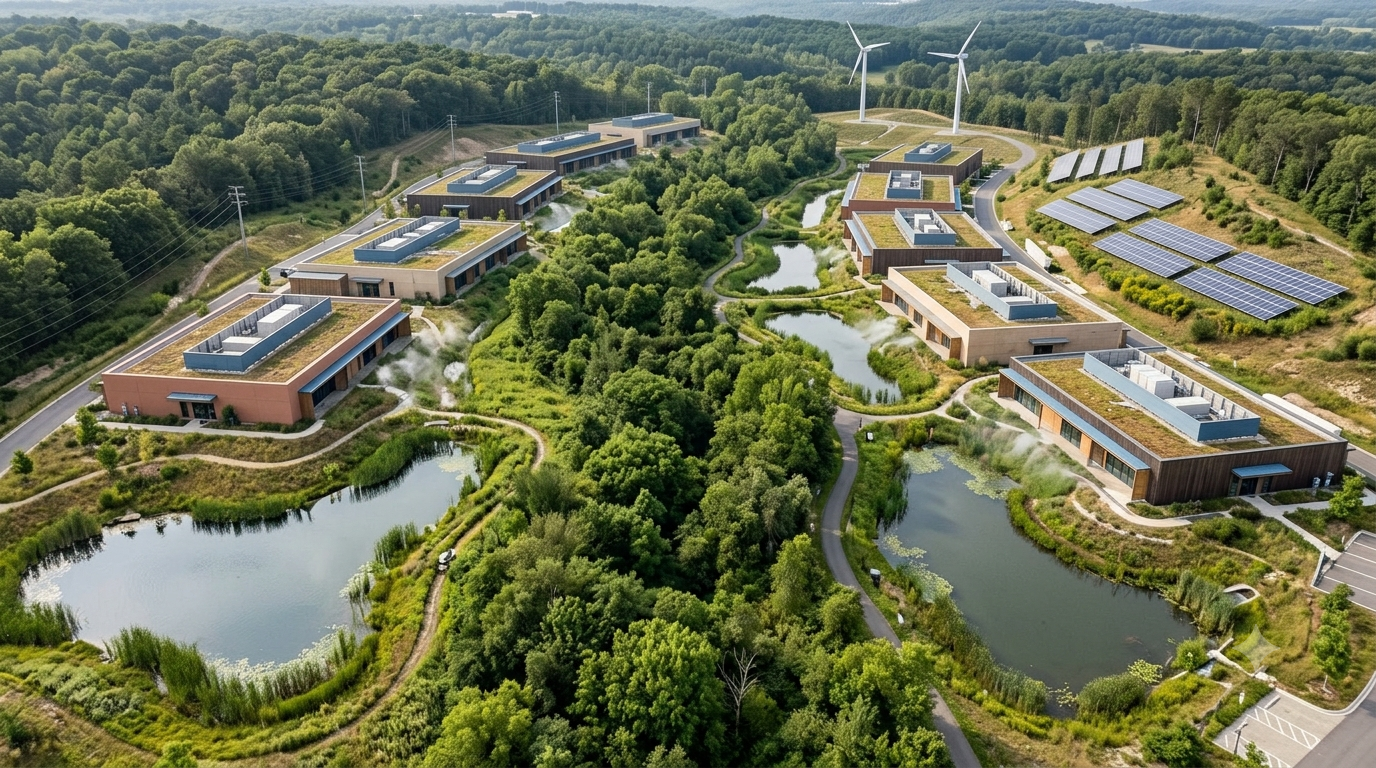
Artificial intelligence has transformed the conversation around digital infrastructure. New facilities now require far more power, cooling, and physical space than traditional enterprise data centers. Governments and investors increasingly focus on electricity availability when selecting future sites. Yet another resource deserves equal attention during planning decisions. Land determines how efficiently operators can build, expand, and coexist with surrounding communities. A responsible approach to site selection therefore supports sustainable digital growth while protecting environmental and social value.

Land Has Become Strategic Infrastructure
The AI boom has accelerated demand for hyperscale campuses across every major market. Large facilities now occupy hundreds of acres to support future expansion plans. Developers also need room for substations, cooling equipment, batteries, and transmission infrastructure. Available land close to reliable electricity has become increasingly scarce. Every successful project now depends on balancing technical requirements with environmental responsibility. Smart planning creates long-term value instead of short-term construction gains. Modern AI campuses differ from conventional industrial developments in several important ways. They require extensive fiber connectivity alongside resilient electrical infrastructure. Cooling systems often influence site layouts before buildings are even designed. Operators also evaluate flood risks, seismic activity, and long-term climate resilience. Every decision affects operational efficiency throughout the facility’s lifetime. Responsible land planning therefore begins years before construction starts.
Site Selection Shapes Long-Term Sustainability
Selecting the right location extends beyond finding available land. Developers must understand local ecosystems, water resources, transportation links, and nearby communities. Poor planning often creates delays through environmental reviews or public opposition. Strong site assessments reduce project risks while improving long-term operational certainty. Careful evaluation also protects biodiversity and minimizes unnecessary land disturbance. Sustainable growth begins with informed decisions rather than rapid expansion. Environmental assessments now influence infrastructure investment more than ever before. Investors increasingly evaluate climate resilience alongside financial returns. Wetlands, protected habitats, and agricultural land require careful consideration during planning. Responsible developers often prioritize previously developed industrial sites whenever practical. Brownfield redevelopment reduces pressure on undeveloped landscapes while supporting local economic renewal. These choices strengthen environmental performance throughout the project’s lifecycle.
Communities Have Become Critical Stakeholders
Data centers increasingly operate within expanding urban and suburban regions. Local communities now expect meaningful engagement before construction begins. Residents want clear information about traffic, noise, employment, and environmental impacts. Transparent communication builds trust throughout the development process. Community participation also helps developers identify local concerns before permitting advances. Early collaboration often prevents expensive delays during later project stages. Public acceptance increasingly determines whether major infrastructure projects move forward successfully. Several recent developments across North America and Europe faced delays after community resistance emerged. Many concerns focused on land use rather than computing technology itself. Residents questioned landscape changes, industrial expansion, and supporting utility infrastructure. Developers who address these issues early often achieve stronger long-term relationships. Responsible land stewardship therefore supports both operational success and public confidence.

Brownfield Sites Offer Long-Term Advantages
Brownfield redevelopment has become increasingly attractive for hyperscale data center projects. Former industrial sites often include existing utility connections and transport infrastructure. These locations can reduce development timelines and minimize environmental disruption. Redeveloping previously disturbed land also limits pressure on natural landscapes. Local governments frequently support these projects through planning incentives and infrastructure upgrades. The approach aligns economic development with more responsible land management. Existing industrial zones also simplify grid integration for new facilities. Transmission corridors frequently already serve manufacturing or logistics operations nearby. Fiber connectivity often requires fewer upgrades than undeveloped rural locations.
Biodiversity Cannot Become an Afterthought
Data center expansion increasingly overlaps with environmentally sensitive regions worldwide. Responsible developers assess ecological impacts before selecting final project locations. Habitat fragmentation remains an important consideration during land planning exercises. Native vegetation, wetlands, and wildlife corridors deserve protection throughout construction activities. Environmental restoration plans should accompany large infrastructure developments whenever practical. Long-term stewardship strengthens both environmental outcomes and corporate credibility. Climate resilience now influences biodiversity planning across infrastructure sectors. Rising temperatures, flooding, and drought affect both ecosystems and facility operations. Developers increasingly integrate natural landscape features into project designs. Green buffers reduce runoff while supporting local ecological balance. Native planting also improves visual integration with surrounding communities. Responsible land management therefore extends beyond construction completion.
Infrastructure Extends Beyond the Data Center
A hyperscale campus depends upon much more than its server buildings. Electrical substations, transmission lines, cooling systems, and fiber routes require additional land. Supporting infrastructure frequently occupies larger areas than operators initially anticipate. Careful planning minimizes unnecessary environmental impacts during future expansion phases. Shared infrastructure corridors also reduce duplication across neighboring developments. Integrated planning improves both efficiency and sustainability. Power availability increasingly shapes where developers invest globally. Many regions possess suitable land but insufficient electrical capacity. Others have renewable generation without nearby transmission infrastructure. Coordinated planning between utilities and developers addresses these constraints effectively.
Water Resources Influence Land Decisions
Cooling requirements significantly influence modern site selection processes. Some AI facilities consume substantial water depending on climate and cooling technology. Developers therefore evaluate local water availability before purchasing land. Water-stressed regions require different engineering approaches than cooler climates. Closed-loop cooling and recycled water systems reduce operational pressure on communities. Responsible planning protects both infrastructure resilience and shared natural resources. Local hydrology studies have become standard practice for major developments. Floodplain mapping helps protect expensive digital infrastructure from future climate risks. Groundwater assessments support responsible resource management throughout facility operations.
Flexibility Supports Future Expansion
AI infrastructure evolves far faster than traditional commercial real estate. Facilities designed today may require substantial expansion within several years. Developers increasingly reserve adjacent land for future buildings and utility upgrades. Flexible master plans reduce disruption during later construction phases. Expansion strategies also improve long-term investment returns for infrastructure owners. Forward-looking land planning supports changing technology requirements.
Policy Now Shapes Responsible Development
Governments increasingly recognize land as a strategic digital infrastructure resource. Planning policies now influence where AI capacity can expand responsibly. Clear zoning frameworks reduce uncertainty for investors and local authorities. Predictable regulations also shorten permitting timelines without compromising environmental safeguards. National infrastructure strategies increasingly integrate land, power, and connectivity planning. Balanced policy creates stronger outcomes for both industry and society. Public agencies also encourage developers to adopt higher environmental standards voluntarily. Several jurisdictions now require biodiversity assessments before approving large infrastructure projects. Environmental reporting has become more detailed across major global markets.
Responsible Planning Creates Long-Term Value
Land decisions influence operational performance throughout a facility’s entire lifespan. Poor site selection creates risks that remain difficult to correct later. Responsible planning improves resilience against environmental and operational challenges. Developers also reduce future expansion costs through smarter master planning. Investors increasingly recognize these advantages during project evaluations. Sustainable growth begins with disciplined infrastructure planning. Economic benefits also extend beyond individual data center operators. Well-planned campuses attract suppliers, construction firms, and digital service providers. Regional economies often benefit from supporting infrastructure investments. Workforce development programs frequently accompany major technology projects. These advantages become more sustainable when communities support long-term development. Responsible land stewardship strengthens those relationships from the beginning.
AI Infrastructure Needs More Than Available Land
Artificial intelligence has accelerated global demand for digital infrastructure at an unprecedented pace. Available land alone no longer guarantees successful project development. Developers must evaluate power, water, biodiversity, connectivity, and community expectations together. Every factor contributes to long-term operational resilience and public acceptance. Successful projects increasingly reflect integrated planning rather than isolated engineering decisions. That approach will define the next generation of AI infrastructure.
Looking Beyond the Next Data Center
The conversation around AI infrastructure often focuses on GPUs, electricity, and cooling technologies. Those elements remain essential, but they represent only part of the equation. Land determines how digital infrastructure interacts with ecosystems, economies, and communities for decades. Every responsible site creates opportunities for sustainable growth without unnecessary environmental compromise. Every poorly planned location creates costs that extend far beyond construction budgets. The future of AI infrastructure therefore depends as much on responsible land stewardship as technological innovation itself.











