
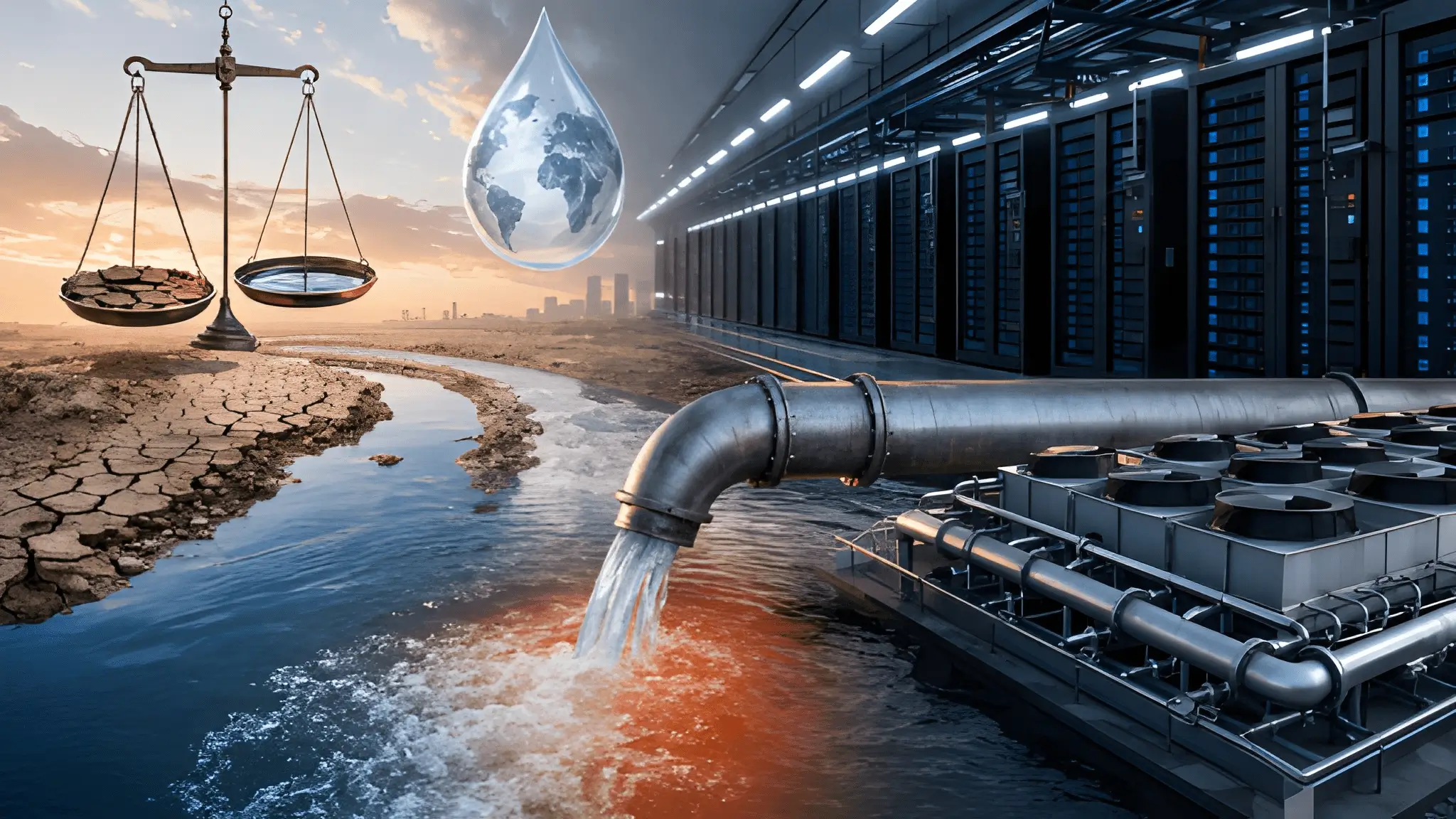
Modern infrastructure planning increasingly evaluates water regulation alongside electricity availability because environmental permitting requirements can materially influence project development, operating conditions, and expansion planning before construction reaches full scale. Project teams often discover that river temperature standards, wastewater discharge conditions, and basin sustainability rules introduce operational ceilings that electrical capacity alone cannot solve. Developers evaluating hyperscale projects routinely assess hydrological conditions alongside transmission availability because environmental permitting requirements influence project feasibility, cooling strategies, and long-term operating planning. Local permitting agencies also rely on increasingly sophisticated watershed models that measure cumulative environmental effects rather than reviewing each facility in isolation, making historical permitting assumptions less dependable for new developments. Water availability and receiving-water constraints have become established site-selection considerations because thermal discharge limits and wastewater permitting requirements can affect the suitability of otherwise well-served locations.

When “One Degree Hotter” Fails the River Test
Thermal discharge regulation depends on protecting aquatic ecosystems instead of simply measuring the total volume of cooling water released from industrial facilities. Under the United States Clean Water Act, discharge permits frequently establish maximum receiving-water temperature increases that operators cannot exceed beyond designated mixing zones, even when facilities remain within their allocated withdrawal rights. Those limits account for seasonal river flows, fish habitat requirements, dissolved oxygen conditions, and cumulative upstream thermal loading that together determine ecological resilience. A data center operating efficiently from an electrical perspective may therefore encounter operational restrictions because warmer seasonal conditions reduce the environmental capacity of nearby rivers. Consequently, identical cooling systems can receive different permit conditions depending on watershed characteristics rather than equipment performance or energy efficiency alone. Thermal compliance requires ongoing operational monitoring because discharge permit conditions remain enforceable throughout a facility’s operating life rather than ending after project approval.
Design choices increasingly reflect these environmental constraints because cooling architecture determines both regulatory flexibility and future expansion potential under evolving watershed conditions. Once downstream temperature thresholds approach regulatory limits, operators may deploy supplemental heat rejection equipment, adjust cooling operations, or implement other operational measures necessary to maintain permit compliance. Such interventions create financial consequences because infrastructure originally designed for full utilization cannot consistently deliver expected computational output throughout warmer operating periods. Closed-loop cooling systems, hybrid cooling towers, reclaimed water integration, and advanced heat exchange technologies offer mitigation pathways, although each solution introduces additional capital expenditure and operational complexity. Hydrological modeling therefore becomes an engineering discipline closely integrated with digital infrastructure development rather than remaining an external environmental review performed near project completion. Project developers commonly incorporate long-term hydrological and climate information into environmental assessments because these factors support permitting evaluations and long-term operational planning.
Drought Maps Are Becoming Data Center Maps
Water availability increasingly shapes infrastructure geography because basin-level resource assessments now influence permitting confidence alongside electrical transmission planning. Regional drought classifications, groundwater sustainability programs, watershed allocation policies, and long-term climate projections collectively provide investors with indicators that extend far beyond annual precipitation statistics. Site selection for large infrastructure projects commonly compares hydrological conditions across multiple jurisdictions because dependable water resources and regulatory requirements influence long-term project feasibility. Areas experiencing persistent water stress often introduce stricter withdrawal conditions, enhanced environmental reviews, and greater public scrutiny that collectively extend development timelines despite favorable electrical infrastructure. Meanwhile, regions with comparatively greater freshwater availability may offer broader water resource capacity, subject to applicable environmental permitting requirements and watershed conditions. Strategic portfolio planning therefore incorporates basin-scale environmental intelligence during the earliest screening exercises rather than treating drought conditions as isolated operational risks.

Geographic investment patterns increasingly reflect these realities because developers seek locations where environmental compliance remains sustainable throughout the operational lifespan of large computing campuses. The Pacific Northwest continues attracting interest through comparatively abundant surface water resources, cooler climatic conditions, and established renewable electricity networks that together support more resilient cooling strategies. Great Lakes states possess substantial freshwater resources that make them notable locations for evaluating water-dependent industrial development alongside other site-selection factors.
Nordic countries similarly benefit from cooler ambient temperatures, significant renewable generation, and substantial freshwater availability that collectively reduce thermal management challenges while supporting lower cooling energy requirements. These regional advantages do not eliminate environmental permitting obligations, yet they reduce exposure to the operational uncertainty associated with increasingly constrained water basins. Corporate expansion strategies therefore balance latency, power availability, tax incentives, workforce access, and watershed resilience as interconnected variables within a single investment framework rather than evaluating each independently.
The Cost of Every Gallon You Can’t Put Back
Wastewater management has become a material operating expense because compliance obligations extend well beyond treatment before discharge into receiving systems. Municipal utilities increasingly apply industrial sewer surcharges that reflect wastewater strength, discharge volume, temperature, and treatment complexity instead of relying upon uniform commercial rate structures. Facilities using advanced cooling technologies must therefore evaluate not only water acquisition costs but also the financial implications associated with returning process water under increasingly detailed permit conditions. Industrial operators located within sensitive watersheds may also encounter discharge limitations that require additional treatment infrastructure before wastewater reaches municipal collection systems or natural receiving waters. Furthermore, environmental permitting authorities increasingly assess cumulative watershed impacts through integrated planning frameworks that influence future operating flexibility alongside current compliance obligations. Financial planning for industrial facilities commonly includes recurring wastewater treatment and compliance costs because these expenses contribute to ongoing operating expenditures.
Several jurisdictions now require zero-liquid-discharge systems or equivalent water recovery strategies where conventional wastewater discharge presents unacceptable environmental risks under local regulatory frameworks. These systems recover substantial portions of process water through advanced filtration, evaporation, crystallization, and chemical treatment technologies that significantly reduce liquid discharge volumes. Although recovery improves environmental performance, operators accept higher capital investment, increased energy consumption, more complex maintenance requirements, and concentrated waste handling obligations throughout facility operations. Evaporation losses also influence permitting economics because each gallon removed from the watershed affects replenishment calculations, regional sustainability targets, and long-term resource management planning. Water accounting supports operational planning by helping organizations evaluate water consumption, treatment requirements, and regulatory compliance throughout a facility’s lifecycle. Executive leadership increasingly reviews hydrological operating costs with the same analytical rigor traditionally reserved for electricity procurement because both variables now shape long-term infrastructure competitiveness.
Counties That Say No After You’ve Broken Ground
Receiving initial development approval no longer guarantees uninterrupted expansion because environmental permitting remains subject to continuing regulatory oversight throughout the construction and operational lifecycle. Local governments frequently impose phased compliance conditions that require developers to demonstrate ongoing adherence to water quality standards before additional construction proceeds. Public agencies also reassess permits when updated hydrological studies, changing watershed conditions, or revised environmental regulations indicate greater ecological risk than originally anticipated during project review. Citizen organizations closely monitor permit compliance because federal environmental law allows qualified parties to challenge alleged violations when regulatory obligations appear inadequately enforced by public authorities. Expansion schedules commonly include contingency planning because legal proceedings, administrative reviews, and supplemental environmental assessments can alter construction sequencing and project timelines. Executive decision makers therefore evaluate regulatory durability alongside engineering feasibility because both variables influence infrastructure delivery timelines and long-term investment certainty.
The resulting uncertainty extends beyond legal compliance because financing models, supplier commitments, and customer deployment schedules all depend upon predictable project execution. Infrastructure investors increasingly conduct detailed environmental due diligence before committing additional capital since permit modifications can affect projected utilization rates and anticipated revenue generation across successive expansion phases. Engineering teams also maintain continuous engagement with watershed authorities, municipal utilities, and environmental specialists to identify emerging compliance issues before they evolve into formal regulatory disputes. Transparent environmental reporting helps demonstrate regulatory compliance and documented water stewardship throughout facility operations for permitting agencies and other stakeholders. Expansion strategies consequently emphasize adaptive planning that accommodates evolving environmental expectations without requiring fundamental redesign after major construction activities have already commenced. Organizations that integrate legal, engineering, environmental, and operational expertise into project governance are better positioned to manage permitting requirements and regulatory compliance throughout project development.
The New Build Playbook Starts With Hydrology, Not Zoning
Site selection for water-intensive infrastructure projects commonly includes watershed evaluation because environmental carrying capacity forms an important component of long-term project feasibility. Hydrologists now participate alongside electrical engineers, environmental counsel, permitting specialists, and financial analysts during the earliest feasibility assessments to identify constraints before significant capital commitments occur. Their analysis extends beyond current water availability by examining seasonal flow variability, groundwater sustainability, receiving-water temperature sensitivity, cumulative industrial demand, and projected climatic conditions across future operating decades. This multidisciplinary approach enables organizations to compare prospective locations using environmental, engineering, utility, and permitting considerations during project evaluation. Early environmental intelligence also improves engineering flexibility because project teams can align cooling architecture, wastewater treatment, and expansion sequencing with realistic permitting expectations before detailed design begins. Infrastructure development therefore becomes a coordinated exercise that integrates hydrology directly into commercial decision making rather than treating environmental review as a downstream compliance obligation.
Long-term infrastructure planning incorporates sustainable water management because environmental permitting establishes operating requirements for facilities located within regulated watersheds. Electricity remains an essential prerequisite for digital infrastructure, while dependable access to compliant water resources forms an important operational consideration under applicable environmental regulations. Organizations that integrate watershed analytics into corporate planning improve their ability to forecast operational costs, protect expansion schedules, and preserve long-term infrastructure value under evolving environmental expectations. Hydrological risk assessment complements evaluations of power procurement, land acquisition, and network connectivity during infrastructure due diligence. Environmental compliance has consequently evolved into a strategic planning discipline that influences competitive positioning across entire infrastructure portfolios instead of affecting only isolated permitting decisions. Successful infrastructure development depends upon aligning water availability, environmental permitting requirements, and cooling system design with applicable regulatory and operational objectives.











