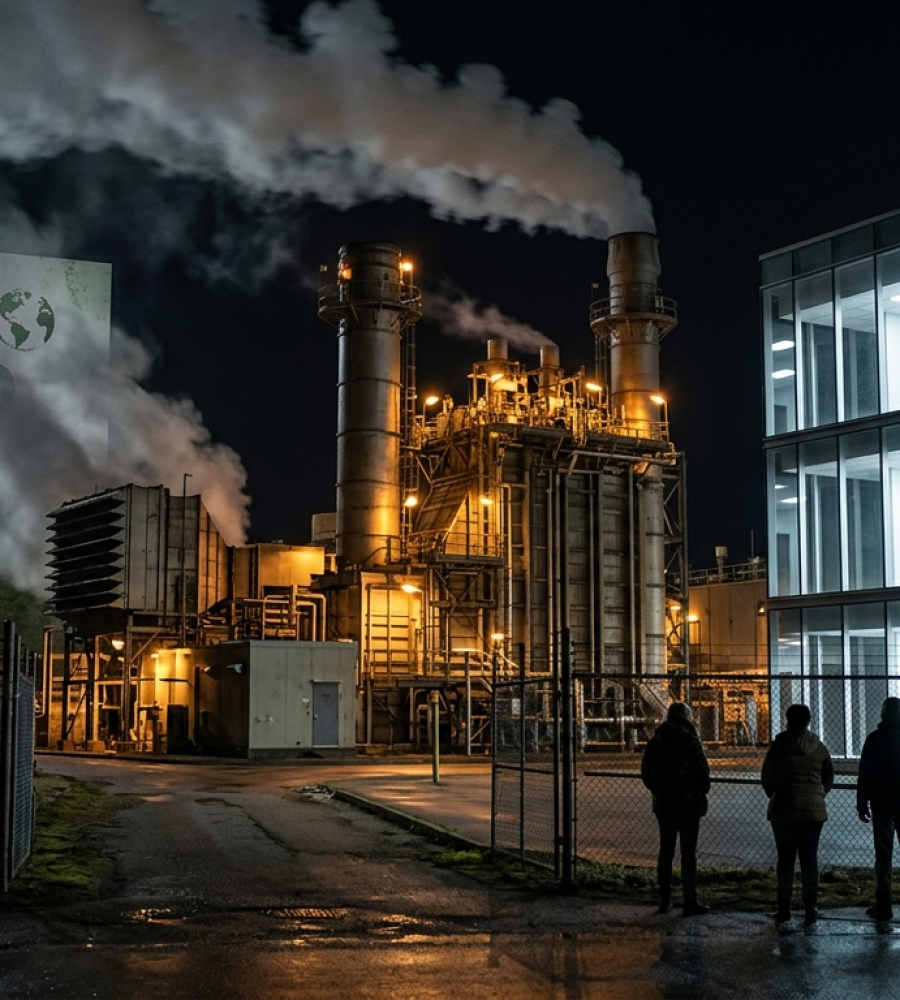

Every infrastructure era develops its own definition of scarcity before it develops its defining technology. Earlier generations measured scarcity through available land, transmission reach, and network connectivity because those factors determined how quickly digital infrastructure could expand. Artificial intelligence has altered that equation by exposing electrical access as the governing constraint behind nearly every large compute deployment. Waiting for transmission studies, utility approvals, and large-scale site energization has become part of infrastructure planning instead of an unexpected delay. That reality has encouraged developers to question whether the traditional path to capacity remains the only viable path available. The resulting discussion no longer revolves around building larger campuses, but around distributing capacity across locations that already possess energized electrical connections.
The conversation therefore shifts away from constructing another hyperscale campus toward redefining what qualifies as infrastructure in the first place. Residential electrical service has historically supported households instead of participating in national compute strategies. Modern power electronics, intelligent energy management, distributed batteries, and compact AI hardware now invite a different architectural possibility that would have appeared impractical only a few years ago. SPAN has publicly proposed its XFRA platform as a distributed compute architecture that coordinates residential and small commercial compute nodes into a software-managed computing resource instead of concentrating processing within a single industrial campus. That proposal deserves careful examination because it represents an architectural change instead of merely another deployment strategy.
The Queue Isn’t Slowing Down, So We Stopped Standing In It
Large AI deployments traditionally begin by identifying suitable land before progressing through utility engagement, transmission studies, environmental assessments, equipment procurement, and eventual energization. That sequence worked when compute demand expanded gradually because infrastructure planning generally progressed at comparable speed. Today’s deployment environment has exposed a widening mismatch between digital investment cycles and electrical infrastructure development across several regions. Regulatory discussions increasingly focus on improving large-load interconnection because existing processes evolved around conventional industrial demand rather than rapidly expanding AI workloads. Recent actions by the Federal Energy Regulatory Commission illustrate that regulators recognize this structural mismatch instead of treating it as a temporary backlog. Developers therefore increasingly evaluate architectural alternatives alongside regulatory reform rather than expecting procedural improvements alone to satisfy deployment schedules.
Interconnection Delay Has Become An Infrastructure Design Constraint
Distributed Residential Compute approaches the problem from a fundamentally different direction by exploring whether selected inference workloads can utilize existing energized residential and small commercial electrical connections instead of depending exclusively on new transmission-scale interconnection for every deployment. Existing residential electrical infrastructure already serves millions of energized properties that possess utility connections, metering, distribution equipment, and local regulatory approval for occupation. Rather than requesting permission to energize another industrial-scale location, distributed architecture attempts to aggregate available capacity across many existing connections through coordinated deployment. Within this architectural model, the infrastructure challenge shifts away from obtaining one exceptionally large electrical connection toward coordinating many existing smaller electrical connections through software and standardized deployment practices. That distinction changes deployment strategy because electrical availability becomes a distributed resource instead of a centralized prerequisite.
Architecturally, the queue remains exactly where it existed before because transmission expansion still governs future electrical growth across every major economy. Distributed aggregation simply reduces immediate dependence upon that queue for selected categories of compute deployment. Such an approach should not be interpreted as replacing conventional data centers because training clusters, hyperscale networking, and specialized infrastructure continue requiring centralized campuses. Residential aggregation instead represents another infrastructure layer capable of supporting suitable inference workloads where distribution characteristics align with operational requirements. The strategic implication therefore concerns optionality rather than replacement because optionality changes competitive positioning whenever deployment timelines become the governing constraint.
Aggregated Capacity Changes Infrastructure Thinking
The phrase “one gigawatt” traditionally evokes a single campus connected through dedicated substations, transmission upgrades, and extensive utility coordination. Residential aggregation proposes separating installed compute capacity from geographical concentration by coordinating distributed endpoints instead of relying exclusively on a single deployment location. Within distributed compute architectures, available capacity can be coordinated through orchestration rather than relying solely upon physical concentration inside one industrial boundary. Such thinking resembles developments already observed across distributed cloud architecture where logical systems increasingly operate independently from physical location. Infrastructure consequently becomes defined by software coordination as much as electrical engineering. That conceptual shift introduces technical consequences extending beyond deployment speed because networking assumptions also begin changing. Traditional campuses optimize around predictable latency, centralized cooling, common security perimeters, synchronized maintenance windows, and homogeneous operational environments.
Residential compute cannot inherit those assumptions because every node operates within a different electrical environment, broadband connection, homeowner schedule, and maintenance condition. Software therefore assumes responsibility for compensating against physical inconsistency through scheduling, workload placement, redundancy, telemetry, and predictive maintenance. Infrastructure resilience increasingly depends upon intelligent coordination rather than identical hardware environments. Viewing aggregated compute through this architectural lens also prevents exaggerated expectations regarding immediate industry transformation. Residential deployment cannot substitute for every workload because numerous AI applications continue demanding tightly coupled accelerator clusters with deterministic networking characteristics. The model nevertheless expands available deployment choices by creating another class of infrastructure positioned between centralized hyperscale campuses and traditional edge computing. That middle layer may prove strategically valuable wherever deployment speed outweighs absolute concentration of compute resources.
One Permit vs Ten Thousand Doorsteps
Conventional data center development begins with identifying a suitable parcel before advancing through zoning reviews, environmental assessments, utility coordination, construction approvals, and commissioning activities that frequently unfold in sequence rather than parallel. Each stage introduces another dependency because local authorities, utilities, engineering teams, and developers must align around one physical location before infrastructure becomes operational. Distributed Residential Compute changes that progression by proposing deployments within buildings that already possess residential occupancy approvals and existing electrical service, while remaining subject to applicable electrical installations, inspections, utility requirements, and local building regulations. The strategy does not remove every regulatory obligation because electrical equipment, safety standards, utility requirements, and local building rules still govern installation activities across participating homes. Large-scale infrastructure planning therefore shifts from focusing primarily on one expansive campus toward developing repeatable installation practices that can satisfy applicable local requirements across many distributed locations.
Residential Approvals Become Infrastructure Assets
Residential approvals also create operational flexibility that centralized campuses rarely experience because deployment no longer depends upon completing every preparatory milestone before capacity becomes available. Individual nodes can enter service as installations conclude, allowing orchestration software to incorporate new resources without waiting for an entire campus to reach commercial readiness. Such incremental commissioning resembles distributed telecommunications deployments more closely than traditional data center construction because network value increases as additional endpoints become active. Infrastructure therefore grows through accumulation instead of singular project completion, producing a deployment rhythm that differs fundamentally from conventional campus expansion. That rhythm also enables geographic diversity because participating homes naturally distribute compute resources across neighborhoods instead of concentrating them behind one security perimeter. Expansion consequently becomes less constrained by one development schedule and increasingly influenced by installation logistics, homeowner participation, and software readiness.
Existing residential infrastructure nevertheless imposes practical boundaries that cannot be overlooked while evaluating distributed deployment strategies. Electrical capacity differs from one residence to another because service sizes, panel configurations, battery installations, rooftop solar integration, and local distribution networks rarely exhibit uniform characteristics across entire communities. Standardization therefore shifts away from physical infrastructure toward installation methodology, hardware validation, and software verification that collectively establish predictable operating behavior despite environmental variation. Equipment suppliers must consequently design platforms capable of accommodating diverse electrical environments without introducing unacceptable operational complexity during installation or maintenance. Utilities may also establish interconnection requirements for behind-the-meter energy resources depending upon jurisdiction, creating another layer of localized compliance that software alone cannot eliminate. Residential aggregation therefore succeeds only when deployment architecture respects regional electrical practices instead of assuming universal installation conditions.
Permitting Logic Changes With Distribution
Large industrial campuses attract regulatory attention because they concentrate electrical demand, construction activity, environmental review, transportation planning, and long-term operational oversight within one identifiable location. Distributed Residential Compute distributes those considerations across many residential addresses where each installation is generally expected to follow local residential electrical and building requirements instead of introducing a single large industrial development. That dispersion alters administrative complexity because oversight becomes decentralized instead of disappearing from the deployment process altogether. Local authorities may evaluate installations through existing residential electrical frameworks while utilities continue assessing impacts on distribution systems serving participating neighborhoods. Infrastructure planning therefore becomes an exercise in coordinating numerous locally compliant deployments instead of securing one comprehensive approval package for a centralized campus. Regulatory engagement consequently becomes broader in scope while becoming narrower in intensity at each individual location.
The distributed model also changes investment sequencing because deployment capacity expands through repeated installation cycles instead of one large construction milestone. Hardware procurement, installer training, software onboarding, operational testing, and homeowner engagement all become recurring operational disciplines rather than temporary project phases preceding commercial operation. That recurring pattern demands disciplined process management because consistency across thousands of installations ultimately determines infrastructure reliability more than the success of any individual deployment. Operational excellence therefore migrates toward standardized execution instead of exceptional construction management, reflecting a different philosophy of infrastructure growth. Scaling distributed compute depends as much upon repeatability as technological sophistication because every installation contributes to aggregate system performance. Successful expansion consequently requires mature operational governance that treats every residential deployment as part of one coordinated infrastructure fabric.
When Site Control Means a Homeowner Agreement
Traditional infrastructure projects measure site control through ownership rights, long-term leases, easements, and contractual authority over clearly defined parcels of land that remain under centralized operational management. Distributed Residential Compute introduces a fundamentally different interpretation because the physical location continues functioning primarily as a private residence while simultaneously contributing computing capacity to a larger coordinated platform. The operator therefore gains limited operational rights through homeowner participation agreements rather than comprehensive authority over an industrial property. That distinction changes infrastructure planning because maintaining participation becomes as important as securing initial enrollment within the distributed network. Long-term stability depends upon sustained homeowner engagement instead of perpetual ownership over every participating location. Infrastructure strategy consequently extends into relationship management alongside engineering execution.
Site Acquisition Gives Way to Participation Agreements
The contractual framework surrounding residential participation must clearly define installation access, maintenance responsibilities, equipment ownership, operational expectations, privacy protections, and procedures governing equipment removal whenever participation concludes. Those provisions influence infrastructure resilience because uncertainty surrounding operational authority can produce avoidable service interruptions across geographically dispersed deployments. Operators therefore require standardized agreements that remain understandable for homeowners while protecting long-term operational continuity across the distributed platform. Technical reliability increasingly depends upon contractual clarity because software cannot compensate for ambiguous operational authority at individual locations. Participation agreements effectively become infrastructure components even though they exist outside conventional engineering documentation. Legal consistency therefore supports technical consistency throughout distributed compute networks.
Homeowner participation also introduces human variability that centralized campuses seldom encounter because residential priorities naturally evolve over time through relocation, renovation, changing energy preferences, or personal circumstances. Infrastructure planning must therefore anticipate participant turnover as a normal operating condition instead of treating it as an exceptional disruption requiring ad hoc responses. Capacity planning becomes probabilistic because the available resource pool fluctuates according to participation levels rather than remaining permanently fixed behind one security perimeter. Software orchestration must therefore recognize that physical infrastructure can disappear for reasons unrelated to hardware reliability or electrical performance. The architecture succeeds only when participant changes remain operationally manageable instead of becoming systemic disruptions. Distributed infrastructure consequently depends upon designing for voluntary participation rather than assuming perpetual physical control.
Occupancy Becomes an Operational Variable
Conventional data centers operate within environments where occupancy remains largely irrelevant because computing equipment exists independently from residential activity, household routines, or private living arrangements. Distributed Residential Compute introduces a condition where operational continuity partially depends upon the stability of occupied homes, creating a relationship between human behavior and infrastructure availability that traditional operators rarely encounter. A homeowner may renovate part of a property, replace electrical equipment, upgrade internet connectivity, relocate permanently, or request temporary equipment removal, and each event can influence the availability of a participating node without reflecting any technical fault. Infrastructure planning therefore expands beyond hardware lifecycle management into occupancy-aware operational planning that anticipates ordinary residential change rather than exceptional technical failures. Capacity forecasting consequently incorporates participation trends alongside equipment health because both influence the effective computing resource available to orchestration software.
That operational reality encourages a different philosophy toward infrastructure resilience because permanence can no longer serve as the default planning assumption for every deployment location. Software must evaluate node availability continuously, redistribute workloads before planned maintenance occurs, and isolate unavailable resources without interrupting service across the wider network. Such capabilities resemble distributed cloud scheduling more closely than conventional campus operations because infrastructure naturally evolves as endpoints join, pause, and re-enter the available resource pool over time. Engineering teams therefore invest more heavily in observability, predictive scheduling, and automated workload migration than in attempting to eliminate every source of residential variability. Operational maturity increasingly reflects the ability to absorb routine participation changes without measurable disruption to higher-level services consuming the distributed compute platform. Infrastructure therefore becomes adaptive by design rather than static by expectation.
Orchestration Is The New Interconnection
Traditional AI infrastructure depends upon physical concentration because centralized campuses simplify workload placement, network engineering, electrical management, cooling strategy, and operational oversight within one controlled environment. Distributed Residential Compute deliberately abandons that assumption by distributing processing resources across many independent locations that share neither identical electrical characteristics nor identical network conditions. The consequence is that orchestration software inherits responsibilities historically managed through physical proximity because coordination can no longer rely upon one building or one utility connection. Infrastructure therefore becomes increasingly defined by software intelligence capable of understanding where workloads should execute, how resources should be balanced, and when capacity should migrate between geographically dispersed nodes. Every scheduling decision influences utilization, resilience, latency, and operational efficiency simultaneously because the infrastructure behaves as one logical platform despite existing across thousands of separate addresses. Software consequently evolves from an operational convenience into the primary mechanism through which distributed infrastructure maintains coherence.
Software Replaces the Substation as the Coordination Layer
Unlike centralized clusters where operators possess detailed knowledge of hardware topology, distributed residential environments continually introduce variability that orchestration systems must interpret in real time. Available electrical capacity, internet performance, temporary maintenance windows, equipment health, and homeowner participation collectively influence whether a specific node should receive additional inference work at any particular moment. Scheduling therefore requires contextual awareness extending beyond processor utilization because physical circumstances directly affect computational reliability throughout the network. Modern orchestration platforms increasingly combine telemetry, policy engines, automated health evaluation, and workload placement algorithms to maintain service continuity under changing operating conditions. Distributed Residential Compute amplifies the importance of those capabilities because software effectively compensates for geographical fragmentation through continuous operational awareness. Infrastructure reliability therefore emerges from intelligent coordination rather than from physical concentration alone.
Building that orchestration layer requires engineering disciplines extending well beyond conventional infrastructure automation because thousands of distributed endpoints continuously generate operational signals requiring interpretation and response. Every node contributes telemetry regarding electrical behavior, hardware condition, software integrity, networking performance, and environmental status that collectively informs workload scheduling decisions across the wider platform. Processing that information efficiently demands scalable observability systems capable of transforming operational data into actionable scheduling intelligence without introducing unnecessary complexity or excessive control latency. Software architecture therefore becomes inseparable from infrastructure architecture because orchestration quality directly influences the usefulness of every deployed compute resource. Distributed Residential Compute consequently transforms software from a supporting operational function into the principal coordination mechanism governing the effectiveness of the entire infrastructure estate.
Intelligent Scheduling Defines Practical Capacity
Installed hardware alone cannot determine usable infrastructure capacity because every distributed node exists within an environment whose operating conditions evolve independently from every other location participating in the network. Practical capacity instead reflects the amount of computing resource that orchestration software can confidently schedule while respecting power availability, connectivity quality, thermal behavior, hardware health, and operational policy across all participating homes. Infrastructure therefore becomes a continuously evaluated resource rather than a permanently fixed quantity available at every moment. Scheduling systems must understand which workloads tolerate temporary redistribution, which applications require predictable latency characteristics, and which resources should remain reserved for redundancy before assigning computational tasks. Effective orchestration consequently depends upon policy-driven decision making instead of static allocation tables traditionally associated with centralized computing environments. Distributed infrastructure derives its operational value from software capable of translating fluctuating physical conditions into dependable computational services.
Workload routing also becomes strategically significant because inference tasks frequently differ in urgency, execution duration, resilience requirements, and geographic sensitivity. Orchestration platforms must therefore evaluate not only where computing resources currently exist but also where executing a workload produces the most predictable operational outcome under prevailing network and electrical conditions. Such decisions increasingly resemble intelligent traffic management rather than traditional batch scheduling because infrastructure conditions continue changing while workloads remain active. Software continuously reassesses node suitability instead of assuming initial placement remains optimal throughout execution. Operational responsiveness therefore replaces static planning as the defining characteristic of distributed compute management. Infrastructure behaves less like a fixed installation and more like a living system whose effectiveness depends upon continuous coordination across independently changing environments.
What Happens When Your Infrastructure Has a Mailing Address
Operating a centralized data center allows infrastructure teams to work within an environment designed specifically for continuous technical operations, where access procedures, maintenance schedules, security controls, and environmental management remain under unified operational authority. Distributed Residential Compute introduces a fundamentally different operating landscape because every deployed node exists inside a functioning neighborhood rather than an isolated industrial campus. Field engineers therefore encounter circumstances shaped by residential routines, local access expectations, homeowner availability, and community considerations that rarely influence conventional infrastructure management. Maintenance planning becomes dependent upon coordinating technical requirements with everyday residential activity instead of scheduling work exclusively around data center operations. Infrastructure management consequently develops an operational layer that combines engineering discipline with structured coordination across thousands of individually occupied properties. The effectiveness of the platform increasingly reflects the quality of those operational processes because every service visit directly influences long-term deployment stability.
Operations Extend Beyond the Equipment
Residential deployments also reshape the responsibilities assigned to field operations because technicians must consistently deliver repeatable installation and maintenance outcomes across environments that differ substantially from one another. Electrical layouts, available installation space, communication pathways, service panels, and backup energy configurations naturally vary between homes, requiring standardized procedures capable of adapting without compromising technical consistency. Documentation therefore becomes significantly more valuable because every completed installation contributes operational knowledge that improves future deployments across similar residential environments. Engineering organizations increasingly rely upon digital asset records, installation photographs, maintenance histories, and configuration management systems to preserve consistency throughout geographically dispersed deployments. Operational maturity consequently depends upon disciplined execution supported by comprehensive documentation instead of relying solely upon highly experienced field personnel. Distributed infrastructure expands successfully when repeatable operating practices accompany technological innovation at every stage of deployment.
Support operations similarly evolve because incident response no longer focuses exclusively upon restoring equipment inside professionally managed campuses. Homeowners require clear communication regarding maintenance appointments, software updates, operational changes, and equipment servicing without unnecessary disruption to daily living. Infrastructure operators therefore develop customer-facing operational capabilities that historically belonged to residential energy service providers rather than enterprise data center organizations. Technical excellence alone cannot sustain long-term participation if operational engagement creates unnecessary inconvenience for participating households. Distributed Residential Compute consequently combines infrastructure management with service management because each residence simultaneously functions as both a computing location and a privately occupied property. Operational discipline therefore becomes visible not only through system availability but also through the quality of interactions occurring beyond the hardware itself.
Neighborhood Presence Changes Infrastructure Governance
Traditional campuses generally establish clear physical boundaries separating infrastructure operations from surrounding communities through purpose-built industrial locations and controlled access arrangements. Distributed Residential Compute removes that physical separation because computing resources become integrated into ordinary residential neighborhoods where infrastructure remains largely invisible yet operationally significant. The absence of a dedicated campus does not eliminate community considerations because neighborhood expectations regarding safety, accessibility, maintenance activity, and visual consistency continue influencing long-term acceptance. Infrastructure operators therefore benefit from maintaining transparent operating practices that explain installation standards, service procedures, and maintenance responsibilities without creating unnecessary uncertainty among participating communities. Operational governance increasingly includes community awareness because infrastructure now exists within shared residential environments instead of isolated technical campuses. Long-term deployment stability consequently depends upon responsible neighborhood integration alongside reliable engineering execution.
Routine maintenance also acquires different operational characteristics because technicians frequently perform work in occupied neighborhoods rather than secure industrial compounds designed for uninterrupted infrastructure access. Vehicle scheduling, appointment coordination, equipment transport, and access verification become recurring operational activities that directly influence service efficiency across geographically distributed deployments. Organizations therefore require logistics capabilities capable of coordinating thousands of localized maintenance activities while preserving consistent technical standards throughout the wider network. Workforce planning increasingly reflects geographic distribution because technician routing influences both operational cost and service responsiveness across participating communities. Distributed infrastructure consequently transforms field logistics into a strategic operational discipline rather than a supporting maintenance function. Infrastructure quality ultimately depends upon the ability to coordinate technical work efficiently across many independently managed residential locations.
Compliance When Your Footprint Is a Zip Code, Not a Building
Compliance within conventional data centers generally revolves around one controlled environment where infrastructure, documentation, operational procedures, and physical security remain concentrated inside a clearly defined facility. Distributed Residential Compute alters that structure because every participating residence contributes another operational location requiring consistent documentation, equipment management, installation records, and maintenance history. The infrastructure footprint therefore expands across postal boundaries instead of remaining associated with one industrial address. Governance increasingly depends upon maintaining standardized operational records capable of demonstrating that every deployed node satisfies applicable technical and administrative requirements throughout its service lifecycle. Documentation quality becomes inseparable from operational quality because incomplete records create uncertainty regarding equipment status, maintenance history, and configuration integrity. Distributed infrastructure consequently requires compliance systems designed for continuous synchronization rather than periodic site-based auditing.
Compliance Moves From One Site to Thousands
Asset management similarly assumes greater importance because every residential deployment introduces another independently operating hardware environment requiring accurate inventory control throughout installation, operation, servicing, replacement, and retirement. Organizations therefore require configuration management systems capable of maintaining a continuously updated understanding of where equipment exists, how it has been configured, and which operational events have occurred during its lifecycle. Those capabilities support engineering efficiency while simultaneously strengthening audit readiness because documentation remains synchronized with actual infrastructure conditions. Distributed Residential Compute depends upon disciplined digital recordkeeping because physical inspection alone cannot efficiently validate thousands of geographically dispersed installations. Infrastructure visibility therefore emerges through information management rather than centralized physical oversight. Operational confidence increasingly reflects the quality of asset intelligence supporting infrastructure governance.
Compliance responsibilities also extend into software because orchestration platforms continuously influence workload placement, operational policy enforcement, system updates, and infrastructure configuration throughout the distributed environment. Governance therefore encompasses application behavior alongside physical equipment because automated systems increasingly execute decisions previously performed manually by operations teams. Policy engines, audit trails, software version management, and change control become essential operational disciplines supporting infrastructure consistency across thousands of independently located nodes. Engineering organizations consequently require governance frameworks capable of validating both physical deployments and the software coordinating those deployments. Distributed infrastructure therefore broadens compliance from site management into continuous systems management operating across an evolving residential network. Technical governance ultimately reflects the combined quality of operational processes, software controls, and engineering documentation rather than any individual component alone.
Local Rules Replace Centralized Uniformity
One industrial campus typically operates under a relatively consistent collection of local planning rules, inspection processes, utility coordination practices, and administrative expectations because the infrastructure occupies one jurisdiction. Distributed Residential Compute naturally spans numerous municipalities where installation procedures, electrical requirements, inspection practices, and administrative processes may differ despite using standardized technical equipment. Operators therefore encounter regulatory diversity as a routine operating condition rather than an occasional project-specific consideration. Standardized hardware alone cannot guarantee standardized deployment because local implementation requirements continue shaping installation methodology throughout different residential jurisdictions. Infrastructure planning consequently incorporates regulatory adaptability alongside engineering standardization to preserve deployment consistency without ignoring local compliance expectations. Distributed architecture therefore rewards organizations capable of balancing operational uniformity with jurisdiction-specific execution.
Every additional jurisdiction also introduces another administrative relationship requiring accurate documentation, repeatable installation standards, and clearly defined operational responsibilities across the infrastructure portfolio. Engineering teams benefit from establishing deployment templates that remain technically consistent while accommodating localized inspection requirements without unnecessary redesign. That balance reduces operational complexity because installers can follow standardized engineering practices while satisfying applicable local procedures through documented implementation guidance. Operational scalability therefore depends upon process maturity instead of expecting regulatory environments to become identical across all participating communities. Distributed Residential Compute consequently emphasizes adaptable governance frameworks capable of preserving engineering quality throughout administratively diverse deployment landscapes. Infrastructure resilience increasingly reflects organizational discipline rather than regulatory uniformity.
The Failure Model No One Wrote For Distributed Homes
Traditional infrastructure planning assumes that reliability begins with designing a single environment capable of resisting equipment failures through redundancy, layered protection, and carefully engineered operating margins. Distributed Residential Compute changes that assumption because the computing platform exists across thousands of independent residences where operational conditions naturally evolve without centralized physical control. Every participating node remains technically capable while simultaneously remaining subject to residential circumstances that conventional infrastructure rarely considers during capacity planning. Electrical work inside a home, changes to broadband service, property renovations, extended homeowner absence, or voluntary withdrawal from the program can all remove available compute resources without indicating any defect in the hardware itself. Infrastructure resilience therefore becomes an exercise in accommodating expected variability instead of attempting to eliminate every interruption from the operating environment. Engineering priorities shift toward preserving overall platform continuity rather than ensuring uninterrupted operation at every individual address.
Reliability No Longer Depends on One Location
The consequence is that failure acquires a broader operational definition than hardware malfunction alone because infrastructure availability becomes influenced by technical and non-technical events simultaneously. Distributed orchestration platforms must therefore distinguish between transient conditions, scheduled maintenance, permanent equipment retirement, homeowner participation changes, and network interruptions before determining the most appropriate response. Such distinctions influence workload placement because applications consuming the platform require consistent computational service regardless of why an individual node becomes unavailable. Software therefore evaluates operational context instead of responding solely to binary hardware status indicators. Reliability increasingly reflects the ability to understand changing infrastructure conditions rather than merely detecting equipment faults after they occur. Distributed Residential Compute consequently expands the engineering definition of resilience beyond the traditional boundaries of electrical and mechanical reliability.
Designing for that environment requires infrastructure architects to embrace graceful degradation rather than complete environmental predictability as the governing operational principle. Capacity reserves, workload redistribution, intelligent replication, continuous health monitoring, and policy-driven scheduling collectively ensure that localized disruptions remain operationally insignificant across the broader compute platform. Those capabilities resemble resilient distributed cloud systems more closely than conventional campus engineering because the infrastructure naturally expects participating resources to fluctuate over time. Engineering success therefore depends upon minimizing service impact rather than preventing every individual interruption from occurring. Distributed architecture rewards adaptability because variability becomes an inherent operating characteristic instead of an exceptional condition requiring manual intervention. Infrastructure reliability ultimately emerges from coordinated system behavior rather than absolute stability at every residential location.
Redundancy Becomes Dynamic Instead of Static
Conventional redundancy generally relies upon physically duplicated infrastructure installed within one controlled environment where backup systems remain immediately available whenever primary equipment experiences an operational fault. Distributed Residential Compute approaches redundancy differently because replacement capacity may already exist across numerous participating homes rather than beside the affected hardware. Software therefore determines resilience by identifying alternative nodes capable of accepting workloads without compromising service continuity or operational policy. Physical separation becomes an operational advantage because geographically dispersed resources naturally reduce dependence upon any single electrical environment, neighborhood, or distribution circuit. Redundancy consequently evolves into a dynamic scheduling capability rather than remaining exclusively a hardware design decision. Infrastructure planning increasingly values intelligent resource allocation alongside conventional engineering resilience.
That transition also changes how operators evaluate spare capacity because idle resources no longer exist merely as passive backups awaiting hardware failure. Available nodes continuously contribute computational value whenever operating conditions permit while simultaneously remaining capable of absorbing workloads from locations experiencing temporary disruption. Resource utilization therefore becomes significantly more fluid because orchestration software continually reassesses where computing activity should occur as infrastructure conditions evolve. Such operational flexibility requires extensive observability because scheduling decisions depend upon current infrastructure awareness rather than static deployment assumptions established during installation. Engineering organizations consequently invest heavily in telemetry quality, policy management, and predictive analytics supporting automated workload movement across the distributed environment. Dynamic redundancy therefore reflects software maturity as much as physical infrastructure design.
You Don’t Solve Paralysis, You Make The Queue Irrelevant
Residential aggregation should not be interpreted as a declaration that transmission planning, utility coordination, or centralized AI campuses have become obsolete because every one of those elements continues supporting the broader digital infrastructure ecosystem. The more significant contribution lies in demonstrating that infrastructure strategy can evolve without waiting for every traditional dependency to improve before new computational capacity becomes available. Distributed Residential Compute introduces a proposed architectural pathway that complements established deployment models instead of attempting to replace centralized AI infrastructure. That distinction matters because infrastructure history repeatedly shows that technological progress often emerges through diversification rather than universal standardization. Multiple deployment approaches generally coexist when different workloads demand different operational characteristics across increasingly complex digital environments. The future of AI infrastructure therefore appears more likely to involve complementary architectures than a single dominant design philosophy.
The central engineering challenge consequently shifts from acquiring one exceptionally large energized location toward coordinating many geographically dispersed resources capable of behaving as one coherent computational platform. Electrical interconnection remains essential because every participating residence continues depending upon the surrounding distribution network, yet software increasingly determines how effectively those individual resources contribute to useful computing capacity. Orchestration, observability, automated policy enforcement, and distributed systems engineering therefore become strategic infrastructure disciplines rather than supporting operational functions. Engineering organizations that successfully combine those capabilities with disciplined field operations, standardized governance, and reliable homeowner participation frameworks are likely to influence whether residential aggregation matures beyond its current early-stage deployment model. Success will ultimately depend upon sustained operational execution rather than the novelty of distributing compute into occupied neighborhoods. Infrastructure leadership therefore expands beyond construction expertise into continuous coordination across technology, operations, and residential participation.