 Skip to content
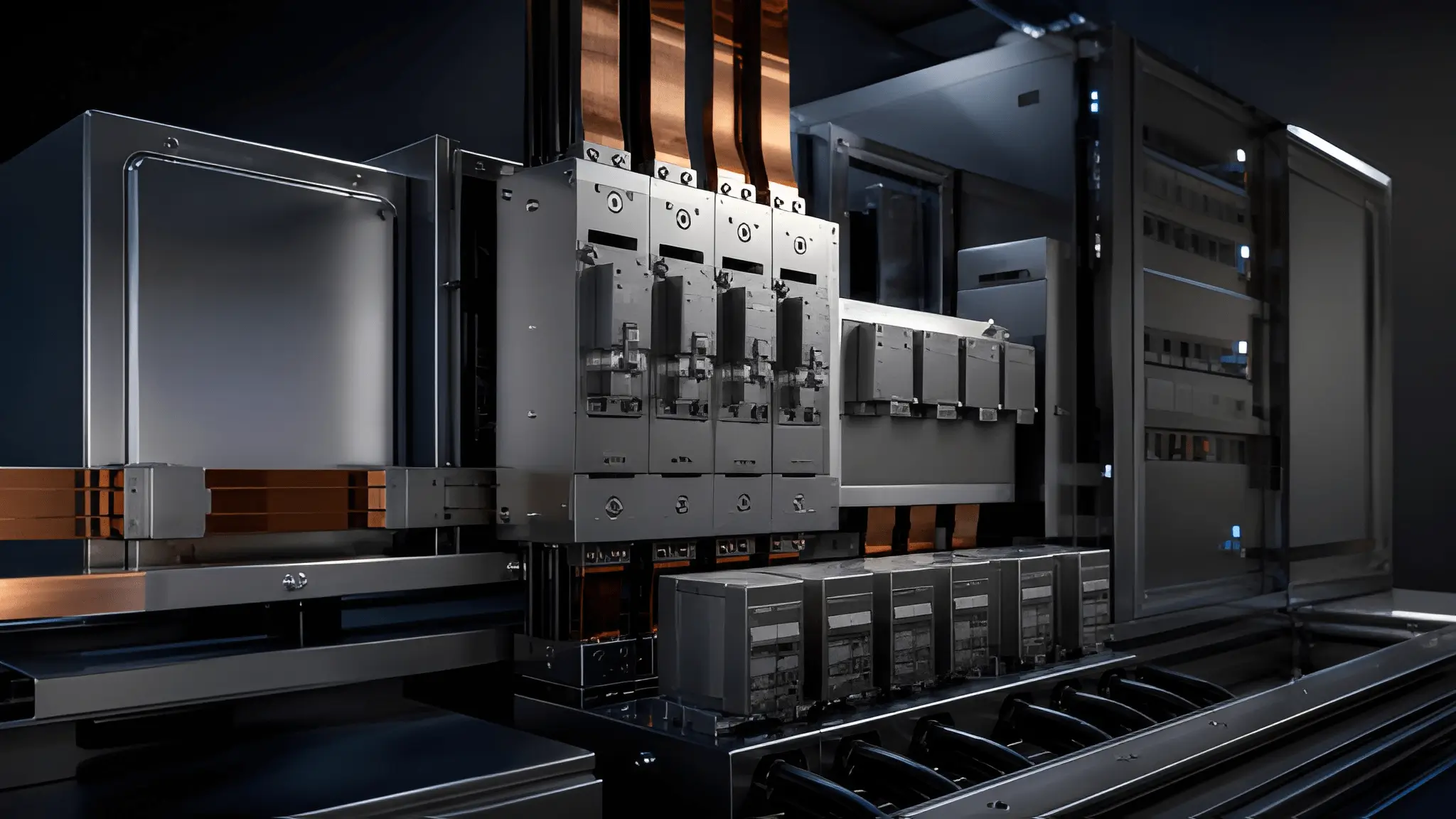
Electrical systems quietly define spatial decisions, equipment density, and even operational philosophy, yet they rarely take center stage in design conversations. The transition toward 800 VDC disrupts that pattern because it alters not only how energy flows but also how infrastructure organizes itself around that flow. Engineers no longer treat power as a background utility once voltage levels reshape efficiency boundaries and fault behavior simultaneously. Every assumption embedded in AC-based distribution begins to lose relevance when direct current operates at higher voltages with fewer conversion stages. This shift introduces a structural ripple effect that extends from switchgear design to the physical geometry of entire facilities.

AI-driven workloads intensify the importance of this transformation because they demand both higher power density and tighter control over energy delivery. Conventional AC architectures struggle to keep pace with these requirements due to their layered inefficiencies and spatial overhead. 800 VDC offers a pathway to reduce those inefficiencies, yet it also introduces new design constraints that require deliberate engineering decisions. Infrastructure teams must rethink how power interacts with compute, cooling, and physical layout in a unified system. This process does not involve incremental optimization but rather a fundamental reordering of priorities across disciplines. The result emerges as a redefinition of infrastructure logic rather than a simple upgrade in voltage.
When Power Architecture Starts Rewriting the Building
Power flow stops behaving like a secondary consideration once 800 VDC enters the design equation because voltage, distance, and impedance begin to interact in tightly coupled ways. Engineers must evaluate how energy travels across the facility before they finalize any structural decisions, since inefficiencies compound more directly in DC environments. Traditional layouts allowed power to navigate around architectural constraints with limited penalties, while high-voltage DC systems make efficiency and loss behavior more sensitive to pathway design and routing discipline. This reality forces teams to map electrical routes first and then align building geometry accordingly. Every deviation from an optimal path introduces consequences that extend beyond efficiency into stability and protection complexity. Infrastructure design begins to revolve around energy pathways rather than physical convenience.
Spatial planning tools now incorporate electrical modeling outputs as primary inputs rather than supplementary data, which changes how early-stage decisions unfold. Engineers simulate load distribution, voltage drop behavior, and fault propagation scenarios before walls or floors take shape. This approach ensures that physical layouts support electrical performance rather than constrain it. Design iterations become more rigorous because adjustments at later stages carry higher costs in DC systems. Collaboration between electrical and architectural teams intensifies as both disciplines must align on shared priorities from the outset. Buildings evolve into physical representations of electrical intent rather than independent constructs.

Architectural Decisions Shift Toward Electrical Topology
Electrical topology diagrams begin to define the blueprint of facilities under 800 VDC adoption because they reveal how energy nodes interact across the system. Designers identify critical junctions where conversion, distribution, and load interfaces converge, and they position these nodes strategically within the layout. This process reduces unnecessary branching and supports more linear distribution paths that align with DC efficiency characteristics. Structural elements adapt to accommodate these requirements, which often leads to unconventional layouts that differ from legacy designs. Engineers must balance accessibility, maintainability, and electrical optimization without compromising any single factor. The resulting architecture reflects a deliberate alignment between form and function.
Mechanical systems also adapt to this shift because cooling must integrate with power-driven layouts rather than dictate them. Airflow patterns adjust to support equipment placement that prioritizes electrical proximity instead of thermal symmetry. This integration requires a deeper level of coordination than traditional designs demanded. Engineers evaluate trade-offs between cooling efficiency and electrical performance with greater precision. The facility becomes a tightly coupled system where decisions in one domain immediately influence outcomes in another. Architectural flexibility decreases, but overall system efficiency improves.
The Emergence of Power-Centric Design Language
Design conversations evolve as 800 VDC reshapes the priorities that guide infrastructure development. Engineers begin to describe facilities in terms of electrical zones, fault domains, and distribution segments rather than rooms and corridors. This language reflects a deeper understanding of how power defines system behavior at every level. Teams focus on impedance paths, isolation boundaries, and energy continuity when evaluating design options. These concepts replace traditional emphasis on airflow containment and spatial segmentation. Infrastructure planning becomes more analytical and less dependent on legacy conventions.
Software tools and modeling platforms reinforce this shift by integrating electrical simulations directly into design workflows. Engineers can visualize how changes in layout affect power distribution in real time, which improves decision-making accuracy. This capability reduces reliance on assumptions that previously guided early-stage planning. Design iterations become data-driven processes that align closely with operational realities. The industry gradually adopts a power-centric mindset that influences both design and execution. Facilities begin to reflect a new paradigm where energy flow defines structure.
The Quiet Disappearance of Electrical Layers
800 VDC eliminates the need for multiple intermediate conversion stages that dominate traditional AC architectures, which leads to a flatter distribution model. Power flows from centralized rectification points directly toward load interfaces with fewer interruptions along the way. This simplification reduces cumulative losses that arise from repeated conversions between AC and DC. Engineers gain clearer visibility into system performance because fewer components mediate energy flow. The distribution chain becomes more transparent and easier to analyze. Infrastructure begins to resemble a streamlined pipeline rather than a layered network.
Fewer layers also reduce synchronization challenges that often complicate redundant AC systems. Engineers can design more predictable pathways for energy delivery without managing interactions across numerous conversion points. This predictability improves both efficiency and reliability under varying load conditions. Maintenance efforts shift toward optimizing a smaller set of critical components instead of managing a broad array of devices. Operational workflows become more straightforward as complexity decreases. The system achieves simplicity without sacrificing capability.
The Decline of Legacy Components
Legacy components such as transformers and PDUs lose relevance as 800 VDC distribution removes their core functional roles. These devices once facilitated voltage stepping and localized distribution within AC systems, but high-voltage DC eliminates many of those requirements. Engineers replace them with fewer, more capable systems that handle broader functions within the distribution chain. Electrical rooms shrink or disappear entirely as equipment consolidation progresses. This transition changes how facilities allocate space for infrastructure. Legacy design assumptions gradually fade as new standards take hold.
The removal of these components does not reduce system sophistication but rather concentrates it within fewer elements. Engineers must ensure that remaining systems operate with higher reliability and precision. This shift increases the importance of design quality and component performance. Maintenance strategies adapt to focus on critical nodes rather than distributed assets. Infrastructure evolves toward a model where fewer components carry greater responsibility. The disappearance of layers marks a transformation rather than a reduction.
Consolidation Drives Operational Simplicity
Operational simplicity emerges as a direct result of consolidation within 800 VDC systems. Technicians interact with fewer devices, which reduces the complexity of maintenance and troubleshooting procedures. Clearer relationships between input and output points improve fault identification and resolution. Engineers design systems that present intuitive interfaces for monitoring and control. This clarity enhances operational efficiency and reduces the likelihood of human error. Infrastructure becomes easier to manage without compromising performance.
Training requirements also evolve as systems shift toward integrated designs. Personnel focus on understanding system behavior rather than memorizing the functions of numerous individual components. This approach improves adaptability and supports long-term operational resilience. Inventory management simplifies because fewer component types dominate the infrastructure. Supply chains align with this consolidation by prioritizing quality over quantity. The overall operational environment becomes more cohesive and manageable.
Switchgear Isn’t Scaling, It’s Being Reimagined
AC switchgear carries assumptions that collapse under high-voltage DC because interruption physics changes completely. Alternating current naturally crosses zero, which helps extinguish arcs during switching events without requiring extreme intervention. Direct current sustains arcs continuously, so interruption demands engineered solutions that actively force current to stop. Engineers cannot scale AC switchgear ratings upward and expect reliable DC performance because arc persistence introduces thermal and material stress beyond intended limits. Contact separation, dielectric recovery, and arc quenching all behave differently when current does not oscillate. This mismatch forces a redesign at the physics layer rather than an incremental upgrade in component capability.
Material selection becomes more critical because arc energy concentrates differently in DC environments. Contacts must withstand longer exposure to high-energy arcs, which accelerates wear and degradation. Insulation systems must handle sustained stress without relying on periodic relief provided by waveform behavior. Engineers must evaluate how each switching event affects long-term reliability under these conditions. Traditional safety margins lose relevance because the failure modes shift. Switchgear design moves away from adaptation and toward reinvention.
Hybrid and Solid-State Switching Takes Center Stage
Hybrid and solid-state switching architectures begin to replace purely mechanical systems in response to these challenges. Solid-state devices interrupt current electronically, which eliminates reliance on physical arc extinction within contacts. Engineers combine these devices with mechanical isolation to achieve both efficiency and safety. Hybrid systems allow rapid interruption through electronics while maintaining physical separation for maintenance and fault isolation. This approach balances performance with operational practicality in high-voltage DC environments. Switchgear evolves into a coordinated system that integrates multiple technologies.
Control systems play a central role in enabling these architectures because switching decisions depend on real-time data and precise timing. Engineers design control logic that evaluates system conditions continuously and initiates switching events with minimal delay. This capability improves fault response and reduces stress on components during abnormal conditions. Integration between sensing, control, and switching elements becomes essential. Switchgear transitions from a passive protective device into an active system that participates in infrastructure stability. The boundary between hardware and software begins to blur within this context.
Distributed Switching Replaces Centralized Hubs
Switchgear no longer exists as a centralized entity under 800 VDC distribution because system design favors distributed control points. Engineers deploy smaller switching nodes closer to load clusters, which reduces fault propagation and improves response time. This distribution aligns with the broader shift toward localized power domains within facilities. Each node manages a defined segment of the system, which enhances fault isolation and operational flexibility. Infrastructure becomes more modular as a result of this approach. Expansion and reconfiguration become easier without disrupting the entire system.
Distributed switching also improves resilience because failures remain contained within smaller sections of the network. Engineers design these nodes to operate independently while maintaining coordination with the overall system. Communication between nodes ensures that switching actions align with system-wide objectives. This architecture supports scalability and adaptability in dynamic environments. Switchgear transforms into a network of intelligent nodes rather than a monolithic structure. The reimagining of switchgear reflects the broader evolution of infrastructure under 800 VDC.
Fault Behavior Demands Faster Recognition
Faults in 800 VDC systems escalate rapidly because current does not naturally diminish during abnormal conditions. Engineers must detect and respond to these events with speed that exceeds traditional protection mechanisms. Detection relies on identifying patterns in current rise, voltage deviation, and system response rather than waiting for threshold breaches. This approach requires high-resolution sensing and continuous monitoring across the distribution network. Protection systems must interpret signals in real time to prevent escalation. The margin for delayed response becomes extremely narrow in DC environments.
Protection strategies must account for the absence of natural interruption points within the waveform. Engineers design systems that actively identify and isolate faults before they propagate. This requirement drives the adoption of advanced sensing technologies that capture detailed system behavior. Data processing capabilities must match the speed and complexity of the signals being analyzed. Protection becomes a dynamic process rather than a reactive measure. Infrastructure stability depends on the accuracy and speed of fault recognition.
Intelligence Replaces Passive Protection
Protection systems evolve into intelligent platforms that analyze system behavior continuously and adapt to changing conditions. Engineers integrate algorithms that evaluate trends and predict potential faults based on historical and real-time data. This capability allows systems to respond proactively rather than waiting for failures to occur. Intelligent protection reduces the stress placed on components during abnormal events. Engineers design these systems to improve accuracy over time through learning mechanisms. Protection becomes an active contributor to system reliability.
Integration with broader infrastructure management systems enhances the effectiveness of intelligent protection. Data from multiple sources converges into centralized platforms that provide a comprehensive view of system health. Engineers can correlate electrical behavior with operational conditions to identify underlying issues. This holistic approach improves decision-making and supports preventive maintenance strategies. Protection systems no longer operate in isolation but as part of a larger ecosystem. Intelligence becomes the defining characteristic of modern protection stacks.
Coordinated Isolation Defines System Resilience
Isolation strategies in 800 VDC systems rely on coordinated action across multiple components rather than independent device operation. Engineers define protection zones that align with both physical layout and electrical topology. Each zone includes sensing, control, and switching elements that work together to contain faults. Coordination ensures that isolation occurs precisely where needed without affecting unaffected areas. This approach preserves system continuity while minimizing disruption. Resilience emerges from the ability to isolate faults quickly and accurately.
Communication between protection elements plays a critical role in achieving this coordination. Engineers design systems that share information across nodes to support synchronized responses. This capability prevents conflicting actions that could compromise system stability. Isolation strategies must balance speed with selectivity to achieve optimal outcomes. Engineers continuously refine these strategies based on operational experience. Protection becomes a coordinated system rather than a collection of independent devices.
Voltage Reduces Current, but Design Complexity Persists
Higher distribution voltage reduces current requirements for the same power delivery, which directly impacts conductor sizing. Engineers can use smaller cables without compromising capacity, which reduces physical bulk within the facility. This change simplifies routing and allows greater flexibility in cable management. However, reduced current does not eliminate design complexity because other factors emerge as critical considerations. Insulation requirements increase with voltage, which introduces new constraints in cable design. Engineers must balance these factors to achieve optimal performance.
Cable routing strategies must account for both electrical and physical considerations in equal measure. Engineers design pathways that minimize impedance while maintaining accessibility and safety. Reduced bulk allows for denser routing, but this density requires careful planning to avoid thermal and electromagnetic interference issues. The interplay between voltage, insulation, and routing defines the new wiring equation. Infrastructure design must address these variables holistically. Simplicity in one dimension often introduces complexity in another.
Cabling Gains Intelligence and Visibility
Cabling systems are beginning to evolve beyond passive conductors as monitoring and sensing capabilities become integrated into advanced or high-density deployments. Engineers embed sensors that track temperature, load conditions, and insulation integrity in real time. This data provides visibility into system performance at a level that was previously unattainable. Infrastructure teams can identify potential issues before they escalate into failures. Cabling becomes an active component of system intelligence rather than a silent participant. This transformation supports proactive maintenance and operational optimization.
In deployments where such monitoring is implemented, integration with control systems allows cabling data to influence decision-making across the infrastructure. Engineers can adjust load distribution based on real-time conditions to optimize performance. This capability enhances system stability and reduces the likelihood of unexpected disruptions. Cabling contributes to a feedback loop that improves overall efficiency. Infrastructure evolves into a data-driven environment where every component provides actionable insights. The concept of “cable brains” reflects this shift toward intelligent wiring systems.
Routing Reflects Electrical Intent Over Physical Symmetry
Cable routing strategies shift away from symmetry and convenience toward alignment with electrical intent. Engineers prioritize direct paths that reduce impedance and improve efficiency. This approach often results in layouts that differ from traditional aesthetic or structural norms. Infrastructure design must accommodate these requirements without compromising other system elements. Coordination between disciplines becomes essential to achieve balanced outcomes. Routing decisions reflect system-level optimization rather than localized preferences.
Engineers must evaluate trade-offs between routing efficiency and practical constraints such as accessibility and safety. This process requires detailed planning and collaboration across teams. Infrastructure layouts become more deliberate as a result of these considerations. The emphasis on electrical intent influences decisions at every stage of design. Cable routing becomes a critical factor in overall system performance. The wiring equation evolves into a strategic element of infrastructure design.
Why Copper Is No Longer the Bottleneck (Or Is It?)
Raising distribution voltage to 800 VDC reduces current requirements, which directly lowers the amount of copper needed for power delivery. Engineers can achieve the same power transfer with smaller conductors, which reduces overall material demand across the facility. This shift changes procurement dynamics because infrastructure no longer depends on large volumes of copper to maintain capacity. Reduced conductor size also simplifies installation and improves routing flexibility within constrained spaces. Designers gain additional freedom to optimize layouts without accommodating bulky cable bundles. Material demand begins to reflect efficiency rather than necessity.
Procurement strategies evolve alongside this change because sourcing priorities shift toward performance consistency instead of volume availability. Engineers evaluate suppliers based on insulation quality, conductor uniformity, and long-term reliability rather than sheer material throughput. This approach reduces exposure to supply chain volatility that traditionally affected copper-intensive systems. Infrastructure projects become less sensitive to fluctuations in raw material availability. Design teams can explore alternative conductor configurations in specific scenarios without compromising system integrity. The perception of copper as a limiting factor begins to diminish.
Copper Still Defines Electrical Integrity
Despite reduced volume requirements, copper continues to play a central role in maintaining electrical integrity within 800 VDC systems. Conductivity, thermal behavior, and mechanical reliability remain critical factors that influence overall system performance. Engineers must ensure that smaller conductors maintain consistent quality across their entire length to prevent localized inefficiencies. Variations in material properties can introduce resistance changes that affect voltage stability. High-voltage DC systems demand tighter tolerances because fewer conversion stages exist to buffer inconsistencies. Copper may no longer dominate quantity, but it still governs performance boundaries.
Quality assurance processes become more rigorous as systems rely on fewer conductors to deliver higher levels of performance. Engineers implement stricter testing protocols to verify material consistency and insulation behavior. These measures ensure that reduced material usage does not compromise reliability or safety. Maintenance strategies also focus on preserving conductor integrity over time. Infrastructure teams must monitor for degradation that could impact system stability. Copper retains its importance as a foundational element of electrical design.
New Constraints Replace Old Dependencies
Eliminating copper as a bulk constraint reveals other limitations that require equal attention. Insulation materials must withstand higher voltage levels without failure, which introduces new design challenges. Connector reliability becomes critical because fewer connection points carry greater significance within the system. Thermal management shifts focus toward localized hotspots rather than distributed heating across large conductors. Engineers must address these factors with the same rigor previously applied to conductor sizing. Infrastructure design continues to balance multiple constraints rather than eliminating them entirely.
Supply chains adapt to support these new priorities by emphasizing advanced materials and precision manufacturing. Engineers collaborate with suppliers to ensure that components meet the demands of high-voltage DC environments. This evolution reflects a broader shift in infrastructure design philosophy. Constraints become more nuanced and interconnected rather than dominated by a single factor. The role of copper changes, but the need for careful material management remains. Infrastructure continues to evolve as new challenges emerge.
Busways Are Getting Thinner, but Smarter
Busway systems benefit significantly from lower current requirements because reduced conductor size allows for slimmer profiles and lighter structures. Engineers can design busways that occupy less space while maintaining the same power delivery capability. This reduction improves installation flexibility and allows integration into tighter facility layouts. Compact busways also reduce structural load requirements, which simplifies building design. Infrastructure gains efficiency through better space utilization. Busways transition from bulky components into streamlined elements of the distribution system.
Design improvements extend beyond size reduction because engineers optimize conductor arrangement and insulation systems for high-voltage DC operation. These enhancements ensure that compact designs maintain reliability under demanding conditions. Busways must handle continuous current flow without the natural interruptions present in AC systems. Engineers carefully evaluate thermal behavior and insulation performance to ensure stability. Compact design does not compromise functionality when executed with precision. Busways evolve into efficient and reliable distribution pathways.
Embedded Monitoring Transforms Busway Functionality
Modern busways can incorporate monitoring systems that provide real-time insights into performance and condition, particularly in high-density or mission-critical environments. Engineers embed sensors that track temperature, load distribution, and system health across the entire length of the busway. This data enables infrastructure teams to identify potential issues before they escalate into failures. Monitoring capabilities enhance operational visibility and support proactive maintenance strategies. Busways become active components within the infrastructure ecosystem. Their role expands beyond power delivery into system intelligence.
When monitoring capabilities are deployed, integration with centralized control platforms allows busway data to influence operational decisions. Engineers can adjust load distribution based on real-time conditions to optimize performance and efficiency. This capability improves system resilience and reduces the risk of unexpected disruptions. Monitoring systems also support predictive maintenance by identifying trends that indicate potential degradation. Busways contribute to a data-driven approach to infrastructure management. Intelligence becomes a defining feature of modern busway systems.
Scalability Drives Modular Busway Architecture
Busway systems evolve to support modular expansion and reconfiguration as infrastructure demands change. Engineers design these systems with plug-and-play capabilities that allow rapid integration of new loads. This flexibility aligns with the dynamic nature of AI-driven environments, where capacity requirements can shift quickly. Modular busways simplify expansion without requiring extensive redesign or disruption. Infrastructure becomes more adaptable and responsive to changing conditions. Scalability becomes a core design principle.
Engineers also consider how modular systems interact with protection and control mechanisms. Each segment must integrate seamlessly with the overall distribution network while maintaining independence. This balance supports both flexibility and reliability within the system. Busways become key enablers of scalable infrastructure design. Their evolution reflects the broader shift toward modular and adaptable systems. Infrastructure gains the ability to grow without compromising performance.
The Layout Flip: Power Paths Replace Airflow Paths
Facility layouts shift as power flow becomes a co-equal design driver alongside airflow management rather than a secondary consideration. Engineers prioritize minimizing electrical distance between sources and loads, which leads to new spatial configurations. Traditional hot aisle and cold aisle arrangements adapt to accommodate these power-centric layouts. Equipment placement aligns with electrical efficiency rather than thermal symmetry. This shift requires a rethinking of how space is organized within the facility. Power paths begin to play a defining role in shaping the structure of the environment alongside thermal design considerations.
Design teams must evaluate how these changes affect cooling strategies because airflow still plays a critical role in system performance. Engineers integrate cooling solutions that align with power-driven layouts rather than competing with them. This integration requires careful planning and coordination across disciplines. Infrastructure design becomes a balancing act between electrical and thermal considerations. Power flow takes precedence, but cooling must adapt effectively. The result is a more integrated and efficient system.
Electrical Efficiency Drives Layout Optimization
Electrical efficiency becomes a central factor in determining facility layout under 800 VDC distribution. Engineers cluster high-demand loads closer to distribution nodes to reduce impedance and improve performance. This approach minimizes losses and enhances system stability. Layout decisions reflect a deliberate effort to optimize energy delivery across the facility. Engineers evaluate multiple configurations to identify the most efficient arrangement. Spatial organization becomes a function of electrical performance.
This optimization process requires detailed modeling and analysis to ensure that design decisions achieve the desired outcomes. Engineers must consider how changes in layout affect both electrical and operational performance. The complexity of these interactions increases as systems become more integrated. Infrastructure design evolves into a highly analytical process that prioritizes efficiency at every level. Layout optimization becomes a critical component of overall system performance. Electrical considerations guide every decision.
Integration Between Power and Cooling Intensifies
Power-centric layouts require deeper integration between electrical and cooling systems than traditional designs. Engineers must ensure that cooling solutions support the placement of equipment based on electrical priorities. This coordination involves aligning airflow patterns with power distribution pathways. Cooling systems must adapt to new configurations without compromising performance. Engineers evaluate trade-offs between cooling efficiency and electrical optimization. Integration becomes essential to achieving balanced outcomes.
Collaboration between disciplines becomes more critical as these systems become more interconnected. Engineers must work together to design solutions that meet both electrical and thermal requirements. This process requires a shared understanding of system behavior and constraints. Infrastructure design becomes a collaborative effort that spans multiple domains. Integration improves overall system efficiency and reliability. The facility operates as a cohesive system rather than a collection of independent parts.
Shorter Paths, Higher Stakes: Rethinking Power Distance
Distance stops acting as a secondary parameter once 800 VDC distribution tightens the relationship between voltage stability and impedance behavior. Engineers must evaluate how every meter of conductor affects system response under both normal and transient conditions. Shorter paths reduce resistive losses and improve voltage consistency at the load interface. This constraint pushes designers to position conversion and distribution nodes closer to compute clusters. Physical proximity becomes a deliberate outcome rather than a convenient byproduct of layout. Infrastructure begins to treat distance as a first-order design variable that influences every decision.
Design teams incorporate detailed modeling to understand how distance interacts with load variability and fault scenarios. Engineers simulate how transient events propagate through shorter versus longer pathways. These simulations reveal that reduced distance improves control but increases sensitivity to localized disturbances. Infrastructure must balance these competing effects through careful planning. The relationship between distance and performance becomes more direct under DC conditions. Design precision increases as tolerance for deviation decreases.
Proximity Concentrates Both Performance and Risk
Reducing distance improves efficiency and responsiveness, but it also concentrates critical functions within smaller physical zones. Engineers must account for the increased impact of localized failures when components sit closer together. A fault in a tightly clustered system can affect a higher proportion of the load if not isolated quickly. Protection strategies must evolve to address this concentration of risk. Engineers design systems that contain faults within defined boundaries to prevent widespread disruption. Proximity amplifies both performance gains and potential consequences.
This concentration also influences how redundancy and resilience strategies are implemented across the infrastructure. Engineers must ensure that critical components do not share common failure points despite their physical proximity. Separation of fault domains becomes a key design consideration. Infrastructure must maintain independence between segments while preserving efficiency. This balance requires careful coordination between layout and protection design. Proximity introduces new challenges that demand deliberate solutions.
Precision Planning Replaces Layout Flexibility
Shorter power paths require precise planning because deviations from optimal routing introduce measurable inefficiencies. Engineers must finalize layout decisions with a high degree of confidence early in the design process. Flexibility decreases as systems become more optimized for specific configurations. Changes at later stages carry greater consequences because they disrupt carefully balanced electrical relationships. Infrastructure design shifts toward upfront accuracy rather than iterative adjustment. Planning becomes more rigorous and data-driven.
Coordination across disciplines becomes essential to maintain this level of precision. Engineers must align structural, electrical, and mechanical considerations from the outset. This alignment reduces the likelihood of conflicts that could compromise system performance. Infrastructure evolves toward highly optimized configurations that leave little room for improvisation. Precision planning becomes a defining characteristic of 800 VDC design. The margin for error narrows as performance expectations rise.
The End of Electrical Sprawl in AI Facilities
800 VDC distribution enables significant consolidation of electrical infrastructure, which reduces the physical footprint required for power systems. Engineers eliminate multiple layers of equipment, allowing facilities to reclaim space previously dedicated to electrical rooms. This consolidation supports higher compute density within the same building envelope. Infrastructure becomes more compact without sacrificing capability. Designers can allocate more space to critical workloads rather than support systems. Electrical sprawl gives way to focused and efficient layouts.
This compression also simplifies facility planning because fewer zones require dedicated infrastructure. Engineers can design more cohesive layouts that integrate power systems seamlessly with compute environments. The reduction in physical separation improves system coherence and operational efficiency. Infrastructure begins to reflect a unified design philosophy rather than fragmented zones. Consolidation drives both spatial and functional efficiency. The facility operates as a tightly integrated system.
Simplified Systems Improve Operational Clarity
Fewer components and streamlined distribution pathways improve operational clarity across the infrastructure. Engineers can trace power flow more easily, which enhances troubleshooting and maintenance processes. Technicians interact with systems that present clear relationships between input and output points. This clarity reduces the likelihood of errors during operation and maintenance. Infrastructure becomes more predictable and manageable. Simplification enhances both reliability and efficiency.
Training requirements also benefit from this reduction in complexity. Personnel can focus on understanding system behavior rather than memorizing numerous component interactions. This approach improves adaptability and supports long-term operational resilience. Engineers design systems with clarity as a priority. Operational workflows become more intuitive and efficient. Simplified systems create a more stable and manageable environment.
Space Efficiency Enables Scalable Growth
Compact infrastructure supports scalable growth by allowing facilities to expand compute capacity without proportional increases in electrical footprint. Engineers design systems that accommodate additional loads within existing spatial constraints. This efficiency aligns with the rapid evolution of AI workloads. Infrastructure can adapt to changing requirements without extensive redesign. Space becomes a strategic resource rather than a limiting factor. Scalability emerges as a natural outcome of efficient design. Engineers must ensure that scalability does not compromise system performance or reliability. Expansion strategies must integrate seamlessly with existing infrastructure. This requirement demands careful planning and coordination. Infrastructure evolves to support both current needs and future growth. Space efficiency becomes a key enabler of long-term adaptability. Facilities gain the ability to scale without disruption.
Conversion Moves to the Edge of Compute
Power conversion shifts closer to the rack as 800 VDC distribution reduces the need for intermediate stages. Engineers deliver high-voltage DC directly to rows, where localized systems handle final voltage conversion. This approach reduces losses associated with long distribution chains. Rack-level conversion improves responsiveness to dynamic load conditions. Infrastructure gains finer control over power delivery. The rack becomes an active participant in power management. Localized conversion also supports better alignment between power delivery and compute demand. Engineers can tailor power systems to the specific requirements of each rack. This flexibility improves efficiency and performance. Infrastructure becomes more adaptable to varying workloads. The shift toward rack-level control reflects a broader trend toward decentralization. Power systems evolve alongside compute architectures.
Rack-level systems provide granular control over power distribution, which enables adaptive management strategies. Engineers can monitor and adjust power delivery at a detailed level without affecting the entire system. This capability supports dynamic load balancing and optimization. Infrastructure can respond to changes in demand in real time. Power management becomes more precise and efficient. Granularity enhances both performance and reliability. Integration with compute management systems further improves this capability. Engineers design interfaces that allow coordination between power and IT systems. This integration supports unified control over infrastructure behavior. Decisions can be made based on both electrical and computational data. Infrastructure becomes more intelligent and responsive. Granular control transforms how power is managed.
The boundary between IT and electrical systems becomes less distinct as rack-level power control integrates with compute management platforms. Engineers design systems that operate as a unified environment rather than separate domains. This convergence improves coordination and efficiency across the infrastructure. Power delivery aligns more closely with computational needs. Infrastructure evolves into a cohesive ecosystem. Integration becomes a defining characteristic of modern facilities. This convergence also introduces new challenges in system design and operation. Engineers must ensure compatibility and reliability across integrated systems. Coordination between disciplines becomes essential to achieve optimal outcomes. Infrastructure design requires a holistic approach that considers both electrical and computational factors. The convergence of systems reflects the evolving nature of technology. Facilities become more interconnected and sophisticated.
What Happens to Redundancy in a DC-First World
Traditional redundancy models rely on layered architectures with multiple parallel components, which require adaptation under 800 VDC distribution rather than direct replication. Engineers cannot replicate fewer components to achieve the same level of redundancy. The absence of intermediate layers changes how failures propagate through the system. Infrastructure must adopt new approaches to maintain reliability. Legacy models do not always align directly with emerging system architectures without modification. This shift requires engineers to rethink how resilience is achieved across the infrastructure. Instead of relying on duplication, systems must incorporate intelligent design features. Protection and control systems play a larger role in maintaining stability. Engineers must evaluate how different elements interact under failure conditions. Infrastructure design becomes more sophisticated. Redundancy evolves into a new paradigm.
Resilience becomes a property of the entire system rather than individual components. Engineers design distribution networks that isolate faults and maintain continuity without relying solely on redundancy. Strategic placement of switching and control elements supports this approach. Infrastructure can continue operating despite localized failures. Resilience emerges from coordination and design. Systems become more robust and adaptable. This approach requires a deeper understanding of system behavior under various conditions. Engineers must anticipate how faults will propagate and respond accordingly. Design strategies must account for both normal operation and failure scenarios. Infrastructure becomes more resilient through careful planning. The focus shifts from component reliability to system stability. Resilience becomes an inherent feature.
Dynamic Failover Replaces Static Backup
Failover mechanisms evolve into dynamic systems that respond to real-time conditions rather than fixed configurations. Engineers design control systems that adjust power flows based on current system state. This adaptability allows infrastructure to maintain operation under changing conditions. Dynamic failover improves efficiency and reliability. Systems can respond to failures without predefined pathways. Infrastructure becomes more flexible. This approach also reduces the need for excess capacity dedicated solely to backup functions. Engineers can utilize resources more effectively while maintaining reliability. Dynamic systems require advanced control and monitoring capabilities. Infrastructure becomes more intelligent and responsive. Failover evolves into an active process. Systems adapt continuously to maintain stability.
Retrofitting Reality: Why Existing Layouts Hit a Wall
Existing facilities present significant challenges when integrating 800 VDC systems due to structural and spatial limitations. Engineers must work within layouts that were not designed for high-voltage DC distribution. Cable pathways, equipment placement, and structural elements restrict optimal design choices. Retrofitting efforts often require compromises that reduce potential benefits. Physical constraints become a major factor in feasibility. Infrastructure must adapt to existing conditions. These limitations highlight the advantages of purpose-built facilities designed for 800 VDC from the outset. Engineers can optimize layouts without being constrained by legacy structures. Retrofitting rarely achieves the same level of efficiency. Infrastructure design must account for these differences. Existing facilities face inherent challenges. Adoption becomes more complex.
Integrating DC systems with existing AC infrastructure introduces complexity at multiple levels. Engineers must manage compatibility between different voltage regimes and protection schemes. Hybrid systems often require additional components that offset some efficiency gains. Operational workflows must adapt to accommodate these changes. Infrastructure becomes more complex during the transition. Integration challenges require careful planning. Engineers must also address differences in system behavior between AC and DC environments. Protection strategies and control systems must operate effectively across both domains. This requirement increases design complexity. Infrastructure must support multiple operating modes. Integration becomes a critical challenge. Systems must function reliably under mixed conditions.
Retrofitting decisions involve trade-offs between cost, performance, and operational disruption. Engineers must evaluate whether the benefits of 800 VDC justify the required investment. Partial adoption may provide limited improvements while preserving existing infrastructure. Full conversion offers greater benefits but requires significant changes. Decision-making becomes complex and context-dependent. Infrastructure must balance competing priorities. Engineers must consider long-term implications when making these decisions. Short-term constraints may influence the feasibility of adoption. Infrastructure strategies must align with organizational goals. Retrofitting rarely provides a perfect solution. Trade-offs define the outcome. Decisions shape the future of infrastructure.
800 VDC Doesn’t Just Upgrade Infrastructure, It Collapses It
800 VDC compresses certain aspects of infrastructure complexity by reducing intermediate layers and consolidating functions into fewer systems, while shifting complexity into control, protection, and integration domains. Engineers design streamlined pathways that reduce inefficiencies and improve performance. Infrastructure becomes easier to analyze and manage at a system level. Fewer components mediate power flow, which enhances clarity. Complexity does not disappear but becomes more concentrated. Systems evolve toward simplicity. This compression also improves operational efficiency by reducing the number of elements that require maintenance. Engineers can focus on optimizing critical components. Infrastructure becomes more reliable and predictable. Simplification enhances both performance and manageability. Systems operate more effectively. Complexity transforms into clarity.
The adoption of 800 VDC introduces a lasting shift in infrastructure design philosophy. Engineers prioritize power flow, proximity, and integration over traditional considerations. This shift influences decisions across all stages of design and operation. Infrastructure evolves to reflect new priorities. Design approaches adapt to changing requirements. Philosophy drives innovation. This transformation affects how engineers approach challenges and opportunities within the industry. Infrastructure design becomes more analytical and data-driven. Engineers must develop new methodologies. The shift extends beyond technology into design approach and operational mindset. The industry moves forward.
Scaling under 800 VDC increasingly depends on architectural decisions in addition to incremental expansion strategies. Engineers design systems that accommodate growth through modular and adaptable structures. Infrastructure can expand without extensive redesign. Scalability becomes an inherent property of the system. Facilities adapt to changing demands efficiently. Growth aligns with design. This approach supports the rapid evolution of AI workloads and infrastructure requirements. Engineers must ensure that scalability does not compromise performance or reliability. Infrastructure becomes more flexible and resilient. Systems evolve to meet future needs. Scaling transforms into a strategic capability. 800 VDC redefines infrastructure growth.










