 Skip to content
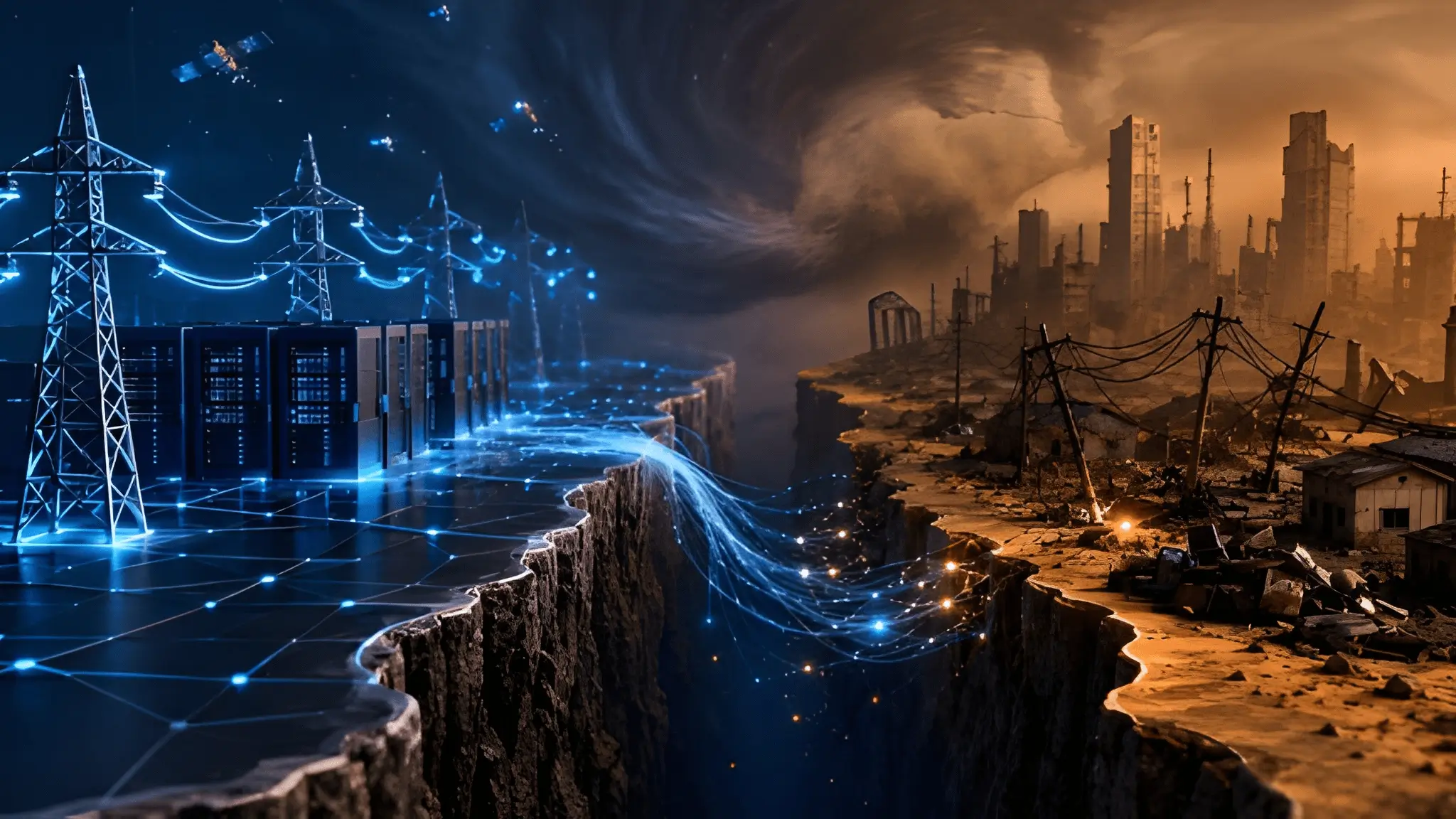
Artificial intelligence infrastructure no longer expands according to software ambition alone. Power systems now shape the geography of compute growth with increasing force because modern AI clusters operate as highly sensitive industrial loads that depend on uninterrupted electrical stability. Several economies still frame AI competitiveness around semiconductor access, cloud investment, and talent concentration, yet transmission resilience and frequency control have started determining which regions can sustain large-scale computational activity over long operational cycles. Data center operators increasingly examine electrical predictability before they evaluate incentives, tax structures, or land availability because unstable power conditions create operational uncertainty that no software architecture can fully absorb. AI infrastructure now exposes the hidden quality of national grids in ways traditional industrial systems never did because hyperscale computing reacts to electrical disturbances with extreme sensitivity and almost immediate operational consequences.

Electricity reliability once functioned as background infrastructure that rarely entered digital policy conversations in a meaningful way. AI expansion has changed that assumption because training clusters, inference campuses, and high-density GPU facilities depend on stable voltage profiles, predictable dispatch behavior, and rapid grid recovery capabilities across every operational hour. Utilities and balancing authorities therefore occupy a more strategic position within the AI economy because power orchestration now influences whether advanced computing systems operate continuously or encounter destabilizing interruptions. Frequency stability, transformer resilience, and transmission flexibility are increasingly viewed as strategic infrastructure priorities because uninterrupted compute availability now influences competitiveness across finance, defense, research, logistics, and industrial automation. The emerging divide may therefore separate countries capable of sustaining stable AI infrastructure from those trapped inside recurring electrical fragility despite ambitious digital aspirations.
The New AI Fault Line Isn’t Digital, It’s Electrical
Nations once worried about internet penetration, cloud adoption, and broadband access when discussing digital competitiveness. AI infrastructure has shifted the conversation toward transmission architecture, reserve margins, and electrical synchronization because advanced computing environments consume power with a level of intensity and continuity that conventional enterprise systems never required. Stable grids increasingly attract hyperscale investment because operators prioritize environments where voltage fluctuations remain tightly controlled and recovery systems respond predictably during disturbances. Weak transmission ecosystems meanwhile risk becoming compute deserts because persistent instability introduces operational risks that complicate long-duration AI deployment strategies. Several countries still promote AI ambitions aggressively, yet investors now examine grid behavior with greater scrutiny because unstable electrical ecosystems can undermine billion-dollar infrastructure investments long before campuses reach full operational scale. The divide therefore reflects electrical confidence rather than digital aspiration because AI infrastructure cannot function effectively inside unpredictable power environments.
Transmission Resilience Is Becoming a Strategic AI Asset
Transmission resilience is increasingly becoming a major characteristic of AI-ready economies because modern computational campuses require uninterrupted access to stable electrical delivery systems across every operational cycle. Several grid operators historically optimized networks around industrial demand patterns that changed gradually and remained relatively predictable throughout the day. AI clusters now introduce highly concentrated loads capable of ramping rapidly, which creates stress across substations, interconnections, and balancing systems that were never designed for synchronized computational intensity. Transmission corridors therefore determine whether electricity can move reliably toward compute hubs without introducing localized instability or operational bottlenecks during high-demand periods. Infrastructure investors increasingly assess transformer redundancy, substation modernization, and interregional transmission coordination because weak delivery architecture can create hidden fragility even inside generation-rich markets. Countries with resilient transmission ecosystems now attract greater infrastructure confidence because operational continuity depends on stable delivery as much as generation availability itself.

Grid operators also face a more complex balancing challenge because renewable integration, decentralized generation, and electrification trends have reduced the inertia traditionally provided by conventional power systems. Low-inertia environments react differently to sudden load swings, which means AI facilities can amplify grid instability when synchronization controls and reserve mechanisms fail to respond quickly enough. Several utilities now evaluate AI campuses not merely as customers but as dynamic grid participants capable of influencing wider system behavior during disturbances. Stable transmission ecosystems therefore require advanced operational intelligence, responsive reserve management, and strong interconnection governance because isolated upgrades cannot solve systemic instability alone. Hyperscalers increasingly prioritize regions where utilities coordinate effectively with balancing authorities because predictable electrical governance reduces deployment uncertainty across long infrastructure cycles. The new AI fault line therefore centers on operational electrical sophistication rather than headline generation capacity because resilient coordination increasingly determines compute viability.
Compute Deserts Are Emerging Beneath Weak Power Systems
Some economies possess strong digital ambitions yet struggle with aging transmission corridors, unstable reserve structures, and inconsistent power quality across industrial regions. AI infrastructure exposes these weaknesses quickly because GPU clusters respond aggressively to electrical irregularities that many traditional industries could tolerate temporarily without immediate disruption. Voltage instability, synchronization drift, and delayed interconnection processes increasingly discourage operators from deploying advanced compute infrastructure inside electrically fragile markets. Several regions therefore risk struggling to attract large-scale compute infrastructure despite strong software talent or favorable regulatory incentives because operational continuity matters more than digital branding during AI-era infrastructure planning. Investors increasingly interpret unstable electrical behavior as long-term operational risk because recurring disturbances create uncertainty around uptime reliability, infrastructure lifespan, and deployment scalability. Grid quality has consequently become a hidden determinant of technological competitiveness because AI systems depend on electrical precision at every operational layer.
Transmission fragility also affects broader economic confidence because AI infrastructure increasingly anchors financial systems, industrial automation, logistics coordination, and digital public services across multiple sectors simultaneously. Regions with unreliable grids may therefore encounter secondary investment hesitation because downstream industries prefer operating near stable compute ecosystems with predictable uptime characteristics. Electrical resilience now influences sovereign AI credibility because governments cannot sustain large-scale national AI strategies without dependable energy infrastructure supporting continuous computational activity. Several developing economies confront this tension directly as rapid digital expansion collides with underinvested transmission architecture and uneven regional reliability conditions. AI deployment therefore magnifies existing electrical disparities instead of neutralizing them because computational infrastructure amplifies the operational consequences of unstable power environments. The emerging energy divide increasingly reflects which nations modernized electrical coordination before AI demand exposed systemic weaknesses at industrial scale.
When Grid Instability Starts Scaring Away AI Capital
AI capital once concentrated primarily around connectivity, tax policy, and access to skilled engineering talent. Electrical instability has altered investment calculations because hyperscale operators increasingly treat grid predictability as a foundational requirement rather than a secondary infrastructure variable. Several projects now face delays not because demand weakened but because interconnection uncertainty, transmission congestion, and reserve instability complicate operational planning across long deployment horizons. Investors increasingly worry about environments where curtailment policies shift unpredictably or voltage fluctuations create hidden operational risks for sensitive computational infrastructure. Large AI campuses require confidence that power systems can sustain continuous operations through seasonal demand spikes, weather disturbances, and industrial load variability without introducing destabilizing interruptions. Grid instability is increasingly influencing infrastructure investment decisions because operators now prioritize operational certainty alongside long-term market opportunity during large-scale compute deployment planning.
Voltage Uncertainty Is Changing Infrastructure Geography
Voltage instability rarely dominated infrastructure discussions during earlier phases of cloud expansion because conventional enterprise computing tolerated limited electrical fluctuations more effectively than modern AI systems. GPU-intensive environments now depend on tightly regulated electrical conditions because rapid computational scaling magnifies sensitivity to even short-duration disturbances across large operational clusters. Voltage swings can trigger protective responses within uninterruptible power systems, forcing facilities onto backup infrastructure and creating cascading operational complications throughout interconnected systems. Several utilities therefore impose stricter interconnection requirements on hyperscale developments because unstable load behavior can propagate across wider grid ecosystems during fault conditions. Investors increasingly interpret voltage unpredictability as a structural infrastructure weakness because repeated disturbances affect operational confidence even when full outages remain relatively infrequent. Stable voltage management has consequently become a competitive infrastructure advantage because AI operations require electrical consistency at industrial scale.
Interconnection delays create additional uncertainty because transmission expansion often moves far slower than hyperscale infrastructure deployment timelines. Several operators now encounter prolonged approval processes as utilities reassess grid readiness for large AI campuses capable of introducing concentrated demand into already stressed electrical ecosystems. Land availability and connectivity therefore matter less when power delivery remains uncertain across the expected operational lifecycle of the facility. Hyperscalers increasingly evaluate regions according to transmission upgrade visibility, regulatory coordination, and reserve planning because delayed interconnections can trap capital inside unfinished infrastructure projects. Electrical predictability now shapes deployment geography because operators prefer markets where utilities demonstrate transparent planning frameworks and credible grid modernization pathways. AI infrastructure investment increasingly favors regions with predictable electrical performance because operational continuity carries greater long-term value than short-term infrastructure incentives alone.
Frequency Swings Are Becoming the Silent AI Killer
Electrical frequency stability rarely attracted public attention because conventional industries could tolerate moderate deviations without immediate operational collapse. AI infrastructure has changed that equation because high-density compute clusters rely on synchronized electrical behavior that must remain tightly controlled across every operational cycle. Grid frequency oscillations increasingly create hidden risks for hyperscale campuses because sensitive power electronics, cooling systems, and synchronization mechanisms respond rapidly to electrical irregularities. Several grid operators now confront more volatile balancing conditions due to renewable intermittency, reduced rotational inertia, and growing electrification pressure across industrial sectors. AI facilities therefore require not only abundant electricity but highly stable electrical rhythm because computational continuity depends on predictable frequency behavior at all times. Frequency stability has consequently become a strategic infrastructure requirement rather than a technical footnote within modern compute expansion planning.
Frequency deviations can propagate operational stress throughout AI campuses even when disturbances remain invisible to the public grid consumer. Sensitive server systems often react to instability through automated protection protocols designed to prevent hardware damage during abnormal electrical behavior. Those responses can interrupt workloads, reduce uptime confidence, and force operators onto backup systems that were intended for short-duration contingencies rather than repeated stabilization events. Several facilities now deploy advanced power conditioning infrastructure because grid irregularities increasingly affect operational predictability across large computational environments. Infrastructure confidence therefore depends on the stability of the broader electrical ecosystem because internal redundancy alone cannot fully neutralize persistent external volatility. AI operators increasingly evaluate grid frequency governance as carefully as they assess connectivity and land access during market selection decisions.
Low-Inertia Grids Create High-Risk Compute Environments
Traditional power systems relied heavily on large rotating generators that naturally stabilized frequency behavior through mechanical inertia distributed across the grid. Modern energy transitions have gradually reduced that stabilizing effect because inverter-based resources respond differently during rapid load changes and fault conditions. AI campuses amplify the challenge because synchronized computational clusters can introduce sharp demand variations that interact unpredictably with already fragile balancing systems. Several utilities therefore confront a more dynamic operational environment where frequency deviations emerge faster and propagate more aggressively across interconnected regions. Low-inertia conditions can create greater operational complexity for AI infrastructure because stabilization windows narrow during disturbances or sudden load imbalances. Operators increasingly favor regions with advanced balancing frameworks because frequency resilience now influences long-term infrastructure confidence directly.
Grid modernization efforts increasingly focus on synthetic inertia, fast frequency response systems, and advanced balancing coordination because traditional stabilization methods alone cannot support future computational demand patterns. Several balancing authorities now integrate predictive analytics and automated response mechanisms to maintain tighter operational control during rapid electrical fluctuations. AI infrastructure depends heavily on those capabilities because milliseconds of instability can trigger operational protection systems across interconnected compute environments. Countries with weak balancing coordination may therefore struggle to attract hyperscale expansion even when generation capacity appears sufficient on paper. Electrical resilience increasingly reflects operational sophistication rather than raw generation scale because compute infrastructure responds to stability quality more than theoretical power abundance. Frequency management has therefore become a central pillar of AI readiness because stable synchronization underpins every layer of uninterrupted computational activity.
Infrastructure Trust Depends on Electrical Precision
AI infrastructure markets increasingly operate on trust because hyperscale deployment requires long investment horizons supported by stable operational assumptions. Electrical precision has become central to that trust because grid oscillations introduce uncertainty around uptime reliability, equipment stress, and continuity planning across computational campuses. Operators therefore assess power quality characteristics in far greater detail than earlier generations of digital infrastructure investors because AI systems react more aggressively to electrical disturbances. Several regions now market themselves as stable power environments rather than simply low-cost energy destinations because reliability has overtaken pricing as the dominant infrastructure concern. Power quality engineering, synchronization monitoring, and disturbance response planning increasingly shape national infrastructure competitiveness because compute continuity depends on every layer of electrical coordination functioning predictably. AI expansion consequently rewards operationally disciplined grids while exposing weaknesses inside fragmented or underinvested electrical ecosystems.
Infrastructure trust also extends beyond individual facilities because national AI ambitions increasingly depend on interconnected ecosystems operating continuously across finance, manufacturing, defense, and logistics sectors. Weak electrical precision undermines that continuity because repeated instability creates cascading operational uncertainty throughout digital supply chains and dependent industrial systems. Several countries now recognize that stable compute infrastructure requires coordinated investment across transmission modernization, reserve flexibility, and balancing intelligence rather than isolated data center construction alone. Energy governance therefore influences digital sovereignty because uninterrupted computational capability increasingly underpins economic resilience and strategic independence. Stable electrical ecosystems attract greater infrastructure confidence because operators prefer environments where systemic reliability supports long-term expansion planning without recurring operational surprises. The silent AI killer may therefore emerge not from catastrophic blackouts but from persistent electrical instability that gradually erodes infrastructure trust over time.
The AI Economy Runs on Confidence, Not Just Electricity
Electricity availability alone no longer guarantees AI infrastructure growth because hyperscale operators increasingly prioritize operational confidence over theoretical energy abundance. Modern compute campuses depend on predictable dispatch behavior, stable reserve planning, and transparent grid governance because infrastructure investments span long operational cycles with limited tolerance for uncertainty. Several regions still advertise low electricity costs aggressively, yet investors increasingly evaluate how consistently grids perform during stress conditions rather than how cheaply they operate during stable periods. Confidence has therefore become an increasingly important infrastructure consideration because AI facilities require assurance that electrical systems can sustain continuous operations through changing demand patterns and environmental disruptions. Utilities, regulators, and balancing authorities now influence AI competitiveness directly because operational predictability shapes deployment confidence across every stage of infrastructure expansion. The AI economy consequently rewards regions where energy systems behave consistently under pressure rather than markets that merely promise abundant generation capacity.
Operational confidence also affects financing structures because infrastructure lenders increasingly assess electrical risk exposure before supporting large-scale compute projects. Unpredictable curtailment policies, weak reserve transparency, and uncertain transmission expansion timelines create hesitation because long-duration AI investments depend on reliable operational assumptions. Several hyperscale projects now incorporate detailed grid risk modeling during site evaluation because electrical fragility can undermine future scalability even when initial deployment conditions appear manageable. AI infrastructure therefore behaves differently from conventional industrial expansion because computational continuity requires stable energy coordination across every operational layer simultaneously. Countries with disciplined electrical governance increasingly attract strategic infrastructure investment because investors value predictable operating environments over short-term incentive packages alone. Energy certainty has consequently become foundational to digital competitiveness because uninterrupted compute operations depend on systemic reliability rather than isolated infrastructure strength.
Dispatch Confidence Is Reshaping Market Selection
Grid dispatch reliability increasingly influences where AI infrastructure expands because operators require assurance that electricity delivery will remain stable during both ordinary and stressed grid conditions. Several markets still possess significant generation portfolios, yet inconsistent dispatch coordination introduces uncertainty around actual operational reliability during periods of high demand or regional imbalance. AI campuses depend on continuous computational activity that cannot tolerate prolonged instability because interruptions affect workload continuity, infrastructure efficiency, and broader ecosystem trust simultaneously. Utilities capable of demonstrating transparent reserve management and coordinated balancing procedures therefore gain strategic advantage within the emerging AI economy. Infrastructure investors increasingly interpret dispatch discipline as evidence of long-term operational maturity because stable coordination reduces uncertainty around future expansion viability. Market selection consequently reflects confidence in electrical governance as much as access to land, fiber connectivity, or generation resources.
Predictable dispatch behavior also supports broader industrial ecosystems because AI infrastructure increasingly anchors financial modeling, logistics coordination, and automation systems across multiple economic sectors. Uncertain energy coordination can therefore create secondary hesitation among businesses that depend on uninterrupted compute services operating nearby. Several countries now strengthen transmission visibility, reserve transparency, and recovery coordination specifically to attract long-duration digital infrastructure investment. Stable dispatch systems provide operational reassurance because hyperscale operators prefer environments where balancing authorities communicate clearly and respond rapidly during disturbances. Infrastructure trust grows when operators believe energy systems can absorb unexpected events without cascading instability across compute environments. Dispatch confidence has therefore evolved into a strategic economic asset because stable electrical coordination increasingly defines national AI readiness.
Energy Certainty Is Becoming Infrastructure Currency
Energy certainty is increasingly treated as a major infrastructure advantage within the AI economy because computational infrastructure depends on stable long-term operating conditions that cannot fluctuate unpredictably across deployment cycles. Several investors now examine grid modernization plans, reserve market structures, and transmission redundancy with greater intensity than traditional real estate incentives because operational continuity determines infrastructure viability over decades rather than quarters. AI campuses require confidence that utilities can coordinate generation, transmission, and balancing systems consistently during changing environmental and industrial conditions. Countries with fragmented regulatory structures or inconsistent energy planning therefore face growing challenges when competing for hyperscale investment despite strong digital ambitions. Predictable electrical governance creates infrastructure trust because operators prefer environments where long-term power reliability remains institutionally supported rather than politically uncertain. Energy certainty has consequently become a defining competitive advantage within the emerging geography of global AI expansion.
The shift toward energy certainty reflects the operational reality of modern AI systems because continuous workloads cannot tolerate repeated interruptions, unstable synchronization, or unpredictable curtailment behavior across interconnected facilities. Several hyperscalers increasingly deploy sophisticated forecasting models that evaluate grid reliability trajectories years before construction begins because infrastructure risk compounds significantly over long operational horizons. Electrical predictability therefore influences financing, insurance, and expansion planning simultaneously because every layer of AI deployment depends on uninterrupted computational continuity. Utilities capable of demonstrating transparent modernization pathways and disciplined balancing frameworks increasingly attract greater infrastructure confidence because investors value reliability visibility over speculative energy abundance. Stable electrical systems now support broader national competitiveness because advanced computing infrastructure increasingly underpins research ecosystems, industrial automation, and strategic digital capabilities. Infrastructure currency in the AI era therefore derives less from cheap electricity and more from confidence that the grid will behave predictably under sustained computational pressure.
Why Some Nations Are Quietly Becoming Compute Safe Havens
Several countries now attract disproportionate AI infrastructure attention despite lacking dominant semiconductor ecosystems or globally recognized technology sectors. Stable electricity markets, disciplined transmission governance, and predictable industrial energy frameworks increasingly explain that shift because hyperscale operators prioritize operational reliability above branding narratives. Compute infrastructure depends heavily on environments where balancing authorities coordinate effectively, reserve systems remain transparent, and recovery mechanisms function rapidly during disturbances. Nations with calm electrical ecosystems therefore gain strategic importance because AI deployment increasingly rewards predictability rather than headline technological prestige alone. Investors quietly favor regions where operational continuity appears institutionally embedded because infrastructure confidence grows when electrical systems behave consistently across long planning horizons. Certain regions are consequently becoming more attractive for large-scale compute infrastructure due to energy stability rather than purely digital sophistication because uninterrupted compute operations require disciplined electrical ecosystems first.
Geographic neutrality sometimes strengthens these markets because politically stable energy systems with mature utility coordination often present lower operational volatility than rapidly expanding but fragmented power environments. Several smaller economies have invested steadily in transmission redundancy, cross-border interconnections, and industrial power quality over extended periods without positioning those efforts explicitly as AI strategy. Modern compute expansion now reveals the strategic value of those investments because stable electrical behavior reduces operational uncertainty across large infrastructure deployments. Hyperscalers increasingly examine transformer resilience, outage recovery coordination, and reserve transparency because subtle operational factors determine whether AI campuses maintain uninterrupted workloads through changing grid conditions. Nations capable of demonstrating disciplined electrical governance therefore become attractive compute destinations even without dominating semiconductor manufacturing or software innovation. AI infrastructure increasingly follows operational calm because stable power environments create long-term confidence that volatile grids cannot easily replicate.
Predictable Grids Create Strategic Infrastructure Magnetism
Predictability has become one of the most valuable characteristics within modern infrastructure markets because AI operators require assurance that electrical systems will support uninterrupted computational activity across long deployment cycles. Several countries now differentiate themselves through transparent dispatch coordination, disciplined maintenance planning, and responsive balancing frameworks rather than aggressive subsidy programs alone. Stable industrial energy governance increasingly attracts infrastructure investment because operators often interpret operational consistency as evidence of long-term institutional reliability. AI campuses depend on electrical ecosystems where unexpected disturbances remain manageable rather than systemic because repeated instability undermines both operational efficiency and infrastructure trust. Nations with mature utility coordination therefore gain competitive advantage because they provide environments where computational infrastructure can scale without recurring energy uncertainty. Predictable grids increasingly function as strategic national assets because uninterrupted AI operations depend on operational reliability more than symbolic digital ambition.
Infrastructure magnetism also emerges from recovery confidence because operators increasingly assess how grids respond after disruptions rather than focusing exclusively on ordinary operating conditions. Several electrical systems maintain strong reputations because utilities restore synchronization rapidly following storms, equipment failures, or regional imbalances without prolonged operational instability. AI infrastructure values that resilience because computational continuity depends on the speed and precision of grid recovery mechanisms across interconnected systems. Countries with coordinated emergency response procedures and strong reserve flexibility therefore attract greater hyperscale interest because operational confidence extends beyond everyday reliability metrics. Stable recovery behavior reduces infrastructure risk because operators can model disruption scenarios more accurately within disciplined electrical ecosystems. Strategic infrastructure magnetism in the AI era consequently derives from the ability to maintain calm operational performance during both normal and abnormal grid conditions.
Quiet Infrastructure Discipline Is Outperforming Loud AI Narratives
Several governments continue framing AI leadership primarily through semiconductor investment announcements, research funding programs, and large-scale digital branding campaigns. Infrastructure markets increasingly respond differently because operators evaluate the underlying quality of electrical systems with far greater scrutiny than public narratives often acknowledge. Quiet infrastructure discipline is becoming increasingly important because transmission resilience, balancing intelligence, and operational predictability influence whether compute ecosystems can function continuously under industrial-scale demand conditions. Countries with modest public AI positioning sometimes outperform louder competitors because their grids already support stable industrial operations with minimal volatility and strong recovery coordination. AI infrastructure therefore rewards institutional consistency more than rhetorical ambition because uninterrupted computational activity depends on electrical precision at every operational layer. The emerging compute geography increasingly reflects operational maturity rather than visibility within global technology narratives.
Infrastructure discipline also influences downstream industrial confidence because manufacturers, logistics providers, and financial systems increasingly prefer operating near stable compute ecosystems with predictable uptime characteristics. Weak electrical coordination creates hesitation beyond the hyperscale sector because businesses dependent on AI-driven services require assurance that supporting infrastructure will remain consistently available. Several nations now strengthen grid modernization quietly through targeted transmission upgrades, balancing reforms, and reserve optimization strategies designed to improve operational resilience over time. Those measures rarely generate public excitement, yet they increasingly determine whether AI ecosystems expand sustainably across national economies. Stable electrical governance therefore acts as a silent multiplier for broader digital competitiveness because uninterrupted computational continuity supports multiple strategic industries simultaneously. The nations quietly becoming compute safe havens are often those that treated grid discipline as long-term infrastructure policy long before AI transformed electricity into a geopolitical asset.
The Next AI Bottleneck Could Be Grid Recovery Speed
Generation capacity alone no longer defines electrical resilience within the AI economy because recovery speed increasingly determines whether compute operations remain stable after disruptions occur. Modern AI infrastructure depends on continuous synchronization across networking systems, cooling architecture, and computational workloads that react poorly to prolonged instability during recovery periods. Several grids can restore power eventually after storms or equipment failures, yet hyperscale operators increasingly evaluate how quickly utilities reestablish stable operating conditions across interconnected transmission systems. Recovery delays create operational uncertainty because compute environments require not merely restored electricity but precisely stabilized electrical behavior before full workloads can resume safely. Grid recovery capability therefore influences infrastructure confidence because AI systems depend on rapid normalization after disturbances rather than gradual restoration processes designed for conventional industrial demand. The next major AI bottleneck may consequently emerge from recovery coordination weaknesses rather than absolute generation shortages.
Weather volatility, transformer failures, and cyber-related disruptions increasingly test the responsiveness of national electrical systems because AI-driven industrial ecosystems now depend on uninterrupted computational continuity across multiple sectors simultaneously. Several utilities historically optimized restoration around residential and conventional industrial priorities that tolerated slower recovery timelines without widespread systemic disruption. AI infrastructure changes those expectations because compute clusters require immediate stabilization to avoid cascading operational complications throughout dependent digital ecosystems. Recovery planning therefore extends beyond physical restoration because balancing authorities must coordinate synchronization, reserve deployment, and transmission stabilization rapidly enough to support sensitive computational infrastructure. Countries with fragmented operational governance may struggle during high-impact disruptions because delayed coordination can prolong instability far beyond the original fault event. Recovery speed has consequently become a strategic infrastructure metric because AI economies depend on rapid electrical normalization after disturbances occur.
AI Divide Will Be Measured in Grid Resilience
The next major global divide may not separate digitally connected societies from disconnected ones because internet access alone no longer determines technological competitiveness within the AI economy. Electrical resilience increasingly shapes that divide because uninterrupted computational infrastructure depends on stable transmission systems, disciplined balancing coordination, and rapid recovery capability operating continuously beneath modern digital ecosystems. Several countries possess ambitious AI strategies, advanced software talent, and expanding data infrastructure, yet fragile grids increasingly undermine their ability to sustain large-scale computational activity reliably over long operational periods. AI infrastructure exposes hidden weaknesses inside national power systems because concentrated compute demand magnifies synchronization instability, transmission congestion, and recovery coordination failures that conventional industrial activity previously masked. Stable electrical environments therefore attract greater infrastructure confidence because hyperscale operators prioritize operational predictability above symbolic digital ambition or temporary energy cost advantages.










