Skip to content
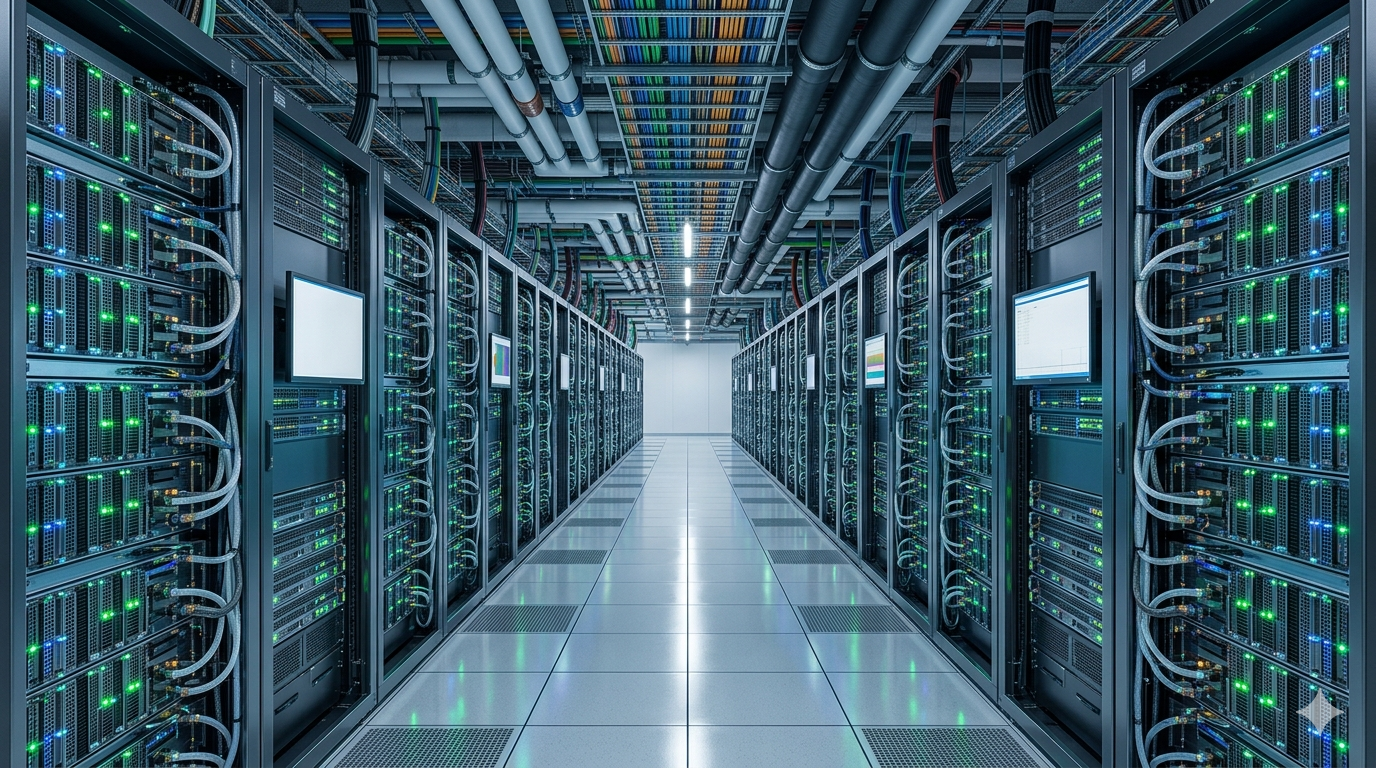
The term “data center” describes a building. It carries connotations of storage, retrieval, and general-purpose computing that no longer capture what the most important compute facilities in the world actually do. When Nvidia CEO Jensen Huang described AI data centers as “AI factories” at GTC 2026, he was not reaching for a metaphor. He was identifying a structural shift in how the most capable AI infrastructure is designed, operated, and valued. The AI factory is not a data center with better GPUs inside. It is a fundamentally different kind of facility, purpose-built around a single output: the continuous, high-volume production of intelligence tokens.

That distinction matters for infrastructure architects, facility operators, and capital allocators. A general-purpose data center optimises for flexibility, multi-tenancy, and hardware longevity. An AI factory optimises for token throughput, hardware utilisation, and workload continuity. The design decisions that flow from each optimisation target are different in ways that compound through every layer of the infrastructure stack. Understanding those differences explains why the most sophisticated AI operators are building facilities that would look strange to a conventional data center engineer, and why that gap will widen rather than narrow as AI workloads evolve.
What Makes a Factory Different From a Warehouse
The factory metaphor is precise in a way the data center metaphor never was. A warehouse stores things. A factory produces things. The distinction determines everything about how the facility is designed, staffed, measured, and managed.
A conventional data center is a warehouse for compute. It houses servers, switches, and storage that customers use on demand. Uptime is the primary performance metric. The facility exists to keep hardware available and responsive. Utilisation matters, but a data center that runs at 60 percent utilisation is not failing. It is providing headroom for demand spikes and hardware failures. The economic model rewards stable tenancy and reliable availability over continuous maximum throughput.

An AI factory is a production facility for tokens. Every GPU hour that passes without producing tokens is waste, not headroom. Utilisation targets are not 60 percent but 90 percent and above, because the economics of AI model training and inference depend on maximising the revenue-generating output from extraordinarily expensive hardware. A Blackwell GPU cluster that sits at 60 percent utilisation is an investment returning 60 percent of its potential revenue. That is not a design feature. It is a failure mode.
Why Production Orientation Changes Everything Downstream
That production orientation changes the facility design from the ground up. Factory layouts are optimised for workflow, not storage density. The movement of data through the compute pipeline determines the physical arrangement of the facility. Network fabric topology, cooling architecture, and power distribution all follow from the production workflow requirements rather than being designed independently and then populated with hardware.
The Architecture of Token Production
Understanding AI factory architecture requires understanding what token production actually demands from infrastructure. Training a large language model is an extended computation requiring sustained, high-bandwidth data movement between GPU nodes across weeks or months. Inference serves user queries by running forward passes through a trained model, requiring very low latency per query and very high throughput across thousands of concurrent sessions. These two workload profiles have different infrastructure requirements, and the AI factory must serve both efficiently.
Beyond GPUs, the hidden architecture powering the AI revolution establishes that the networking layer is as critical as the compute layer to AI factory performance. Training clusters require very high bandwidth and low latency within the cluster boundary. Inference clusters require low and consistent latency to external requesters, with the internal fabric needing to serve model sharding and key-value cache access patterns that differ significantly from training communication patterns.
Why Two Distinct Fabric Designs Are Required
The AI factory therefore requires two distinct network fabric designs serving different workload profiles within the same facility. The scale-up fabric, connecting GPUs within a training or inference cluster, operates at the highest bandwidth and lowest latency the technology can deliver. The scale-out fabric, connecting clusters to each other and to external networks, operates at somewhat lower bandwidth requirements but with greater geographic reach. The AI factory that conflates these two fabric requirements compromises both training efficiency and inference latency.
Power Density as the Defining Design Variable
Conventional data centers are designed around power density targets that the AI era has rendered obsolete. A facility built for 10 to 20 kilowatts per rack cannot physically operate current-generation AI hardware. Blackwell GPU racks require 120 kilowatts and above. Vera Rubin targets rack power well beyond that. An AI factory designed today must accommodate not just current hardware specifications but the trajectory of hardware density increases that will arrive with each subsequent GPU generation.
This forward-looking power density requirement changes the structural engineering of the facility in ways that are expensive to retrofit after construction. Engineers must design floor loading specifications, power delivery bus capacities, transformer ratings, and cooling distribution infrastructure for peak future density rather than current deployment requirements. An AI factory that cannot scale its power delivery to accommodate the next hardware generation will face expensive partial rebuild before that generation can be deployed, converting a competitive opportunity into a capital problem.
Why Power Redundancy Requirements Differ From Conventional Data Centers
AI factories require power delivery architectures with higher redundancy at every stage and fault isolation capabilities that prevent a failure in one zone from propagating to adjacent zones. N+1 redundancy at the UPS level is standard in conventional data centers. AI factories increasingly require 2N redundancy at critical stages, particularly for the highest-value training clusters, accepting the higher capital cost in exchange for the revenue protection that uninterrupted training jobs provide. A power event that forces a checkpoint restart on a multi-week training run loses hours of compute time worth hundreds of thousands of dollars.
Cooling Architecture for Continuous Maximum Utilisation
The cooling architecture of an AI factory follows directly from its utilisation target. A facility running GPU clusters at 90 percent utilisation continuously generates heat at near-peak rates around the clock. The cooling system has no recovery periods, no off-peak intervals during which accumulated heat can be dissipated. This continuous maximum thermal load fundamentally changes the cooling system design requirements.
Air cooling cannot serve AI factory thermal loads at current GPU densities. The physics of convective heat transfer from a 120-kilowatt rack to ambient air require air flow volumes that are physically impractical in a dense rack environment. Direct-to-chip liquid cooling is not an enhancement for AI factories. It is a fundamental requirement.
When the cooling stack fragments, data center design adapts to the reality that different components within the same rack have different thermal requirements. GPU dies require direct-to-chip cooling. Power delivery components require different thermal management. Memory and networking components have their own thermal profiles. The AI factory cooling architecture must manage multiple simultaneous thermal loops within the same physical footprint.
Why Cooling Undersizing Is an AI Factory’s Most Expensive Mistake
The cooling infrastructure of an AI factory represents a significant portion of total facility capital cost, proportionally higher than in conventional data centers because the thermal loads per unit of floor space are dramatically higher. Operators who undersize cooling infrastructure to reduce initial capital cost discover the constraint at deployment time, when the alternative is either throttling GPU performance or delaying production. Neither outcome is acceptable in a facility whose economic model depends on continuous maximum utilisation.
The Operational Model of Continuous Production
The factory metaphor extends to operations as well as architecture. A factory runs production shifts, measures output per unit time, and tracks yield, efficiency, and throughput as primary operational metrics. Downtime is not an availability event but a direct revenue loss, which means the production line requires the same discipline that any manufacturing operation applies to keeping output continuous.
AI factory operations reflect this production orientation. Operations teams track GPU utilisation continuously and dashboard it at the infrastructure, cluster, and individual accelerator level. Workload schedulers eliminate idle time between jobs, queuing training runs and inference services to fill the utilisation space as tightly as possible. Teams measure hardware failures not just as reliability events but as production interruptions, tracking mean time to recovery in terms of lost token production rather than hours of downtime.
AI compute beyond chips is now about controlling the full stack from the silicon through the facility through the software that schedules workloads. The AI factory operators who achieve highest utilisation are those who have the tightest integration between hardware monitoring, workload scheduling, and infrastructure management systems. A scheduler that can detect a degrading GPU and migrate its workload to a healthy unit before failure converts a production stoppage into a managed transition.
Why Operational Expertise Is Harder to Replicate Than Hardware
The workforce model of an AI factory requires deep expertise in GPU cluster management, distributed training monitoring, inference serving optimisation, and performance engineering. That operational expertise is scarce, expensive, and increasingly the differentiating capability between AI infrastructure operators who achieve competitive unit economics and those who do not. The GPU is available to any operator with sufficient capital. The operational depth that makes the GPU cluster run at 95 percent effective utilisation rather than 75 percent accumulates through time and practice, not capital deployment.
The Economics of Token Production
The economic model of an AI factory is fundamentally different from a conventional data center’s economic model. Conventional data centers generate revenue through capacity rental. An AI factory generates revenue through token production. The economics are those of a manufacturing operation rather than a real estate operation.
Revenue per token falls as AI hardware efficiency improves, because each new GPU generation delivers more tokens per watt than its predecessor. The AI factory that cannot reduce its cost per token at least as fast as market pricing falls sees its margin compress even if its revenue grows. That dynamic creates continuous pressure to upgrade hardware, redeploy capacity to higher-value workloads, and improve operational efficiency.
The rise of inference clouds as a distinct tier reflects the emergence of a market for specialised token production that neither hyperscaler general-purpose clouds nor conventional data centers serve optimally. Inference clouds build AI factory economics into their operating model, specialising entirely in token production for specific model families and optimising their infrastructure stack around that single output.
Why the Capital Structure of an AI Factory Differs From a Data Center
The capital efficiency of an AI factory also differs from conventional data center economics. A conventional data center can be built and then populated with tenants over time, deferring capital investment until occupancy justifies it. An AI factory, by contrast, demands the full capital stack up front before production begins. A 100-megawatt AI factory with Blackwell-class density requires a GPU cluster worth billions of dollars before it generates a single token of revenue. That front-loaded capital requirement changes the financing structure and the investor profile for AI factory development.
Why This Shift Is Structural and Not Cyclical
The shift from data center to AI factory as the primary unit of compute infrastructure is structural because it reflects a permanent change in what the most important compute infrastructure is asked to produce. General-purpose compute demand has not disappeared. Enterprise IT, web applications, and conventional databases will continue to require data center capacity. But the growth is in AI inference and training, and those workloads have different infrastructure requirements that the AI factory model is designed to serve.
Modern data centers designed for replacement over longevity are already incorporating AI factory design principles into their upgrade cycles. The facilities being built today for general hyperscaler use incorporate liquid cooling readiness, higher floor loading specifications, and power delivery architectures that can scale to AI factory densities as the hardware migration proceeds.
Why Purpose-Built Retains Advantages Over Retrofitted
However, the purpose-built AI factory will retain performance and economic advantages over retrofitted conventional facilities for the foreseeable future. A facility designed from the ground up for 120-kilowatt rack density with direct-to-chip cooling, 2N power redundancy, and a network fabric topology optimised for GPU cluster communication will outperform a retrofitted conventional data center on every metric that matters for token production. The gap between purpose-built and retrofitted will narrow as the retrofit ecosystem matures, but it will not close entirely.
The Geographic Implications of AI Factory Development
AI factories have different site selection requirements than conventional data centers. The power density requirement, combined with the cooling infrastructure needs, favours locations where high-voltage grid connections are accessible, water is available for cooling, and land parcels are large enough to accommodate gigawatt-scale power delivery infrastructure.
These requirements are concentrating AI factory development in a smaller number of locations than conventional data center development occupies. Northern Virginia faces power constraints that limit AI factory development despite its connectivity and ecosystem advantages. Markets with available power, including parts of Texas, the Midwest, and selected European locations, are emerging as AI factory destinations precisely because they can provide the power access that AI factory economics require.
Why Talent Proximity Constrains AI Factory Siting
The geographic concentration of AI factory development also reflects the workforce requirements of AI factory operations. The specialised expertise in GPU cluster management, cooling system operation, and AI workload scheduling that AI factory operations require is concentrated in technology hubs. Facilities located far from those talent pools face operational challenges that offset the power and land cost advantages of remote locations. The optimal AI factory location balances power access, land availability, and proximity to the operational expertise that determines whether the facility achieves its utilisation targets.
The Sustainability Dimension
AI factories consume power at intensities that raise environmental questions that conventional data centers have not previously confronted at the same scale. A 500-megawatt AI factory running at 90 percent utilisation continuously consumes approximately 3.9 terawatt-hours annually. The sustainability challenge for AI factories is more acute than for conventional data centers because the utilisation target works against the demand flexibility that allows conventional facilities to shift consumption to periods of high renewable generation.
An AI factory running a multi-week training job at 90 percent utilisation cannot defer consumption to renewable-favourable periods without losing training progress. The continuous production orientation of the AI factory model is structurally in tension with the intermittency of renewable energy supply.
Why 24/7 Carbon-Free Energy Matching Is the Standard Response
Operators are addressing this tension through long-term power purchase agreements with renewable generators combined with grid connections that provide firm power when renewable generation is insufficient. The 24/7 carbon-free energy matching approach, where operators contract for renewable energy that matches their consumption on an hourly rather than annual basis, is becoming a standard commitment for AI factory operators with sustainability obligations. That approach is more expensive than simple renewable energy credits but provides a more credible carbon accounting that investors and enterprise customers increasingly require.
The Role of Software in AI Factory Economics
The software layer of an AI factory determines whether the hardware investment delivers its theoretical economic potential or falls short due to suboptimal utilisation, scheduling inefficiencies, or failure detection gaps. Workload scheduling software determines how efficiently GPU clusters are used across multiple concurrent training runs and inference services. The scheduler that can pack workloads tightly, minimising idle GPU time between jobs, directly improves the revenue per GPU per hour that the AI factory generates.
Observability software determines how quickly the operations team can detect and respond to performance degradation, hardware failures, and cooling anomalies. An AI factory running millions of dollars of hardware at maximum utilisation cannot afford the detection-to-response latency that conventional data center monitoring tools were designed around. Observability stacks for AI factories need to detect GPU memory errors, thermal anomalies, and network congestion at millisecond resolution and trigger automated responses before human operators are even notified.
Why Software Competence Compounds Into Competitive Advantage
The operators who build deep software competence across scheduling, observability, and performance optimisation alongside their hardware and facility competence are building AI factory capabilities that are significantly harder to replicate than hardware procurement alone. The performance difference between a well-optimised scheduler and a naive one can be 10 to 20 percent of effective GPU utilisation at scale, a difference measured in hundreds of millions of dollars annually for large AI factory operators. That capability builds over months and years of operational learning that capital alone cannot acquire.
What Comes After the AI Factory
The AI factory represents the current state of the art in AI infrastructure design. It is not the endpoint. The most likely next evolution is the disaggregated AI factory, where compute, memory, and networking resources are physically separated and connected by optical interconnects fast enough to allow pooling and dynamic allocation across workloads. Current AI factories tightly couple compute and memory within each GPU, which simplifies the hardware architecture but limits the ability to match resource allocation to the varying memory and compute ratios of different workloads.
Co-packaged optics and silicon photonics interconnects are the enabling technology for disaggregated AI factory architecture. The bandwidth and latency of optical interconnects at the rack and cluster scale is approaching the point where compute and memory can be separated by metres rather than millimetres without significant performance penalty. When that threshold is crossed, the AI factory design will undergo another fundamental reorganisation.
Why Building for Adaptability Now Avoids Expensive Rebuilds Later
The operators and architects who understand the AI factory model clearly enough to anticipate this next evolution are positioning their infrastructure investment decisions today to accommodate it. The facility built for a tightly-coupled current architecture that cannot accommodate disaggregated future architectures will face the same retrofit challenge in five years that conventional data centers face today. Building for the factory model means building for the production capability, not just the current production hardware.
The Competitive Moat That Factory Design Creates
The AI factory model creates a competitive moat that extends beyond hardware procurement. An operator who builds a purpose-built AI factory with optimised cooling, power redundancy, network fabric topology, and operational software does not simply have better hardware than a competitor running equivalent GPUs in a conventional data center. The purpose-built AI factory has structurally lower cost per token, higher effective utilisation, better hardware reliability, and faster incident response. Each of those advantages compounds into a lower total cost of ownership.
The moat deepens over time because AI factory operations generate learning that compounds. An operations team that has managed 100 GPU cluster training runs has better intuitions about failure modes, scheduling optimisation, and cooling management than a team that has managed 10. That operational learning is not transferable through hardware procurement or capital deployment. It accumulates through time and practice, making early movers in AI factory development structurally advantaged relative to later entrants.
The frontier AI labs that have built their own AI factory capabilities, including OpenAI through its Stargate partnership, Anthropic through Fluidstack, and Google through its internal data center organisation, have not done so purely for cost reasons. They have done so to control the infrastructure layer that determines whether their AI development programmes can execute at the pace their competitive position requires. Owning and operating AI factory infrastructure converts infrastructure from a constraint on research velocity into a competitive capability that accelerates it.
Why the Distinction Between Hardware and Factory Is the Most Important Strategic One
The hyperscalers who have built AI factory capabilities internally, and who are now offering AI factory infrastructure as a service to enterprise customers and AI labs, are monetising operational expertise that took years to develop. The transition from data center to AI factory as the primary paradigm of advanced compute infrastructure is not a future development. It is happening now. The data center was a building for computers. The AI factory is a production facility for intelligence. That distinction, simple in its framing and profound in its implications, is reshaping every layer of the infrastructure stack from the silicon through the facility through the economics of the organisations that operate them.