 Skip to content
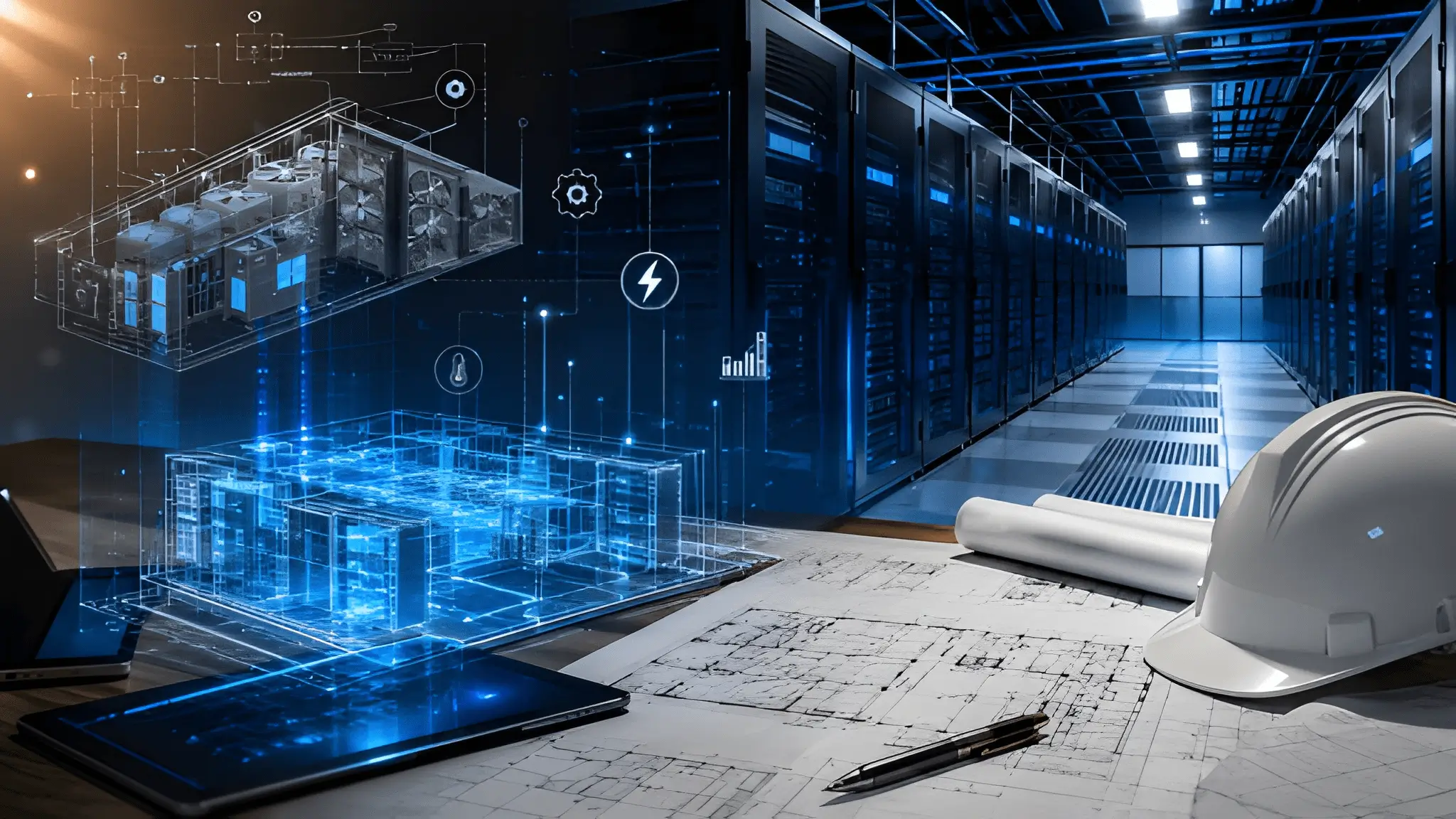
Modern AI-focused data center leasing often moves beyond discussions of available land, rentable area, and electrical capacity early in the evaluation process because engineering readiness increasingly influences deployment planning alongside commercial considerations. Technical procurement teams for large AI deployments commonly involve engineering specialists alongside commercial stakeholders because infrastructure design now directly influences application performance and long-term operational reliability. Structural design, airflow pathways, vibration characteristics, maintenance access, and telemetry interfaces collectively influence whether dense accelerated computing clusters can sustain predictable performance throughout extended training workloads. Many traditional powered-shell offerings continue to emphasize configurable real estate, while AI-focused deployments increasingly evaluate facilities as integrated engineering systems whose physical characteristics influence computational performance.

Conventional colocation strategies emerged during an era when rack densities allowed operators to separate building delivery from infrastructure customization without introducing significant operational uncertainty. Incremental growth suited enterprise computing because deployments expanded gradually, thermal loads remained comparatively predictable, and electrical distribution rarely approached physical design limits inside individual white spaces. Accelerator-based computing has altered those assumptions by concentrating enormous thermal and electrical intensity into compact deployment footprints that amplify every structural and environmental design decision. Successful AI deployment depends on both adequate powered capacity and validated engineering performance because electrical availability, cooling capability, structural readiness, and operational resilience collectively determine deployment success. Large AI infrastructure projects commonly include reviews of airflow models, structural calculations, maintenance strategies, commissioning records, and monitoring capabilities because those engineering documents help validate operational readiness before deployment.
The Lease That Broke the Model: Why Square Footage Stopped Mattering
Commercial leases traditionally describe rentable value through floor dimensions, utility allocation, access rights, and occupancy duration because those characteristics historically defined operational flexibility across conventional digital infrastructure. Artificial intelligence deployments evaluate a broader set of engineering variables because computational density makes environmental stability, cooling performance, structural readiness, and infrastructure resilience important considerations alongside traditional commercial requirements. Rack placement now depends upon airflow interaction, thermal containment behavior, cooling distribution efficiency, equipment service clearances, and cable routing geometry before infrastructure teams finalize hardware layouts. Mechanical engineering plays an increasingly important role in tenancy planning for high-density AI deployments because thermal behavior directly influences hardware reliability and operational consistency across accelerator clusters. Large AI infrastructure projects commonly include detailed reviews of engineering documentation because design assumptions influence deployment planning, operational resilience, and long-term infrastructure compatibility.
AI Infrastructure Measures Environmental Performance Before Occupancy
Physical area continues providing essential operational context, although usable computational capacity increasingly depends upon environmental consistency rather than available square footage alone. Dense accelerator installations generate localized operating conditions that require coordinated interaction among electrical distribution systems, mechanical infrastructure, structural components, and continuous monitoring platforms throughout every stage of deployment. Cooling architecture significantly influences deployment suitability because environmental performance directly affects infrastructure capability, operational resilience, and future expansion planning. Many infrastructure providers now present thermal validation studies alongside conventional property documentation because engineering analysis helps demonstrate operational readiness before equipment installation. Design reviews now include airflow simulation, containment validation, pressure balancing, and maintenance accessibility because those characteristics collectively determine whether infrastructure supports intended computational behavior.

Legacy leasing language often assumed that tenants would engineer remaining infrastructure independently after securing suitable powered space because deployment complexity remained comparatively manageable across lower-density computing environments. Artificial intelligence clusters reduce the traditional separation between shell delivery and infrastructure engineering because design assumptions established during construction can influence future deployment compatibility. Many operators now provide more comprehensive engineering documentation covering airflow behavior, structural tolerances, cooling strategies, maintenance methodologies, and monitoring capabilities before commercial agreements are finalized. Greater engineering transparency supports more informed commercial decision-making because infrastructure risks can be identified and evaluated before deployment begins. Competitive differentiation therefore shifts toward validated engineering evidence rather than generalized flexibility because sophisticated tenants evaluate operational predictability before considering commercial incentives. Square footage remains necessary within lease documentation, although environmental performance increasingly determines whether that space possesses meaningful computational value.
Latency Domains Have Become Physical Design Questions
Application architects increasingly evaluate physical infrastructure through latency behavior because distributed accelerator clusters require deterministic communication across tightly synchronized computational environments. Network performance consequently depends upon building geometry, cable pathway design, equipment adjacency, and infrastructure layout instead of exclusively relying upon networking hardware capabilities. Infrastructure planning therefore incorporates computational topology during early design stages because physical separation introduces measurable operational effects across coordinated processing environments. Mechanical, structural, and networking disciplines now collaborate much earlier within project delivery because infrastructure performance emerges from integrated engineering rather than isolated subsystem optimization. Traditional leasing frameworks rarely acknowledged these interactions because previous computing architectures tolerated broader physical variation without significant operational consequences. Artificial intelligence environments reduce that tolerance by linking computational efficiency directly with infrastructure organization inside the building envelope.
Building configuration increasingly influences workload scheduling because communication pathways interact with thermal management, maintenance accessibility, and equipment placement throughout densely populated computing halls. Infrastructure designers therefore evaluate routing efficiency alongside airflow containment because both characteristics influence deployment scalability under sustained computational demand. Cable distribution systems require greater engineering coordination since communication architecture must remain maintainable without disrupting environmental performance across neighboring deployment zones. Operators increasingly document infrastructure topology during lease discussions because physical layout affects long-term computational flexibility as significantly as electrical capacity itself. Commercial agreements therefore reference engineering deliverables that previously remained internal project documentation because tenants require greater visibility into operational assumptions before occupancy. Infrastructure consequently becomes an extension of computational architecture rather than passive accommodation for installed hardware.
From Empty Boxes to Engineering Covenants: The New Paperwork for 150kW Tenancy
Commercial leasing documents once concentrated on tenancy duration, utility commitments, insurance obligations, maintenance responsibilities, and financial protections because those clauses adequately governed conventional colocation relationships across relatively predictable operating environments. Artificial intelligence deployments require a substantially broader contractual framework because engineering assumptions now influence infrastructure performance long after construction reaches completion and occupancy begins. Technical annexes increasingly accompany lease agreements to define structural tolerances, thermal operating conditions, airflow assumptions, equipment installation procedures, maintenance coordination, commissioning expectations, and telemetry accessibility before either party commits to deployment schedules. Those documents reduce uncertainty because both operator and tenant understand precisely how the building must perform under continuous computational demand instead of relying upon generalized infrastructure descriptions. Engineering specifications therefore evolve into contractual obligations rather than remaining internal design references because operational accountability extends throughout the lease lifecycle instead of ending when physical possession transfers.
Engineering Annexes Have Become the Foundation of Modern AI Leasing
Infrastructure documentation now serves a different purpose than conventional technical appendices because AI-native tenants expect measurable operational commitments instead of descriptive facility narratives. Cooling system design reports increasingly accompany leasing discussions because airflow assumptions influence equipment selection, cabinet orientation, maintenance planning, and future deployment flexibility throughout the occupied environment. Structural calculations receive similar attention because equipment density introduces concentrated loading conditions that require validated engineering evidence rather than estimated capacity based upon historical deployment practices. Maintenance methodologies also become contractual considerations because servicing mechanical or electrical infrastructure must occur without creating unpredictable environmental changes across continuously operating accelerator clusters. Operators therefore disclose commissioning methodologies, operational testing procedures, monitoring capabilities, and maintenance coordination processes as formal engineering deliverables supporting commercial confidence before occupancy begins. Engineering transparency ultimately strengthens contractual stability because technical assumptions become visible, reviewable, and enforceable instead of remaining hidden beneath conventional property documentation.
Legal language consequently expands beyond property rights because computational reliability increasingly depends upon building behavior throughout the operational lifecycle rather than during initial occupancy alone. Infrastructure providers therefore collaborate more closely with engineering consultants during contract preparation because technical commitments require measurable definitions capable of supporting long-term operational accountability. Predictive maintenance strategies, environmental monitoring interfaces, infrastructure redundancy validation, and continuous commissioning procedures now appear within negotiated documentation because tenants require confidence that engineering performance remains consistent after deployment completion. Traditional powered-shell agreements rarely addressed those responsibilities because tenants historically completed substantial infrastructure customization after taking possession of available space. Artificial intelligence environments instead require engineering certainty before hardware procurement progresses because unresolved infrastructure assumptions create deployment risks that software optimization cannot mitigate after installation concludes. The modern lease therefore becomes a technical covenant describing how the building must continuously perform rather than simply defining who occupies available space.
Performance Guarantees Now Extend Beyond Electrical Availability
Electrical service availability historically represented the principal technical commitment within powered-shell agreements because sufficient utility capacity generally allowed tenants to design remaining infrastructure according to individual operational preferences. Artificial intelligence deployments challenge that assumption because electrical capacity alone provides little assurance that supporting infrastructure can sustain stable environmental conditions throughout extended computational activity. Performance guarantees therefore increasingly encompass airflow consistency, environmental monitoring integrity, thermal response behavior, maintenance coordination, structural resilience, equipment accessibility, and commissioning validation instead of focusing exclusively upon utility delivery. Each engineering commitment influences computational continuity because accelerator clusters depend upon predictable physical conditions across interconnected hardware ecosystems operating without interruption. Infrastructure providers consequently define measurable engineering parameters before occupancy because operational reliability emerges from coordinated subsystem behavior rather than isolated electrical performance. Technical guarantees therefore evolve into integrated service commitments reflecting the multidisciplinary nature of contemporary computational infrastructure.
Continuous operational visibility also becomes an essential contractual consideration because AI-native tenants expect infrastructure behavior to remain observable throughout deployment rather than relying solely upon periodic maintenance reporting. Building management platforms increasingly integrate with environmental monitoring systems, mechanical infrastructure, electrical distribution networks, and operational telemetry because coordinated visibility improves predictive maintenance while reducing unexpected operational disruptions. Operators therefore negotiate data accessibility alongside traditional infrastructure obligations because engineering transparency supports collaborative operational planning between infrastructure teams and tenant engineering organizations. Predictive analytics similarly become relevant within contractual discussions because early identification of environmental deviation reduces infrastructure risk before computational performance becomes affected. Maintenance scheduling consequently depends upon continuously available engineering information instead of fixed calendar intervals because infrastructure behavior varies according to operating conditions throughout deployment lifecycles. Building intelligence therefore becomes part of contractual performance rather than an optional operational enhancement.
Floor Plans Aren’t Placemats: Structural Reality Checks Before the First Cabinet Lands
Building floor plans traditionally illustrated available space, circulation pathways, equipment locations, and expansion opportunities because conventional infrastructure rarely approached the structural limits established during original construction. Artificial intelligence environments fundamentally change that evaluation because concentrated equipment density requires structural engineering validation before procurement teams finalize deployment schedules or hardware configurations. Every equipment row introduces combined loading from cabinets, cooling infrastructure, electrical distribution systems, cable pathways, and maintenance equipment that collectively influence how structural components behave throughout continuous operation. Structural engineers therefore evaluate load distribution, reinforcement requirements, equipment anchoring strategies, slab behavior, and service accessibility well before installation activities begin because design assumptions directly influence long-term operational reliability. Deployment planning consequently extends beyond architectural layout into detailed structural analysis because computational infrastructure now interacts with the physical building more intensively than conventional digital environments ever required. commercial discussions.
Structural Capacity Determines Deployment Viability Long Before Equipment Delivery
Cabinet positioning increasingly reflects engineering limitations rather than simple space optimization because concentrated loading conditions require balanced structural distribution across supporting elements throughout the white space. Equipment placement also considers maintenance pathways because service access influences structural loading during infrastructure replacement, equipment movement, and operational modifications performed after occupancy. Operators therefore coordinate structural design with mechanical, electrical, and architectural disciplines to ensure infrastructure systems function collectively without creating localized engineering constraints during deployment. Structural reinforcement occasionally becomes necessary before occupancy because original design assumptions often reflected significantly lower equipment densities than modern accelerator environments require. Technical reviews consequently evaluate deck integrity, support continuity, equipment anchoring, and construction tolerances before procurement decisions progress toward execution. Engineering certainty therefore begins beneath the cabinet footprint because computational performance ultimately depends upon the physical stability of the supporting structure.
Commercial discussions increasingly incorporate structural documentation because tenants seek engineering assurance before committing substantial investments in specialized computing hardware with limited deployment flexibility. Infrastructure providers therefore present engineering calculations, inspection records, commissioning documentation, and structural assessments alongside traditional leasing information because those materials demonstrate readiness more convincingly than generalized infrastructure descriptions. Building owners also recognize that validated engineering evidence accelerates technical due diligence because sophisticated procurement organizations require objective documentation supporting every significant infrastructure assumption. Traditional shell marketing often highlighted expansion potential without addressing structural compatibility because lower-density deployments tolerated greater uncertainty during occupancy planning. Artificial intelligence deployments instead require engineering validation before installation activities commence because correcting structural deficiencies after equipment arrival introduces unacceptable operational complexity. Structural readiness consequently becomes one of the earliest determinants of deployment success rather than a background engineering consideration examined after commercial agreements conclude.
Environmental Conditions Now Shape Structural Design Decisions Before Commissioning
Structural engineering increasingly interacts with environmental performance because thermal management systems, cooling distribution strategies, maintenance accessibility, and long-term operational conditions collectively influence how buildings support dense computational infrastructure throughout their lifecycle. Water management considerations provide an important example because cooling system selection affects equipment placement, service access, piping distribution, floor penetrations, and future maintenance planning across the occupied environment. Infrastructure teams therefore evaluate structural and environmental systems together instead of treating them as independent engineering disciplines because operational efficiency depends upon coordinated building behavior. Design coordination also improves long-term adaptability because environmental modifications become easier when structural allowances exist before occupancy begins. Engineering collaboration consequently shifts toward integrated planning where mechanical and structural specialists evaluate infrastructure performance through shared operational objectives rather than isolated subsystem optimization. Physical architecture therefore evolves alongside environmental engineering because computational density links both disciplines throughout modern AI infrastructure planning.
Environmental resilience also influences structural planning because infrastructure must continue supporting operational requirements under changing seasonal conditions, maintenance activities, equipment refresh cycles, and evolving cooling technologies throughout extended occupancy periods. Operators therefore consider serviceability during structural design because maintenance access often determines whether infrastructure improvements can occur without disrupting neighboring computational environments. Cooling equipment placement similarly affects structural loading because mechanical systems contribute additional weight while introducing maintenance pathways that interact with supporting building elements. Technical documentation consequently describes integrated engineering relationships instead of presenting structural calculations independently from environmental infrastructure planning. Procurement organizations increasingly review those multidisciplinary design records because operational resilience depends upon coordinated engineering rather than isolated compliance with individual technical standards. Building readiness therefore reflects the quality of engineering integration as much as the strength of individual structural components.
The Sound of Stranded Revenue: Acoustic and Vibration Specs Nobody Wrote Into the Old Shell
Acoustic performance rarely influenced commercial data center negotiations because historical server deployments generated relatively uniform operating conditions that remained within conventional building design expectations. Accelerator-dense environments alter that relationship because high-capacity cooling equipment, elevated airflow velocities, liquid-cooling support systems, and concentrated computational activity collectively create mechanical behaviors that extend well beyond traditional infrastructure assumptions. Vibrational energy now propagates through structural elements, equipment frames, suspended services, and mechanical assemblies in ways that require deliberate engineering attention before occupancy rather than reactive mitigation after installation. Infrastructure providers therefore evaluate mechanical isolation during early design phases because localized vibration can influence equipment stability, maintenance precision, monitoring accuracy, and neighboring deployment environments throughout continuous operation. Building engineering consequently expands beyond static structural adequacy toward dynamic operational stability because infrastructure performance increasingly depends upon how the building responds under sustained computational loading.
Mechanical Stability Has Become an Operational Requirement Rather Than a Building Characteristic
Mechanical systems also interact more closely than before because cooling equipment, pipework, cable containment, raised structural supports, and electrical distribution collectively influence vibration transmission throughout densely populated white spaces. Engineering teams therefore analyze resonance pathways alongside conventional structural calculations because dynamic equipment behavior differs substantially from static building loads that dominated earlier design methodologies. Equipment mounting strategies similarly receive greater scrutiny because improperly isolated assemblies may transfer recurring mechanical energy into surrounding infrastructure despite meeting conventional structural requirements. Operators increasingly incorporate vibration monitoring within commissioning activities because measured operational performance provides stronger evidence than theoretical design assumptions alone. Continuous observation further supports predictive maintenance because developing mechanical deviations often appear before conventional operational indicators reveal emerging infrastructure concerns. Engineering accountability therefore extends into dynamic building behavior that historically remained outside commercial leasing discussions.
AI-native tenants increasingly expect documentation demonstrating that infrastructure supports stable mechanical conditions throughout long-duration computational workloads rather than relying upon generalized assurances regarding construction quality. Technical due diligence therefore includes vibration assessments, equipment isolation methodologies, structural damping strategies, commissioning measurements, and operational monitoring capabilities before hardware deployment proceeds toward execution. Engineering transparency strengthens commercial confidence because both operator and tenant understand how the building behaves under realistic operating conditions instead of depending exclusively upon design intent established during construction. Traditional powered-shell agreements seldom referenced those characteristics because lower-density computing rarely produced operational environments requiring such detailed mechanical validation. Contemporary accelerator infrastructure leaves considerably less operational tolerance because computational continuity depends upon integrated physical stability across every supporting engineering discipline. Mechanical behavior consequently becomes part of infrastructure value because predictable buildings provide predictable computational environments throughout extended deployment lifecycles.
Acoustic Isolation Has Shifted from Occupant Comfort to Infrastructure Protection
Noise control within legacy colocation facilities primarily addressed workplace comfort, equipment servicing, and occupational safety because computational infrastructure generated relatively consistent environmental conditions across shared deployment spaces. Artificial intelligence environments introduce significantly different engineering priorities because large cooling assemblies, high-performance pumps, advanced air handling systems, and supporting infrastructure create complex acoustic profiles capable of affecting neighboring operational environments if design coordination remains insufficient. Acoustic engineering therefore becomes part of infrastructure planning because sound energy often reflects underlying mechanical interactions that influence operational stability throughout the facility. Operators increasingly evaluate equipment placement, structural separation, mechanical isolation, and service routing together because integrated engineering reduces acoustic transmission without compromising thermal or maintenance objectives. Infrastructure design consequently treats sound management as an operational engineering discipline rather than a finishing activity performed after construction reaches completion.
Shared environments require additional engineering discipline because neighboring deployments frequently operate under different thermal conditions, maintenance schedules, and computational profiles despite occupying adjacent white-space areas within the same building. Acoustic separation therefore supports operational independence by reducing unintended interactions among mechanically intensive infrastructure systems distributed across multiple tenancy zones. Structural damping techniques similarly improve operational resilience because reducing vibration transmission often limits associated acoustic propagation through interconnected building elements. Commissioning teams consequently verify mechanical and acoustic behavior together because both characteristics originate from integrated infrastructure performance rather than isolated subsystem operation. Continuous monitoring further strengthens operational planning because gradual changes in vibration or acoustic signatures frequently indicate developing maintenance requirements before equipment reliability becomes affected.
Permitting for Physics, Not Paper: Local Approvals That Now Gate Your Fill Rate
Infrastructure permitting historically concentrated on zoning compliance, construction documentation, utility coordination, fire protection, and occupancy requirements because conventional data center developments fit established regulatory frameworks with relatively predictable environmental characteristics. Artificial intelligence infrastructure introduces engineering conditions that encourage permitting authorities to examine how buildings interact with surrounding environments throughout long-term operation instead of limiting review to administrative completeness. Thermal discharge management, cooling system design, water stewardship strategies, electrical resilience, emergency planning, and environmental integration increasingly receive detailed technical evaluation because dense computational environments create operational characteristics that extend beyond conventional commercial construction assumptions. Regulatory engagement therefore begins earlier within project development because engineering evidence supports permitting decisions more effectively than generalized infrastructure descriptions prepared during conceptual planning. Infrastructure providers consequently coordinate with engineering consultants throughout permitting activities because multidisciplinary technical documentation improves review efficiency while reducing uncertainty during approval processes.
Regulatory Reviews Increasingly Examine Operational Engineering Instead of Administrative Completeness
Engineering submissions now include broader technical analysis because permitting organizations require greater visibility into how infrastructure behaves during continuous operation rather than solely during normal occupancy conditions. Cooling architecture documentation often accompanies environmental reviews because thermal management influences energy behavior, equipment placement, maintenance planning, and site integration throughout the operational lifecycle. Water management strategies similarly receive greater attention because cooling technologies interact with regional environmental objectives, infrastructure resilience, and long-term resource planning beyond immediate construction considerations. Operators therefore integrate permitting requirements into engineering development instead of treating regulatory review as a sequential administrative milestone completed after technical design reaches maturity. Coordinated planning reduces redesign risk because engineering assumptions remain aligned with regulatory expectations throughout project progression.
Commercial schedules increasingly depend upon permitting certainty because infrastructure approval delays frequently affect deployment planning, commissioning activities, equipment procurement, and tenant occupancy across highly synchronized project timelines. Infrastructure providers therefore present technically validated engineering documentation capable of supporting detailed regulatory review before procurement activities accelerate toward implementation. Artificial intelligence deployments further encourage proactive regulatory engagement because operational characteristics often differ substantially from conventional digital infrastructure occupying comparable physical footprints. Traditional powered-shell development occasionally assumed that remaining engineering customization could occur after shell completion because permitting largely focused upon building delivery rather than computational behavior. Contemporary infrastructure planning instead integrates regulatory engineering throughout project development because deployment readiness now depends upon operational validation extending beyond conventional construction approval.
Environmental Integration Now Determines Whether a Shell Can Become Operational
Building completion no longer guarantees deployment readiness because environmental engineering increasingly determines whether computational infrastructure can transition from construction project to operational platform without additional regulatory review. Local authorities increasingly evaluate heat management strategies, cooling technology selection, water reuse planning, environmental resilience, and operational sustainability because infrastructure interacts continuously with surrounding ecosystems throughout its service life. Engineering teams therefore design buildings with permitting outcomes in mind instead of separating environmental planning from commercial development objectives established during early project stages. Operational readiness consequently depends upon integrated environmental design because regulatory expectations increasingly address infrastructure behavior under sustained computational demand rather than initial occupancy alone. Technical coordination further improves long-term flexibility because environmentally resilient infrastructure adapts more effectively to changing operational requirements without triggering extensive redevelopment activities.
Environmental considerations also influence infrastructure architecture because cooling systems, heat rejection methods, maintenance access, and equipment placement collectively shape long-term operational capability across dense AI deployments. Operators therefore evaluate engineering alternatives according to both computational performance and regulatory compatibility because successful infrastructure must satisfy technical and environmental objectives simultaneously. Design documentation increasingly reflects those integrated priorities through multidisciplinary engineering analysis that connects mechanical systems, structural planning, environmental stewardship, and operational resilience into unified project strategies. Regulatory authorities benefit from comprehensive engineering evidence because technical transparency supports informed approval processes while reducing ambiguity surrounding long-term infrastructure behavior.
The Death of Phased Delivery: Why AI-Native Tenants Won’t Tolerate Staged Readiness
Phased delivery became a widely accepted practice because conventional enterprise computing expanded gradually through successive hardware refreshes, incremental application growth, and predictable increases in infrastructure utilization over extended operational periods. Operators could therefore commission additional electrical capacity, cooling equipment, white-space fit-outs, and support infrastructure according to tenant demand without materially affecting application performance or deployment sequencing. Artificial intelligence environments operate under fundamentally different planning assumptions because training clusters depend upon tightly integrated hardware ecosystems that derive operational value only when the complete computational environment becomes available simultaneously. Infrastructure readiness therefore cannot remain distributed across multiple commissioning phases because incomplete environmental, electrical, or mechanical capability delays productive computational activity regardless of installed hardware availability. Deployment planning consequently shifts toward synchronized infrastructure completion where every supporting subsystem reaches validated operational status before production workloads begin.
Incremental Infrastructure Delivery No Longer Matches AI Cluster Deployment Models
Procurement strategies also reinforce that operational reality because accelerator hardware, high-speed networking, cooling architecture, storage platforms, and orchestration software arrive as coordinated deployment programs rather than isolated infrastructure investments. Engineering teams therefore expect the physical building to accommodate complete deployment architecture from the first installation window instead of supporting staged commissioning over several operational cycles. Partial readiness introduces engineering uncertainty because subsequent construction activities may affect thermal conditions, maintenance pathways, airflow characteristics, and operational continuity after computational workloads enter production. Operators increasingly recognize that continuous construction within occupied AI environments creates technical risks extending beyond traditional commissioning considerations because infrastructure systems function as integrated operational ecosystems rather than independent engineering disciplines. Project delivery therefore emphasizes synchronized commissioning across electrical, structural, mechanical, and monitoring systems before occupancy instead of completing infrastructure progressively according to historical shell-development practices.
Commercial expectations evolve alongside those engineering realities because AI-native tenants evaluate deployment schedules according to infrastructure certainty instead of future scalability alone. Infrastructure providers therefore commit greater resources toward integrated commissioning, multidisciplinary design coordination, and operational verification before marketing available capacity because predictable readiness strengthens technical confidence during procurement. Traditional phased-delivery models often assumed that tenants could tolerate infrastructure evolution while applications matured because operational density remained comparatively manageable throughout deployment lifecycles. Artificial intelligence environments reduce that flexibility because every subsystem contributes directly to computational performance from the moment production begins. Engineering maturity therefore replaces phased availability as the principal measure of deployment readiness because operational continuity depends upon coordinated infrastructure performance across the complete facility.
Continuous Commissioning Replaces Sequential Build-Out as the New Operational Standard
Commissioning traditionally represented the concluding stage of construction because infrastructure systems required validation before occupants assumed responsibility for customized operational environments inside completed buildings. Artificial intelligence deployments extend that philosophy because engineering performance must remain continuously verifiable throughout the infrastructure lifecycle rather than only during initial occupancy acceptance. Continuous commissioning therefore emerges as a practical operational discipline where environmental conditions, electrical distribution, cooling efficiency, telemetry integrity, mechanical behavior, and maintenance performance remain observable through coordinated monitoring instead of periodic verification events. Infrastructure providers increasingly embed operational validation into daily building management because sustained engineering performance supports computational stability more effectively than isolated acceptance testing performed before occupancy. Engineering teams consequently evaluate infrastructure through persistent operational evidence rather than relying exclusively upon historical commissioning documentation generated during project completion.
Operational monitoring platforms support that transition because infrastructure behavior changes throughout maintenance cycles, seasonal environmental variation, equipment refresh programs, and evolving computational demand across AI deployments. Engineering organizations therefore integrate telemetry from electrical, mechanical, thermal, and environmental systems into coordinated operational dashboards capable of identifying emerging deviations before computational performance becomes affected. Predictive maintenance similarly benefits because continuous engineering observation reveals gradual infrastructure changes that conventional inspection intervals may overlook until operational consequences become measurable. Operators consequently define service commitments around sustained engineering performance instead of static infrastructure availability because computational reliability depends upon building behavior throughout occupancy rather than construction completion alone.
Embedded Intelligence Clauses: When the Building Has to Think Like the Cluster
Building management systems historically operated as internal operational tools because infrastructure owners primarily used them to supervise mechanical equipment, electrical assets, environmental conditions, and maintenance activities throughout conventional facility lifecycles. Artificial intelligence deployments redefine that role because infrastructure telemetry increasingly contributes directly to workload planning, capacity optimization, predictive maintenance, and engineering decision-making across computational environments operating with minimal tolerance for environmental variation. Operators therefore expose greater portions of infrastructure intelligence through contractual agreements because AI-native tenants require continuous visibility into building behavior alongside application and hardware monitoring. Telemetry consequently becomes part of the leased service because computational infrastructure performs more predictably when environmental awareness extends beyond isolated operational teams. Engineering transparency therefore supports technical collaboration by allowing building systems and computational platforms to operate from consistent environmental information rather than disconnected operational assumptions.
Infrastructure Telemetry Has Become a Contractual Deliverable Instead of an Operational Convenience
Environmental sensing now extends far beyond temperature observation because infrastructure teams monitor airflow behavior, cooling efficiency, electrical quality, equipment utilization, maintenance conditions, mechanical performance, and operational trends through integrated digital platforms supporting real-time engineering awareness. Those monitoring capabilities enable earlier operational intervention because developing infrastructure deviations become visible before computational stability experiences measurable degradation. Predictive maintenance similarly gains precision because historical operational patterns combined with live engineering telemetry reveal emerging performance changes across interconnected infrastructure systems. Operators therefore integrate telemetry architecture during facility design instead of treating monitoring as a supplementary operational enhancement implemented after commissioning concludes. Engineering documentation increasingly describes data accessibility, monitoring interfaces, retention methodologies, and operational integration because tenants require dependable infrastructure intelligence throughout deployment lifecycles. Building intelligence consequently becomes an engineered capability with commercial value rather than an internal maintenance resource invisible to occupants.
Lease documentation increasingly formalizes those expectations because AI-native organizations seek assured access to infrastructure information supporting coordinated operational planning across physical and computational environments. Technical annexes therefore define telemetry availability, interface compatibility, monitoring responsibilities, operational data quality, and maintenance coordination procedures capable of supporting long-term engineering collaboration between infrastructure providers and tenant operations teams. Traditional powered-shell agreements generally omitted those considerations because historical deployments separated facility operations from tenant computing activities with relatively limited technical interaction. Artificial intelligence environments eliminate much of that separation because computational performance increasingly depends upon synchronized awareness of infrastructure behavior across multiple engineering domains. Operators consequently compete by demonstrating operational intelligence alongside physical capability because informed buildings support more resilient computational ecosystems. Infrastructure telemetry therefore becomes part of the lease itself because visibility now represents operational infrastructure rather than optional analytical convenience.
Predictive Engineering Creates a Shared Operational Language Between Building and Compute
Modern computational environments increasingly depend upon predictive engineering because infrastructure reliability improves when operators anticipate changing operational conditions instead of responding only after measurable performance degradation appears. Artificial intelligence deployments strengthen that requirement because dense computational activity amplifies the operational consequences of even minor environmental deviations across interconnected accelerator clusters. Engineering organizations therefore combine predictive maintenance methodologies with environmental telemetry, mechanical observation, electrical monitoring, and operational analytics to identify infrastructure trends requiring intervention before production workloads experience disruption. Building systems consequently support computational continuity by providing early engineering awareness rather than functioning solely as reactive maintenance platforms. Operational decision-making therefore becomes increasingly collaborative because infrastructure teams and tenant engineering organizations evaluate consistent technical evidence while planning maintenance, capacity optimization, and lifecycle improvements. The building effectively begins participating in workload reliability through continuous engineering awareness rather than merely supplying physical accommodation.
Predictive engineering also influences lifecycle planning because infrastructure investments increasingly prioritize adaptability supported by measurable operational evidence instead of assumptions established during original construction. Maintenance programs therefore evolve according to observed infrastructure behavior rather than fixed service intervals because engineering data reveals how systems perform under actual computational operating conditions. Operators similarly optimize equipment replacement strategies through long-term telemetry analysis that identifies performance trends across cooling infrastructure, electrical systems, structural monitoring, and environmental management technologies. Technical collaboration consequently extends throughout occupancy because engineering insight continuously informs operational refinement instead of remaining confined to commissioning documentation produced before deployment. Infrastructure performance thereby improves through iterative engineering supported by observable building behavior rather than isolated maintenance events scheduled independently of computational demand. Predictive capability ultimately transforms infrastructure into an adaptive operational platform aligned with evolving AI deployment requirements.
From Landlord to Co-Architect — The Only Lease Left to Sign
The powered-shell model reached prominence because it successfully separated real estate delivery from infrastructure customization during an era when computational density left significant engineering flexibility after occupancy. Artificial intelligence has fundamentally narrowed that flexibility because the building itself now shapes thermal behavior, mechanical stability, electrical resilience, environmental consistency, maintenance accessibility, and operational intelligence before the first accelerator cabinet reaches the data hall. Infrastructure providers therefore compete on engineering confidence instead of unfinished adaptability because AI-native deployments require validated physical performance from the first day of production rather than incremental refinement over successive expansion phases. Every structural decision, cooling pathway, telemetry interface, commissioning process, and maintenance strategy now contributes directly to computational reliability throughout the operational lifecycle. The commercial conversation consequently shifts away from leasing unfinished technical potential toward demonstrating measurable engineering readiness supported by multidisciplinary evidence.
The future competitive threshold no longer depends upon delivering powered land because computational infrastructure now requires buildings that actively participate in engineering outcomes throughout every operational stage. Artificial intelligence deployments increasingly reward providers capable of integrating structural engineering, environmental design, mechanical performance, digital telemetry, operational intelligence, and commissioning discipline into a unified infrastructure strategy before occupancy begins. Leasing therefore transforms into a collaborative engineering exercise where infrastructure providers and tenants jointly define how the physical environment will sustain computational reliability over many years of continuous operation. That evolution marks the practical end of the powered-shell era because unfinished flexibility cannot compensate for unresolved engineering uncertainty inside high-density AI environments. The operators that succeed in the coming generation of digital infrastructure will position themselves as technical partners responsible for predictable operational performance instead of landlords delivering adaptable physical space.










