
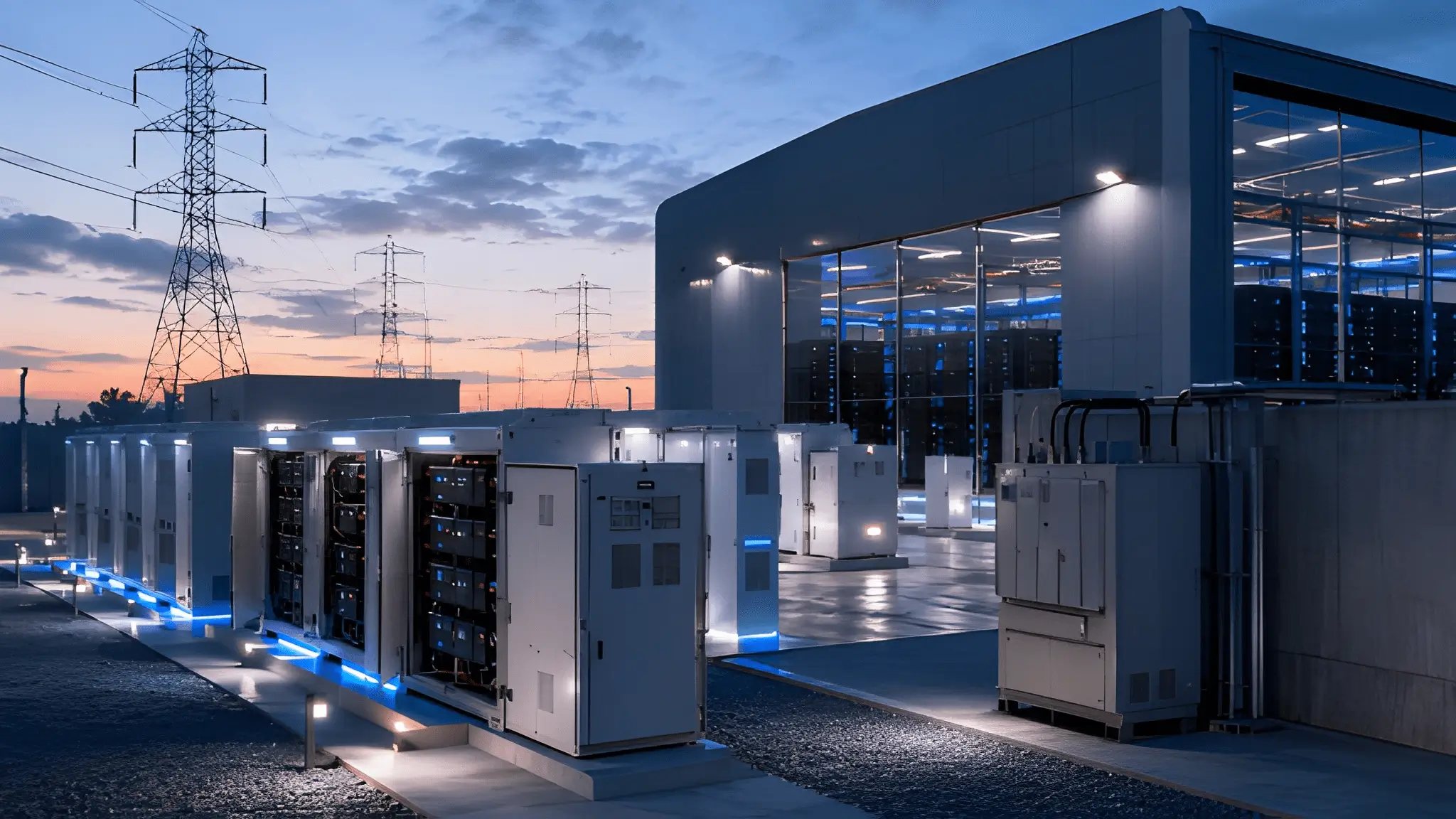
Large infrastructure projects rarely change because a single technology improves. They change when several engineering disciplines begin influencing each other in ways that previous planning assumptions no longer accommodate. Battery Energy Storage System (BESS) are increasingly becoming an important consideration in modern data centre development, where electrical engineering, fire protection, civil planning, operational resilience and long-term campus expansion are evaluated together during campus planning and infrastructure design. Instead of remaining an external energy asset connected through utility infrastructure, battery storage has started to occupy valuable land inside digital campuses where every metre affects future growth. The result extends well beyond energy strategy because battery placement now influences how architects sequence buildings, engineers design safety zones, and operators prepare campuses for decades of expansion. This evolution marks a broader shift in infrastructure thinking where digital capacity and electrical resilience develop together rather than through separate planning exercises.

Many earlier master plans treated electrical infrastructure as a supporting layer positioned around the operational core of the campus. Designers often allocated substations, transformers and backup generation along the perimeter because those assets required separation from critical computing environments while still maintaining utility access. Battery storage initially followed that same logic because projects focused on grid services, renewable integration or utility-side balancing instead of direct interaction with digital workloads. Recent deployment strategies increasingly challenge that arrangement because operators now expect storage to participate in resilience, power quality management, commissioning support and campus flexibility from the first construction phase onward. Physical proximity therefore creates engineering opportunities that cannot emerge when storage remains several kilometres away behind another ownership boundary. The changing relationship between energy systems and computing infrastructure now makes campus planning as important as battery chemistry itself.
When Storage Stops Being An Off-Site Asset
Many early Battery Energy Storage System deployments associated with large data centre developments focused on utility interconnections, renewable integration or grid-support applications before becoming a consideration within integrated campus engineering strategies. Developers often viewed storage as a resource capable of supporting renewable generation, reducing transmission congestion or participating in electricity market services without materially affecting facility design. Recent campus developments increasingly integrate storage into broader electrical strategies that prioritise operational flexibility from the beginning of site development, reducing the separation between external energy infrastructure planning and campus engineering decisions. The battery therefore becomes another permanent component of campus infrastructure alongside substations, mechanical plants and distribution networks rather than an independent external asset.
From Utility Infrastructure To Campus Infrastructure
Developers increasingly recognise that electrical flexibility possesses tangible planning value long before a single server begins processing workloads. Early construction phases often require temporary energisation strategies, staged commissioning and evolving electrical loads while additional buildings remain under development across the same property. On-campus battery systems can support those transitional periods without relying exclusively on temporary diesel generation or extensive utility modifications that may delay project sequencing. Storage therefore contributes to construction strategy as much as long-term operations because phased infrastructure development benefits from flexible electrical resources positioned within the campus boundary. This broader role changes how investment decisions evaluate battery installations because engineering teams consider lifetime operational value instead of isolated electrical performance. Campus planning consequently becomes inseparable from energy planning as both disciplines begin shaping identical development milestones.

The ownership model also changes when batteries move inside the fence because responsibilities increasingly align with campus operations rather than external utility agreements. Operational teams gain greater visibility into battery performance, maintenance scheduling and integration with other electrical assets that support critical computing environments. Engineering departments likewise coordinate future upgrades without depending on infrastructure located beyond organisational control or separate regulatory frameworks. That operational alignment simplifies certain planning activities while introducing new requirements for governance, safety management and lifecycle coordination across previously independent engineering disciplines. Infrastructure ownership therefore expands beyond physical equipment because integrated planning becomes essential for extracting the full operational value of co-located energy storage.
The Design Conversation Begins Earlier Than Before
Campus master planning increasingly incorporates battery storage during the earliest feasibility assessments instead of introducing it after electrical capacity decisions have already concluded. Civil engineers, electrical designers, environmental specialists and fire protection professionals now collaborate earlier because battery placement influences access roads, utility corridors, drainage systems and future expansion areas simultaneously. Waiting until later project stages often creates avoidable conflicts where valuable land has already been assigned to buildings or infrastructure that restricts safe battery deployment. Early integration therefore reduces redesign effort while improving coordination between engineering disciplines responsible for different infrastructure systems. The planning process becomes more iterative because battery systems now influence decisions traditionally reserved for architecture or civil engineering alone. Cross-disciplinary coordination consequently emerges as a defining characteristic of contemporary campus development.
Electrical architecture also changes because designers increasingly evaluate battery systems alongside medium-voltage distribution strategies rather than treating storage as a downstream addition. Protection coordination, switching philosophy and operational redundancy all depend upon where energy storage connects within the campus electrical hierarchy. Physical location therefore affects more than cable routing because equipment placement influences protection zones, maintenance isolation procedures and future network expansion possibilities. These considerations encourage integrated electrical design where storage participates in broader resilience objectives instead of serving only isolated energy management functions. Design reviews consequently examine batteries through the same long-term operational lens applied to substations and primary electrical infrastructure. The resulting architecture reflects strategic planning rather than incremental equipment deployment.
How Much Ground Does A Battery Campus Actually Need
Battery Energy Storage Systems occupy more than the footprint visible on engineering drawings because the surrounding operational envelope often determines whether a design remains viable throughout its lifecycle. Developers evaluating co-located storage quickly discover that usable land extends beyond battery containers to include fire separation zones, maintenance corridors, equipment access, cable routing and emergency response areas that cannot simply overlap with other infrastructure. Land planning therefore becomes an exercise in preserving optionality rather than maximising immediate equipment density because infrastructure decisions made during the first phase frequently influence every subsequent expansion stage. Battery deployment inside the campus boundary consequently introduces a spatial planning discipline that differs substantially from locating storage on a separate parcel dedicated exclusively to energy infrastructure.
Land competition has emerged as one of the defining engineering questions for campuses that combine high-density computing with increasingly sophisticated electrical infrastructure. A battery installation rarely functions as an isolated asset because transformers, switchgear, protection equipment, communication systems and service areas all accompany the storage installation throughout its operational life. Those supporting systems occupy land that cannot easily transition into another use while the battery remains operational because maintenance access and safety clearances depend upon preserving dedicated operational space. Civil engineers therefore evaluate battery compounds in terms of operational geometry rather than equipment dimensions alone because circulation patterns influence both safety performance and maintenance efficiency. Decisions concerning battery placement increasingly require collaboration between architectural planners, civil engineers, electrical specialists and emergency planning professionals to ensure that infrastructure growth remains feasible across multiple construction phases.
Beyond Megawatts: Land Consumption And Engineering Constraints
Engineering discussions frequently begin with battery capacity, yet practical site planning quickly shifts attention toward operational spacing instead of electrical output. Battery enclosures require separation distances that accommodate thermal events, equipment servicing and emergency intervention while remaining compatible with surrounding infrastructure that supports continuous computing operations. Internal roads must provide sufficient turning radius for specialised transport vehicles, while maintenance activities demand unobstructed working areas capable of supporting heavy lifting equipment during module replacement or enclosure servicing. Underground utility corridors introduce another layer of complexity because electrical conduits, fibre routes, drainage infrastructure and water management systems often compete for identical underground space within the same development parcel. Engineers therefore examine the battery compound as an integrated operational environment rather than a collection of equipment positioned on available land.
Topography and civil engineering conditions further influence how efficiently battery infrastructure fits within a data centre campus because grading requirements extend beyond the equipment footprint itself. Retaining structures, drainage pathways, erosion control measures and surface water management all affect usable land while introducing additional construction considerations that vary according to local environmental conditions. Battery compounds frequently require stable foundations capable of supporting concentrated equipment loads while maintaining long-term structural performance under repeated maintenance activities and changing environmental conditions. Civil engineers therefore coordinate closely with geotechnical specialists to ensure that foundation strategies align with broader campus development plans instead of creating isolated engineering solutions. These considerations become particularly important where phased expansion may alter surrounding ground conditions or introduce additional infrastructure near existing battery installations.
Protecting Tomorrow’s Expansion While Building Today’s Energy Block
Every permanent structure introduced during the first construction phase influences how efficiently later phases can proceed because infrastructure rarely disappears once operational. Battery compounds present a unique planning challenge because they must remain continuously available while adjacent buildings, electrical systems and site circulation evolve through successive stages of campus development. Construction activities therefore occur around operating energy infrastructure that continues supporting critical electrical systems without interruption throughout future expansion programmes. Site planners increasingly sequence development so that battery installations neither obstruct major construction logistics nor require costly relocation before additional data halls become operational. Long-term phasing consequently becomes a central design consideration rather than an administrative planning exercise performed after engineering concludes. Successful master plans therefore evaluate battery placement through the lens of future construction as much as present operational needs.
Expansion flexibility also depends upon preserving continuous access to every major infrastructure system across the campus because maintenance requirements continue regardless of ongoing construction activities. Roads serving battery compounds often perform multiple roles by supporting emergency response, equipment replacement and operational maintenance throughout the infrastructure lifecycle. Blocking those routes during future building projects can introduce operational risks that extend well beyond temporary construction inconvenience because battery systems require reliable access under both normal and emergency conditions. Campus circulation therefore receives the same level of strategic attention as electrical architecture because movement across the site directly affects resilience, safety and operational continuity. Designers increasingly establish permanent infrastructure corridors that remain functional regardless of future development sequencing across adjacent parcels.
The Fire Separation Challenge No Site Drawing Can Avoid
The decision to position Battery Energy Storage Systems inside a data centre campus introduces a layer of engineering complexity that extends beyond electrical integration or land allocation. Fire safety becomes an organising principle that influences the placement of nearly every surrounding asset because battery installations present hazard characteristics that differ fundamentally from substations, generators and mechanical equipment. Conventional building separation strategies cannot simply transfer to energy storage without considering thermal runaway behaviour, enclosure configuration and emergency response requirements defined through modern safety standards. Every site layout must therefore account for credible fire scenarios before construction begins because retrofitting separation distances after detailed design often proves impractical. Fire engineering consequently moves from a specialist review at the end of the project into one of the earliest master planning disciplines that shape campus geometry.
Earlier battery projects frequently occupied independent sites where separation distances could expand without directly influencing mission-critical operations. Co-located campuses rarely enjoy that level of spatial flexibility because every adjustment to battery positioning affects roads, electrical yards, cooling infrastructure and future building footprints inside the same property boundary. Fire protection engineers therefore evaluate battery compounds as part of an interconnected infrastructure system instead of assessing the storage installation in isolation. Design decisions increasingly balance operational resilience with fire mitigation while preserving sufficient flexibility for long-term campus growth. That integrated approach requires continuous collaboration between civil, structural, electrical and fire engineering disciplines because each design change influences multiple infrastructure systems simultaneously. Modern data centre campuses therefore demonstrate that fire separation has evolved into a campus planning challenge rather than a compliance exercise completed after engineering decisions have already been made.
Thermal Propagation Is Now A Campus Design Variable
Thermal propagation represents one of the defining engineering considerations when battery systems operate alongside mission-critical digital infrastructure because designers must evaluate how abnormal events could influence neighbouring equipment. Modern battery installations incorporate monitoring systems, isolation strategies and protective controls intended to reduce the likelihood of propagation between individual cells and modules. Even so, site planning cannot assume that engineered controls alone determine overall resilience because physical separation remains an important component of risk reduction recognised within contemporary fire protection guidance. Engineers therefore study enclosure spacing, orientation and surrounding infrastructure together rather than evaluating each design element independently. The objective extends beyond protecting the battery installation because adjacent electrical assets, cooling infrastructure and operational buildings must also maintain their integrity during abnormal events.
Thermal propagation also influences infrastructure sequencing because equipment located immediately adjacent to battery compounds may require additional protective measures or alternative positioning within the master plan. Electrical distribution yards, communication pathways and mechanical systems often occupy similar parts of the campus, creating engineering decisions that extend beyond the battery installation itself. Fire engineers therefore work closely with electrical designers to identify arrangements that minimise the potential for a single incident to disrupt multiple critical infrastructure systems simultaneously. This coordination becomes increasingly valuable during phased developments where future buildings will gradually occupy land that initially remains open during early construction stages. Planning for those future relationships at the beginning of the project reduces the likelihood that later expansion compromises carefully established safety strategies. The master plan therefore evolves through successive design iterations where thermal separation influences long-term infrastructure flexibility as much as immediate operational resilience.
Designing Around Deflagration Venting And NFPA Separation Requirements
Battery enclosure design increasingly considers the controlled management of gases that may develop under abnormal operating conditions because pressure accumulation can influence the behaviour of enclosed systems during rare failure scenarios. Engineers therefore evaluate vent orientation, equipment positioning and surrounding structures together so that any engineered pressure relief path remains compatible with nearby infrastructure and safe operational practices. The direction in which venting systems discharge becomes an important planning consideration because neighbouring buildings, access roads and electrical equipment should not interfere with the intended performance of protective design features. Site geometry therefore influences enclosure effectiveness just as much as the enclosure itself because surrounding infrastructure determines how protective systems interact with the broader campus environment. Design teams increasingly integrate these considerations into early master planning rather than addressing them after civil layouts have already become fixed. That proactive approach supports both operational resilience and long-term infrastructure adaptability.
Deflagration venting, equipment spacing and emergency access ultimately converge within the same master planning conversation because each depends upon preserving unobstructed space around battery compounds throughout the operational lifecycle. Buildings constructed too closely during later expansion phases may inadvertently affect maintenance activities, emergency response routes or the intended performance of engineered protective systems established during the original design. Master planners therefore treat battery compounds as permanent infrastructure zones whose operational envelopes deserve the same long-term protection as substations or primary electrical distribution yards. Preserving those relationships requires disciplined development governance so that future construction remains consistent with the engineering assumptions underpinning the original safety strategy. Co-location therefore succeeds not because batteries occupy the same campus as computing infrastructure but because every subsequent design decision continues respecting the operational requirements established for both systems.
Why The Space Between Batteries And Buildings Defines The Design
Infrastructure planning often focuses on the placement of major assets, yet the spaces between those assets frequently determine whether a campus remains practical throughout its operational life. Battery Energy Storage Systems require clear operational envelopes that support maintenance, inspection, emergency response and future equipment replacement without disrupting adjacent computing infrastructure. Those corridors cannot become residual areas left over after buildings occupy the preferred parts of the site because their function directly influences the reliability of both energy and digital infrastructure. Designers therefore evaluate circulation routes, working clearances and equipment access at the same level of importance as electrical capacity or structural design. The distance separating batteries from surrounding buildings consequently becomes an engineered operational space rather than unused land awaiting future development. Master planning increasingly reflects that philosophy because long-term campus performance depends upon preserving movement as carefully as preserving electrical resilience.
Earlier industrial developments often treated internal roads as secondary infrastructure that adapted to the final arrangement of buildings and utilities. Modern data centre campuses reverse that sequence because specialist maintenance vehicles, emergency responders and heavy lifting equipment require predictable access to every critical asset throughout decades of operation. Battery compounds introduce additional movement requirements since enclosure replacement, transformer maintenance and periodic inspections demand routes capable of supporting substantial equipment without interfering with operational data halls. Every circulation path therefore performs both logistical and resilience functions because restricted access can delay routine maintenance as well as emergency intervention. Civil engineers increasingly design these routes as permanent operational infrastructure instead of temporary construction conveniences that disappear once commissioning concludes. This planning discipline recognises that access corridors contribute directly to infrastructure availability rather than simply improving site navigation.
Access Routes Are Becoming Critical Infrastructure
Battery installations require regular inspection, preventative maintenance and occasional component replacement throughout their operational life, making dependable access an essential engineering requirement rather than a convenience. Heavy transport vehicles must reach battery compounds without negotiating restrictive geometries that could complicate equipment delivery or removal during scheduled maintenance programmes. Internal road layouts therefore account for vehicle dimensions, turning movements and pavement loading well before architectural planning reaches its final stages. Those considerations extend to supporting infrastructure because transformers, switchgear and associated electrical equipment frequently require similar maintenance access during different stages of the campus lifecycle. Engineers consequently design road networks capable of supporting multiple infrastructure systems instead of creating dedicated routes for individual assets. This integrated circulation strategy reduces operational complexity while improving resilience across the entire development.
Emergency access introduces another dimension because response teams must reach battery compounds rapidly without crossing operational constraints created by neighbouring buildings or utility installations. Access roads therefore require consistent availability regardless of construction activity, maintenance operations or future campus expansion because emergency planning assumes predictable site conditions throughout the infrastructure lifecycle. Designers also evaluate vehicle positioning, staging areas and safe working distances to ensure that emergency responders can operate effectively without creating unnecessary exposure to adjacent critical systems. These considerations influence not only battery placement but also the orientation of buildings, fencing arrangements and internal security controls across the campus. Civil planning consequently supports emergency preparedness through physical infrastructure rather than relying solely upon operational procedures after the site becomes active. Reliable access therefore becomes a permanent resilience feature embedded within the master plan itself.
Designing For Maintenance Before Failure Occurs
The operational lifecycle of a battery system inevitably includes equipment replacement, software upgrades, inspection programmes and periodic interventions that require substantial physical access long before any abnormal event occurs. Master planners increasingly design campuses around those predictable activities because planned maintenance generates fewer operational risks when infrastructure already accommodates specialist equipment and personnel movement. Crane positioning, lifting zones and temporary work areas therefore receive attention during early site planning rather than becoming reactive solutions developed after commissioning. Engineers recognise that maintenance logistics influence operational resilience because delayed access can extend service interruptions or complicate routine engineering activities. Physical design consequently supports lifecycle management through deliberate spatial planning instead of depending upon temporary operational workarounds. The resulting campus remains adaptable because infrastructure evolves alongside maintenance requirements rather than resisting them.
Crane operations illustrate this relationship particularly well because battery enclosure replacement or major electrical equipment upgrades frequently require overhead lifting capabilities that depend upon unobstructed working space. Adjacent buildings, elevated pipework, cable bridges and permanent landscape features can all influence how safely heavy lifting activities proceed within an operational campus. Designers therefore preserve clear lifting corridors that remain compatible with both current infrastructure and anticipated future expansion without unnecessarily reducing development potential elsewhere on the site. Maintenance planning thus becomes a spatial design discipline where engineering foresight prevents operational constraints from emerging years after construction concludes. Every metre reserved for safe equipment replacement contributes to lifecycle resilience even though it may appear unused during normal operations. That perspective increasingly informs sophisticated master planning strategies where maintainability becomes an integral component of infrastructure design.
From Perimeter To Core: How Master Plans Are Being Redrawn
The location of energy infrastructure has traditionally reflected a simple planning principle where electrical assets occupied the outer edges of a development while operational buildings formed the centre of the campus. That arrangement separated high-voltage infrastructure from occupied spaces, simplified utility connections and preserved the most accessible land for future computing capacity. Battery Energy Storage Systems increasingly challenge that long-standing model because their operational role now extends far beyond storing electrical energy for occasional discharge. Co-located storage participates in commissioning strategies, resilience planning, power quality management and operational flexibility from the earliest stages of campus development. These expanded responsibilities encourage designers to position battery systems where they interact more directly with primary electrical architecture instead of remaining isolated at the site boundary. Master plans therefore evolve around energy infrastructure rather than simply accommodating it after architectural layouts have already matured.
The change represents a broader shift in development philosophy because campus sequencing increasingly begins with electrical readiness rather than building construction alone. Infrastructure that once supported completed data halls now enables the phased delivery of those facilities through carefully planned energisation strategies and adaptable electrical distribution. Battery systems contribute to that evolution by providing operational flexibility during construction phases where electrical demand changes as new buildings gradually enter service. Site planners therefore evaluate energy blocks according to how effectively they support long-term campus evolution instead of assessing them solely through immediate operational requirements. This planning approach recognises that digital infrastructure depends upon an electrical ecosystem capable of expanding without disrupting operational continuity. Energy infrastructure consequently becomes a structural component of master planning instead of remaining a supporting engineering discipline.
Energy Blocks Are Reshaping Campus Phasing
The earliest phases of a large data centre campus establish engineering decisions that remain influential throughout every subsequent stage of expansion because permanent infrastructure rarely relocates once commissioned. Battery compounds now participate in those foundational decisions by providing electrical capability that supports both immediate operations and future development without requiring substantial redesign. Their integration with substations, switchyards and medium-voltage distribution systems creates an interconnected energy block capable of serving multiple construction phases as additional computing infrastructure enters service. Designers therefore consider battery placement alongside utility interconnection strategy and distribution architecture rather than introducing storage after the electrical backbone has already been established. This coordinated planning improves infrastructure continuity while reducing the operational disruption associated with expanding complex digital campuses over extended periods.
Phased construction requires electrical systems capable of supporting changing operational conditions as each new building increases demand across the campus. Battery systems contribute flexibility during those transitions because they complement energisation strategies, facilitate commissioning activities and support temporary operating configurations while permanent infrastructure continues expanding. Their location therefore affects not only present-day operations but also the sequence in which future buildings can safely and efficiently connect to the wider electrical network. Engineers increasingly evaluate these relationships during master planning because altering energy infrastructure after several phases become operational often introduces unnecessary complexity and operational risk. A carefully positioned energy block can therefore simplify multiple future construction stages while preserving resilience across existing operations. Long-term campus success increasingly depends upon recognising those interdependencies before detailed building design begins.
Electrical Infrastructure Is Becoming The First Permanent Asset
The traditional image of campus construction often begins with foundations for computing buildings followed by supporting infrastructure that gradually fills the surrounding site. Contemporary developments increasingly reverse that sequence because electrical infrastructure establishes operational capability upon which every later construction activity depends. Utility interconnections, substations, primary distribution networks and battery compounds frequently represent the first permanent engineering assets completed on site because they enable commissioning and phased energisation across the wider campus. Their location therefore influences every future building rather than adapting to decisions already embedded within completed architecture. Designers increasingly recognise that electrical permanence deserves the same strategic consideration historically reserved for data halls themselves. On many large phased developments, campus expansion increasingly follows the location of permanent energy infrastructure because substations, electrical distribution systems and supporting assets establish the framework for later building phases.
Battery Energy Storage Systems reinforce this planning philosophy because they remain closely integrated with the primary electrical network throughout the operational life of the campus. Their role extends beyond emergency support by contributing to operational continuity, infrastructure flexibility and long-term resilience as computing capacity gradually increases over successive development phases. Locating storage within the central energy architecture simplifies coordination between major electrical assets while preserving opportunities for future expansion that align with the original master planning strategy. This integrated approach also reduces the likelihood that later infrastructure additions create fragmented electrical layouts requiring complex operational procedures or unnecessary engineering compromises. Electrical infrastructure therefore evolves as a cohesive system where every permanent asset contributes to a unified operational framework. Battery co-location strengthens that framework by encouraging design decisions grounded in long-term infrastructure integration rather than isolated equipment deployment.
Living Together: What It Means To Operate Two Different Assets On One Site
Bringing Battery Energy Storage Systems inside the same campus as mission-critical computing infrastructure changes more than the physical arrangement of equipment because it also changes the operational rhythm of the site. Data halls, electrical infrastructure and battery systems each follow different maintenance philosophies, inspection frequencies and operational priorities despite contributing to the same resilience objectives. Their coexistence therefore requires operational planning that recognises those differences instead of attempting to manage every asset through identical procedures. Site operations gradually become more integrated because engineering teams coordinate maintenance activities, safety reviews and operational planning across systems that historically remained under separate organisational structures. Daily decision-making consequently reflects a broader infrastructure perspective where electrical resilience and digital continuity influence one another more directly than before. Co-location ultimately succeeds only when operational integration develops with the same discipline as physical infrastructure planning.
Earlier battery projects often remained operationally independent because utility operators, energy developers or third-party specialists assumed responsibility for storage assets located away from computing infrastructure. That separation simplified operational governance since each organisation managed its own maintenance schedules, safety procedures and monitoring platforms without significant interaction beyond electrical interconnection. On-campus deployment removes many of those organisational boundaries because battery systems increasingly become part of the same operational ecosystem supporting continuous digital services. Engineering teams therefore coordinate activities across electrical distribution, mechanical systems, battery infrastructure and computing environments that now occupy the same operational landscape. The result requires greater collaboration rather than greater complexity because integrated planning reduces unnecessary operational conflicts while improving visibility across critical infrastructure. Modern campuses increasingly demonstrate that operational integration has become just as important as electrical integration when evaluating successful co-location strategies.
Different Operational Rhythms Inside One Campus
Battery systems and mission-critical computing infrastructure rarely require intervention at identical intervals because each technology follows distinct operational and maintenance characteristics throughout its service life. Battery inspections may focus on enclosure integrity, thermal monitoring, electrical performance and protection systems, while data hall operations concentrate on computing availability, network resilience and environmental stability. Those activities often occur independently, yet they share common infrastructure such as electrical distribution, access routes and operational personnel within the same campus. Maintenance planners therefore develop schedules that minimise operational overlap while preserving uninterrupted support for critical digital services. Coordinated planning becomes particularly valuable during periods where multiple infrastructure systems require simultaneous engineering attention across different parts of the campus. Successful co-location therefore depends upon understanding operational timing as carefully as physical infrastructure placement.
Operational sequencing also becomes important because certain maintenance activities may temporarily alter electrical configurations or access arrangements supporting adjacent infrastructure. Battery isolation procedures, switching operations and equipment replacement require careful coordination with electrical distribution teams responsible for maintaining continuous service to operational computing environments. Those interactions encourage structured communication between engineering disciplines that previously managed infrastructure with relatively limited operational dependency. Maintenance planning consequently evolves into a coordinated engineering exercise where scheduling decisions reflect campus-wide operational priorities rather than the immediate needs of individual assets. This integrated approach reduces unnecessary operational disruption while improving visibility into infrastructure activities occurring across the wider development. Engineering organisations increasingly recognise that operational resilience depends upon disciplined coordination as much as technical redundancy.
Integrating Monitoring, Safety And Workforce Practices
Modern battery systems generate extensive operational information through battery management systems, environmental sensors and electrical monitoring platforms designed to support safe and reliable operation. Data centre campuses likewise rely upon sophisticated infrastructure monitoring that continuously evaluates electrical distribution, cooling performance and critical operational conditions across multiple engineering systems. Co-location creates opportunities to improve operational awareness by coordinating these information sources while preserving the specialised monitoring functions required for each infrastructure type. Engineering teams therefore gain broader visibility into campus conditions without eliminating the distinct technical requirements associated with battery management or mission-critical computing. Integrated operational awareness strengthens decision-making because infrastructure relationships become easier to understand across the wider campus environment.
Safety management also evolves because battery infrastructure introduces procedures, emergency planning requirements and operational competencies that complement existing electrical safety programmes rather than replacing them. Personnel responsible for operating co-located campuses increasingly develop familiarity with battery-specific hazards, emergency isolation procedures and inspection practices while continuing to support the broader operational needs of mission-critical infrastructure. Training therefore becomes multidisciplinary because effective incident response depends upon understanding how different infrastructure systems interact under both normal and abnormal operating conditions. Operational exercises frequently incorporate scenarios involving multiple engineering disciplines so that coordination remains effective during planned maintenance as well as emergency situations. These practices strengthen organisational preparedness by encouraging shared operational understanding across traditionally separate technical specialisms. Workforce development consequently becomes another important component of successful co-location strategies.
What Close Proximity Changes For Black Start And Recovery
Recovery planning has always formed a central part of resilient data centre design, yet the introduction of on-campus Battery Energy Storage Systems changes how engineers approach restoration following major electrical disturbances. Conventional recovery strategies frequently assumed that storage resources, if available, remained outside the immediate campus boundary and therefore operated through separate electrical pathways or utility coordination mechanisms. Co-located battery systems reduce that physical separation by placing controllable energy resources within the same operational environment as the primary electrical distribution network supporting critical computing infrastructure. Their proximity creates additional opportunities for carefully sequenced recovery while also introducing new engineering considerations regarding protection coordination, operational control and infrastructure interaction. Recovery planning therefore becomes more integrated because battery assets participate directly in campus restoration rather than acting solely as supporting grid resources. The engineering discussion consequently shifts from connecting external energy to coordinating internal resilience across multiple infrastructure systems.
Resilience depends upon more than maintaining electrical supply because the order in which infrastructure returns to service often determines how efficiently normal operations resume. Electrical distribution equipment, cooling systems, network infrastructure and computing environments each possess operational dependencies that require careful coordination during restoration activities. Battery systems positioned inside the campus provide additional flexibility during those sequences because they can support internal electrical transitions without relying entirely upon external network conditions. Engineers therefore evaluate recovery strategies according to the relationships between infrastructure systems rather than considering each asset independently. Physical proximity encourages integrated operational planning where electrical architecture and recovery procedures evolve together throughout the design process. Modern campuses increasingly reflect this philosophy by incorporating restoration logic into master planning from the earliest engineering stages.
Islanding Becomes A Campus-Level Strategy
The concept of islanding has traditionally centred upon maintaining critical operations when external electrical conditions become unstable, allowing selected infrastructure to continue operating independently for a defined period under controlled conditions. Battery Energy Storage Systems positioned inside the campus expand the engineering possibilities surrounding that concept because they become physically integrated with the electrical architecture supporting mission-critical computing environments. Designers therefore evaluate islanding at the scale of the entire campus instead of limiting the discussion to isolated electrical assets or individual backup systems. This broader perspective encourages coordinated planning between substations, switchgear, battery systems and distribution networks so that each component contributes to a unified resilience strategy. Operational procedures increasingly reflect those relationships by considering how energy flows across the complete campus rather than focusing exclusively on individual pieces of equipment. Islanding consequently evolves into a campus-wide operational capability supported by infrastructure specifically arranged to facilitate coordinated electrical behaviour.
Engineering teams also recognise that successful islanding depends upon predictable operational transitions rather than simply maintaining electrical availability. Protection systems, switching arrangements and control logic must operate consistently across multiple infrastructure layers while preserving stability throughout changing operating conditions. Battery systems positioned within the campus reduce the physical separation between controllable energy resources and critical electrical loads, allowing engineers to design more integrated operational strategies that align with broader resilience objectives. This proximity simplifies certain operational relationships while increasing the importance of coordinated system design because multiple electrical assets now interact within the same physical environment. Detailed engineering therefore focuses on compatibility between infrastructure systems instead of treating battery installations as electrically independent resources. The resulting architecture supports resilience through coordinated system behaviour rather than isolated equipment performance.
Restart Sequencing Changes When Storage Sits Inside The Fence
Restart planning requires engineers to determine the order in which infrastructure returns to service following planned or unplanned interruptions, ensuring that each electrical and mechanical dependency becomes available before the next operational stage begins. Battery systems positioned inside the campus influence that sequencing because they remain directly connected to the same electrical environment supporting mission-critical infrastructure. Their presence creates additional flexibility during energisation by supporting carefully controlled transitions between different operating states while reducing reliance upon external coordination during the earliest stages of restoration. Engineers therefore incorporate battery capability into restart planning alongside substations, switchgear and standby generation instead of considering those systems independently. Recovery logic increasingly reflects integrated campus architecture where multiple infrastructure systems contribute to a coordinated restoration process. Physical proximity consequently changes operational sequencing because electrical resources become immediately available within the same engineering environment.
Restart sequencing also benefits from improved operational visibility because engineering teams manage battery systems through monitoring platforms closely integrated with broader campus electrical operations. Real-time awareness supports informed decision-making regarding switching activities, infrastructure readiness and operational coordination during complex restoration scenarios. These capabilities complement established resilience practices without replacing the disciplined engineering procedures that continue governing safe electrical operations. Co-location therefore enhances operational flexibility by improving the interaction between infrastructure systems rather than fundamentally changing the principles underlying resilient electrical design. Recovery planning remains grounded in engineering discipline while taking advantage of the practical benefits created by integrated campus architecture. The operational outcome reflects coordinated infrastructure rather than dependence upon any single technology.
The Fence Is Not Where It Used To Be
The evolution of Battery Energy Storage Systems from peripheral infrastructure toward integrated campus assets reflects a broader transformation in how modern data centre developments define resilience, expansion and operational flexibility. Physical proximity between battery systems and computing infrastructure has introduced new engineering relationships that influence civil planning, fire protection, maintenance logistics, electrical architecture and long-term master planning simultaneously. Each discipline now contributes to decisions that previously belonged almost exclusively to electrical engineering because battery placement affects nearly every aspect of campus development throughout its lifecycle. Co-location therefore represents a design philosophy where infrastructure planning begins with integrated operational thinking instead of independent engineering workstreams. Many recent large-scale data centre developments increasingly plan energy infrastructure and digital infrastructure together because both systems influence campus resilience, operational flexibility and long-term expansion strategies. The fence surrounding the campus now defines a unified engineering environment rather than separating two different categories of infrastructure.
Master planning increasingly demonstrates that successful co-location depends less upon battery technology itself than upon the quality of the engineering decisions governing how infrastructure interacts over many years of operation. Fire separation, access planning, phased construction, maintenance logistics and recovery sequencing each contribute to the effectiveness of battery deployment because every operational relationship originates from physical design choices established during the earliest planning stages. Developers who recognise those interdependencies create campuses capable of adapting to future technical requirements without compromising resilience or operational efficiency. Battery systems therefore become enduring elements of campus architecture whose influence extends well beyond electrical storage into the broader organisation of digital infrastructure. Long-term value emerges from preserving engineering flexibility rather than pursuing maximum infrastructure density at the outset of development. Co-location consequently rewards disciplined planning where energy systems and computing environments evolve together through carefully coordinated master planning.











