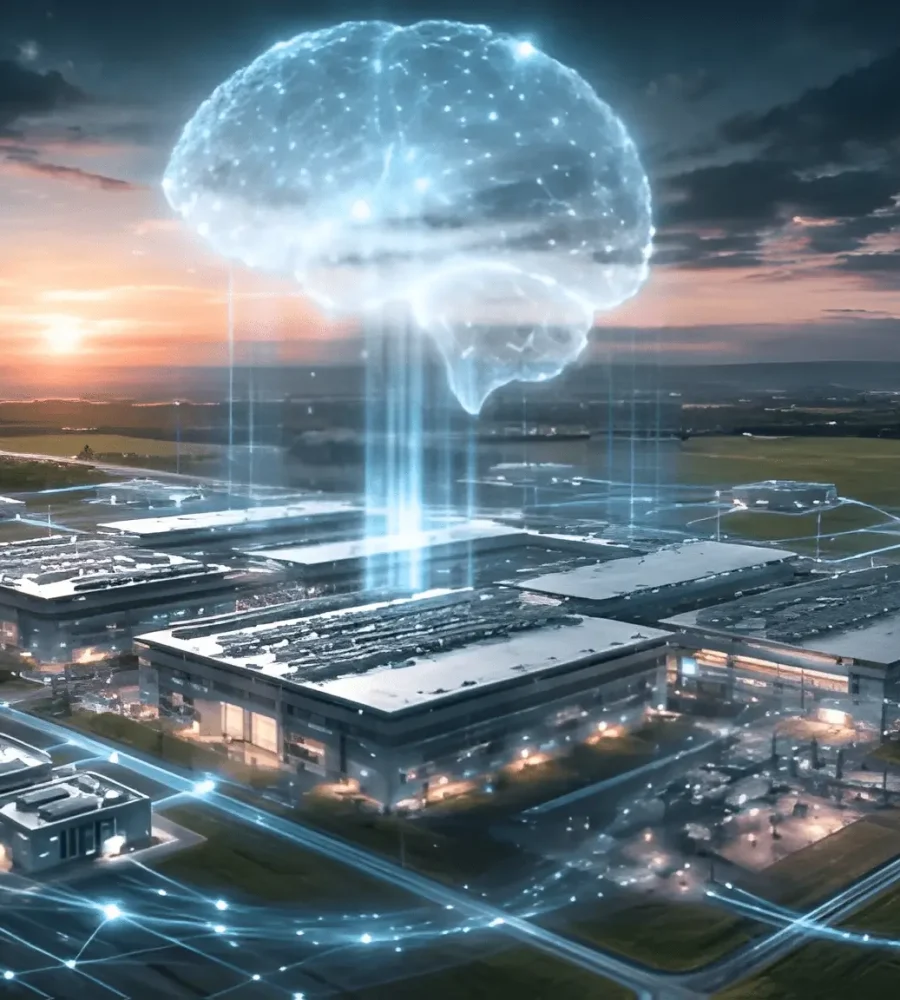
A silent architectural shift is unfolding beneath the surface of modern AI infrastructure, where centralized GPU clusters increasingly face scaling and coordination constraints under evolving AI workload demands. Traditional models concentrated compute within singular regions, assuming proximity would guarantee performance and simplicity in orchestration. That assumption now faces pressure from the growing weight of data gravity and the unpredictable behavior of AI workloads. Enterprises increasingly encounter bottlenecks when training pipelines stretch across datasets that refuse to remain localized. Distributed compute meshes emerge as a structural response, not as an experimental alternative but as a necessary evolution. These meshes break apart the idea that one region can efficiently host the entirety of an AI lifecycle.
Centralized scaling once thrived on predictability, where infrastructure teams could plan capacity expansions with linear expectations. AI workloads disrupt that predictability because they demand bursts of compute that rarely align with static provisioning models. Data ingestion pipelines now originate from multiple geographies, each carrying regulatory, latency, and processing implications. A distributed compute mesh allows workloads to operate closer to their data sources without forcing relocation into a single cluster. This shift reduces friction in data movement while introducing complexity in synchronization across environments. Engineers now design systems that prioritize locality without sacrificing interoperability.
The Limits of Monolithic GPU Scaling
Monolithic GPU clusters struggle under the pressure of interdependent workloads that require simultaneous access to shared datasets.Scaling these clusters introduces growing communication overhead and network congestion as additional nodes participate in synchronized workloads. Training large models across a single cluster creates synchronization overhead that undermines efficiency. Distributed meshes counter this by allowing segments of workloads to execute independently while maintaining coordination through higher-level orchestration. This structure acknowledges that not all compute tasks require tight coupling at every stage. It reframes scaling as a distributed challenge rather than a centralized expansion problem.
Mesh Architectures as a Response to Data Gravity
Data gravity exerts a force that pulls compute toward where data resides, rather than the other way around. Organizations that attempt to centralize data often encounter latency penalties and compliance barriers that complicate operations. Mesh architectures embrace this reality by positioning compute nodes near data clusters across different environments. This design reduces unnecessary data movement while maintaining accessibility through interconnected systems. Engineers build pipelines that adapt dynamically to data location instead of enforcing rigid placement rules. The result is a system that behaves more like a network of capabilities than a singular infrastructure entity.
Redundancy once served as the cornerstone of infrastructure resilience, where duplicating resources ensured continuity during failures. AI systems challenge this principle because they rely on tightly synchronized operations where redundancy alone does not address coordination and state consistency requirements. Replicating hardware does not guarantee consistency when workloads depend on real-time communication between distributed components. Latency mismatches and synchronization delays introduce failure modes that traditional redundancy models fail to address. Engineers now redefine resilience as the ability to maintain functional coherence across distributed systems. This shift moves beyond duplication and toward intelligent coordination across environments.
AI training pipelines demand high-bandwidth communication between GPUs, where even minor disruptions can degrade performance or halt processes. Redundant systems may exist, yet they cannot seamlessly replace active workloads without preserving state and synchronization context. Resilience increasingly depends on maintaining continuity at the workload level alongside infrastructure availability in distributed AI systems.This approach requires orchestration systems that understand dependencies between tasks and adapt dynamically during disruptions. Engineers design fallback mechanisms that prioritize continuity of computation rather than mere availability of resources. This redefinition aligns resilience with the operational realities of AI systems.
Synchronization as the New Resilience Metric
Synchronization emerges as a critical factor in determining whether AI workloads can sustain operations during disruptions. Systems must ensure that distributed components remain aligned in their execution states despite variations in network conditions. Traditional redundancy fails to address this requirement because it focuses on hardware duplication rather than state consistency. Engineers implement synchronization protocols that maintain coherence across distributed environments. These protocols enable systems to recover without restarting entire workflows. The emphasis shifts from redundancy to continuity of execution.
Failover mechanisms traditionally switch workloads to backup systems when primary resources fail. AI infrastructure requires adaptive recovery models that adjust workloads dynamically based on real-time conditions. These models consider latency, bandwidth, and compute availability when redistributing tasks. Systems must evaluate multiple variables before determining optimal recovery strategies. Engineers design frameworks that enable workloads to migrate seamlessly without disrupting ongoing processes. This approach transforms recovery into an active process rather than a reactive measure.
AI pipelines no longer operate as monolithic sequences confined within a single environment. Workload sharding introduces a modular approach where different stages of the pipeline execute across multiple Neocloud providers. Training tasks can be architected to run on one provider while fine-tuning processes are deployed on another, depending on resource availability and system design choices.Inference workloads often migrate closer to end users to reduce latency and improve responsiveness. This distribution allows systems to leverage the strengths of different environments without forcing uniformity. Engineers design pipelines that treat infrastructure as a collection of capabilities rather than a fixed location.
Sharding requires careful coordination because each segment of the pipeline depends on outputs generated by other stages. Data formats, model checkpoints, and metadata must remain consistent across environments to ensure seamless transitions. Engineers implement standardized interfaces that allow components to communicate effectively despite differences in underlying infrastructure. This approach reduces friction in cross-cloud operations while maintaining flexibility in workload placement. Systems must handle variations in performance and latency across providers without compromising overall efficiency. The result is a pipeline that adapts to changing conditions while maintaining operational integrity.
Decoupling Training, Fine-Tuning, and Inference
Decoupling different stages of the AI pipeline enables greater flexibility in resource allocation. Training workloads often require high-performance GPUs, while inference tasks prioritize low latency and scalability. By separating these stages, systems can optimize each component independently. Engineers design architectures that allow models to move seamlessly between stages without requiring full redeployment. This decoupling reduces resource contention and improves overall efficiency. It also enables organizations to respond quickly to changing demands.
Interoperability becomes a critical concern when workloads span multiple Neocloud providers. Differences in APIs, data formats, and networking protocols can introduce friction in cross-cloud operations. Engineers address these challenges by implementing abstraction layers that standardize interactions between systems. These layers enable workloads to operate consistently regardless of underlying infrastructure differences. Systems must also handle variations in performance and reliability across providers. This complexity requires careful design to ensure seamless integration.
Latency Fragmentation: The Hidden Cost of Multi-Neocloud Architectures
Latency no longer behaves as a uniform variable in distributed AI systems, and fragmentation introduces unpredictable performance characteristics across Neocloud environments. Workloads that once operated within tightly coupled clusters now traverse multiple networks, each with its own latency profile and congestion patterns. These variations disrupt synchronization cycles, especially in training processes that depend on consistent communication between nodes. Engineers must account for latency as a distributed phenomenon rather than a localized metric. The complexity increases when workloads span providers with differing network architectures and routing efficiencies. This shift transforms latency from a technical parameter into a structural constraint that shapes architectural decisions.
Latency fragmentation may remain less apparent during initial deployment phases and becomes more pronounced as workloads scale and interact across distributed environments. Systems may perform optimally within isolated environments but degrade when integrated into multi-cloud pipelines. Engineers must simulate cross-cloud interactions to understand how latency impacts overall performance. These simulations reveal that even minor delays can cascade into significant inefficiencies in distributed systems. The challenge lies in balancing workload distribution with the need for synchronization. This balance requires continuous monitoring and adaptive optimization strategies.
The Impact on Distributed Training Workloads
Distributed training relies on frequent communication between nodes, where latency directly affects convergence speed and model accuracy. Fragmented latency introduces inconsistencies that disrupt synchronization cycles, leading to inefficiencies in gradient updates. Engineers must design training strategies that tolerate latency variations without compromising performance. Techniques such as asynchronous training help mitigate some of these challenges. Systems must also adapt dynamically to changing network conditions. This approach ensures that training processes remain efficient despite distributed environments.
Workload placement strategies must evolve to account for latency fragmentation across Neocloud providers. Engineers analyze network paths and latency profiles before assigning tasks to specific environments. This analysis helps minimize communication delays and improve overall system performance. Systems must continuously evaluate latency conditions and adjust placement strategies accordingly. This dynamic approach enables workloads to adapt to changing network environments. The result is a more resilient and efficient distributed system.
Data movement across Neocloud environments introduces a new layer of economic complexity that often surpasses compute costs in significance. Bandwidth pricing varies across providers, and cross-cloud transfers frequently incur additional charges that accumulate rapidly in distributed systems. Engineers must consider these costs when designing architectures that rely on frequent data exchanges. The economic impact extends beyond direct costs, influencing decisions about workload placement and data replication strategies. Systems that fail to account for interconnect economics risk inefficiencies that undermine scalability. This dynamic transforms networking into a central consideration in infrastructure design.
Interconnect economics also reflect the physical realities of network infrastructure, where data must traverse multiple layers of connectivity. These layers introduce both latency and cost, creating trade-offs that engineers must navigate carefully. Systems may reduce costs by limiting data movement, yet this approach can increase latency and reduce performance. Engineers must balance these competing factors to achieve optimal outcomes. This balance requires a deep understanding of network architectures and pricing models. The result is a design approach that treats connectivity as a strategic resource rather than a background utility.
Bandwidth as a Strategic Constraint
Bandwidth availability and pricing shape how systems distribute workloads across Neocloud providers. Engineers must evaluate whether moving data between environments justifies the associated costs. High-bandwidth requirements can limit the feasibility of certain architectures. Systems must optimize data transfer patterns to reduce unnecessary movement. This optimization involves compressing data, caching results, and prioritizing critical transfers. The goal is to maximize efficiency while minimizing costs.
Networking across multiple providers introduces complexity that extends beyond cost considerations. Differences in network configurations, routing protocols, and security policies can complicate connectivity. Engineers must design systems that accommodate these variations while maintaining reliability. This design often involves creating abstraction layers that standardize network interactions. Systems must also monitor network performance to detect and address issues promptly. This complexity requires ongoing management and optimization.
Control planes are evolving from localized management systems toward distributed orchestration approaches that can span multiple Neocloud environments. These systems coordinate workload placement, resource allocation, and execution across diverse infrastructures. Engineers design control planes that operate independently of underlying providers while maintaining visibility into their capabilities. This abstraction enables systems to treat multiple environments as a unified operational space. The challenge lies in maintaining consistency and performance across distributed control mechanisms. This evolution reflects the growing complexity of multi-cloud architectures.
Orchestration across fragmented clouds requires systems that can interpret and adapt to varying conditions in real time. Control planes must evaluate factors such as latency, cost, and resource availability when making decisions. These decisions influence how workloads move and execute across environments. Engineers implement policies that guide orchestration strategies while allowing flexibility in execution. Systems must also handle failures gracefully, ensuring continuity of operations. This approach transforms orchestration into a dynamic and intelligent process.
Meta-Orchestration Layers
Meta-orchestration layers are designed to sit above individual cloud control systems, providing a unified interface for managing distributed workloads across environments. These layers abstract the complexities of different providers, enabling consistent operations across environments. Engineers design these systems to integrate seamlessly with existing infrastructure. Meta-orchestration enables more efficient workload distribution and resource utilization. Systems must also ensure that abstraction does not compromise performance or visibility. This balance defines the effectiveness of meta-orchestration strategies.
Policy-Driven Workload Scheduling
Policy-driven scheduling allows systems to make decisions based on predefined criteria such as cost, performance, and compliance. Engineers define policies that guide how workloads are distributed across Neocloud providers. These policies enable systems to adapt dynamically to changing conditions. Scheduling decisions must consider multiple variables simultaneously. Systems must also monitor outcomes to refine policies over time. This iterative process improves efficiency and resilience.
Failure domains expand in multi-Neocloud architectures, extending beyond hardware and availability zones to include provider-level dependencies and orchestration layers. Systems must account for failures that occur at multiple levels simultaneously, including network disruptions and API inconsistencies. Engineers redefine failure domains to reflect the distributed nature of modern infrastructure. This redefinition requires a deeper understanding of dependencies across systems. Systems must isolate failures effectively to prevent cascading effects. This complexity challenges traditional approaches to reliability engineering.
Provider-level failures introduce unique challenges because they can affect multiple workloads simultaneously. Systems must detect and respond to these failures quickly to maintain continuity. Engineers design architectures that distribute workloads across providers to reduce risk. This distribution requires careful coordination to ensure consistency. Systems must also handle partial failures that affect only specific components. This approach enhances resilience while maintaining operational efficiency.
API Instability as a Failure Vector
APIs serve as the interface between systems and cloud providers, making their stability critical to operations. Instability in APIs can disrupt workflows and introduce unexpected behavior in distributed systems. Engineers must design systems that handle API inconsistencies gracefully. This design includes implementing retries, fallbacks, and monitoring mechanisms. Systems must also adapt to changes in API behavior over time. This adaptability ensures continuity despite evolving interfaces.
Redefining Isolation in Distributed Systems
Isolation strategies must evolve to address the complexities of multi-cloud environments. Engineers design systems that compartmentalize workloads to limit the impact of failures. This compartmentalization requires careful planning and execution. Systems must balance isolation with the need for communication between components. This balance ensures that failures do not propagate across the system. The result is a more resilient architecture.
Data gravity continues to shape the movement of workloads in ways that challenge the flexibility promised by multi-cloud strategies. Large datasets resist relocation due to both physical constraints and regulatory considerations. Engineers must decide whether to move compute closer to data or attempt to centralize data for easier processing. This decision influences the overall architecture of AI systems. Systems must balance the benefits of compute mobility with the realities of data gravity. This tension defines many of the trade-offs in distributed infrastructure.
Compute mobility offers the promise of flexibility, allowing workloads to shift across environments based on demand and availability. However, this mobility often encounters limitations when data cannot move as freely. Engineers must design systems that operate effectively within these constraints. This design includes optimizing data access patterns and minimizing unnecessary transfers. Systems must also consider compliance requirements that restrict data movement. This complexity requires a nuanced approach to infrastructure design.
Anchoring Compute to Data
Anchoring compute near data sources reduces latency and improves performance in distributed systems. Engineers design architectures that prioritize data locality to enhance efficiency. This approach minimizes the need for data movement across environments. Systems must also ensure that compute resources remain accessible and scalable. This balance enables efficient processing without sacrificing flexibility. The result is a system that aligns with the realities of data gravity.
Workload portability faces constraints when dependencies on data and infrastructure vary across environments. Engineers must address these constraints to enable effective multi-cloud operations. This effort includes standardizing interfaces and optimizing deployment processes. Systems must also handle differences in performance and capabilities across providers. These challenges limit the extent to which workloads can move freely. This limitation shapes the design of distributed systems.
Security Surfaces Multiply: Risk in Multi-Neocloud Environments
Security architecture expands in complexity as workloads distribute across multiple Neocloud providers, creating a broader and more fragmented attack surface. Each provider introduces its own identity frameworks, access controls, and network boundaries, which must integrate without exposing vulnerabilities. Engineers must manage authentication flows that span environments while maintaining strict access governance. This expansion requires systems to treat identity as a distributed construct rather than a centralized authority. Security models must adapt to ensure consistent enforcement across heterogeneous infrastructures. The result is a shift from perimeter-based security toward identity-centric design principles.
Fragmentation introduces challenges in maintaining visibility across environments, where monitoring tools often require integration to provide unified insights into system behavior. Engineers must deploy observability frameworks that aggregate security signals from multiple providers. These frameworks enable systems to detect anomalies and respond to threats in real time. Security teams must also ensure that policies remain consistent despite differences in provider capabilities. This consistency requires abstraction layers that standardize security controls. The complexity of these systems demands continuous evaluation and refinement.
Identity Federation Across Clouds
Identity federation enables users and services to authenticate across multiple environments without duplicating credentials. Engineers implement federation protocols that maintain trust relationships between providers. These protocols allow systems to enforce consistent access policies across distributed infrastructures. Federation reduces the risk of credential sprawl while improving usability. Systems must also handle variations in identity standards across providers. This approach ensures secure and seamless access management.
AI pipelines introduce unique security challenges because they involve multiple stages and data flows across environments. Engineers must secure each stage of the pipeline while maintaining overall integrity. This effort includes protecting data in transit and at rest, as well as ensuring the authenticity of model artifacts. Systems must also monitor interactions between components to detect anomalies. Security measures must adapt to the dynamic nature of distributed workloads. This approach ensures that pipelines remain secure despite fragmentation.
Regulatory frameworks increasingly influence how AI infrastructure evolves, often requiring data to remain within specific jurisdictions. These requirements often lead organizations to operate across multiple Neocloud providers to address regional compliance and data residency constraints. Engineers must design systems that respect data residency constraints while maintaining operational efficiency. This necessity introduces fragmentation as a structural feature rather than a strategic choice. Systems must navigate varying compliance requirements across regions. This dynamic reshapes how infrastructure is designed and managed.
Sovereign fragmentation also affects how data flows between environments, where cross-border transfers may require additional safeguards or restrictions. Engineers must implement mechanisms that enforce compliance without disrupting workflows. These mechanisms include data localization strategies and region-specific processing pipelines. Systems must also adapt to evolving regulatory landscapes that introduce new constraints. This adaptability requires continuous monitoring of legal requirements. The result is an infrastructure that aligns with both technical and regulatory demands.
Regional Compliance as an Architectural Driver
Compliance requirements now shape architectural decisions in ways that extend beyond traditional considerations. Engineers must account for regional differences in data protection laws when designing systems. This consideration influences workload placement and data storage strategies. Systems must ensure that sensitive data remains within designated jurisdictions. This constraint affects how workloads distribute across Neocloud providers. The result is an architecture that reflects regulatory realities.
Operating across multiple Neocloud providers enables systems to meet diverse regulatory requirements without compromising functionality. Engineers design architectures that segment workloads based on compliance needs. This segmentation ensures that data processing aligns with regional laws. Systems must also maintain interoperability across segmented environments. This approach allows organizations to operate globally while adhering to local regulations. The strategy transforms fragmentation into a compliance-driven necessity.
Cost optimization evolves into a dynamic process in multi-Neocloud environments, where systems continuously evaluate resource availability and pricing across providers. Engineers design architectures that can enable workload shifting based on cost efficiency, subject to operational and compatibility constraints.This approach introduces utilization arbitrage as a strategic layer within infrastructure management. Systems must monitor pricing models and resource availability in real time. This monitoring enables informed decisions about workload placement. The result is a system that balances performance with economic efficiency.
Utilization arbitrage also requires systems to adapt to variations in resource capabilities across providers. Engineers must ensure that workloads remain compatible with different environments. This compatibility involves standardizing deployment processes and optimizing resource utilization. Systems must also handle transitions between providers without introducing inefficiencies. This complexity demands sophisticated orchestration mechanisms. The approach transforms cost optimization into an active and continuous process.
Dynamic Workload Shifting
Dynamic workload shifting enables systems to move tasks across providers based on changing conditions. Engineers implement mechanisms that evaluate cost, performance, and availability before making decisions. These mechanisms ensure that workloads operate in the most efficient environment at any given time. Systems must also maintain continuity during transitions. This capability requires seamless integration between providers. The result is a flexible and adaptive infrastructure.
Balancing cost and performance remains a critical challenge in distributed systems. Engineers must evaluate trade-offs between resource efficiency and operational requirements. Systems must prioritize workloads based on their importance and sensitivity to performance variations. This prioritization enables more effective resource allocation. Engineers design strategies that optimize both cost and performance simultaneously. The result is a balanced and efficient system.
A new layer of intermediaries emerges in response to the complexity of multi-Neocloud environments, where cloud brokers and AI infrastructure aggregators provide unified access to distributed resources. These entities abstract the differences between providers, enabling users to interact with multiple environments through a single interface. Engineers design systems that integrate with these intermediaries to simplify operations. This abstraction reduces the burden of managing multiple providers directly. Systems must also ensure that abstraction does not obscure critical performance details. The emergence of this layer reflects the growing complexity of distributed infrastructure.
Cloud brokers also influence how resources are allocated and consumed, acting as coordinators between demand and supply across providers. Engineers must consider how these intermediaries impact system performance and cost structures. Systems must evaluate whether the benefits of abstraction outweigh potential limitations. This evaluation requires a deep understanding of both infrastructure and operational requirements. The role of brokers continues to evolve as multi-cloud strategies mature. The result is a new ecosystem that reshapes how infrastructure is accessed and managed.
Abstraction vs Visibility Trade-Off
Abstraction simplifies operations while potentially reducing direct visibility into underlying infrastructure behavior, requiring additional observability mechanisms.Engineers must balance these competing factors when integrating cloud brokers. Systems must maintain sufficient transparency to enable effective monitoring and optimization. This balance ensures that abstraction does not compromise performance or reliability. Engineers design solutions that provide both simplicity and insight. The result is a more manageable yet transparent system.
Aggregation introduces a service layer intended to consolidate resources from multiple providers into a more unified operational platform. Engineers design this layer to handle workload distribution, resource allocation, and performance optimization. Systems must ensure that aggregation does not introduce additional latency or complexity. This layer enables more efficient utilization of distributed resources. Engineers must also ensure compatibility across providers. The approach enhances the scalability and flexibility of infrastructure.
Fragmentation is increasingly shaping the emerging structure of AI infrastructure, where distribution complements consolidation as part of resilience strategies. Systems no longer rely on singular environments to deliver performance and reliability. Engineers design architectures that embrace fragmentation as a means of achieving flexibility and adaptability. This approach reflects the realities of modern AI workloads and their demands. Systems must operate effectively across diverse environments without compromising efficiency. The shift redefines how infrastructure is conceptualized and implemented.
Multi-Neocloud strategies indicate that resilience can be enhanced through distribution alongside redundancy, where systems adapt dynamically to changing conditions. Engineers must navigate the complexities introduced by fragmentation while leveraging its advantages. This navigation requires a deep understanding of distributed systems and their behavior. Systems must balance competing factors such as latency, cost, and compliance. The result is an infrastructure that aligns with the evolving needs of AI. Fragmentation emerges not as a limitation but as a defining characteristic of modern compute architecture.