The Capital Has Chosen Southeast Asia. The Grid Has Not Been Consulted.
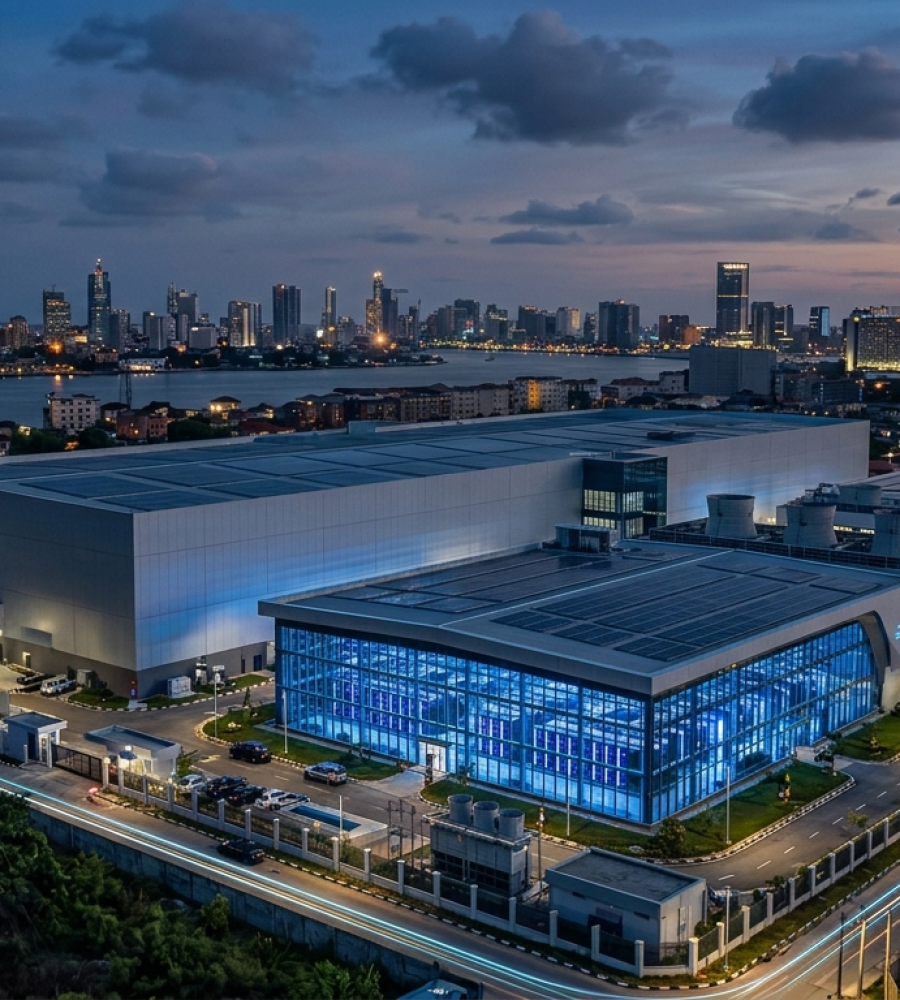
The sequence of investment announcements flowing into Southeast Asia’s data center ecosystem through 2025 and into 2026 reads like the opening chapter of a regional economic transformation. Microsoft, Google, Amazon, ByteDance, and a long list of hyperscalers and neoclouds have committed capital to Malaysia, Indonesia, Singapore, and the Philippines at a pace and scale that the region has never previously experienced for a single infrastructure category. Malaysia alone attracted over forty-three billion US dollars in data center-related investment between 2021 and 2024. Johor’s data center capacity grew from ten megawatts at the start of 2021 to approximately 1.3 gigawatts by November 2024, a hundred-and-thirty-fold increase in under four years.
The SIJORI triangle, the geographic cluster connecting Singapore’s established digital ecosystem, Malaysia’s Johor state directly across the causeway, and Indonesia’s Riau Islands province, has emerged as the most concentrated AI infrastructure construction zone in the Asia-Pacific region. Singapore’s National AI Strategy 2.0, which acknowledged the city-state’s finite land and power capacity, has functioned as a structural pressure valve, redirecting capital that cannot be accommodated within Singapore’s domestic grid constraints into the adjacent provinces of the neighboring nations. The Johor-Singapore Special Economic Zone formalized this capital redirection into a governance framework, and the results have been visible: land prices in Johor technology parks surged, construction order books filled, and TNB, Malaysia’s national utility, found itself processing Electricity Supply Agreements at a pace that its grid enhancement programme was not designed to match.
The problem that this extraordinary capital concentration has created is not, at its root, a regulatory problem or a permitting problem or a construction capacity problem. It is a physics problem. The volume mismatch between what the data center pipeline is demanding and what the regional power infrastructure can reliably deliver has reached a point that market incentives alone cannot resolve. A single Nvidia GB200 NVL72 hyperscale deployment requires three hundred megawatts of firm, uninterruptible power delivery. That is equivalent to the entire historical data center power budget of metropolitan Jakarta. Delivering it in the twelve-to-twenty-four month timelines that hyperscaler commitments assume requires grid enhancement investment and generation capacity additions that Southeast Asia’s utility infrastructure was never engineered to provide on that timeline. As Wood Mackenzie’s June 2026 analysis framed it with deliberate precision: the issue is increasingly about where power is available rather than whether it is available, with areas attracting the highest concentration of data center investment also where grid infrastructure is under the greatest pressure.
The Spillover Surge and the Capital-Utility Divergence
How Singapore’s Cap Became Malaysia’s Crisis
Singapore’s decision to impose a moratorium on new large-scale data center development in 2019, and its subsequent management of capacity through a strictly controlled application process under its Green Data Centre Roadmap, was a rational response to an equally rational problem: the city-state’s land area is finite, its grid connection points are constrained, and the environmental footprint of unrestricted data center growth was incompatible with Singapore’s sustainability commitments. The moratorium created the spatial and commercial logic for the SIJORI overflow: capital that wanted proximity to Singapore’s financial ecosystem, legal framework, and subsea cable network, but could not access Singapore’s physical infrastructure, moved across the causeway to Johor.
This geography created a specific asymmetry that has become the central infrastructure stress of the entire regional ecosystem. Singapore’s grid is operated by SP Group under the Energy Market Authority’s framework, with generation adequacy requirements, stability standards, and demand growth protocols developed over decades of continuous operation in a dense, wealthy, technically sophisticated urban environment. TNB, Malaysia’s national utility, operates an entirely different system, one with genuine engineering competence and a grid infrastructure that has expanded substantially over the past decade, but one that was designed to serve the power needs of a developing industrial economy rather than to absorb hundreds of megawatts of concentrated, continuous, high-criticality load from hyperscale AI campuses within compressed timelines.
The disparity between declared maximum demand and actual utilisation that emerged from TNB’s December 2024 data reflects the structural tension this asymmetry has created. Of the 5.9 gigawatts of total maximum demand secured through Electricity Supply Agreements, the actual load utilisation stood at 405 megawatts, roughly seven percent of the secured total. This gap is not simply a utilisation problem. It is a grid planning problem: TNB has committed to grid infrastructure sufficient for 5.9 gigawatts, regardless of whether that capacity is actually drawn, while the actual operational load is a fraction of what was committed to. Malaysia’s deputy energy minister confirmed in December 2025 that costs related to upgrading electricity and water grid infrastructure to support data centres will be fully borne by developers, a policy change that directly addresses the risk of socialising overbuilding costs across the broader rate-paying public. This policy shift will slow future speculative applications, but it does not resolve the infrastructure gap that the applications already approved have created.
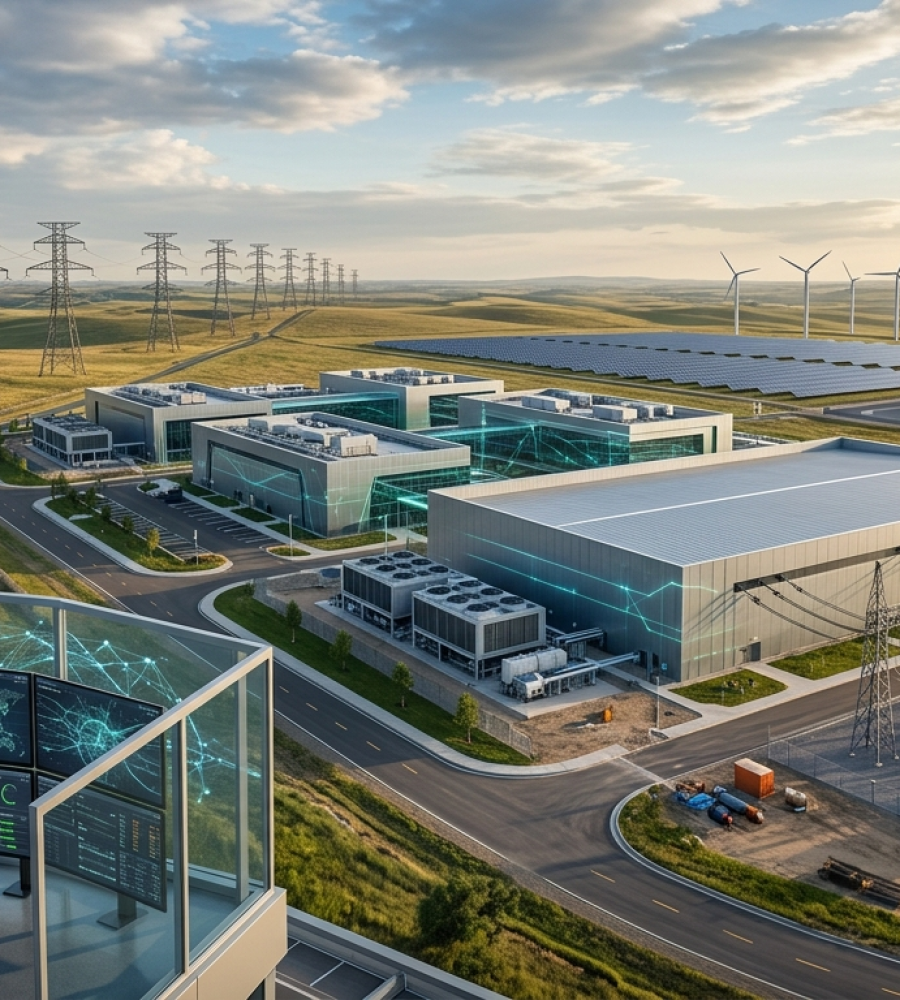
The localised transmission bottlenecks that are already visible in Johor illustrate what happens when capital moves faster than grid infrastructure. The 275 kilovolt Senai substation extension represents the most critical near-term grid upgrade in Johor’s data center corridor, timed to provide fresh hyperscale energization windows for projects already under construction. If that substation upgrade is delayed by permitting, supply chain constraints, or contractor capacity limitations, it does not delay the investment announcement it was supposed to serve. It delays the revenue that the data center operator was expecting to generate from the facility, while the capital committed to building that facility continues to carry its financing costs. The capital-utility divergence is, in operational terms, a timeline mismatch that becomes more expensive with every month that the utility upgrade falls behind the facility completion schedule.
Deconstructing the Thermodynamics of the Solar Plateau
What Tropical Solar Can and Cannot Do for an AI Cluster
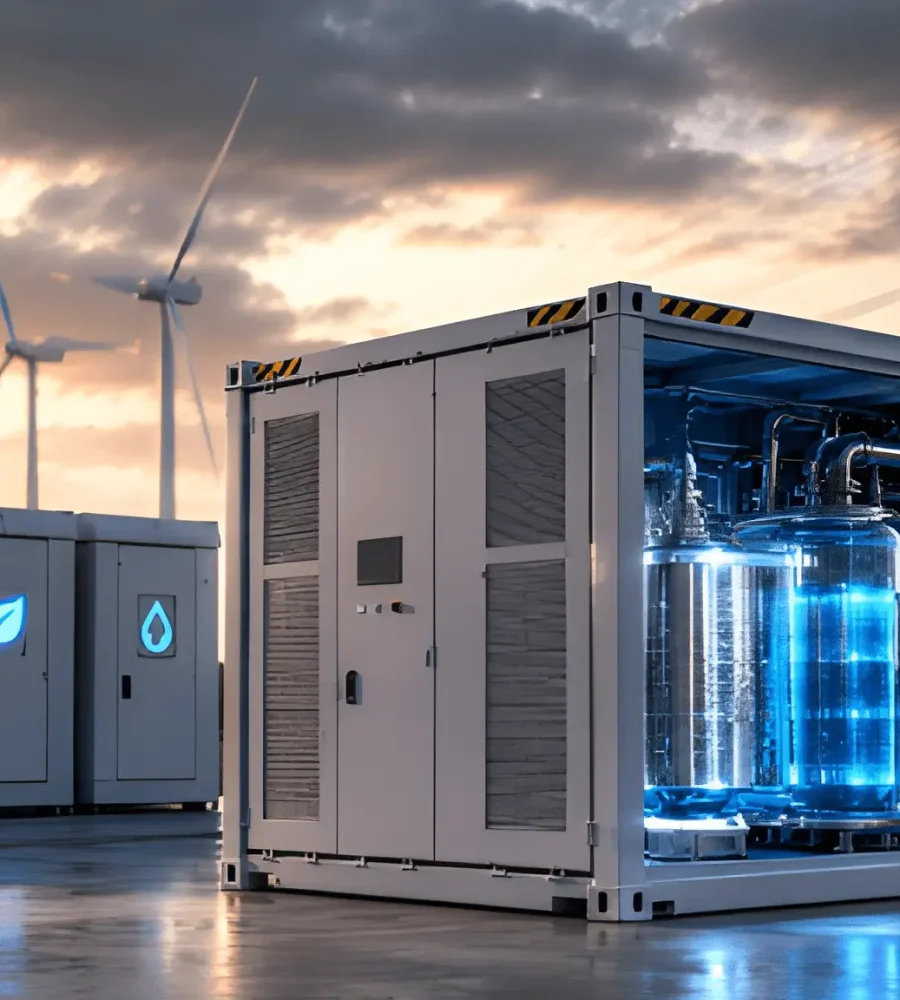
The renewable energy commitments that accompany almost every Southeast Asian data center project announcement are genuine in their intent and often technically credible in their design. YTL’s five-hundred-megawatt Green Data Center Park in Johor explicitly names solar power as a component of its energy strategy. AirTrunk’s partnership with Pekat Solar for rooftop solar deployment at its Johor campus reflects the same commitment. The Tianneng Group’s one-gigawatt-hour Solar-Storage-Computing project announced in early 2026 represents the most ambitious attempt yet to integrate generation and storage directly into a data center campus in the SIJORI region. These are not greenwashing exercises. They are operational responses to genuine sustainability mandates from the hyperscaler customers these facilities serve.
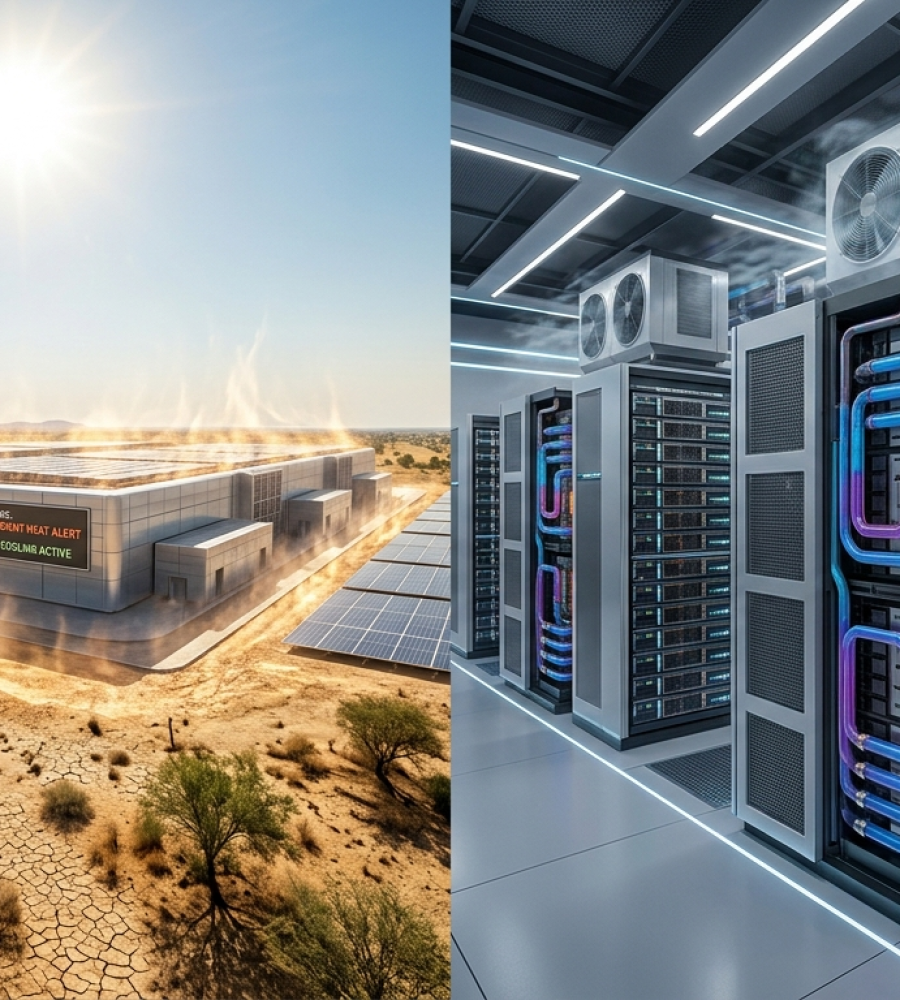
The physics of tropical solar generation, however, creates an engineering constraint that no amount of panel procurement can overcome without complementary firm generation sources. The capacity factor of a solar array is the ratio of actual energy generated to the theoretical maximum if the array operated at full rated power continuously. In Malaysia and Indonesia, tropical solar arrays achieve capacity factors in the range of fifteen to twenty-two percent, limited by cloud cover, monsoonal rain patterns, atmospheric humidity that scatters incident radiation, and the simple fact that the sun sets every day regardless of AI training run schedules. An AI cluster requiring three hundred megawatts of continuous power draws that three hundred megawatts every hour of every day of every year at one hundred percent availability. A solar array rated at three hundred megawatts provides, on average, between forty-five and sixty-six megawatts of actual energy output when averaged across an operating year, and zero megawatts at night.
The grid saturation problem that emerges when solar penetration approaches the structural inflection point described in the blueprint goes beyond simple capacity inadequacy. When intermittent solar generation is injected into regional transmission networks that lack grid-scale battery storage, the voltage and frequency fluctuations that result from rapid changes in solar output can propagate across the grid at timescales that are damaging to sensitive high-frequency electronic equipment. Modern AI training clusters communicate between GPUs through NVLink and InfiniBand interconnects operating at frequencies where power supply instability translates directly into data transmission errors. A GPU cluster experiencing a mid-training power quality event does not simply slow down. It may corrupt the gradient updates being propagated across the cluster, requiring a checkpoint restart that wastes hours or days of compute time at a direct operational cost measured in hundreds of thousands of dollars per incident.
This is the engineering reality behind the solar plateau: not that solar generation is insufficient in absolute energy terms, but that intermittent generation sources cannot provide the flat, non-interruptible baseload power curve that deep learning training runs require, and that the battery storage infrastructure required to transform intermittent solar into firm dispatchable power does not yet exist at the scale the regional data center pipeline demands. BMI’s December 2025 research found that data centres accounted for around twenty percent of new generation growth in Malaysia in 2024 and could exceed sixty percent of output growth between 2025 and 2026, a share so large that the manner in which that demand is met will determine the carbon intensity of the entire Malaysian generation fleet for the next decade, not just the sustainability profile of the data centers themselves.
The Fossil Regression That Nobody Announces
The absence of firm, zero-carbon baseload generation in Southeast Asia has produced an operational reality that the press releases of the region’s data center industry rarely acknowledge directly: the data centers being built in Johor, Batam, and Cyberjaya today are overwhelmingly powered by the same coal and gas generation fleet that has supplied Peninsular Malaysia’s grid since the 1990s. Approximately seventy percent of the ASEAN grid currently runs on coal and gas, according to the Earth VC analysis published in June 2026. TNB’s installed generation capacity in Johor is approximately 6.8 gigawatts, primarily sourced from natural gas and coal. The Green Lane Pathway that TNB offers to data center developers, which ensures grid connection within twelve months of approval, is not connecting those facilities to a renewable energy network. It is connecting them to a gas and coal grid that will continue to serve as their primary power source until alternative generation capacity is built and connected.
The IEA’s Southeast Asia Energy Outlook 2026, published days before this analysis was written, describes the structural trajectory with uncomfortable clarity: electricity demand across ASEAN is projected to double by 2050, nearly eighty percent of the region’s energy still comes from fossil fuels, and meeting rapidly growing demand while keeping energy secure, affordable, and sustainable will require an integrated power system that does not yet exist. The gap between AI industry sustainability commitments and grid reality in Southeast Asia is not primarily a failure of corporate intent. It is a consequence of asking a grid infrastructure built for a different era to absorb a demand growth rate that outpaces its transition timeline.
The specific coal phase-out timeline that Malaysia faces sharpens this reality further. Approximately 2.1 gigawatts of coal-fired power plants are expected to retire in the 2030s as part of Malaysia’s New Energy Transition Roadmap. Those retirements will remove generation capacity from a grid that is simultaneously being asked to serve an additional thirty to sixty percent data center load above its current baseline. The combination of planned coal capacity retirement and explosive data center demand growth is a structural power supply gap that renewable generation alone, given the capacity factor constraints of tropical solar, cannot fill at the reliability level that AI infrastructure requires.
The ASEAN Power Grid Mirage and Cross-Border Protectionism
A Shared Vision With No Shared Operator
The ASEAN Power Grid initiative has been formally on the regional agenda since 1999, representing one of the longest-running infrastructure integration ambitions in Southeast Asian political history. In that time, it has produced bilateral interconnection projects and a framework of enhanced memoranda of understanding that collectively describe a coherent vision for a regionally integrated electricity market. The World Bank and the Asian Development Bank’s October 2025 launch of the ASEAN Power Grid Financing Initiative, providing financing and technical assistance for preparation, feasibility studies, and regulatory capacity-building, marked a meaningful capital commitment to an agenda that has historically advanced primarily through political declarations rather than funded implementation. The initiative estimates that Southeast Asia will need up to eight hundred billion dollars in generation and transmission investments by 2045, a figure that contextualises the infrastructure gap in terms that development finance institutions can engage with.
The CSIS analysis of the APG, published in March 2026, provides the most candid assessment of the gap between this institutional momentum and operational reality: ASEAN has a shared vision but no single operator, regulator, or enforcement mechanism capable of turning it into an integrated market. This is not a minor implementation detail that additional financing or political commitment can resolve quickly. It reflects a structural feature of ASEAN’s institutional architecture: the association operates on consensus among sovereign member states that have historically been unwilling to subordinate national regulatory authority over their energy systems to any regional body. The electricity market structure in most ASEAN countries is vertically integrated or under a single-buyer model with state-owned utilities owning and operating the grid. These utilities face financial constraints that limit their capacity to invest in domestic grid infrastructure, let alone in capital-intensive cross-border interconnectors.
The cross-border protectionism that the blueprint identifies operates through mechanisms that are simultaneously economically rational for individual member states and collectively self-defeating for the regional integration agenda. A state-owned utility in Malaysia, operating under a domestic decarbonisation mandate and serving an industrial base with its own electrification timeline, faces no obvious economic incentive to export its most reliable, cheapest, and cleanest generation to power data centers in an adjacent country when its own manufacturing sector is competing for the same electrons. The transmission tariffs required to make cross-border power trade commercially viable for data center operators add a cost layer on top of the generation cost itself, eroding the price competitiveness that would otherwise justify routing power from generation surplus regions to demand concentration zones. The Philippines’ plan to prioritize APG integration during its 2026 ASEAN chairmanship, initiating grid interconnection talks with Malaysia, represents genuine political commitment. The regulatory harmonisation, technical standards alignment, and market rule establishment that must precede functional cross-border power trade involve processes measured in years rather than months.
Indonesia’s Batam Gamble and the Archipelago Grid Problem
Why The Region’s Largest Economy Cannot Simply Copy Malaysia’s Playbook
Indonesia’s position in the SIJORI equation is defined by a geographic and institutional reality that has no parallel in Malaysia’s experience. Batam, the Indonesian island sitting directly across the Strait of Singapore from the city-state and connected to the SIJORI economic corridor by ferry and commercial relationships that have operated for decades, has attracted data center investment ambitions on the basis of its proximity to Singapore’s fiber connectivity and its lower land costs relative to Johor. The commercial logic is straightforward. The infrastructure reality is considerably more complicated.
Batam operates on an electricity grid managed by PT Batam Indonesia Free Zone Authority, a separate industrial zone authority rather than PLN, Indonesia’s state utility. This institutional separation from Indonesia’s national grid means that power for Batam data centers cannot be sourced simply by tapping into Sumatra’s or Java’s generation capacity. It must be generated or procured within the island’s own constrained system, or imported via undersea cable from Singapore or Malaysia, at the transmission tariffs and regulatory conditions that cross-border power trade involves. The island’s current generation capacity is adequate for its existing industrial and residential load but has not been dimensioned for the kind of hyperscale AI data center load that proximity to Singapore’s digital ecosystem makes theoretically attractive.
PLN’s national grid faces its own structural challenges that compound Batam’s local constraints. Indonesia is an archipelago of seventeen thousand islands, and the generation-to-transmission infrastructure that connects them reflects decades of investment prioritising Java and Bali, where the majority of economic activity and population are concentrated, over the outer islands where land is cheaper and where data center developers might prefer to build if power were available at the required quality and price. The Borneo power development initiatives and the government’s renewable energy targets, which include substantial hydroelectric ambitions in Kalimantan, represent genuine long-term generation capacity that could serve future data center demand. The timelines for those developments are measured in years that hyperscalers’ current expansion programmes cannot accommodate.
The Indonesian government’s formal nuclear energy roadmap, targeting ten thousand megawatts of nuclear capacity by 2040, is the most ambitious nuclear commitment of any ASEAN member state in absolute terms. It is also the most challenging to execute, given that Indonesia has no nuclear regulatory infrastructure at anything approaching the maturity required to license a commercial reactor, no domestic nuclear engineering workforce, and no existing nuclear power plant against which operational experience can be benchmarked. The Philippine model of establishing PhilATOM before making construction commitments, allowing the regulatory institution to develop independence and technical depth before commercial pressure creates timeline shortcuts, represents a more defensible sequencing. Indonesia’s scale of ambition without a comparable institutional development programme creates the risk that political commitments outrun the regulatory capacity required to execute them safely.
The SMR Undercurrent: Capitalising the Next Power Paradigm
Why Private Capital Is Moving Before Governments Have Decided
Against the backdrop of the solar plateau’s engineering constraints, the ASEAN Power Grid’s institutional limitations, and the fossil fuel regression that fills the gap between sustainability commitments and grid reality, a quieter and more consequential capital allocation movement is underway. Private equity and venture capital firms with visibility into the data center demand pipeline are routing investment toward advanced nuclear technology developers with Southeast Asian market strategies, not because the regulatory environment in any ASEAN country currently permits commercial nuclear operation, but because the forward arithmetic of the regional power market makes baseload nuclear the only technology category capable of meeting the demand trajectory at the reliability standard AI infrastructure requires.
Earth VC’s public disclosure of its investments in Aalo Atomics, a US-based SMR developer targeting data center applications, and Blykalla, a Swedish SMR developer, frames the investment thesis with operational precision: SMRs can generate up to three hundred megawatts of electrical output per unit, operate at capacity factors near ninety percent, and are designed for factory production and modular deployment. A ninety-percent capacity factor is not an incremental improvement over tropical solar’s fifteen-to-twenty-two percent. It is a fundamentally different reliability profile that transforms the power planning logic for AI infrastructure entirely. A single SMR unit at three hundred megawatts and ninety percent capacity factor delivers the same firm energy that twenty SMR-equivalent units of tropical solar capacity would need to deliver at twenty percent capacity factor, with the additional engineering problem that the solar output is not dispatchable and the nuclear output is. This is the arithmetic that settles the question of why nuclear has a role in Southeast Asia’s energy future, in Earth VC’s framing, not as a political preference but as a computational outcome.
Google’s agreement to purchase five hundred megawatts from an advanced reactor project in Tennessee, cited in BMI’s December 2025 analysis, represents the template transaction structure that Southeast Asian regulators and utilities are now studying. A hyperscaler providing a long-term offtake agreement directly to a nuclear developer creates the revenue certainty that nuclear project finance requires to reach commercial viability. It bypasses the traditional utility procurement process that has historically defined how nuclear capacity enters a grid. In Southeast Asia, where no utility has experience commissioning nuclear generation and no regulatory framework currently permits it, the data-center-direct offtake model may represent the most commercially viable pathway to first deployment, because it concentrates the revenue assurance, the technical demand requirements, and the sustainability motivation in a single counterparty that can drive the project forward independent of the utility’s own institutional capacity.
The Regulatory Runway That No Country Has Fully Built
The specific regulatory challenge facing SMR deployment in Southeast Asia is not simply that the technology is unproven at commercial scale, though that is a genuine consideration. It is that none of the five major energy-consuming ASEAN nations, Indonesia, Malaysia, the Philippines, Thailand, and Vietnam, currently possesses the full technical, regulatory, and industrial capacity to deploy an SMR without extensive overseas collaboration, and that building that capacity requires a sustained, multi-year institutional investment that must begin substantially before any construction permit can be contemplated.
Indonesia’s target of ten thousand megawatts of nuclear energy by 2040 and Malaysia’s target of potential SMR deployment by 2035 represent political commitments that require regulatory infrastructure built from essentially nothing. The Philippines established PhilATOM, its independent nuclear regulator, in September 2025, a milestone that represents a genuine institutional step forward, but one that marks the beginning of the regulatory development process rather than anything approaching readiness for commercial SMR licensing. The IAEA’s capacity-building support programs and the World Bank’s July 2025 lifting of its long-standing ban on financing nuclear energy both improve the external support environment for countries taking these first steps. They do not accelerate the underlying institutional timeline, which involves training regulatory specialists, developing safety standards, establishing quality assurance frameworks, conducting environmental impact assessments, and building the legal infrastructure for nuclear liability, waste management, and emergency response, none of which can be completed quickly regardless of how much political urgency is expressed at the ministerial level.
The geopolitical dimension of SMR supplier selection adds a further complication that purely technical regulatory analysis tends to understate. The Stimson Center’s November 2025 assessment identified that major nuclear suppliers, Russia, China, South Korea, France, and the United States, offer distinct reactor technologies, financing models, training programs, political expectations, and deployment timelines, and that fuel supply arrangements and financing structures can create decades-long dependencies that influence how ASEAN governments weigh their options. Russia’s comprehensive build-own-operate package, which includes even the removal of spent nuclear fuel, is commercially attractive for governments with limited nuclear infrastructure. It is also a source of sustained geopolitical dependency that the current alignment of ASEAN-US relations makes politically sensitive for governments seeking to maintain strategic balance. China’s Linglong-1, the world’s first operational SMR, currently running in Hainan Province and providing the first real-world operational data on modular reactor deployment at scale, offers a technically validated alternative, but raises comparable strategic dependency concerns for countries already managing complex economic relationships with Beijing.
Singapore’s September 2025 appointment of Mott MacDonald to conduct a study into advanced nuclear technologies including water-cooled SMRs represents the most technically rigorous preparatory step taken by any ASEAN government, and Singapore’s regulatory competence, institutional depth, and financial resources make it the most credible candidate for early SMR deployment in the region. The island-state has no domestic generation space for a large nuclear facility, but its Maritime and Port Authority framework and its offshore energy infrastructure experience make it a natural candidate for evaluating floating SMR configurations that could supply power via undersea cable without consuming its constrained land area.
The Verdict: Power Infrastructure as Competitive Sovereignty
The Race That Is Already Being Run
The APAC AI race will not be won by the nation with the most advanced regional digital framework agreement. It will be decided by the sovereign state that secures firm, zero-carbon baseload power behind the data center meter before its regional competitors do. This is not a projection about a speculative future state. It is a description of a competitive dynamic that is already operational: hyperscalers conducting site selection for the next generation of Southeast Asian AI campuses are evaluating power certainty, not power availability in aggregate terms, as their primary site selection criterion. A site with a credible three-hundred-megawatt firm power commitment is more valuable than a site with three gigawatts of announced investment and no firm connection timeline, regardless of what the investment announcement press release said.
Malaysia’s temporary pause on non-AI-driven data center development, announced in 2026 due to water shortages and power supply constraints, illustrates what happens when the capital-utility divergence is not resolved before the construction pipeline arrives at energisation. The pause is a policy mechanism for managing a grid stress that the original investment approval process did not adequately account for. It is not a sign that Malaysia’s data center ambitions have been abandoned. It is a sign that the infrastructure required to underwrite those ambitions requires a more deliberate sequencing of investment approval against grid enhancement completion than the Green Lane Pathway’s twelve-month commitment guarantee was designed to provide.
The country that moves fastest to establish a credible SMR regulatory pathway, secure an initial hyperscaler offtake agreement that provides the revenue certainty for project finance, and complete the first commercial SMR deployment in the SIJORI region will not simply secure a power supply for its own AI campuses. It will capture a share of the hyperscaler investment that is currently hedged across multiple markets precisely because no single Southeast Asian jurisdiction has yet demonstrated the firm power certainty that production AI infrastructure demands. The power infrastructure question and the competitive positioning question are, at this stage of the regional AI buildout, the same question. Southeast Asia’s solar resources are real and will make a meaningful contribution to the region’s energy mix. They cannot, by the physics of capacity factors and grid frequency stability, constitute the baseload foundation that the AI supercycle requires. The path from where the region is to where it needs to be runs through a nuclear regulatory runway that no government has yet fully committed to building. The competitive prize for the first government that does is the hyperscaler capital that is currently waiting for exactly that commitment before deploying at full scale.