Skip to content
The Ocean Becomes the New Backplane
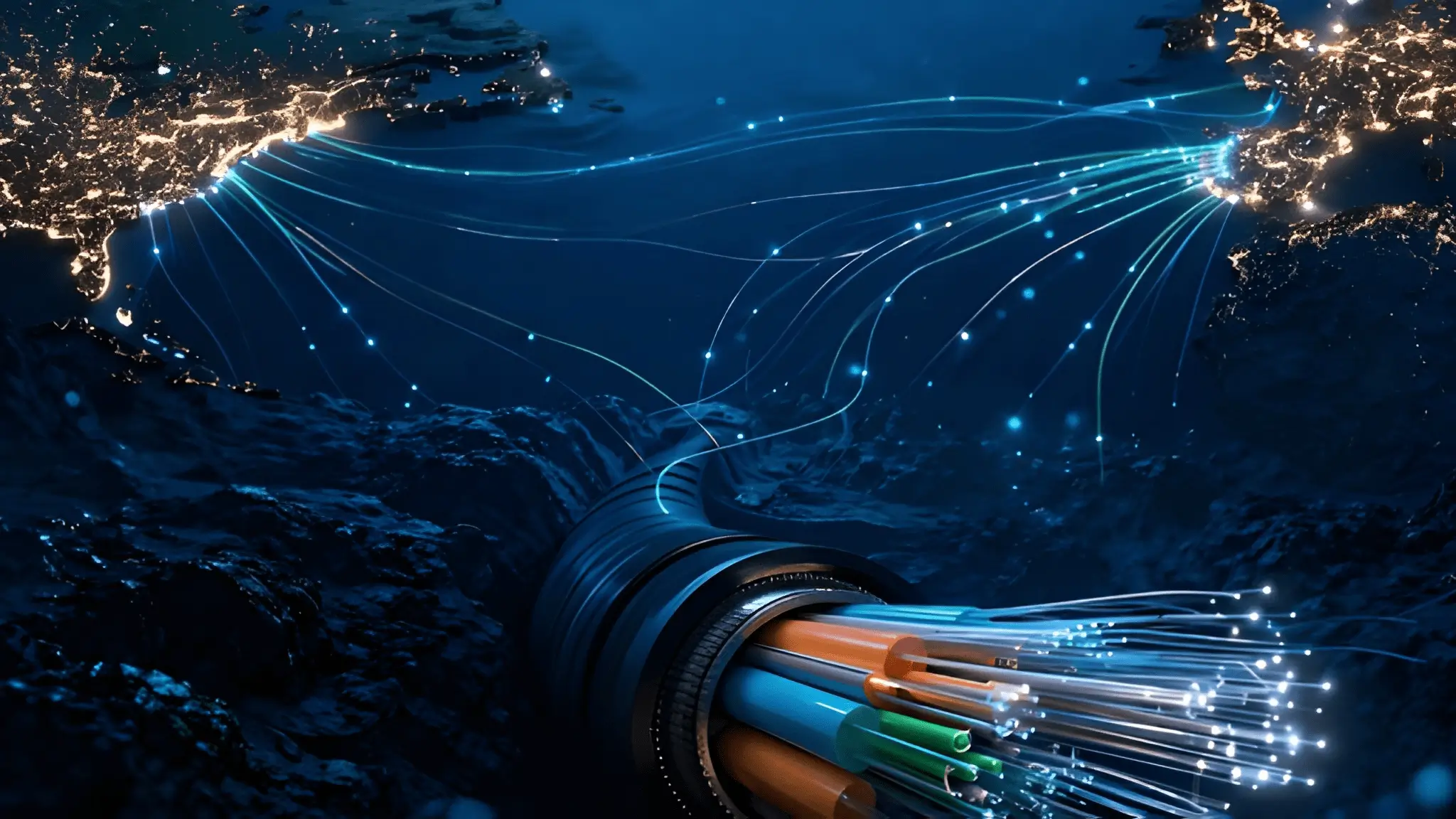
The internet once felt abstract, something that existed in cloud diagrams and data centers, far removed from physical constraints. That perception has shifted as artificial intelligence workloads began to demand sustained, high-capacity, and low-latency connectivity across continents. Subsea cables now serve as the physical backbone of this transformation, carrying not just internet traffic but synchronized compute operations between distant regions. Engineers increasingly integrate these cables closely with data center networks, treating them as critical extensions of global connectivity rather than isolated external links. This shift reframes the ocean floor as a continuation of terrestrial compute architecture, tightly integrated into AI execution pipelines. The Atlantic Ocean, in particular, has evolved into a dense corridor where digital infrastructure directly influences computational outcomes.

Traditional network design separated compute and transport layers, allowing traffic to flow across shared infrastructure without strict performance coupling. AI systems disrupt that separation because distributed training, inference orchestration, and model synchronization require deterministic performance across nodes. Subsea cables therefore act as backplane interconnects between geographically separated clusters, linking compute zones across continents in near real-time. This architectural change elevates cables from passive carriers to active participants in system performance. Operators now optimize routing, capacity allocation, and signal integrity with the same rigor applied to internal data center networks. The ocean floor has effectively become a programmable extension of AI infrastructure.
Latency sensitivity further strengthens this transformation, as even minor delays influence how workloads distribute across regions. Training large models across multiple locations depends on synchronized gradient updates that cannot tolerate inconsistent timing. Subsea cables must therefore deliver predictable latency, not just raw bandwidth, to sustain these operations. Engineers design routes with fewer branching points and controlled amplification stages to minimize variability. This approach mirrors high-performance computing clusters, where interconnect quality directly impacts output efficiency. The Atlantic corridor increasingly supports coordinated data exchange between global compute environments, complementing its role as a high-capacity network path.
From Connectivity to Compute Fabric
Cloud providers originally deployed subsea capacity to ensure redundancy and improve user experience for applications like streaming and browsing. That model no longer defines current demand patterns, as AI workloads require persistent, high-throughput data exchange between training and inference environments. Subsea cables now support continuous flows of model parameters, datasets, and inference requests across regions. This shift transforms connectivity into a compute fabric that underpins distributed intelligence systems. Infrastructure teams treat these links as critical dependencies for operational continuity rather than optional enhancements. The Atlantic has become a central artery for this emerging fabric.

Design philosophies have adapted accordingly, prioritizing performance consistency over simple capacity expansion. Cable systems incorporate advanced modulation techniques and optimized repeater spacing to maintain signal quality across long distances. Operators also align landing points with major data center clusters to reduce terrestrial latency overhead. These decisions reflect a deeper integration between subsea infrastructure and compute placement strategies. The result is a tightly coupled system where oceanic and terrestrial networks operate as a unified environment. AI workloads now depend on this integration to function at scale.
Security considerations also evolve within this framework, as cables carry increasingly sensitive data tied to model development and inference processes. Infrastructure owners implement enhanced monitoring and physical protection measures to safeguard these assets. Governments and operators collaborate to secure landing stations and mitigate risks associated with disruption or interception. This heightened focus underscores the strategic importance of subsea systems in the AI era. The ocean no longer represents a neutral medium but a contested and managed layer of global infrastructure. Control over this layer increasingly translates into technological advantage.
AI Traffic Is Rewriting Transatlantic Demand
AI training workloads generate massive volumes of data movement that extend far beyond traditional internet traffic patterns. Distributed training architectures can span multiple geographic regions in certain scenarios, though most large-scale training remains regionally concentrated due to latency constraints. Subsea cables carry these synchronization streams, enabling coordinated computation across continents. This process differs fundamentally from content delivery because it involves bidirectional, high-frequency exchanges rather than one-way distribution. Engineers must ensure that these flows remain stable and predictable to avoid degrading training efficiency. The Atlantic corridor has become a primary pathway for such exchanges between North America and Europe.
Data locality no longer constrains training in the same way it once did, as infrastructure now supports real-time movement of datasets and model updates. Organizations increasingly consider factors such as energy availability, regulatory conditions, and compute capacity alongside geographic proximity when distributing workloads. Subsea cables enable this flexibility by bridging distances without compromising performance. This capability introduces new complexity in traffic management, as operators must balance diverse and dynamic flows. AI workloads therefore reshape how capacity is provisioned and utilized across the Atlantic. The network must adapt continuously to shifting computational demands.
Inference workloads add another layer of demand, particularly when applications require responses generated in one region and delivered in another. These interactions can create cross-Atlantic traffic that complements regionally served inference flows in specific use cases. Unlike streaming traffic, inference exchanges often involve smaller but latency-sensitive packets that require consistent delivery times. Subsea infrastructure must accommodate both high-throughput and low-latency requirements simultaneously. This dual demand profile challenges traditional network optimization strategies. Operators must redesign systems to support these emerging patterns effectively.
Inference Traffic and Real-Time Exchange
Inference traffic differs from training in its immediacy and responsiveness requirements, shaping how networks prioritize and route data. Applications such as conversational AI, recommendation systems, and real-time analytics depend on rapid cross-regional communication. Subsea cables facilitate these interactions by providing direct and efficient pathways between compute clusters. The Atlantic region supports a significant portion of these exchanges due to its dense connectivity and proximity to major data hubs. Infrastructure must therefore maintain high availability and low latency to sustain user experience. This requirement elevates the importance of cable reliability and redundancy.
Traffic patterns increasingly include more continuous interaction between regions alongside traditional periodic traffic flows. AI systems generate steady flows of requests and responses that traverse the Atlantic throughout operational cycles. Network operators must monitor and manage these flows in real time to prevent congestion and maintain performance. This dynamic environment contrasts with earlier models where traffic followed predictable peaks and troughs. AI workloads introduce variability that demands adaptive network management. Subsea cables must support this adaptability to remain effective.
The increasing complexity of AI traffic also influences how capacity planning occurs across subsea systems. Operators cannot rely solely on historical usage patterns to predict future demand. Instead, they must account for evolving AI deployment strategies and emerging applications. This forward-looking approach requires close collaboration between infrastructure providers and technology developers. The Atlantic corridor remains central to these considerations due to its strategic importance. Demand will continue to evolve as AI systems expand in scale and scope.
From Content to Compute: Traffic Patterns Are Flipping
For years, transatlantic traffic largely revolved around content distribution, driven by video streaming, social media platforms, and web applications. That model relied on predictable flows, where data originated from centralized servers and moved outward to end users across regions. Subsea cables supported this pattern by optimizing for downstream delivery and caching strategies. The rise of artificial intelligence has disrupted this equilibrium, introducing workloads that no longer fit within content-centric paradigms. Traffic now moves in multiple directions with varying intensity, shaped by both compute requirements and ongoing user-driven consumption patterns. The Atlantic corridor reflects this transition as data exchanges increasingly align with computational workflows.
Streaming traffic still exists, but it no longer defines the dominant behavior across subsea networks. AI workloads introduce continuous synchronization between distributed systems, creating sustained bidirectional flows. This shift introduces additional demand for bidirectional capacity while one-way delivery models such as streaming continue to dominate overall traffic volumes. Network operators must adjust provisioning strategies to accommodate these changes without compromising performance. The infrastructure must handle diverse traffic types that coexist and interact in complex ways. Subsea systems now operate in an environment where predictability has diminished significantly.
Content delivery networks previously optimized latency by placing caches closer to users, minimizing the need for repeated long-distance transfers. AI systems operate differently because they require centralized or clustered compute resources that cannot always be replicated at the edge. This constraint drives repeated cross-Atlantic exchanges, reinforcing the importance of subsea connectivity. The network must support these interactions without introducing bottlenecks that degrade computational efficiency. Engineers increasingly design systems with this requirement in mind. The Atlantic has increasingly supported ongoing compute interaction alongside its established role in large-scale content delivery.
AI-Driven Data Exchange Between Regions
AI-driven traffic introduces a fundamentally different pattern characterized by constant movement of structured and unstructured data between regions. Training processes require datasets to move across clusters, while inference systems exchange contextual information to generate responses. These interactions create a mesh of communication that spans continents and relies heavily on subsea infrastructure. The Atlantic serves as a critical link within this mesh, enabling seamless integration between North American and European compute environments. Traffic flows increasingly reflect interconnected systems layered on top of established linear delivery paths. This transformation demands new approaches to network design and management.
Data exchange volumes fluctuate based on workload intensity, making it challenging to maintain consistent performance. Operators must implement adaptive routing and traffic engineering techniques to handle these variations effectively. Subsea cables must support dynamic allocation of capacity to meet shifting demands. This requirement contrasts with earlier models where capacity planning relied on stable growth patterns. AI workloads introduce unpredictability that requires continuous monitoring and adjustment. The network evolves alongside the workloads it supports.
Inter-regional collaboration further amplifies these patterns, as organizations distribute workloads across continents to optimize resource utilization. Subsea infrastructure enables this distribution by providing reliable and efficient connectivity. The Atlantic corridor facilitates coordination between diverse compute environments, allowing systems to operate as unified entities. This capability enhances flexibility but also increases dependency on stable subsea performance. Infrastructure reliability becomes a critical factor in sustaining AI operations. The network must deliver both resilience and efficiency under changing conditions.
Hyperscalers Are Quietly Owning the Ocean
Large technology companies have steadily increased their involvement in subsea cable projects, transitioning from capacity buyers to infrastructure owners. This shift reflects the growing importance of network control in supporting global operations. Ownership allows these companies to tailor infrastructure to their specific requirements, ensuring optimal performance for AI workloads. Subsea cables now form part of vertically integrated ecosystems that span data centers, networks, and applications. The Atlantic hosts several such systems that connect major hubs across continents. This trend signals a broader transformation in how digital infrastructure is developed and managed.
Private ownership provides greater flexibility in capacity allocation, enabling operators to prioritize critical workloads without relying on shared infrastructure. Companies can optimize routing, latency, and redundancy based on internal needs rather than external agreements. This control enhances performance consistency, which is essential for AI operations. Subsea cables become strategic assets that support long-term technological objectives. The shift also reduces dependence on traditional telecommunications providers. Infrastructure ownership increasingly aligns with competitive advantage.
Investment strategies reflect this priority, with hyperscalers funding new cable systems and participating in consortium projects. These initiatives expand capacity while reinforcing control over key routes. The Atlantic remains a focal point due to its role in connecting major economic and technological regions. Ownership structures often involve partnerships that balance cost and influence. This approach allows companies to secure access while sharing risks. The result is a complex landscape where private and collaborative interests intersect.
Capacity Control and Strategic Advantage
Control over subsea capacity extends beyond simple access, influencing how traffic flows and how services perform globally. Companies that own infrastructure can implement advanced traffic management techniques that optimize performance for AI workloads. This capability enables more efficient use of resources and enhances user experience. Subsea cables thus become integral to service delivery rather than background infrastructure. The Atlantic corridor exemplifies this integration, supporting high-performance connections between major compute regions. Control translates directly into operational efficiency.
Strategic considerations also shape how capacity is deployed and managed across these systems. Operators must balance current demand with future growth, ensuring that infrastructure remains scalable and adaptable. Ownership facilitates long-term planning by aligning network development with organizational goals. This alignment supports innovation and enables rapid deployment of new technologies. Subsea cables serve as enablers of these capabilities, connecting distributed systems into cohesive networks. The ocean becomes a domain of strategic planning rather than passive connectivity.
Competition intensifies as more companies seek to establish control over critical routes and capacity. This dynamic drives investment in new systems and upgrades to existing infrastructure. The Atlantic region experiences continuous development as stakeholders vie for influence and capability. Control over subsea networks increasingly shapes the competitive landscape of AI and cloud services. Infrastructure decisions carry long-term implications for market positioning. The race for dominance extends beneath the ocean surface.
Capacity Is No Longer Enough, Control Is
The traditional model of leasing bandwidth on shared subsea cables no longer satisfies the requirements of modern AI workloads. Leasing provides access, but it can limit fine-grained control over routing, latency, and performance characteristics compared to full ownership. AI systems demand consistent and predictable connectivity that shared environments cannot always guarantee. Ownership of routes allows operators to define these parameters precisely, aligning network behavior with computational needs. This shift reflects a broader move toward infrastructure sovereignty within the technology sector. The Atlantic corridor highlights this transition as companies prioritize control over mere access.
Route ownership enables optimization at multiple levels, from physical path selection to traffic engineering strategies. Operators can design systems that minimize latency and reduce potential points of failure. This capability enhances reliability and supports high-performance workloads. Subsea cables become tailored assets rather than generic resources. The network evolves into a customized environment that supports specific operational goals. Control over routes thus becomes a critical factor in infrastructure design.
Leasing still plays a role, particularly for smaller operators and emerging markets, but it cannot match the advantages of ownership for large-scale AI deployments. Organizations that rely solely on leased capacity may face certain limitations in flexibility and optimization compared to those with direct infrastructure control. This disparity creates a competitive divide between those who control infrastructure and those who do not. The Atlantic region exemplifies this divide, with major players consolidating influence over key routes. Control shapes the future of connectivity in this environment. The balance between access and ownership continues to shift.
Strategic Importance of Route Control
Route control influences not only performance but also resilience and security across subsea networks. Operators can design redundant paths and implement protective measures that reduce vulnerability to disruptions. This capability becomes increasingly important as subsea infrastructure gains strategic significance. Governments and organizations recognize the need to secure these assets against potential threats. Control over routes allows for coordinated responses to incidents and enhances overall network stability. The Atlantic serves as a critical testbed for these strategies.
Geopolitical considerations also shape how routes are selected and managed, reflecting broader strategic interests. Countries and companies seek to establish influence over key corridors that support economic and technological activity. Subsea cables become instruments of policy as well as infrastructure. Decisions about routing and landing points carry implications beyond technical performance. The Atlantic region exemplifies this intersection of technology and geopolitics. Control over routes becomes a matter of national and corporate strategy.
The emphasis on control drives innovation in cable design and deployment, as operators seek to enhance capabilities and differentiate their systems. New technologies improve capacity, reliability, and efficiency, supporting evolving requirements. These advancements reinforce the importance of subsea infrastructure in the digital ecosystem. The network continues to evolve as stakeholders invest in its development. The Atlantic remains central to this evolution due to its strategic importance. Control over infrastructure defines the next phase of connectivity.
The Atlantic Is Becoming a Strategic Chokepoint
The Atlantic Ocean carries a dense concentration of subsea cable systems that connect major economic and technological regions. These routes link North America and Europe through a relatively narrow geographic corridor compared to global oceanic spans. This concentration creates efficiency in connectivity but also introduces structural dependency on a limited set of pathways. AI-driven workloads amplify this dependency because they require continuous, high-performance connectivity across these routes. Subsea cables in this region now carry not just general internet traffic but coordinated compute operations between continents. The Atlantic has therefore evolved into a critical chokepoint within the global digital infrastructure landscape.
Network operators design systems to mitigate risks associated with route concentration, but physical geography imposes constraints that cannot be fully eliminated. Cable paths often converge near specific landing zones due to seabed conditions and proximity to data center hubs. This convergence increases the potential impact of disruptions, whether caused by natural events or human activity. AI workloads intensify the consequences of such disruptions because they depend on stable and continuous connectivity. Infrastructure resilience becomes a central concern in this context. The Atlantic corridor exemplifies how geographic realities shape technological dependencies.
Strategic awareness of this concentration has grown among governments and industry stakeholders. Policymakers increasingly recognize subsea cables as critical infrastructure that requires protection and oversight. This recognition influences regulatory frameworks and investment decisions related to subsea systems. The Atlantic region receives particular attention due to its role in supporting transcontinental data flows. Efforts to enhance monitoring and security reflect this priority. The chokepoint nature of the Atlantic continues to shape strategic thinking.
Geopolitical Sensitivity and Risk
Geopolitical dynamics further elevate the importance of the Atlantic as a strategic chokepoint. Nations rely on these routes to support economic activity, technological development, and communication networks. Any disruption or manipulation of subsea infrastructure can have far-reaching consequences. AI systems add another layer of sensitivity because they underpin critical applications across industries. Subsea cables thus become targets of strategic interest in both defensive and offensive contexts. The Atlantic corridor sits at the center of these considerations.
Governments and alliances have begun to incorporate subsea infrastructure into broader security strategies. Monitoring capabilities, patrol activities, and collaborative frameworks aim to protect these assets from potential threats. This approach reflects the recognition that digital infrastructure forms part of national security architecture. AI workloads increase the stakes by linking computational capabilities directly to network performance. Subsea cables become integral to maintaining technological competitiveness. The Atlantic region remains a focal point for these efforts.
Risk management strategies also evolve in response to this environment, emphasizing redundancy and diversification of routes. Operators explore alternative pathways and backup systems to reduce reliance on any single corridor. These initiatives require significant investment and coordination among stakeholders. The complexity of subsea networks makes such efforts challenging but necessary. The Atlantic continues to illustrate the balance between efficiency and resilience. Strategic planning must account for both factors simultaneously.
Europe’s AI Ambitions Depend on American Pipes
Europe’s growing interest in artificial intelligence has increased its reliance on transatlantic connectivity. Many advanced AI workloads are currently concentrated in North America, where infrastructure has scaled rapidly, although capacity in other regions continues to expand. Subsea cables enable this relationship by facilitating data exchange between European demand centers and American compute hubs. This dependency shapes how AI ecosystems develop across regions. The Atlantic corridor functions as a bridge that supports this interaction. Infrastructure performance directly influences the effectiveness of these cross-regional operations.
European organizations leverage transatlantic connectivity to access high-performance compute environments and specialized resources. This approach allows them to participate in global AI development without replicating all infrastructure locally. Subsea cables play a critical role in enabling this model by providing reliable and efficient connectivity. However, this reliance can introduce strategic considerations related to autonomy and control depending on workload distribution. Policymakers and industry leaders must balance access with long-term independence. The Atlantic remains central to this balancing act.
Efforts to expand local infrastructure within Europe aim to reduce dependency while maintaining connectivity with global systems. These initiatives include investments in data centers, research facilities, and network infrastructure. Subsea cables continue to support these developments by linking regional assets to broader ecosystems. The interplay between local and transatlantic resources increasingly shapes the current trajectory of European AI development. Connectivity remains a foundational element of this trajectory. The Atlantic corridor continues to enable and shape these dynamics.
Compute Imbalance and Network Reliance
The imbalance between compute capacity and demand across regions reinforces the importance of subsea connectivity. North America hosts a significant portion of large-scale AI infrastructure, while Europe generates substantial demand for these capabilities. Subsea cables bridge this gap by enabling efficient data exchange between regions. This arrangement supports collaboration and resource sharing but also creates structural dependencies. Network reliability becomes a critical factor in sustaining these interactions. The Atlantic plays a pivotal role in maintaining this balance.
AI workloads require consistent and high-performance connectivity to function effectively across distributed environments. Subsea infrastructure must deliver this performance to support cross-regional operations. Any degradation in connectivity can impact model training, inference, and overall system efficiency. Operators must therefore prioritize stability and resilience in network design. The Atlantic corridor exemplifies the importance of these considerations. Infrastructure quality directly influences technological outcomes.
Long-term strategies aim to address this imbalance by expanding compute capacity in Europe while maintaining strong transatlantic links. These efforts require coordinated investment in both infrastructure and policy frameworks. Subsea cables remain a key component of this strategy, enabling continued collaboration and integration. The relationship between regions will likely evolve as capabilities develop. Connectivity will continue to underpin this evolution. The Atlantic remains central to these developments.
Milliseconds and Workload Placement
Latency has emerged as a defining factor in how AI workloads are distributed across global infrastructure. Even small delays can influence the responsiveness of inference systems and, in certain distributed setups, aspects of model training efficiency. Subsea cables must therefore deliver consistent and low-latency connectivity to support these operations. Engineers design routes and systems with latency optimization as a primary objective. The Atlantic corridor plays a critical role in enabling low-latency connections between major compute regions. Infrastructure performance directly impacts workload placement decisions.
Workload placement strategies now consider latency alongside factors such as cost, energy availability, and regulatory requirements. Organizations deploy AI systems in locations that balance these considerations effectively. Subsea cables enable flexibility by connecting diverse regions with minimal delay. This capability allows some workloads to operate across distributed environments, although performance sensitivity often favors regional deployment for training. The network becomes an active component in determining where computation occurs. The Atlantic exemplifies how connectivity shapes these decisions.
Latency sensitivity also drives innovation in cable design and network architecture. Operators implement advanced technologies to reduce signal delay and improve transmission efficiency. These improvements enhance the overall performance of subsea systems. AI workloads benefit from these advancements through improved responsiveness and more efficient data exchange across regions. The network evolves to meet the demands of emerging applications. The Atlantic remains a focal point for these developments.
Performance as a Competitive Edge
Performance differentiation increasingly depends on the ability to deliver low-latency and high-reliability connectivity. Companies that achieve superior network performance can offer more efficient and responsive AI services. Subsea cables play a central role in enabling this advantage by connecting global infrastructure seamlessly. The Atlantic corridor supports many of these high-performance connections. Control over latency becomes a strategic asset in the competitive landscape. Infrastructure quality directly influences service outcomes.
Operators must continuously monitor and optimize network performance to maintain this edge. AI workloads introduce dynamic traffic patterns that require adaptive management strategies. Subsea systems must respond to these changes without compromising stability. This requirement drives investment in monitoring tools and optimization techniques. The network becomes a dynamic environment that evolves alongside workloads. The Atlantic continues to illustrate these challenges and opportunities.
The importance of latency extends beyond technical performance, influencing broader strategic decisions. Organizations consider network characteristics when planning infrastructure investments and partnerships. Subsea connectivity becomes a factor in shaping business strategies and technological roadmaps. The Atlantic region exemplifies how these considerations play out in practice. Infrastructure decisions carry long-term implications for competitiveness. Latency has become a defining currency in the AI era.
Cable Routes Are Now Political Decisions
Subsea cable routing no longer follows purely technical or commercial logic, as governments now exert influence over where and how systems are deployed. Regulatory approvals, security reviews, and geopolitical alignments shape decisions about landing points and cable paths. This involvement reflects the recognition that subsea infrastructure underpins national digital capabilities. AI workloads increase the stakes by tying computational power directly to connectivity. Governments therefore treat cable projects as strategic assets rather than neutral investments. The Atlantic corridor illustrates how policy and infrastructure have become deeply intertwined.
National security concerns often guide decisions about cable ownership, partnerships, and routing. Authorities evaluate potential risks associated with foreign involvement in critical infrastructure projects. These evaluations influence which companies can participate and where cables can land. AI systems amplify these concerns because they handle sensitive data and support essential services. Subsea cables thus become part of broader security frameworks. The Atlantic region remains a focal point for these considerations due to its strategic importance.
Policy frameworks also aim to balance openness with control, ensuring that infrastructure supports economic growth while maintaining security. Governments collaborate with industry stakeholders to develop guidelines and standards for subsea systems. These efforts reflect the complexity of managing global networks that span multiple jurisdictions. The Atlantic corridor exemplifies this complexity, connecting regions with different regulatory environments. Coordination becomes essential to ensure consistent performance and security. Infrastructure development now requires alignment between technical and political objectives.
Routing Choices Reflect Strategic Interests
Routing decisions increasingly reflect strategic priorities rather than purely geographic efficiency. Countries and companies select paths that align with political alliances, economic interests, and security considerations. These choices influence how data flows across regions and which routes become dominant. AI workloads depend on these routes for performance and reliability, making routing decisions even more significant. Subsea cables thus become instruments of strategic planning. The Atlantic region highlights how these dynamics play out in practice.
Alternative routes sometimes emerge as stakeholders seek to reduce dependence on specific corridors or partners. These initiatives aim to enhance resilience and diversify connectivity options. However, they also introduce complexity in network design and management. Operators must balance redundancy with efficiency to maintain optimal performance. AI workloads require both reliability and speed, making this balance particularly challenging. The Atlantic continues to serve as a central hub within this evolving network landscape.
The interplay between politics and technology shapes the future of subsea infrastructure. Decisions made today will influence connectivity patterns for years to come. Stakeholders must navigate a landscape where technical requirements intersect with geopolitical realities. Subsea cables embody this intersection, carrying both data and strategic intent. The Atlantic corridor remains a key arena for these developments. Routing decisions now carry implications far beyond network performance.
Resilience vs Speed: The Hidden Trade-Off
Subsea network design increasingly involves a trade-off between resilience and performance, particularly in the context of AI workloads. Redundant routes improve reliability by providing alternative paths in case of disruption. However, these routes may introduce additional latency compared to more direct connections. AI systems often prioritize low latency to maintain efficiency, creating tension between these objectives. Engineers must carefully evaluate how to balance these competing demands. The Atlantic corridor exemplifies this challenge due to its critical role in global connectivity.
Redundancy strategies typically involve deploying multiple cables along different paths, ensuring that traffic can be rerouted if necessary. This approach enhances network resilience but requires significant investment and coordination. Operators must also ensure that backup routes can handle the same performance requirements as primary paths. AI workloads complicate this process because they demand consistent and predictable connectivity. Variations in latency or capacity can impact system performance. The network must therefore maintain high standards across all routes.
Design decisions often involve trade-offs that reflect specific operational priorities. Some systems prioritize direct routes to minimize latency, while others emphasize redundancy to enhance reliability. The optimal balance depends on the nature of the workloads and the risk tolerance of operators. AI applications introduce new considerations that influence these decisions. Subsea infrastructure must adapt to meet these evolving requirements. The Atlantic remains a key environment for exploring these trade-offs.
Security, Stability, and Performance
Security considerations add another dimension to the resilience versus speed trade-off. Protecting subsea infrastructure from potential threats requires measures that may affect performance. Monitoring systems, physical safeguards, and controlled access points enhance security but can introduce complexity. Operators must integrate these measures without compromising network efficiency. AI workloads depend on both security and performance, making this integration critical. The Atlantic corridor highlights the importance of achieving this balance.
Stability also plays a crucial role in network design, as consistent performance supports reliable AI operations. Subsea systems must maintain signal integrity and minimize disruptions לאורך long distances. Engineers implement advanced technologies to achieve these goals, balancing performance with durability. This approach ensures that infrastructure can support demanding workloads over time. AI systems benefit from stable connectivity that enables continuous operation. The network becomes a foundation for sustained computational activity.
Performance optimization remains a central objective, driving ongoing innovation in subsea technology. Operators explore new materials, designs, and transmission techniques to enhance efficiency. These advancements aim to reduce latency while maintaining resilience and security. The interplay between these factors shapes the evolution of subsea infrastructure. The Atlantic continues to serve as a testing ground for these innovations. Achieving the right balance remains a key challenge for the industry.
Dedicated Routes for Hyperscaler Ecosystems
Private fiber corridors have emerged as a defining feature of modern subsea infrastructure, reflecting the needs of hyperscale operators. These dedicated routes connect specific data center clusters across continents, enabling optimized performance for AI workloads. Unlike shared systems, private corridors allow operators to control every aspect of the network. This control supports consistent latency, capacity allocation, and security measures. The Atlantic hosts several such corridors that link major hubs in North America and Europe. These systems illustrate the shift toward vertically integrated infrastructure.
Dedicated routes reduce reliance on shared infrastructure, allowing operators to tailor networks to their specific requirements. This approach enhances performance and reliability, particularly for latency-sensitive applications. AI workloads benefit from these optimized connections, achieving greater efficiency and responsiveness. Private corridors also support scalability, enabling operators to expand capacity as needed. The network evolves in alignment with computational demands. The Atlantic remains a central axis for these developments.
Investment in private corridors reflects the strategic importance of subsea infrastructure in the AI era. Companies allocate significant resources to develop and maintain these systems. Partnerships often play a role in sharing costs and expertise while preserving control. This collaborative approach supports the expansion of global connectivity. Subsea cables become integral components of corporate infrastructure strategies. The Atlantic corridor continues to attract investment and innovation.
Vertical Integration Across Oceanic Networks
Vertical integration extends beyond ownership of cables to encompass the entire infrastructure stack, from data centers to network operations. This approach allows companies to optimize performance across all layers of the system. Subsea cables form a critical link within this integrated environment. Operators can coordinate network behavior with compute workloads to achieve optimal efficiency. AI systems benefit from this alignment, enabling seamless operation across distributed environments. The Atlantic corridor exemplifies how integration enhances performance.
Integrated infrastructure also supports innovation by providing a controlled environment for experimentation and development. Companies can test new technologies and deployment strategies without external constraints. This capability accelerates the evolution of AI systems and network architectures. Subsea cables play a key role in enabling these advancements by connecting global resources. The network becomes a platform for innovation rather than a limitation. The Atlantic remains central to these efforts.
The rise of private corridors and vertical integration reshapes the competitive landscape of digital infrastructure. Companies that control multiple layers of the stack gain significant advantages in performance and flexibility. This dynamic influences how markets evolve and how services are delivered. Subsea infrastructure becomes a strategic differentiator in this context. The Atlantic corridor continues to reflect these changes. Integration defines the next phase of infrastructure development.
When Cables Carry Power Dynamics, Not Just Data
Subsea cables now represent more than technical infrastructure, as they increasingly function as instruments of geopolitical influence. Control over cable routes, landing stations, and capacity allocation allows stakeholders to shape how data flows across regions. This influence extends to AI ecosystems, where connectivity can affect computational capabilities and deployment strategies in specific scenarios. Nations and corporations recognize that infrastructure ownership can translate into strategic advantage. The Atlantic corridor embodies this shift, serving as a domain where power dynamics intersect with technology. Subsea systems have become tools of influence as much as enablers of communication.
Geopolitical leverage emerges through both direct control and indirect dependency, as regions rely on infrastructure owned or influenced by external actors. This dynamic can create asymmetries that influence negotiations, partnerships, and policy decisions. AI workloads amplify these asymmetries because they depend on reliable and high-performance connectivity. Subsea cables thus become critical assets in maintaining technological sovereignty. The Atlantic region highlights how these dependencies manifest in practice. Infrastructure decisions now carry implications that extend beyond technical considerations.
Strategic competition increasingly plays out through infrastructure development and control. Stakeholders invest in new cable systems to expand influence and secure access to critical routes. These investments reflect long-term planning that aligns with broader geopolitical objectives. Subsea infrastructure becomes a means of projecting power and ensuring resilience. The Atlantic corridor remains central to these strategies due to its importance in global connectivity. The intersection of technology and geopolitics continues to deepen.
Control, Dependency, and Influence
Control over subsea infrastructure shapes dependency relationships between regions and organizations. Entities that own or manage critical routes can influence how and where data flows, affecting performance and access. This capability becomes particularly significant in the context of AI, where connectivity underpins computational operations. Dependencies may arise when regions rely on external infrastructure to support their digital ecosystems. The Atlantic corridor exemplifies these dynamics, linking regions with varying levels of control and capacity. Infrastructure becomes a determinant of influence within the global digital landscape.
Dependency does not necessarily imply vulnerability, but it requires careful management to ensure stability and resilience. Stakeholders must balance reliance on external infrastructure with efforts to develop local capabilities. This balance shapes investment strategies and policy decisions across regions. Subsea cables play a central role in enabling connectivity while also defining the boundaries of independence. The Atlantic remains a critical link in this context. Infrastructure choices influence both opportunity and risk.
Influence extends beyond ownership to include participation in governance and standard-setting processes related to subsea infrastructure. Organizations and governments collaborate to establish frameworks that guide development and operation. These frameworks reflect shared interests but also reveal competing priorities. AI systems add complexity by introducing new requirements and sensitivities. Subsea cables must support these evolving needs while maintaining stability. The Atlantic corridor continues to serve as a focal point for these interactions.
What Happens If the Atlantic Gets Saturated?
The growth of AI workloads raises questions about the long-term evolution of transatlantic subsea infrastructure capacity. Existing cable systems provide substantial bandwidth, but demand continues to evolve in ways that challenge traditional planning models. AI-driven traffic introduces sustained, high-intensity flows that differ from historical usage patterns. Subsea cables must accommodate these changes while maintaining performance and reliability. The Atlantic corridor faces increasing pressure as demand grows across multiple dimensions. Capacity planning must adapt to this new reality.
While current systems are not near saturation, long-term constraints could gradually affect performance and flexibility if demand continues to grow. Network operators may encounter congestion, reduced efficiency, or limitations in scaling workloads. AI systems amplify these effects because they rely on consistent and predictable connectivity. Subsea infrastructure must therefore evolve to address potential bottlenecks before they impact operations. The Atlantic region may serve as a critical testing ground for these challenges as demand evolves over time. Proactive planning becomes essential to sustain growth.
Expansion efforts aim to address these pressures by deploying new cable systems and upgrading existing ones. These initiatives increase capacity and enhance performance, supporting continued development of AI ecosystems. However, expansion requires significant investment and coordination among stakeholders. The complexity of subsea projects adds to the challenge of scaling infrastructure effectively. The Atlantic continues to attract attention as a priority area for development. Capacity remains a dynamic and evolving concern.
Rerouting, Delays, and Systemic Impact
If saturation occurs, traffic may need to be rerouted through alternative paths, potentially increasing latency and complexity. These adjustments can affect the performance of AI workloads, particularly those that depend on low-latency connectivity. Operators must manage these transitions carefully to minimize disruption. Subsea infrastructure must support flexible routing while maintaining stability. The Atlantic corridor plays a central role in enabling these capabilities. Network adaptability becomes a key factor in managing saturation risks.
Delays in data transmission can propagate through distributed systems, affecting synchronization and overall efficiency. AI workloads are particularly sensitive to such delays, as they rely on coordinated operations across regions. Subsea cables must therefore maintain high performance even under increased load. Operators implement monitoring and optimization strategies to address potential issues. These efforts aim to preserve system integrity and performance. The Atlantic remains a focal point for these challenges.
Systemic impacts extend beyond individual workloads, influencing broader digital ecosystems and economic activity. Connectivity disruptions or limitations can affect multiple sectors that rely on AI-driven services. Subsea infrastructure thus becomes a critical component of resilience at both technical and societal levels. Stakeholders must consider these implications when planning and managing networks. The Atlantic corridor exemplifies the interconnected nature of these systems. Infrastructure performance shapes outcomes across domains.
The Real AI Race Is Underwater
The narrative of artificial intelligence often centers on algorithms, compute power, and data, but the underlying infrastructure tells a more complex story. Subsea cables form the connective tissue that enables global AI systems to function as unified entities. Control over these systems influences how workloads distribute, how quickly they respond, and how reliably they operate. The Atlantic Ocean has emerged as a central arena where these dynamics converge. Infrastructure beneath the surface now shapes outcomes above it. The race for AI leadership increasingly considers subsea infrastructure as an important enabling factor alongside compute and software capabilities.
Technological advantage no longer derives solely from computational capability but also from the ability to move data efficiently across regions. Subsea infrastructure enables this movement, supporting connectivity between distributed systems across regions. AI workloads rely on this connectivity to achieve scale and performance. The Atlantic corridor exemplifies how physical infrastructure underpins digital innovation. Stakeholders must recognize the importance of these systems in shaping the future of technology. The ocean has become an integral part of the AI landscape.
Strategic investments in subsea infrastructure reflect this recognition, as companies and governments seek to secure their positions within the global ecosystem. These efforts extend beyond capacity expansion to include control, resilience, and integration. The Atlantic continues to attract attention as a critical corridor for these initiatives. Infrastructure decisions made today will influence technological trajectories for years to come. Subsea cables represent both opportunity and responsibility in this context. The future of AI will continue to rely on both subsea connectivity and advancements within data centers.
A Connected Future Shaped Below the Surface
The evolution of subsea infrastructure highlights the interconnected nature of modern technology systems. AI workloads span continents, relying on networks that operate seamlessly across vast distances. Subsea cables enable this connectivity, forming the backbone of global digital ecosystems. The Atlantic corridor remains central to this network, supporting critical interactions between regions. Infrastructure performance directly influences the capabilities and reach of AI systems. The ocean floor has become a stage for technological advancement.
Future developments will likely deepen the integration between subsea networks and compute infrastructure. Innovations in cable design, network management, and system architecture will shape how these systems evolve. AI workloads will continue to drive demand for performance, reliability, and scalability. Subsea infrastructure must adapt to meet these requirements while addressing emerging challenges. The Atlantic will remain a focal point for these developments. Connectivity will continue to define the boundaries of possibility.
The real race in artificial intelligence extends beyond visible technologies into the hidden layers that support them. Subsea cables embody this hidden dimension, carrying both data and strategic significance. Control, resilience, and performance define success in this environment. The Atlantic corridor stands as a testament to the importance of infrastructure in shaping global outcomes. The future of AI will depend on how effectively these systems are developed and managed. The race is already underway beneath the surface.