
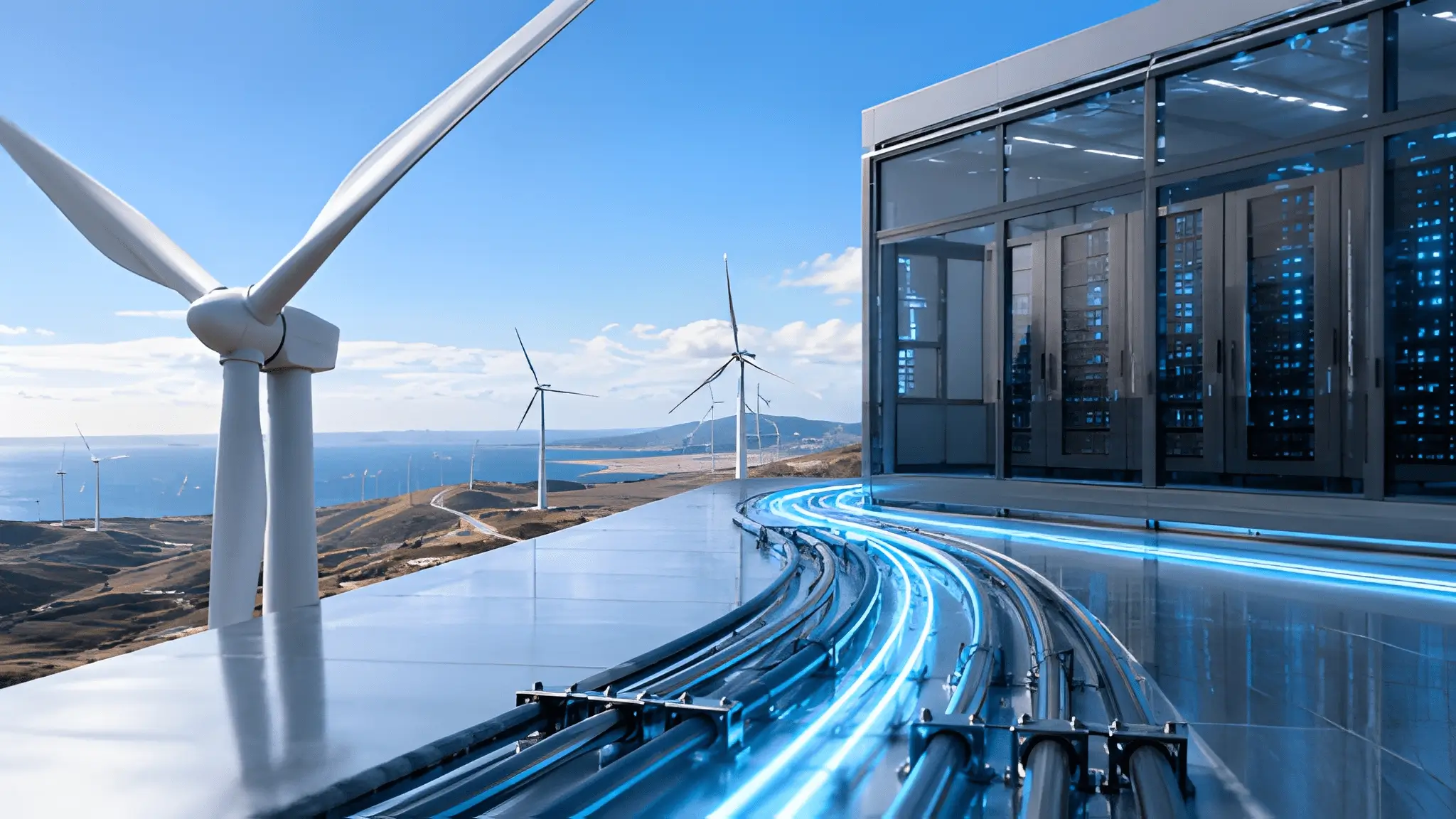
Japan’s effort to align renewable power generation with digital infrastructure reached a significant milestone after Eurus Energy and Toyota Tsusho formally advanced construction of Soya Green Data Center 1 in Hokkaido. The companies recently held a pillar-raising ceremony following the start of construction in April, marking progress on what will become the country’s first data center directly connected to wind power. Rather than relying on conventional grid distribution, the facility will receive electricity through a dedicated private transmission line from the nearby Kobaoko Wind Farm in Wakkanai. The project highlights a broader shift toward locating computing capacity where renewable electricity is produced instead of expanding infrastructure around existing metropolitan demand.

Japan Tests a New Infrastructure Model Around Renewable Energy
Soya Green Data Center 1 represents more than another regional data center investment because it introduces a different infrastructure architecture for Japan’s rapidly growing digital economy. The facility will sit adjacent to the 42MW Kobaoko Wind Farm, allowing renewable electricity to move directly from generation to computing operations through a private connection. This design reduces dependence on conventional transmission pathways while creating a closer relationship between renewable generation assets and digital infrastructure. The development occupies approximately 9,900 square meters and will house a single-story, earthquake-resistant facility with receiving capacity of roughly 3MW. Commercial operations are scheduled during Japan’s fiscal year 2027. The project reflects growing interest in integrating energy generation and computing facilities into a single regional ecosystem rather than treating them as separate infrastructure investments.
Eurus Energy and Toyota Tsusho Divide Infrastructure Responsibilities
The partnership assigns operational responsibilities according to each company’s expertise. Toyota Tsusho will oversee data center operations and service delivery, while Eurus Energy will manage the project site, construction activities, and renewable energy supply. Eurus Energy operates as a wholly owned subsidiary of Toyota Tsusho, the trading company within the Toyota Group, giving both organizations a closely aligned approach to infrastructure development.The Kobaoko Wind Farm entered commercial operation in February 2024 with installed capacity totaling 42MW. Although the wind facility will provide the primary electricity source, the partners also plan to establish a mechanism that secures additional renewable electricity whenever wind generation alone cannot satisfy operational requirements. Consequently, the approach aims to maintain continuous service availability while preserving the project’s renewable energy objectives.
Hokkaido Emerges as a Candidate for Larger Digital Infrastructure Expansion
The current project may also establish the foundation for considerably larger infrastructure investment across northern Japan. Toyota Tsusho and Eurus Energy are evaluating a second development phase that could add between 10MW and 20MW of additional capacity around 2030. If completed, that expansion would contribute toward creating a larger regional data center cluster supported by locally generated renewable electricity.

The long-term strategy extends beyond increasing computing capacity. It also introduces a regional model where renewable energy resources become a catalyst for attracting digital infrastructure investment, creating economic activity in areas traditionally viewed primarily as energy-producing regions. Such an approach reflects changing priorities among infrastructure developers seeking locations that combine clean energy availability with long-term operational resilience.
Regional Infrastructure Strategy Addresses Japan’s Concentration Challenge
Japan’s data center market remains heavily concentrated around Tokyo and Osaka, where enterprise demand, cloud connectivity, and network exchanges have historically driven investment. That concentration has increasingly raised questions surrounding power distribution, infrastructure resilience, and operational continuity should major natural disasters affect those metropolitan regions. Expanding digital infrastructure into Hokkaido presents an alternative model capable of reducing geographic concentration while utilizing renewable resources that remain underused.
The Soya region offers particularly favorable wind conditions that have supported Toyota Tsusho’s broader renewable energy portfolio. The company currently operates ten wind farms across the area with combined generating capacity of 525.5MW. Despite this renewable generation potential, regional electricity demand remains relatively limited, while transmission constraints have restricted opportunities for further wind power development. Establishing computing infrastructure close to renewable generation offers a practical way to consume electricity where it is produced instead of relying entirely on expanding transmission capacity.
Computing Demand Begins Following Renewable Generation
The Soya Green Data Center 1 project reflects an emerging infrastructure philosophy that will likely gain momentum as artificial intelligence and high-density computing drive global electricity demand higher. Historically, developers chose data center locations based on network connectivity and proximity to customers. They later integrated renewable energy into those facilities through grid procurement or renewable energy purchasing agreements. Projects such as Soya Green Data Center 1 reverse that approach by placing digital infrastructure alongside renewable generation assets. This model reduces the geographic disconnect between where clean electricity originates and where digital workloads consume power. As hyperscale operators continue searching for reliable low-carbon electricity, regions with abundant renewable resources but limited local demand will likely attract the next wave of data center investment.











