
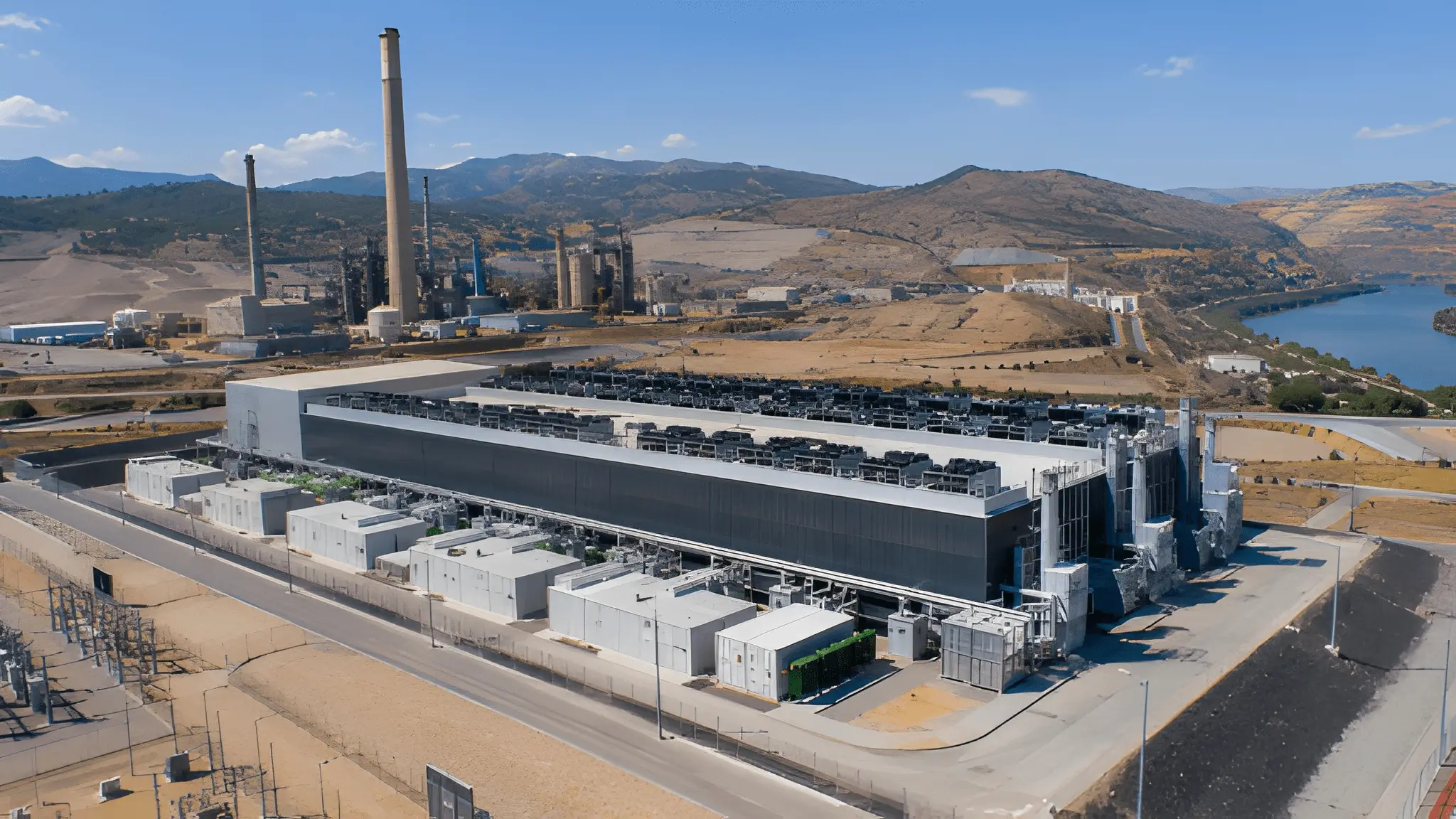
Rubix Data Centers, the AI infrastructure development arm of Submer Group, will invest more than €1 billion (approximately US$1.14 billion) to develop a large-scale artificial intelligence data center campus in Flix, Catalonia. The project will transform the site of a former Ercros industrial plant into a next-generation AI infrastructure facility designed to support hyperscale computing demand across Europe. The company will also operate the campus after construction, reinforcing its long-term commitment to the region instead of following a build-and-exit model. The investment positions northeastern Spain as another emerging destination for AI infrastructure as European governments compete to attract advanced digital capacity.

The project was formally introduced during a media event attended by Salvador Illa, President of the Government of Catalonia, and Miquel Sàmper, Catalonia’s Minister of Business and Labor. Their presence underscored the regional government’s broader ambition to accelerate technology-driven economic development while attracting large-scale private infrastructure investment. The announcement also reflects growing confidence in Catalonia’s ability to support high-density AI workloads through available industrial land and energy resources. As AI infrastructure investment continues to accelerate across Europe, projects tied to existing industrial zones have become increasingly attractive for developers seeking faster deployment timelines.
Rubix Expands Its Develop-And-Operate AI Infrastructure Strategy
Rather than serving solely as a construction developer, Rubix Data Centers plans to retain long-term operational responsibility for the campus under its develop-and-operate business model. According to the company, the completed facility will deliver the land, electrical capacity, buildings, and advanced cooling systems required to support next-generation AI computing environments while serving a long-term third-party tenant. “Rubix will deploy its develop-and-operate model through which the facility is built and then run by Rubix to agreed service levels for a third-party long-term tenant, drawing on a leadership team with decades of experience delivering data centers at scale,” the company said.
The approach reflects a broader shift across AI infrastructure, where developers increasingly seek recurring operational revenue rather than exiting projects immediately after construction. By maintaining ownership of operational performance, infrastructure providers can align facility design, reliability, and customer service throughout the lifecycle of AI deployments. Consequently, long-term operating models are becoming more attractive as hyperscale tenants prioritize predictable infrastructure partnerships over conventional real estate arrangements.

Liquid Cooling Design Targets Sustainable AI Computing
Submer said the Catalonia facility will incorporate its latest liquid cooling technologies to improve energy efficiency while eliminating water consumption during day-to-day operations. The cooling architecture has been designed specifically for increasingly power-dense AI workloads that require higher thermal performance than conventional enterprise computing environments. The company stated that the facility uses energy-efficient liquid cooling technology that consumes no water during operations. That design aligns with rising industry efforts to improve sustainability without compromising computing performance as AI clusters continue growing in size and power density. Infrastructure developers across Europe have faced mounting pressure to reduce environmental impact while expanding capacity for generative AI and high-performance computing applications.
Patrick Smets, CEO of Submer, emphasized both the site’s historical importance and its future strategic role. “The Flix site has notable industrial heritage, and it is where our vision for AI infrastructure can start to take shape,” said Patrick Smets, CEO, Submer, explaining the significance of the location. “As demand accelerates, we will expand across the full stack, from land and power to cloud and edge, and we are building where it creates the most lasting value. Returning this site to productive use, with durable infrastructure and long-term local partnerships, is exactly the kind of initiative we want to be known for.” His comments illustrate Submer’s broader strategy of building integrated AI infrastructure that extends beyond cooling technologies into land development, power access, cloud enablement, and edge computing capabilities.
Long-Term Regional Commitment Extends Beyond Construction
Rubix executives also highlighted their intention to establish a lasting operational presence in Flix instead of treating the development as a one-time infrastructure project. John Eland, CEO, Rubix Data Centers, concurred saying, “We intend to operate the facility we are building here, so we are not simply passing through Flix. Instead, we are committing to Flix for the long term, working alongside the local community and the administration, and creating skilled local jobs as the site returns to productive use.” The strategy combines infrastructure investment with local economic development by supporting skilled employment opportunities and restoring productive use to an industrial site. Moreover, retaining operational responsibility enables Rubix to build deeper relationships with regional authorities and enterprise customers while supporting future expansion opportunities across Europe.
Rubix Marks Submer’s Expansion Beyond Cooling Technology
The Catalonia project represents another milestone in Submer’s transformation from a liquid cooling specialist into a broader AI infrastructure company. In March 2025, the company announced plans to expand into data center design and construction, broadening its role beyond thermal management technologies. Submer later launched Rubix Data Centers in June 2025 to develop and operate AI data center campuses globally. Headquartered in London, Rubix focuses on delivering the physical infrastructure required for hyperscale AI and cloud deployments, including land acquisition, facility development, operational management, and supporting infrastructure.
The Catalonia development demonstrates how that strategy has progressed from concept to large-scale execution. As global AI demand continues reshaping infrastructure investment priorities, developers increasingly seek locations that combine available power, industrial land, sustainable cooling technologies, and long-term operational certainty. The Flix campus reflects those priorities while positioning Rubix Data Centers as a developer aiming to participate across the full infrastructure value chain rather than supplying only one layer of the AI ecosystem.











