
NVIDIA H200 shipments delayed to Q3  · BREAKING: Microsoft confirms 3GW data centre expansion in Asia-Pacific ·  AWS announces new sovereign cloud regions in India and UAE  · Arm-based servers now 24% of hyperscale deployments ·  EU AI Act enforcement enters phase two  · Global data centre investment hits $612B in 2026 ·  TSMC Arizona yields improve to 68% on 3nm process  · OpenAI valuation reaches $400B after latest funding round ·  NVIDIA H200 shipments delayed to Q3  · BREAKING: Microsoft confirms 3GW data centre expansion in Asia-Pacific ·  AWS announces new sovereign cloud regions in India and UAE  · Arm-based servers now 24% of hyperscale deployments ·  EU AI Act enforcement enters phase two  · Global data centre investment hits $612B in 2026

The Ratepayer Protection Pledge Looks Very Different Six Months Later

On March 4, 2026, the White House gathered the technology industry’s most powerful AI infrastructure operators and extracted a public

Share
ratepayer protection pledge six months later White House hyperscaler Amazon Google Meta Microsoft OpenAI PJM FERC unchanged

On March 4, 2026, the White House gathered the technology industry’s most powerful AI infrastructure operators and extracted a public commitment. Amazon, Google, Meta, Microsoft, OpenAI, Oracle, and xAI signed the Ratepayer Protection Pledge, committing to build, bring, or buy all of the energy needed for their data centers and to cover the full cost of power delivery infrastructure upgrades rather than passing those costs to American households. The announcement received broadly positive coverage. The pledge appeared to signal a meaningful shift in AI infrastructure financing, replacing cost socialisation across residential ratepayers with direct cost responsibility for the operators creating the load.

Six months of regulatory proceedings have clarified what the pledge has actually produced. The answer is more complicated than either its advocates or its sceptics suggested at the time. Some meaningful progress has occurred. Much of what the pledge implied would change has not changed. And the most important regulatory proceedings that will determine the pledge’s lasting impact are still in progress.

What the Pledge Actually Committed To — and What It Did Not

The pledge’s central mechanism was the build, bring, or buy framework, which treated three options as equivalent paths to compliance: building on-site generation, bringing dedicated supply through PPAs, or buying capacity market resources through existing grid market mechanisms. The Milken Institute’s analysis identified the critical flaw in that framing immediately after the pledge was signed: buying and bringing operate within shared infrastructure, while building bypasses it. Only the build option eliminates the data center’s dependence on the shared grid. The bring option reduces it. The buy option is substantially what the current framework already allows.

The pledge was also explicitly nonbinding. Perkins Coie’s analysis noted that the pledge does not provide guidance or enforcement mechanisms, leaving companies and regulatory bodies to create the cost framework themselves. Analysts at IDC agreed that while the pledge sets direction, most decisions are still made at the state and regional level. That is not a critique of the pledge’s intent. It is an accurate description of how electricity market regulation works. Voluntary commitments cannot override complex utility cost-recovery rules. Only regulatory proceedings can do that.

The Regulatory Progress That Has and Has Not Occurred

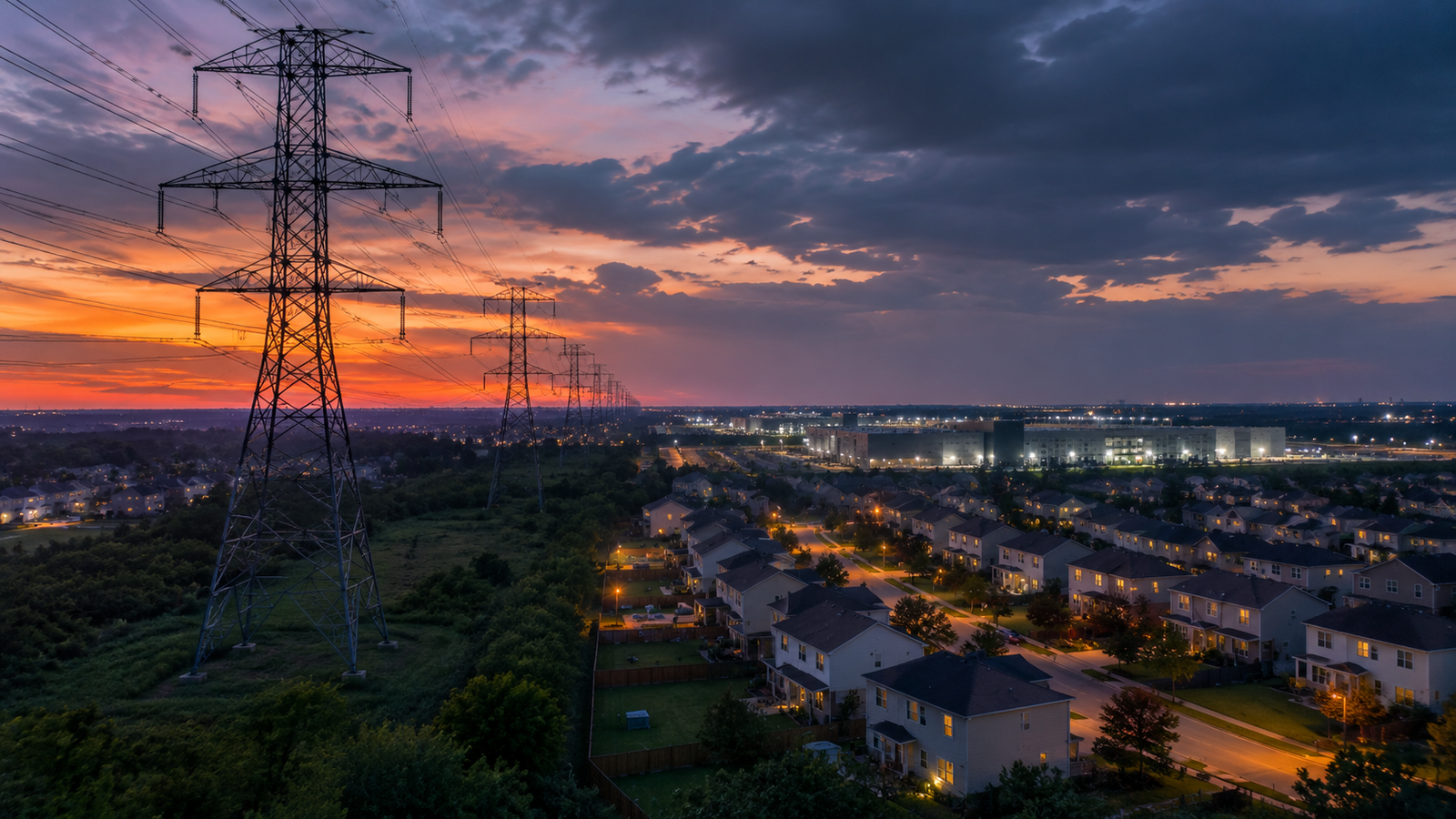
Six months after the pledge, the regulatory record shows meaningful activity but limited completed implementation. FERC’s RM26-4-000 large-load interconnection rulemaking is in the comment and response phase, with a final rule not expected until late 2026 or 2027. PJM’s reliability backstop auction, which would require large loads to fund new generation capacity directly, remains under stakeholder development. The $13 billion in added costs that data center load projections have contributed to the last two PJM capacity auctions continues to be distributed across the 67 million Americans in PJM’s service territory.

At the state level, Florida’s SB 484 and AEP Ohio’s large load rate class represent genuine implementations of the pledge’s cost causation principle. But these are the exceptions. In most of the 36 states with active large-load tariff proceedings, regulators are still evaluating proposals and have not yet reached final decisions. Progress is real. However, regulatory timelines are moving more slowly than the pace at which AI infrastructure operators are adding new load to the grid.

Why the Signatories Who Are Moving Fastest Are Moving Fastest

Not all seven signatories are moving at the same pace, and the pattern of who is moving fastest and why reveals something important about what actually drives compliance in a voluntary framework.

Google’s $180 to $190 billion 2026 capex programme includes significant on-site generation and long-term renewable PPAs. Amazon’s SMR co-development programme with Dominion Energy in Virginia adds firm clean generation to the regional grid. Both represent genuine build-or-bring compliance. Both are also the commercially optimal paths for those specific companies in those specific markets, independent of the pledge. Google’s load profile in its primary markets requires firm, carbon-free, 24/7 generation that renewables alone cannot provide. Amazon’s Northern Virginia concentration makes the utility relationship a strategic imperative regardless of any White House commitment. The pledge gave both companies political credit for decisions they were making anyway.

The signatories moving slowest are those whose commercially optimal compliance path is buying capacity market resources through existing mechanisms — the option that Milken identified as substantively equivalent to the status quo. A hyperscaler that satisfies its pledge commitment by purchasing PJM capacity credits is sharing grid costs through market mechanisms rather than eliminating them through own-generation addition. The residential ratepayer who receives a higher electricity bill does not experience those two outcomes as equivalent, and they are not.

What Genuine Compliance Would Require

The pledge has been in place for six months. The PJM capacity auction results expected in May 2026 were identified at the time of the pledge as an early test of its impact. The results, combined with the regulatory record at FERC and in state PUC proceedings, now provide the first genuine assessment basis.

Genuine compliance with the pledge’s stated intent, that Americans do not face higher electricity bills because of AI infrastructure load, requires data center operators to pay the incremental capacity costs created by their load additions rather than spread those costs across all ratepayers. Achieving that outcome requires enforceable cost causation rules in FERC-approved tariffs, not voluntary commitments. As our analysis of why the utility rate case is the most important AI infrastructure document nobody is reading showed, regulators are writing those enforceable rules through proceedings that are moving substantially slower than the load additions they are meant to govern.

The pledge was a genuine step in the right direction. Six months of regulatory record suggest that the step was smaller than the announcement implied, and that the distance remaining to the stated destination is longer than the celebration at the signing ceremony suggested. The signatories deserve credit for making a public commitment. The regulatory community deserves credit for the proceedings that are translating that commitment toward binding obligation. Neither the pledge nor the proceedings have yet delivered the outcome that policymakers said American residential ratepayers would receive. The work continues.


[simple-author-box]

More from AI Infrastructure

Every major AI announcement tends to emphasize graphics processors, cloud capacity, or multi-billion-dollar data

The conversation surrounding every major power disruption follows a familiar pattern. Engineers examine protective

Singapore rarely enters energy conversations as a country defined by what exists beneath its

COMPUTE WEEKLY

The briefing that 40,000+ tech leaders read every Monday. Sharp, fast, essential.

Great! We’ve received your information.

We couldn’t process your submission. Please retry

Building an AI Startup Without Owning GPUs

Not owning GPUs has become the default, deliberate strategy for building an AI company — not a compromise founders accept reluctantly. H100 rental rates fell 64-75% in fifteen months, a dense ecosystem of neoclouds and inference-as-a-service providers now lets startups skip infrastructure entirely, and credit programs can fund a company’s first year before a founder writes a check
Most Read

Infrastructure planning discussions often prioritize engineering, construction, and utility considerations before examining how end

AI infrastructure deployment schedules depend on coordinated progress across hardware availability, electrical infrastructure, cooling

Artificial intelligence has transformed the economics of digital infrastructure. Every new AI model requires

Data centers do not visibly smoke. They have no smokestacks, no visible exhaust, and

Artificial intelligence has transformed the economics of digital infrastructure. Companies once competed by acquiring

Disruptor Spotlight

Cerebras Systems

The chip that makes Nvidia nervous. Cerebras’ Wafer Scale Engine is rewriting the rules of AI inference at scale.
Faster
0 x
YoY Revenue
0 x
Transistors
0 T
Market Pulse
NVDA
$924.60
-2.11%
MSFT
$421.30
-2.94%
AMZN
$192.80
-4.87%
AMD
$924.60
-2.40%
TSMC
$924.60
-2.32%
Indicative only · Not financial advice
Upcoming Events
SEP
The AI Infrastructure Race (India)
WEBINAR · ONLINE
The AI Infrastructure Race: Won on Power, Land and Trust — Not Capital
MAY
0
AI Infrastructure Summit
DUBAI · IN PERSON
MEA’s premier AI infrastructure event.
JUN
0 0
Compute Forecast Summit
SINGAPORE · IN PERSON
Our flagship APAC event. Early bird open.
Latest Moves
Live
ecolab
Ecolab Deepens Cooling Strategy With $4.75B CoolIT Acquisition
Ecolab is making one of its biggest moves yet into AI infrastructure after completing its $4.75 billion acquisition of liquid cooling specialist CoolIT Systems
Pure DC AVK Europe data center microgrid Dublin 110MW AI infrastructure Ireland 2026
Pure DC and AVK Deploy Europe’s First 110 MW Data Center Microgrid in Dublin
The Pure DC Dublin microgrid has made history as Europe’s first large-scale on-site data center microgrid, launched in partnership with power solutions provider AVK at Pure DC’s campus in Ireland.
Pace Digitek
Pace Digitek Partners With MEGMEET to Expand AI Data Center Power Business
India’s AI infrastructure ecosystem continues to mature as domestic technology manufacturers move beyond traditional telecommunications and industrial markets toward high-growth digital infrastructure opportunities
Follow Compute Forecast
11K followers
1200 followers
Companies to Watch
CW
CoreWeave
Neo Cloud · $19B · IPO Watch
CB
Cerebras Systems
AI Hardware · $4.25B · Pre-IPO
G42
G42
Sovereign AI · Abu Dhabi
H
Humain
Saudi AI · $40B Fund
Latest Podcast
AI Capex, Cloud Margins & the Nuclear Bet
48 MIN · 25 APR 2026

The Ratepayer Protection Pledge Looks Very Different Six Months Later

On March 4, 2026, the White House gathered the technology industry’s most powerful AI infrastructure operators and extracted a public

Share
ratepayer protection pledge six months later White House hyperscaler Amazon Google Meta Microsoft OpenAI PJM FERC unchanged
19
847 SHARES

0
SHARES

[simple-author-box]

More from AI Infrastructure

Infrastructure planning discussions often prioritize engineering, construction, and utility considerations before examining how end

AI infrastructure deployment schedules depend on coordinated progress across hardware availability, electrical infrastructure, cooling

Artificial intelligence has transformed the economics of digital infrastructure. Every new AI model requires

Data centers do not visibly smoke. They have no smokestacks, no visible exhaust, and

COMPUTE WEEKLY

The briefing that 40,000+ tech leaders read every Monday. Sharp, fast, essential.

Great! We’ve received your information.

We couldn’t process your submission. Please retry

Global AI Infrastructure Outlook 2026

The briefing that 40,000+ tech leaders read every Monday. Sharp, fast, essential.
Download Free
Most Read

Infrastructure planning discussions often prioritize engineering, construction, and utility considerations before examining how end

AI infrastructure deployment schedules depend on coordinated progress across hardware availability, electrical infrastructure, cooling

Artificial intelligence has transformed the economics of digital infrastructure. Every new AI model requires

Data centers do not visibly smoke. They have no smokestacks, no visible exhaust, and

Artificial intelligence has transformed the economics of digital infrastructure. Companies once competed by acquiring

Disruptor Spotlight

Cerebras Systems

The chip that makes Nvidia nervous. Cerebras’ Wafer Scale Engine is rewriting the rules of AI inference at scale.
Faster
0 x
YoY Revenue
0 x
Transistors
0 T
Market Pulse
NVDA
$924.60
+2.4%
MSFT
$421.30
+1.1%
AMZN
$192.80
-0.6%
NVDA
$924.60
+2.4%
NVDA
$924.60
+2.4%
Indicative only · Not financial advice
Upcoming Events
MAY
0 0
DCD Global — London
LONDON · IN PERSON
World’s largest DC event. CF is media partner.
MAY
0
AI Infrastructure Summit
DUBAI · IN PERSON
MEA’s premier AI infrastructure event.
JUN
0 0

Compute Forecast Summit

SINGAPORE · IN PERSON
Our flagship APAC event. Early bird open.
Latest Moves
  • Live
Sam Altman
OpenAI appoints new Chief Infrastructure Officer to lead $100B DC programme
27 APR · OPENAI
Sam Altman
OpenAI appoints new Chief Infrastructure Officer to lead $100B DC programme
27 APR · OPENAI
Sam Altman
OpenAI appoints new Chief Infrastructure Officer to lead $100B DC programme
27 APR · OPENAI
Follow Compute Forecast
18.4K followers
12.1K followers
9.3K subscribers
41 episodes
Companies to Watch
CW
CoreWeave
Neo Cloud · $19B · IPO Watch
CB
Cerebras Systems
AI Hardware · $4.25B · Pre-IPO
G42
G42
Sovereign AI · Abu Dhabi
CW
Humain
Saudi AI · $40B Fund
Latest Podcast
AI Capex, Cloud Margins & the Nuclear Bet
48 MIN · 25 APR 2026
Scroll to Top








