 Skip to content
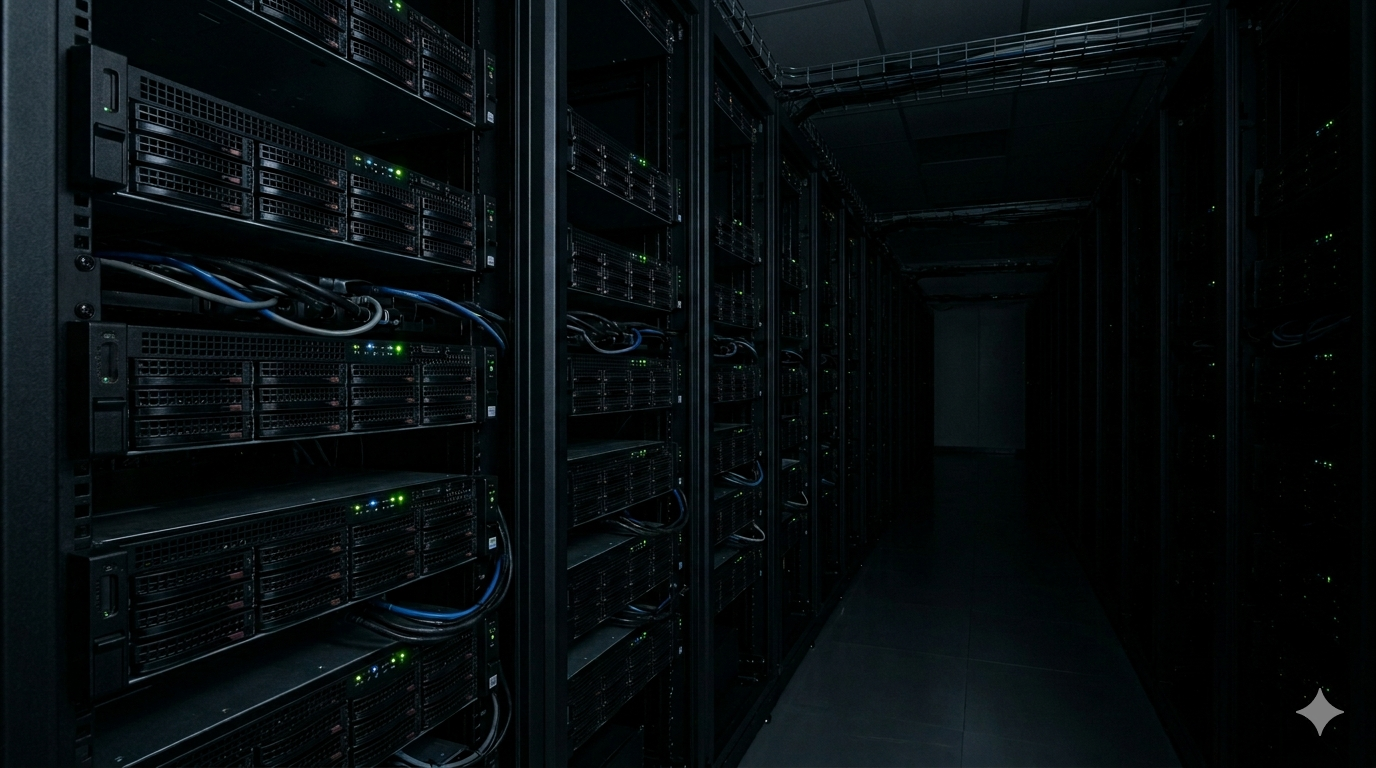
The narrative around GPU infrastructure has focused almost entirely on scarcity. Chips are in short supply. Power availability constrains every major market. Facility space cannot keep pace with demand. Those constraints are real and the coverage they receive is warranted. However, a quieter problem is developing on the other side of the ledger. Operators who bought GPUs aggressively to meet projected demand are discovering that deploying those GPUs into revenue-generating workloads is harder and slower than procurement timelines assumed. The result is stranded compute assets inside data centers, sitting in expensive facilities. They draw power, require cooling, and generate nothing while the debt that financed them accumulates interest.

This is not a hypothetical risk for a distant future. Stranded compute assets are accumulating inside AI data centers right now. The neocloud sector carries them. Enterprise AI deployments carry them. Build-to-suit facilities that independent developers rushed to deliver for hyperscaler tenants carry them too. The financial implications are significant and largely unexamined. The industry has spent two years developing sophisticated frameworks for managing GPU scarcity. It has spent almost no time developing frameworks for managing GPU surplus inside facilities that cannot fill their capacity.
The Gap Between Procurement and Deployment
GPU procurement decisions happen on timelines that bear no relationship to workload deployment timelines. A neocloud operator deciding to buy ten thousand GPUs makes that decision based on contracted revenue, projected demand, and the competitive logic of securing allocation before competitors do. The decision takes weeks. The deployment, meaning the time from GPU installation to those GPUs running at utilization levels that justify their cost, takes months. In some cases it takes over a year.
That gap exists for structural reasons that procurement calculus rarely accounts for fully. Enterprise customers need time to develop the internal AI capabilities required to consume dedicated GPU capacity at scale. Model development cycles, data preparation, compliance review, and organizational change management all sit between a signed contract and actual workload deployment. A neocloud operator that books a large enterprise customer and installs the committed GPU capacity on schedule may wait six to twelve months before that customer reaches the utilization level the deal economics require. During that period, the GPU cluster sits as a stranded asset. It generates partial revenue against full capital cost.
Why the AI Factory Model Amplifies the Problem
The shift from general-purpose data centers to purpose-built AI factories, as covered in our analysis of the AI factory model replacing conventional data center infrastructure, has made the stranded asset problem structurally worse. An AI factory optimizes every layer of its design around continuous high-density GPU utilization. Its power infrastructure, cooling architecture, and networking fabric all reflect the assumption that GPU clusters will run at ninety percent utilization or above on a sustained basis. That assumption is embedded in the facility economics. The capital cost per megawatt of an AI factory is substantially higher than a conventional data center because every system targets maximum throughput.
When utilization falls below the levels the facility economics require, the cost structure does not flex. The cooling system runs regardless of how many GPUs are active. The power infrastructure carries the same fixed costs whether the facility runs at forty percent utilization or ninety percent. The facility lease or mortgage does not adjust to reflect underperforming workload deployment. A stranded asset problem in an AI factory is therefore more financially damaging than the same utilization shortfall in a conventional data center. The cost base needing revenue coverage is higher and far less variable.

The Debt Structure Makes It Worse
The financing structures that funded GPU procurement inside underutilized AI facilities were not built for the utilization ramp timelines operators are actually experiencing. Lenders underwrote GPU-collateralized debt against contracted revenue at expected utilization levels. When utilization ramps more slowly than underwriting assumed, revenue falls short of projections. Operators must cover the gap from equity, from other revenue streams, or by renegotiating debt terms that reflected a different utilization trajectory.
As explored in our analysis of the rise of inference clouds, the inference market offers the highest utilization density in the near term. Inference workloads run continuously against deployed models serving live user traffic. Enterprise AI training deployments have no comparable ramp-up profile. Operators who positioned GPU capacity primarily against training workloads and enterprise deployment contracts are discovering that actual utilization looks very different from what contract terms implied. Those who built capacity around inference have fared better, but the inference market is intensely competitive. Margins compress as more capacity chases the same demand.
What Operators Need to Do Differently
The stranded compute asset problem will not resolve itself as AI adoption scales. The deployment gap between GPU procurement and workload activation is structural, not temporary. Operators who plan their capital structures around procurement timelines rather than deployment timelines will keep accumulating underutilized capacity faster than workloads can absorb it. The solution is not to slow procurement. It is to build financial models that honestly reflect the utilization ramp reality. Debt covenants, equity contributions, and customer contracts all need structuring around that reality.
Customer contracts need to reflect actual deployment commitments rather than capacity commitments alone. A contract that pays a neocloud for reserved GPU capacity regardless of utilization protects revenue but does not solve the stranded asset problem. That structure transfers financial risk to the customer, who may not sustain payments for capacity they cannot deploy effectively. Operators who help customers deploy faster through technical onboarding support, workload optimization assistance, and integration resources will convert stranded assets to productive ones faster than those who treat deployment as the customer’s problem. The AI data center boom has a scarcity story and a surplus story. The surplus story is just beginning.












