Skip to content
The numbers that define the AI infrastructure buildout are, by now, familiar. Microsoft committed $80 billion to data center investment in fiscal 2025. Google announced $75 billion in capital expenditure for 2025. Amazon continues expanding at a pace that has made it the single largest consumer of commercial electricity in the United States. The aggregate of publicly committed hyperscaler and AI infrastructure investment across the United States over the next three to five years exceeds 50 gigawatts of planned capacity. Earnings calls, investor presentations, and infrastructure analyses cite that number so frequently it has acquired the status of a consensus forecast.

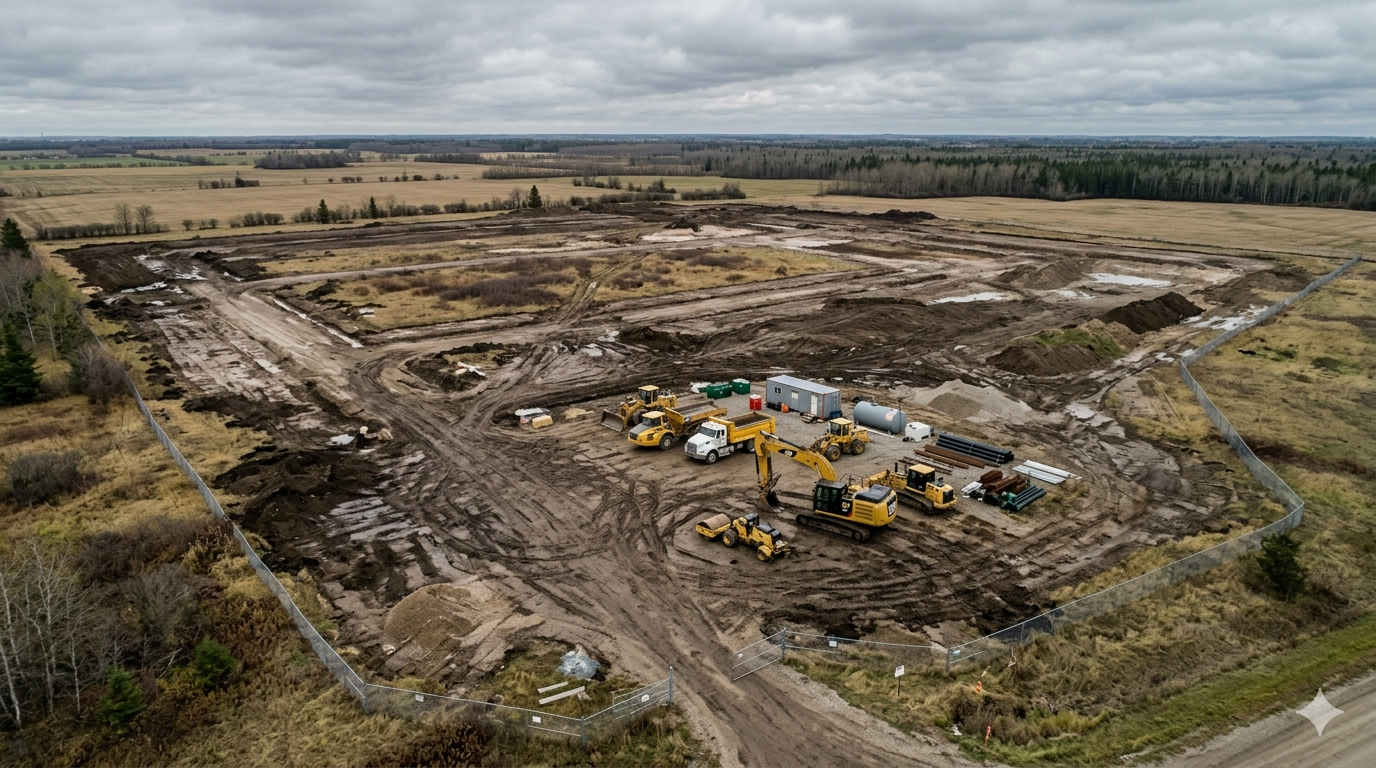
It is not a forecast. It is, rather, an announcement aggregate. That distinction matters enormously, and the data published by Bloomberg and Sightline Climate in April 2026 makes it impossible to ignore. Approximately 12 gigawatts of AI data center capacity are currently under active construction in the United States. Another 21.5 gigawatts sit in plans described as targeting 2027. Of that planned capacity, only 6.3 gigawatts have broken ground. The gap between announcement and active construction is not, in other words, a rounding error. It is a structural feature of the current AI infrastructure market. Understanding what is driving it, what it means for enterprise AI adoption, and how investors should evaluate it is, consequently, essential for anyone operating in this space.
Why the Gap Is Structural, Not Cyclical
The gap is not the result of hyperscalers changing their minds about AI demand. Enterprise AI adoption is accelerating across every measurable dimension. The problem is operational. A specific set of constraints separates announcing infrastructure from actually building it, and that fact is the central lesson of the announced vs built gap. Capital cannot simply buy its way through those constraints. Those structural prerequisites, specifically confirmed power access, cooling supply chains, anchor tenant commitments, and permitting clearance, are not being resolved at the pace that announcement timelines implied.
What the Announced vs Built Gap Actually Measures
The announced vs built gap is not a single phenomenon. It encompasses several distinct categories of project with different underlying causes of delay and different probabilities of eventual delivery. Understanding those categories is essential to forming an accurate view of the market, because the headline figures aggregate them in ways that obscure very different risk profiles.

The first category is, specifically, projects that are genuinely on track but on timelines longer than announcement language suggested. These are projects with confirmed anchor tenants, executed power interconnection agreements, and equipment procurement already underway. The delay between announcement and groundbreaking in these cases reflects the genuine complexity of large infrastructure development rather than any fundamental obstacle. The Stargate campus in Abilene is in some respects a member of this category. It is delivering. The timeline from announcement to commissioning was, however, longer than early statements implied.
The second category is, by contrast, projects with confirmed capital but unresolved structural prerequisites. These projects have investor commitments, site control, and in many cases pre-lease interest from potential tenants. However, they do not have confirmed power interconnection, executed anchor tenant leases, or cooling infrastructure procurement consistent with their stated timelines. As we have covered in our analysis of the gigawatt campus problem, this is the category where the structural constraints of large-scale AI campus development concentrate.
Why the Gap Concentrates in Specific Project Types
The third category is, however, the most problematic. These projects exist primarily as announcements: site acquisitions, pre-development agreements, and letters of intent communicated as infrastructure commitments without the foundational elements required to move to construction. They represent most of the gap between the 50-gigawatt announced pipeline and the 12 gigawatts under active construction. The capital intent behind them is genuine. However, they still face years of prerequisite resolution before a shovel can enter the ground.
The concentration of the gap in this category reflects a specific dynamic in how AI infrastructure announcements are made and consumed by financial markets. Hyperscalers face pressure to demonstrate to investors that they are investing sufficiently in AI infrastructure to maintain competitive positioning. Data center developers face pressure to demonstrate to potential tenants and capital providers that they have the scale and ambition to serve hyperscale demand. The announcement economy, consequently, rewards scale over operational specificity. Historically, the market imposed no meaningful penalty for timelines that slipped. As we have covered in our analysis of why some data center deals are dying before they are announced, the operational prerequisites that separate viable projects from aspirational ones are becoming the primary filter through which the market is evaluating the pipeline. The evidence, however, is now testing that acceptance directly and visibly.
How Markets Are Correcting for the Announcement Gap
The question is no longer only how much capacity operators announce. It is how much of that capacity they can credibly trace to confirmed power access, executed tenant leases, and equipment procurement that aligns with the stated timeline. That shift is already visible in the questions analyst teams ask on earnings calls. Similarly, deal teams at infrastructure funds are now conducting due diligence on new investments using fundamentally different criteria.
That market dynamic is, however, now changing. The Fermi America situation shifted the framework through which investors evaluate developer announcements. A company went public on the strength of its announced scale and then watched the gap between announcement and delivery become public in the most painful way possible.
A developer announcing a 500-megawatt campus is more credible to institutional investors and more attractive to hyperscaler real estate teams than one announcing a 50-megawatt facility. The announcement economy, in other words, does not reward the developer most likely to deliver. It rewards, rather, the one that announces at the largest scale.
The Four Structural Constraints Driving the Gap
The announced vs built gap reflects the interaction of four structural factors that operate independently and compound each other. Each one is well understood in isolation. Their combined effect on project timelines is less widely appreciated.
The first is, specifically, power interconnection. Grid interconnection queues in the most attractive US markets run five to seven years for loads above 100 megawatts. A project announcing a gigawatt campus in northern Virginia, Phoenix, or Dallas in 2025 cannot realistically expect grid-connected power before 2030 or 2031. That is only achievable with a queue position from a prior application. Most newly announced projects do not have one. Behind-the-meter generation is, in theory, the standard workaround. In practice, however, it introduces its own permitting, fuel supply, and reliability complexity that extends timelines rather than eliminating them.
The Supply Chain Reality Behind the Numbers
The second structural constraint is, moreover, equipment supply chains. As we have covered in our analysis of how electrical equipment shortages are quietly stalling the AI infrastructure buildout, transformer lead times are running 18 to 36 months at the manufacturers capable of producing units at the quality and scale required for large AI campuses. As we have also covered in our analysis of the silent bottleneck of transformer and substation supply chains, the tariff environment has added cost and further extended lead times for equipment manufactured in China.
If a project breaks ground without committing to equipment procurement 24 to 30 months in advance, it will miss its commissioning timeline regardless of how well everything else proceeds. Most projects in the announced pipeline have not made those procurement commitments. In other words, the supply chain constraint is not a problem developers can solve quickly once construction begins. They must solve it years before construction starts.
The Anchor Tenant and Permitting Constraints
Construction financing for large AI campus development requires executed leases with creditworthy tenants before lenders commit capital. That requirement is non-negotiable. It is, moreover, the constraint that most directly creates the chicken-and-egg dynamic stalling development. Hyperscalers require evidence of construction progress, confirmed power access, and cooling design compatibility before they will execute leases. The anchor tenant constraint most frequently separates projects that break ground from those that do not. Both parties must commit simultaneously, and neither can do so without the other moving first.
The Role of Microsoft’s Capacity Walkback in Defining the Market
Microsoft’s decision in early 2026 to walk away from approximately 2 gigawatts of preleased data center capacity is the clearest single data point on how the announced vs built gap manifests in practice. The decisions were, in fact, financially rational. They also revealed something important about the structure of pre-lease agreements in the AI infrastructure market.
In many cases, those agreements do not transfer delivery risk from the developer to the tenant in ways that protect the developer’s economics when the tenant walks away. Developers who structured their financing around Microsoft’s pre-lease commitments were left with capital structures that depended on a tenant who was no longer there. Consequently, developers will structure the next generation of pre-lease agreements differently. Those who can negotiate terms that balance tenant flexibility with developer financial security will attract both the capital and the tenants required for the next phase of the buildout.
The fourth constraint is permitting. Air permits for behind-the-meter generation, water permits for cooling systems, and zoning approvals for large industrial facilities are all subject to timelines and community opposition dynamics that are growing more challenging, not less.
The Permitting Environment Is Getting Harder, Not Easier
The permitting constraint deserves particular attention because developers most frequently underestimate it in project timelines, and because the political environment of the past 18 months has affected it most directly. State environmental review processes govern air permits for behind-the-meter gas generation, and these reviews take 12 to 24 months in most jurisdictions while litigation can extend them indefinitely. Regulators are also increasing scrutiny of water permits for large cooling systems in markets where drought risk is high, including Phoenix, Las Vegas, and parts of Texas.
The projects navigating this environment successfully engaged, specifically, with the permitting process years before their announcement. They invested in genuine community engagement rather than treating it as a checkbox, and designed their facilities with the environmental concerns of their specific market in mind. Those that treated permitting as a standard administrative process to be managed in parallel with construction planning are discovering it does not move on their modelled timelines.
What the Gap Means for Enterprise AI Adoption
The most significant downstream consequence of the announced vs built gap is, in fact, not financial. It is operational. Enterprise organisations planning AI infrastructure strategies on the basis of announced capacity availability are building plans around capacity that may not be available on the timelines that announcements implied.
The enterprise AI adoption cycle has a specific cadence. Organisations identifying AI workloads for large-scale deployment need to plan infrastructure 18 to 24 months in advance of the deployment date. If the capacity they plan around sits in a developer’s announced pipeline rather than under active construction, the lead time assumptions embedded in their planning are, consequently, wrong. The announced vs built gap is creating a secondary planning gap inside enterprise organisations that will manifest as deployment delays 18 to 24 months from now.
The Geography of the Gap
The announced vs built gap is not uniformly distributed across US markets. It concentrates in specific geographies where the structural constraints are most acute. Understanding that geographic concentration is important for anyone evaluating where new capacity is most likely to come online over the next three to five years.
Northern Virginia has a gap almost entirely driven by power interconnection. The market has virtually no available build-ready land at scale, grid interconnection queues extend seven years for large loads, and community opposition has produced legislative pressure for greater regulatory scrutiny. Projects announced in northern Virginia are, consequently, among the least likely to deliver on their stated timelines regardless of developer credibility.
Phoenix and Atlanta are intermediate cases. Land availability and utility relationships are more constructive than Virginia. Water availability in Phoenix, however, adds cooling complexity not present in Texas or the Midwest.
Secondary Markets Are Becoming the More Reliable Delivery Venues
Texas, by contrast, has available land and a more permissive regulatory environment for large industrial development. The gap in Texas concentrates more in behind-the-meter generation complexity and cooling infrastructure lead times than in grid interconnection timelines. Projects that have solved the power problem and secured equipment procurement are more likely to deliver on aggressive timelines in Texas than equivalent projects in Virginia or California.
Secondary markets absorbing overflow from primary markets, particularly Columbus, Kansas City, and the Carolinas, have more manageable gap dynamics. They offer shorter grid interconnection timelines, available land, and utility relationships that actively support development. Consequently, projects announcing capacity in these markets are more likely to deliver on their stated timelines. That is one reason sophisticated enterprise buyers are increasingly prioritising secondary markets over primary ones, even though those markets offer higher latency to fibre interconnection and smaller talent pools.
The Colocation Market Is Absorbing the Overhang
The enterprise AI adoption implication is made more complex by the fact that the capacity shortfall is not uniform across market segments. Hyperscaler-owned capacity is largely on track. Hyperscalers have the balance sheet to commit to equipment procurement years in advance and the utility relationships to secure queue positions before announcing projects. The gap concentrates in developer-owned colocation and build-to-suit capacity, which is the segment that serves enterprise and mid-market AI infrastructure demand.
Enterprises that cannot afford to build their own data centers and do not qualify for hyperscaler cloud rates at their scale are, notably, most exposed to the announced vs built gap. As we have covered in our analysis of the AI data center insurance market being stress-tested, the risk transfer mechanisms for large AI infrastructure projects are still being developed, and enterprises relying on developer delivery commitments have limited contractual protection when those commitments slip.
What the Gap Means for Investors
The investor implications of the announced-versus-built gap are beginning to appear in individual stock valuations, but the sector has not fully absorbed them yet. Fermi America’s decline of more than 80% from its IPO high is the clearest individual case study. However, the broader repricing of AI infrastructure developer valuations has been more gradual and remains notably incomplete.
The core investor problem is that the 50-gigawatt announced pipeline appears in analyst models as forward revenue for power companies, equipment manufacturers, cooling vendors, and construction firms.
When a significant portion of that pipeline delivers two to three years later than modelled, those revenue projections are wrong.
The downstream effects are, consequently, material across the entire supply chain. Equipment manufacturers who ramped production capacity in anticipation of demand, utilities who committed to transmission upgrades sized against announced project timelines, and construction firms that staffed up for expected work volumes all carry that exposure. The financial models for the AI infrastructure sector’s supply chain were built around announcement timelines. They need to be rebuilt around construction timelines. As we have covered in our analysis of how investors are rethinking data center valuation, the methodology for evaluating AI infrastructure investments is changing rapidly.
The Valuation Premium of Confirmed Delivery
A data center developer that can demonstrate a track record of delivering large-scale AI infrastructure on announced timelines holds a competitive advantage that competitors cannot replicate quickly. Confirmed power access, executed tenant leases, and equipment procurement that aligns with commissioning schedules provide the proof points that define that track record.
The barriers to replicating that operational capability are not primarily financial. They are relational and experiential.
Utility relationships that produce favourable interconnection timelines take years to build. Equipment procurement relationships that provide priority access during supply constraints require track records of timely payment and project follow-through.
Anchor tenant relationships that produce executed leases before groundbreaking require demonstrated delivery history. None of these assets can be assembled with capital alone. The data center developers who have them are, consequently, building sustainable competitive moats that the announced vs built gap is making more visible and more valuable.
What Operators Who Are Delivering Are Doing Differently
Every project that is delivering has, specifically, confirmed power access before breaking ground. In most cases that means grid interconnection agreements from queue positions secured years before the project was publicly announced. Every project that is delivering also has, notably, a confirmed anchor tenant. The anchor tenant must be an executed lease, not simply a letter of intent or an advanced discussion. It is an executed lease with defined capacity, defined delivery specifications, and financial terms that support the construction financing structure.
The operators who have solved this dynamic have typically built deep relationships with hyperscaler real estate teams over multiple years and multiple transactions. That relationship history is difficult to replicate and underpins, consequently, a structural advantage that capital alone cannot create. As we have covered in our analysis of how debt is funding the AI infrastructure buildout, the capital structure of AI infrastructure development is evolving rapidly. The operators who combine access to capital with demonstrable operational capability to deploy it are the ones who will define the next phase of the buildout.
What the Gap Signals About the Next Three Years
The announced vs built gap is not a permanent feature of the AI infrastructure market. It is a transitional phenomenon produced by the collision between the speed of AI demand growth and the timescales required to build the infrastructure to serve it. That collision will eventually resolve, but the resolution will not be uniform. It will happen first in the markets and for the operators who have most aggressively addressed the structural prerequisites.
The three-to-five-year outlook for US AI data center capacity is, therefore, more nuanced than the aggregate announced pipeline suggests. The realistic deliverable capacity over that period is, in fact, closer to 15 to 20 gigawatts than the 50-plus gigawatts that announcement aggregates imply.
However, it differs materially from the figure supporting hyperscaler revenue models, equipment manufacturer production plans, and utility investment programmes. In other words, recalibrating financial models to reflect construction timelines rather than announcement timelines is not simply a matter of adjusting revenue forecasts. It requires a fundamental reassessment of the operational maturity of the projects underpinning those forecasts. Notably, most of the investor and analyst community is still in the early stages of that reassessment. Ultimately, the announced-versus-built gap forces the entire market to confront that reality. The defining question for everyone with exposure to this market is whether operators address it proactively before they misallocate capital or reactively after the damage is done. Consequently, operators and investors who move first will define the terms on which the next phase of AI infrastructure development is financed and built.