 Skip to content
Insurance has always lagged the assets it covers. New technologies create new risk profiles, and the actuarial models that underwriters depend on require years of loss experience before they can price novel risks with confidence. The insurance market has navigated this lag before, through the emergence of nuclear power, through the rise of satellite technology, through the growth of internet infrastructure. In each case, the industry developed specialized capacity, built relevant expertise, and eventually produced underwriting frameworks that could cover the new asset class at commercially viable terms. The AI data center boom is testing whether the insurance industry can make that transition fast enough to keep pace with an infrastructure buildout that is moving faster and concentrating more capital in single locations than anything the industry has previously encountered.

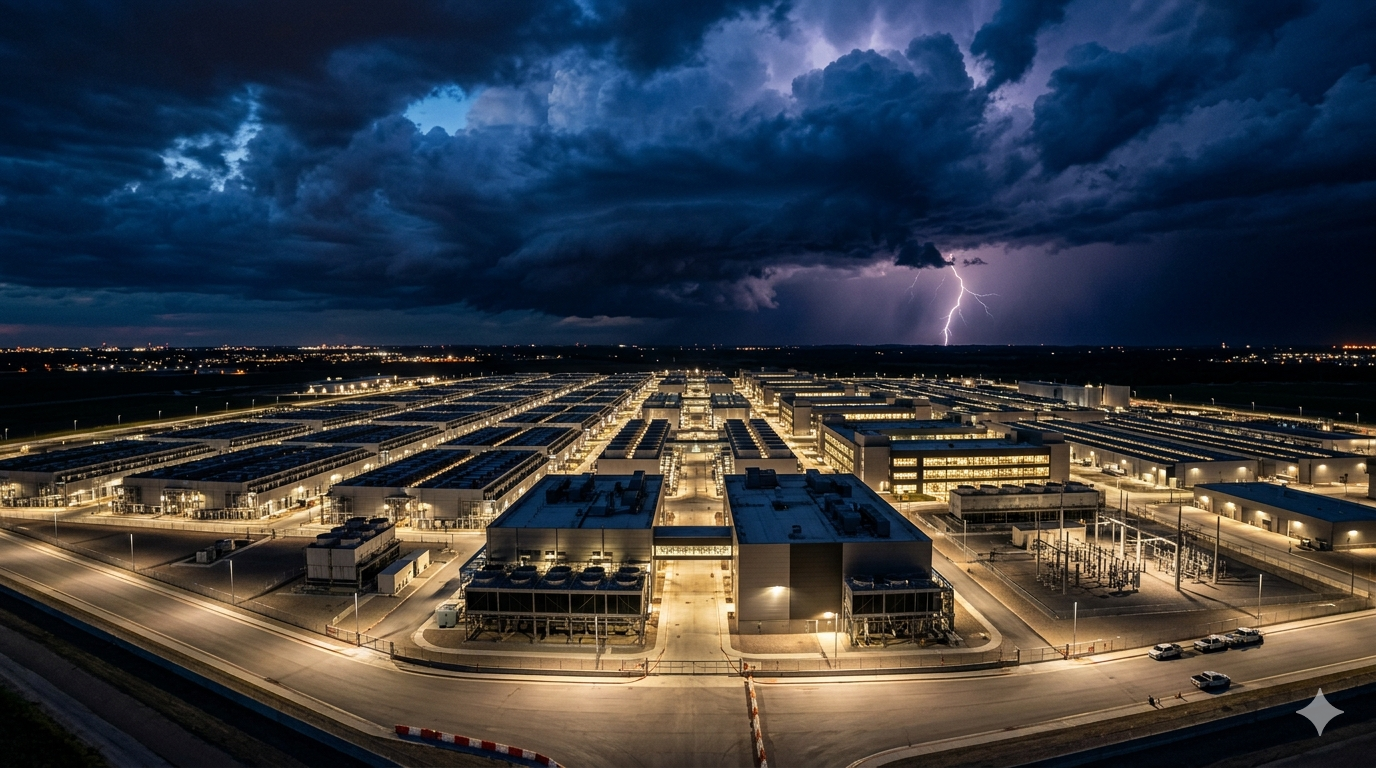
The numbers frame the challenge plainly. Individual AI data center campuses now carry replacement values exceeding $20 billion. Global data center insurance premiums are projected to more than double, from roughly $10.6 billion today to $24.2 billion by 2030, according to Swiss Re Institute analysis. The AI data center insurance market is not keeping pace with the asset values it needs to cover. Insuring a $20 billion campus was nearly impossible in 2023. By 2026 it has become a weekly conversation among major insurers, but the ability to provide adequate coverage has not kept pace with the frequency of those conversations. The gap between what operators need to insure and what the market can provide is widening, and the consequences of that gap will become visible when the first major loss event hits an underinsured AI facility.
The Concentration Problem That Changes Everything
Traditional property insurance works best when risk is distributed. An insurer that covers thousands of office buildings across multiple geographies faces a manageable aggregate exposure because a single catastrophic event is unlikely to affect more than a small fraction of the portfolio simultaneously. The diversification benefit is the foundation on which commercial property insurance economics rest. AI data center risk violates that foundation at every scale.
At the individual facility level, the concentration of value in a single location is unprecedented in commercial real estate. A $20 billion campus represents more insurable value than many entire property insurance portfolios. The building itself may account for a relatively small fraction of that value. The GPU clusters, networking infrastructure, power systems, and cooling equipment that fill the facility can collectively represent multiples of the construction cost. When a single facility failure can generate a loss event larger than the entire annual premium base of a specialized insurer, the actuarial mathematics of diversification break down entirely.

Geographic Concentration Compounds the Problem
The geographic concentration of AI data center development compounds the per-facility concentration problem into a systemic one. Northern Virginia, Silicon Valley, Dallas, Phoenix, Singapore, Dublin, and Amsterdam account for a disproportionate share of global AI data center capacity. Multiple hyperscale facilities in the same geographic area create correlated exposure that no single insurer or reinsurer can absorb without significant risk of financial distress following a regional catastrophe event.
A major hurricane striking Northern Virginia, a severe earthquake affecting Silicon Valley, or a sustained grid failure affecting a major data center hub could simultaneously impair dozens of facilities carrying aggregate insured values in the hundreds of billions of dollars. The reinsurance markets that underpin primary insurers’ capacity to write large individual risks are themselves exposed to this geographic concentration. When a correlated loss event can threaten the solvency of multiple reinsurers simultaneously, the entire insurance chain from primary insurer through reinsurer to retrocessionaire faces stress that the market has not previously modeled for data center risk. The insurance industry recognized this dynamic in nuclear power generation decades ago and responded with industry-wide pooling arrangements that spread risk across the entire market. The AI data center sector has not yet developed equivalent mechanisms, and the window for doing so before a major loss event forces the issue is narrowing.
The Supply Chain Storage Risk
A less visible dimension of the concentration problem involves equipment in transit and storage. AI data center operators are importing enormous quantities of high-value GPU hardware from overseas manufacturers, storing it in third-party logistics facilities before installation, and moving it through supply chains that span multiple jurisdictions and custody relationships. The insurable value of GPU inventory in transit and storage at any given moment across the industry runs into the tens of billions of dollars globally.
This equipment often sits in facilities that the data center operator neither owns nor operates, under custody arrangements that blur responsibility for loss between the operator, the logistics provider, and the facility owner. Standard commercial property policies did not account for this custody structure. Insurers did not calibrate the standard exclusions and limitations in logistics and warehousing insurance for assets worth hundreds of thousands of dollars per unit that can suffer total loss from a single fire, flood, or theft event. Insurers covering GPU inventory in transit are underwriting risk profiles for which they have essentially no loss history, using policy language written for conventional cargo categories that behave very differently.
The GPU Collateral Problem at the Center of Everything
The most structurally significant challenge facing the AI data center insurance market is not the property risk of the facilities themselves but the intersection of insurance with the novel financing structures that the buildout has generated. GPU-backed debt has emerged as a defining feature of AI infrastructure finance. CoreWeave’s $8.5 billion investment-grade GPU-backed deal represents the most visible example of a financing model that uses high-performance chips as collateral in ways that create fundamental tensions with conventional insurance underwriting.
The core tension is simple. Data center financing structures require financed assets to retain value throughout the loan term. Lenders need confidence that if a borrower defaults, they can liquidate the collateral at a value sufficient to recover the outstanding debt. For real estate, this requirement is straightforward to model. Buildings depreciate slowly and predictably. Their value is primarily a function of location, construction quality, and market conditions that change gradually. For GPUs, none of these characteristics apply. The financing market has moved faster than the insurance market in developing products for GPU-collateralized debt, creating a structural mismatch that will only become visible when a defaulting borrower forces a test of the underlying assumptions.
The GPU Depreciation Mismatch
A GPU generation cycle runs roughly eighteen months. Each new generation delivers step-function improvements in performance per dollar and performance per watt that make the previous generation substantially less competitive for the workloads that drive GPU demand. An H100 cluster that represented the state of the art in 2023 is already economically challenged by Blackwell architecture in 2025 and will face further pressure from subsequent generations. The physical assets remain functional throughout their seven-year average lifespan. The economic value of those assets, however, can decline dramatically within two to three years of deployment as newer generations capture the premium workloads that justify the cost of GPU infrastructure.
This depreciation mismatch creates what analysts have called the GPU debt treadmill. Operators who financed their initial GPU fleet against the value of those assets must either raise additional debt to replace aging hardware with new generations or watch their competitive position deteriorate as customers migrate to operators with more current hardware. The insurance market sits at the center of this dynamic because lenders require insurance coverage on collateralized assets. When the insured value of the assets exceeds their market value due to technological depreciation, the insurance policy provides coverage that does not align with the economic reality of the collateral.
Insurers writing replacement cost coverage on GPU assets that have depreciated significantly below replacement cost are creating a moral hazard that the market has not yet fully recognized or addressed. As explored in our analysis of the 5-year wait problem and how lead times are rewriting AI deployment strategies, the mismatch between asset lifecycles and infrastructure financing terms is a structural feature of AI infrastructure that manifests across multiple dimensions simultaneously.
Different Lifecycle Disclosures to Different Investors
The opacity of AI data center financing structures adds a further layer of complexity that makes insurance underwriting more difficult and creates potential for future disputes. Some operators are disclosing different GPU lifecycle assumptions to different investors. A lender receiving a seven-year lifecycle disclosure is making different underwriting assumptions than a lender receiving a three-year lifecycle disclosure for the same assets. When the same physical assets underlie multiple financing structures with different lifecycle assumptions, the aggregate insured value and the aggregate debt outstanding can bear little relationship to each other, creating systemic opacity that regulators and risk managers are only beginning to examine.
Insurance coverage written against these assets inherits the opacity of the underlying financing structures. An insurer covering a GPU fleet does not necessarily have visibility into whether those assets are simultaneously serving as collateral in multiple debt facilities, whether the operator has made lifecycle disclosures to lenders that differ from the asset values on which the insurance policy was written, or whether a loss event would trigger complex disputes about which party is entitled to insurance proceeds across overlapping claims. The legal and financial complexity that would accompany a major loss event at a heavily financed AI data center has no precedent in the property insurance market. The policy language currently in use was not written to address it.
How Operators Are Responding to the Collateral Mismatch
The more sophisticated operators in the AI data center market are beginning to adapt their asset management and insurance strategies in response to the GPU depreciation and collateral mismatch problem. The clearest adaptation is the shift toward modular facility design that anticipates hardware replacement cycles from the outset. Rather than building facilities optimized for a specific GPU generation, operators are designing power infrastructure, cooling architecture, and rack layouts to accommodate future hardware generations without requiring major facility modifications. This design approach reduces the economic impact of hardware depreciation by extending the facility’s useful life across multiple GPU generations, which in turn improves the alignment between insurance coverage periods and the economic life of the insured assets.
A second adaptation is the development of bespoke insurance arrangements that value GPU assets on an agreed-value basis rather than a replacement cost basis. Agreed-value policies establish the insured value of specific assets at policy inception based on negotiated assessments of current market value rather than replacement cost. This approach eliminates the moral hazard of replacement cost coverage on rapidly depreciating assets and aligns the insurance economics more closely with the financing economics of the underlying debt. Gallagher and other major insurance brokers are actively developing agreed-value structures for GPU fleets, but the market for these products remains thin and pricing is highly variable given the absence of established actuarial benchmarks.
What Insurers Are Actually Doing
The insurance market is not standing still in the face of these challenges. Major insurers and reinsurers are building dedicated AI infrastructure teams, developing specialized products, and deploying capacity through innovative structures that attempt to address the concentration and collateral problems that conventional policies cannot handle. The pace of market adaptation is accelerating, but it remains materially behind the pace of the buildout it needs to cover.
Marsh has launched a dedicated digital infrastructure advisory group and introduced its Nimbus facility specifically for AI data center construction in the UK and Europe, recently expanding it to offer limits of up to $2.7 billion. That facility limit represents real progress from the position of two years ago when insuring even a moderately large campus on commercially viable terms was extremely difficult. However, $2.7 billion of limit against a $20 billion campus leaves a substantial coverage gap that operators must fill through co-insurance arrangements, captive structures, or self-insurance. The market is developing, but not fast enough to close the gap between available capacity and insurable values at the largest facilities.
The Reinsurance Capacity Constraint
The primary insurance market’s ability to provide coverage for AI data center risk ultimately depends on the availability of reinsurance capacity to absorb the catastrophic loss scenarios that concentration creates. Reinsurers price their capacity based on loss models that estimate the probability and severity of major loss events across the portfolios they support. For AI data center risk, those models are severely constrained by the absence of loss experience. A technology that has existed at meaningful scale for only a few years has generated almost no actuarial data on major loss events, forcing reinsurers to model risk using analogies to other asset classes that may not accurately reflect how AI data center failures actually occur and propagate.
Swiss Re Institute has specifically called out the emerging risk from lithium-ion battery backup systems integrated into server racks as a fire ignition source that did not previously exist in data center environments. Fire accounts for roughly eleven percent of data center loss events but drives more than forty-two percent of loss costs, according to FM data cited in Swiss Re’s analysis. The addition of lithium-ion battery systems at high density throughout GPU-intensive facilities changes the fire risk profile of these buildings in ways that historical loss models for data centers do not capture. Reinsurers writing capacity against fire risk in AI data centers are therefore pricing from models that systematically underestimate the hazard they are covering.
Liquid Cooling Adds a New Loss Pathway
The rapid adoption of liquid cooling in AI data centers introduces another loss pathway that conventional data center insurance models did not contemplate at meaningful scale. As documented in our analysis of the AI factory model replacing conventional data center infrastructure, liquid cooling is no longer optional for GPU-dense AI factories running at high utilization. The networking of cooling infrastructure across large facilities creates water damage exposure from improper installation, seal failures, and maintenance errors at a scale that air-cooled facilities did not present.
Liquid-related losses already represent nearly twenty-four percent of total data center loss costs in FM’s loss review data, a figure that will only grow as liquid cooling penetration increases across the industry. The reinsurance models that underpin primary insurer capacity for data center risk were calibrated before liquid cooling became a standard architecture. They are therefore systematically underpricing the water damage exposure that AI factory designs carry.
Business Interruption Is the Underpriced Exposure
Beyond property damage, business interruption insurance for AI data centers represents the most dramatically underpriced exposure category in the market. A hyperscale AI campus running GPU clusters at ninety percent utilization for inference workloads and training jobs generates revenue at a rate that dwarfs conventional data center operations. When that facility goes offline due to a fire, power failure, cooling system failure, or other loss event, the business interruption cost accumulates at a corresponding rate.
The business interruption exposure compounds through the downstream relationships that AI data center operators maintain with their customers. An enterprise customer whose AI model training pipeline is disrupted by a data center outage faces operational losses that cascade through every business function dependent on that pipeline. A neocloud operator whose inference capacity goes offline faces breach of service level agreement claims from thousands of customers simultaneously. The contingent business interruption exposure that major AI data center operators carry but have not fully insured is likely larger in aggregate than the property exposure that their policies explicitly cover. Insurance brokers who have begun stress-testing business interruption coverage for AI data center clients are finding coverage gaps that their clients had not previously recognized and that the market cannot currently fill at adequate limits.
The Systemic Risk Dimension
The concentration of AI infrastructure in a small number of large facilities, combined with the concentration of the insurance and reinsurance capacity covering those facilities in a small number of major carriers, creates a systemic risk profile that extends beyond any individual loss event. US senators have already urged federal agencies to examine how technology companies are using complex and opaque debt markets to finance AI infrastructure expansion, warning of potential destabilizing losses for financial institutions. The insurance dimension of that systemic concern has received less attention but is equally significant.
A single major loss event at a hyperscale AI campus could simultaneously trigger property insurance claims, business interruption claims, contingent business interruption claims from downstream customers that depend on the affected facility, and credit insurance claims from lenders whose collateral has been destroyed. The total value of these claims could exceed the loss reserves of multiple primary insurers and trigger reinsurance recoveries at a scale that tests reinsurer capital adequacy at the same time. The market has never modeled the cascading structure of insurance and reinsurance claims after a major AI data center loss at the scale current facility values imply, and it still lacks an agreed framework for handling such an event.
The Regulatory Gap
The regulatory framework governing AI data center insurance is as underdeveloped as the actuarial models underwriting the risk. Insurance regulators in most jurisdictions have not developed specific guidance for AI infrastructure risk, leaving primary insurers and reinsurers to develop their own frameworks without regulatory oversight that could ensure consistency, transparency, or adequacy. The absence of regulatory standards for how GPU depreciation should be reflected in insured values, how lifecycle disclosures from operators should be verified, or how concentration risk in single facilities should be managed creates opportunities for adverse selection that could undermine the market’s ability to respond to a major loss event.
The regulatory gap is particularly acute in the credit insurance dimension of AI data center risk. As AI infrastructure financing moves off balance sheet through private credit structures, asset-backed securities, and other complex instruments, insurers write products that protect lenders against borrower default using assets whose value and risk profile remain opaque. Regulators overseeing these insurance products cannot fully see the underlying financing arrangements that determine what is actually being insured. This opacity creates the conditions for a systemic failure mode that insurance regulation was designed to prevent but that current frameworks cannot detect effectively.
Several major data center operators have already received letters from US congressional committees requesting information about their debt structures and insurance arrangements. That regulatory attention is early stage but signals the direction that oversight will travel as the buildout continues and the systemic risks it creates become harder to ignore.
The Warranty and Indemnity Gap
A dimension of AI data center insurance risk that receives almost no coverage is the growing demand for warranty and indemnity insurance on mergers and acquisitions involving data center assets. The AI data center sector has seen substantial M&A activity as well-capitalized acquirers buy development-stage projects, operational campuses, and neocloud platforms at valuations that reflect projected rather than demonstrated cash flows. Warranty and indemnity insurance protects buyers against losses arising from breaches of representations and warranties made by sellers, including representations about asset values, equipment condition, customer contract terms, and financing arrangements.
For AI data center M&A, the representations that sellers make about GPU asset values, useful lives, and financing structures are precisely the representations that the market has not yet developed reliable frameworks for verifying. A buyer who acquires a GPU-heavy data center business based on seller representations about asset values and lifecycle assumptions faces warranty and indemnity exposure that underwriters cannot adequately price because the actuarial basis for doing so does not yet exist. The warranty and indemnity insurance market for AI data center transactions is developing rapidly in response to deal flow but is doing so without the loss experience or regulatory framework that would allow it to price risk accurately.
What Operators and Lenders Should Be Doing Now
The AI data center insurance gap is not a problem that will solve itself as the market matures. The scale of individual facilities, the pace of hardware depreciation, the opacity of financing structures, and the absence of loss experience all create conditions that slow market adaptation relative to the speed of the buildout. Operators and lenders who assume that adequate insurance coverage will be available when they need it are taking a risk that the current market does not support.
Operators building large AI data center facilities should treat insurance as a design constraint rather than a procurement afterthought. Engaging major insurers and reinsurers early in the facility design process, well before construction begins, allows those carriers to influence facility design in ways that improve insurability. FM has already updated its 2026 loss prevention guidance to require higher fire-resistance wall ratings and more stringent sprinkler requirements for AI data center environments. Operators who design to those standards from the outset will access more favorable insurance terms than those who attempt to retrofit compliance after construction. Early insurer engagement also allows operators to understand the coverage gaps that current market capacity cannot fill, enabling them to structure captive insurance programs, self-insurance reserves, or alternative risk transfer mechanisms to fill those gaps before they face a loss event that exposes them.
What the Market Needs to Develop
The AI data center insurance market needs several structural developments to function adequately at the scale the buildout requires. Industry-wide pooling arrangements for catastrophic concentration risk, analogous to the nuclear industry’s pooling structures, would allow the market to provide coverage for the largest facilities without concentrating catastrophic exposure in individual carriers. Standardized actuarial models for GPU depreciation, developed collaboratively between insurers, operators, and lenders, would reduce the opacity that currently allows inconsistent lifecycle disclosures to persist unchallenged. Regulatory guidance on insured value requirements for GPU-collateralized debt would reduce the moral hazard created by replacement cost policies written against assets trading at significant discounts to replacement cost.
None of these developments will happen quickly. Industry pooling arrangements require years of negotiation and regulatory approval. Actuarial model development requires loss experience that the AI data center sector has not yet generated. Regulatory guidance requires regulators to develop expertise in an asset class that most financial regulators are only beginning to understand. The buildout will continue at pace regardless of whether the insurance market is ready for it. The question is not whether the AI data center insurance market will be tested by a major loss event. The question is whether it will have developed adequate capacity and frameworks before that event arrives, or whether the event itself will force the structural changes that the market has so far moved too slowly to make on its own.












