Skip to content
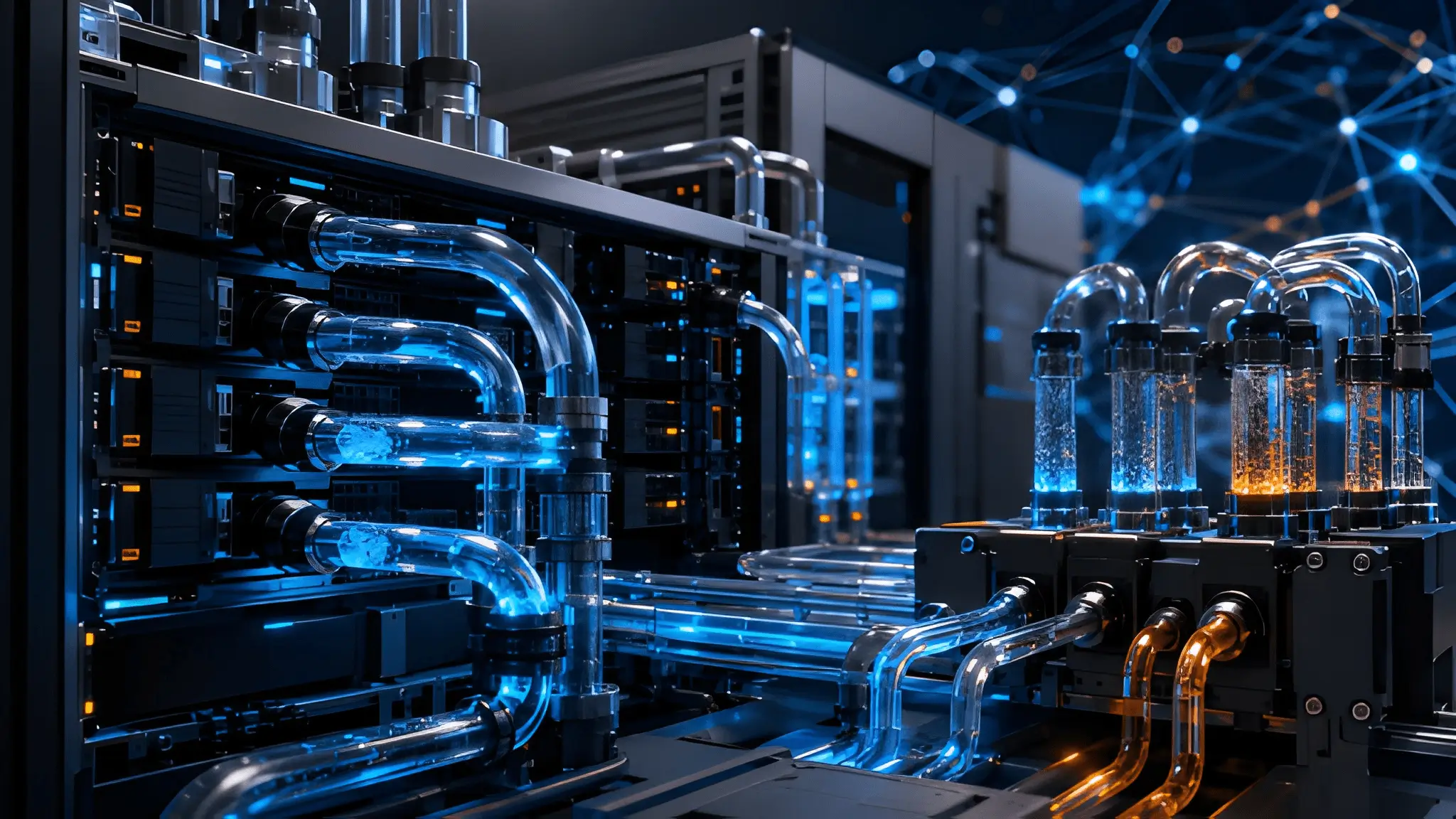
A rack entering a modern artificial intelligence environment no longer carries only compute hardware, power requirements, and network dependencies because the fluid surrounding its components is becoming part of the infrastructure identity itself. The quiet transformation happening inside advanced computing environments is not simply about replacing air with liquid but about deciding which chemistry controls the relationship between silicon, hardware materials, maintenance procedures, and future expansion paths. Cooling fluid has moved from being an invisible operational layer into a strategic engineering choice that influences how systems are designed, serviced, transferred, and reused. The industry conversation around liquid cooling often focuses on thermal efficiency, yet the deeper divide is emerging around chemical compatibility and ownership of the cooling ecosystem. Different operators, hardware manufacturers, and cooling technology providers evaluate liquid cooling approaches according to their hardware designs, workload requirements, reliability objectives, and operational priorities rather than following a single universal cooling model.

The disagreement is not only between single-phase and two-phase immersion cooling models but also between different assumptions about what a cooling standard should accomplish. A universal fluid specification sounds attractive in theory because it could simplify equipment movement, maintenance procedures, and multi-tenant operations across shared environments. The practical challenge appears when every fluid decision affects seals, coatings, thermal interfaces, pumps, sensors, and long-term reliability expectations built into the surrounding infrastructure. Hyperscalers that design their own large-scale computing systems often optimize around specific combinations of processors, servers, workloads, and operating conditions rather than around the needs of every possible tenant. Cooling chemistry therefore becomes linked with architecture decisions that are difficult to separate once a deployment reaches production scale. The result is a fragmented ecosystem where compatibility becomes less about physical connection and more about whether two different engineering philosophies can coexist inside the same environment.
The Strategic Role of Coolant Selection
The growing importance of coolant chemistry comes at a moment when artificial intelligence workloads are changing the relationship between computing density and thermal management. Traditional cooling approaches were built around predictable heat removal patterns, but modern accelerator-heavy systems push thermal designs closer to the limits of conventional methods. Liquid cooling has become a pathway for managing concentrated heat loads, yet the choice of fluid introduces another layer of complexity because the liquid itself becomes part of the system design. A fluid that performs well in one environment may create challenges when combined with different hardware generations, maintenance procedures, or operational practices. The industry is therefore entering a period where cooling decisions made at the engineering level may determine how flexible future computing environments remain. Chemistry is becoming a form of infrastructure alignment, and misalignment can create restrictions long after the original deployment decision.
Why Fluid Patents Are Becoming the New NDA
The traditional competitive advantage in computing infrastructure has usually centred around processors, networking systems, software platforms, and supply chain control, but cooling chemistry is introducing another layer of differentiation. A carefully engineered coolant formulation can influence thermal performance, material durability, maintenance cycles, and operational stability, making the fluid itself a valuable part of the infrastructure strategy. Some organizations are exploring proprietary approaches because a specific chemical combination can support tightly controlled hardware environments that are difficult to reproduce elsewhere. These formulations do not necessarily create secrecy through the fluid alone but through the accumulated engineering knowledge surrounding how the fluid interacts with the complete system. The chemistry becomes connected with operational data, hardware validation processes, and long-term reliability testing that may remain closely guarded. In that environment, fluid knowledge starts resembling a technical agreement between partners rather than a simple commodity specification.

A cooling fluid patent does not only represent ownership of a chemical mixture because it can also represent ownership of a performance model built around that chemistry. Engineers may evaluate viscosity, dielectric properties, thermal behaviour, material compatibility, contamination response, and degradation patterns before accepting a fluid for large-scale deployment. Those evaluations create a technical boundary around the infrastructure because changing the chemistry can require a new validation process across many connected components. A shared data hall designed around one coolant philosophy may not easily accept another approach without additional engineering work. The challenge becomes more visible in environments where multiple operators or tenants expect flexibility because a common physical space does not guarantee chemical interoperability. The industry is gradually discovering that a cooling layer can become as defining as the hardware layer beneath it.
Proprietary Cooling Is Creating Differentiation
The movement toward proprietary cooling strategies also reflects a broader shift in how hyperscalers approach infrastructure ownership. Large-scale computing operators increasingly design systems around specific performance objectives rather than purchasing completely standardized environments from the market. Cooling systems, power delivery methods, and rack architectures are becoming integrated design decisions where changing one element affects the others. A coolant formulation that works efficiently with a particular server generation may not provide the same results when introduced into another environment with different materials and operating assumptions. This creates a natural incentive to protect engineering discoveries because the value comes from the entire ecosystem surrounding the fluid. The industry consequence is that open standards become harder to define when the most advanced deployments depend on customized solutions.
The rise of fluid-specific engineering does not mean every organization will permanently reject common standards because interoperability still carries significant value. Shared approaches can simplify procurement, reduce complexity, and allow broader adoption of liquid cooling technologies across different environments. The tension exists because the companies operating the largest computing platforms often optimize for maximum control over performance, reliability, and future design flexibility. A common standard can improve compatibility across different environments, while highly customized cooling approaches may provide organizations with greater control over system optimization for specific workload and hardware requirements. Cooling chemistry therefore sits between two competing priorities: ecosystem openness and infrastructure optimization. The debate is not about whether standards matter but about whether the highest-performance environments can accept the compromises that standards usually require.
The Boiling Point That Broke the Room
The thermal behaviour of the fluid, including phase-change characteristics in two-phase systems, influences cooling architecture decisions, hardware integration requirements, and operational procedures. Single-phase immersion cooling keeps the fluid in a liquid state while transferring heat away from electronic components through circulation and heat exchange systems. Two-phase immersion cooling uses a fluid designed to change state, allowing heat from components to trigger evaporation and later condensation within a controlled system. Both approaches use dielectric fluids to bring cooling closer to the source of heat, but the thermal behaviour of the fluid determines how the entire system operates. The difference is not merely a choice between two cooling products because it changes the design logic of racks, tanks, maintenance processes, and monitoring systems. The boiling point becomes the dividing line that influences everything from hardware configuration to operational procedures.
The challenge for shared environments appears when different cooling philosophies attempt to occupy the same operational ecosystem. A rack designed around one thermal model may require different procedures, monitoring tools, and replacement fluids compared with another rack using a different approach. This affects how equipment can move between environments because the cooling system is no longer just a support mechanism. The fluid becomes part of the operating conditions that define whether hardware can function safely and predictably. Multi-tenant environments historically depended on physical and electrical compatibility, but liquid cooling introduces chemical compatibility as another requirement. That change creates a new layer of complexity for operators managing diverse workloads under one roof.
When ‘Non-Conductive’ Gets Redefined
The phrase “non-conductive” has traditionally provided a sense of technical comfort in conversations around dielectric cooling fluids, yet modern liquid cooling environments are forcing engineers to examine what that term actually guarantees. A fluid may resist electrical current under controlled testing conditions while still interacting with materials, contaminants, additives, and operating environments in ways that influence long-term reliability. The distinction matters because advanced cooling systems operate close to sensitive electronics, where small changes in fluid behaviour can affect connectors, coatings, seals, and component surfaces. The industry is moving away from viewing dielectric properties as a simple pass-or-fail measurement and toward a broader understanding of fluid performance throughout its lifecycle. This shift is creating new evaluation processes where chemical stability becomes as important as electrical insulation. The result is a more complex definition of safety that extends beyond the initial specification sheet.
Testing dielectric fluids involves more than measuring whether a liquid can carry electrical current because engineers must understand how the fluid behaves after extended exposure to heat, materials, and operational stress. Cooling environments experience continuous interaction between fluids and components, which means long-term compatibility becomes a critical design consideration. A formulation that appears stable during early validation may encounter different conditions once deployed across large computing environments with changing workloads and maintenance cycles. Material compatibility therefore becomes a central concern because plastics, elastomers, coatings, and metals may respond differently depending on the chemical composition of the fluid. These interactions require additional compatibility validation when organizations evaluate cooling approaches across different hardware ecosystems because fluid performance depends on the relationship between the coolant, materials, and system design. The term dielectric becomes less of a final answer and more of a starting point for deeper qualification.
When Chemistry Becomes an Operational Risk
The legal and operational concerns surrounding fluid compatibility are also becoming more visible as liquid cooling adoption expands. When equipment damage occurs inside a liquid-cooled environment, determining responsibility can become complicated because multiple elements contribute to system behaviour. The fluid supplier, hardware manufacturer, cooling system designer, and operator may each influence the final outcome. Questions around material selection, maintenance procedures, contamination handling, and fluid replacement can create disagreements when failures involve multiple technical boundaries. These situations highlight why colocation environments face particular challenges because they must support different equipment strategies while maintaining predictable operational conditions. Chemical compatibility is no longer only an engineering concern because it can influence contractual relationships and risk management decisions.
Colocation operators historically built their value around providing shared infrastructure where different customers could deploy their own technology within defined physical and electrical boundaries. Liquid cooling introduces another dimension because the cooling method must be considered alongside hardware compatibility, maintenance processes, and system design requirements. A tenant using one fluid chemistry may require different handling procedures from another tenant using a separate formulation. The operator must then balance flexibility with operational control because supporting every possible cooling approach can increase complexity. This creates a compliance gray zone where technical standards may describe performance requirements without fully addressing the practical realities of mixed chemical environments. The industry challenge is not the absence of engineering knowledge but the difficulty of creating universal rules around highly specialized systems.
The Flush Protocol Problem Nobody Agrees On
Moving hardware between cooling environments appears simple until the chemistry inside the system becomes part of the migration process. A rack leaving one liquid cooling environment may carry traces of the previous fluid through internal channels, seals, surfaces, and connected components. Those traces create questions about whether a new fluid can safely interact with the remaining residue without changing performance characteristics. Traditional equipment movement procedures focused on physical compatibility, but liquid cooling introduces chemical transition management as another requirement. The process of removing one fluid and preparing a system for another becomes a specialized operation rather than a routine hardware transfer. This creates a new challenge for environments that depend on flexible equipment movement across different users or operational zones.
A flush procedure must account for more than removing visible fluid because internal surfaces can retain microscopic amounts of previous chemistry. Different fluids may respond differently when mixed, even when both formulations individually meet performance requirements. Engineers must consider residue behaviour, material exposure, filtration methods, and verification procedures before introducing a replacement fluid. The complexity increases when equipment has operated for long periods because thermal cycles and chemical exposure may influence internal materials over time. A migration process therefore requires knowledge of the previous cooling environment, which creates another dependency between infrastructure history and future flexibility. The cooling record becomes part of the hardware identity.
Migration Risk Extends Beyond Hardware
Cross-contamination risks create a particular challenge for shared environments because operators must prevent one customer’s cooling strategy from affecting another customer’s deployment. A common assumption is that separating systems physically solves compatibility issues, but liquid cooling introduces operational relationships that extend beyond physical boundaries. Equipment servicing, maintenance tools, replacement procedures, and technician workflows all influence whether different cooling approaches can coexist. The industry is developing practices for managing these transitions, yet there remains no universal agreement on how much preparation is sufficient before a rack changes environments. Different organizations may establish different acceptance criteria based on their own reliability requirements. This creates another layer of divergence across the ecosystem.
The disagreement around flush protocols reveals a deeper issue within liquid cooling adoption: the industry is still defining what portability means in a chemistry-dependent environment. Traditional computing systems allowed organizations to move servers between locations with relatively predictable expectations around compatibility. Liquid cooling changes that assumption because the thermal environment becomes physically connected to the equipment. A server designed for one fluid ecosystem may require additional engineering consideration before entering another. This does not prevent movement, but it changes the economics and planning involved in relocation. The question shifts from “Can the rack move?” to “What preparation is required before the rack becomes operational again?”
When Liquid Cooling Becomes a Prerequisite for Your Next H100 Cluster Deployment
The growth of advanced accelerator deployments has changed liquid cooling from an optional engineering improvement into a strategic infrastructure consideration. Modern artificial intelligence systems place intense demands on thermal management because computing performance continues to increase within compact hardware designs. The cooling challenge does not begin after the hardware arrives because the infrastructure decisions must often happen before deployment planning is complete. Rack architecture, power delivery, thermal design, and cooling compatibility increasingly influence whether a deployment can proceed smoothly. Liquid cooling is becoming an important infrastructure consideration for certain high-density accelerator deployments where thermal management requirements exceed the practical limits of traditional cooling approaches. This changes how organizations approach future expansion because cooling capability becomes connected with technology availability.
High-performance accelerator platforms require careful coordination between hardware specifications and cooling environments. A system designed for advanced workloads depends on stable operating conditions, predictable thermal behaviour, and reliable infrastructure support. Liquid cooling helps address heat removal challenges by bringing the cooling medium closer to the source of heat generation. The choice of coolant, however, influences more than temperature management because it affects maintenance practices, component compatibility, and operational planning. Organizations cannot treat the cooling system as an isolated component because it becomes integrated with the overall deployment architecture. The result is a closer relationship between hardware roadmaps and cooling strategies.
Deployment Planning Now Starts With Cooling
The move toward liquid cooling also introduces new considerations around warranties, performance expectations, and capital planning. Hardware vendors define operating requirements for their systems, and cooling environments must align with those requirements to support expected performance, reliability, and lifecycle operation. A mismatch between hardware requirements and cooling practices can create uncertainty around support processes and long-term reliability. Organizations planning large deployments must therefore evaluate cooling decisions alongside hardware selection rather than treating them as separate projects. This approach changes the traditional timeline of infrastructure planning because cooling chemistry decisions may influence which systems can be deployed effectively. Thermal management becomes a prerequisite consideration in the early stages of design.
The relationship between accelerator adoption and cooling infrastructure highlights why chemistry divergence matters across the ecosystem. If different operators choose different fluid strategies, organizations moving workloads between environments may face additional compatibility decisions. A deployment optimized for one cooling ecosystem may not transfer easily into another without technical preparation. This creates a form of infrastructure dependency where cooling design influences future flexibility. The challenge is not that different approaches exist but that each approach creates a different operational environment around the hardware. AI expansion therefore depends not only on acquiring computing resources but also on aligning the physical systems that support them.
The Maintenance Log That Exposes the Divide
Single-phase cooling approaches typically focus on maintaining stable liquid circulation, filtration, and heat transfer performance throughout the operating lifecycle. The fluid remains part of a continuous management process where operators evaluate cleanliness, condition, and compatibility with the surrounding system. Maintenance procedures often revolve around preserving fluid quality and ensuring that pumps, heat exchangers, and internal components continue functioning within expected conditions. The operational model depends on consistency because changes in fluid behaviour can influence the entire thermal pathway. This creates a maintenance philosophy centred around fluid stability and system monitoring. The chemistry becomes something that must remain predictable rather than something that simply exists within the cooling loop.
Two-phase cooling environments follow a different maintenance philosophy because phase change introduces additional variables that operators must understand. The fluid must maintain predictable evaporation and condensation behaviour while interacting with hardware surfaces and system components. Monitoring focuses not only on the condition of the fluid but also on how effectively the entire phase-change process continues over time. Any changes in system performance may require analysis of multiple factors, including fluid condition, equipment operation, and environmental control. This creates a different maintenance discipline where thermal behaviour becomes closely connected with chemical behaviour. The operating team must understand the relationship between the fluid’s physical properties and the performance of the cooling architecture.
Monitoring Chemistry Over Time
Fluid degradation monitoring has become increasingly important because cooling chemistry exists within a dynamic environment rather than a static container. Heat exposure, material interaction, and operational stress can gradually influence fluid characteristics even when the system appears stable. Engineers evaluate whether a fluid continues to meet expected performance requirements and whether any changes indicate future reliability concerns. This approach reflects a broader shift in infrastructure management where preventive analysis becomes more valuable than reactive maintenance. The cooling system becomes a continuously observed environment rather than an invisible support layer. Maintenance data becomes a source of operational intelligence that influences future design decisions.
The differences between cooling approaches also affect how organizations plan replacement strategies and lifecycle management. A fluid decision made during initial deployment can influence future maintenance processes, technician requirements, and equipment transition procedures. When systems remain within the same chemistry ecosystem, operational knowledge accumulates over time and becomes easier to apply. When equipment moves between different cooling approaches, that accumulated knowledge may not transfer directly. The result is a growing connection between maintenance history and infrastructure flexibility. The longer a system operates within a specific cooling model, the more closely its procedures become tied to that chemistry. The maintenance record ultimately reveals a larger industry divide between those who view cooling as a standardized utility and those who view it as a customized engineering system. The first perspective prioritizes interoperability, common procedures, and broad compatibility across different environments.
How Chemistry Choice Rewrites Rack Residency Rules
Rack residency has historically depended on factors such as power availability, network design, hardware compatibility, and operational requirements, but liquid cooling introduces a new factor: chemical environment. A rack is no longer defined only by the equipment installed inside it because the surrounding cooling ecosystem becomes part of its operating identity. The choice of coolant can influence equipment compatibility, applicable maintenance procedures, and the preparation required when hardware transitions between different cooling environments. This creates the idea of chemistry zones where specific cooling approaches exist alongside particular hardware strategies. These zones may not always appear as visible physical boundaries, but they influence how infrastructure teams plan movement and expansion. Cooling chemistry is therefore beginning to shape the geography of computing environments.
A shared environment can support different cooling strategies, yet each approach introduces additional coordination requirements. Operators must understand which systems can interact safely, which maintenance procedures apply, and what preparation is required before hardware transitions occur. A rack designed around one coolant ecosystem may become closely associated with that environment because the supporting processes develop around it. This reduces the simplicity of moving equipment between different operational areas. The concept of rack mobility changes from a hardware question into a broader infrastructure question. The cooling environment becomes part of the asset lifecycle.
Residency Rules Extend Beyond Geography
The emergence of chemistry-based residency rules also affects how future computing environments are planned. Organizations building new deployments must consider not only where hardware will operate today but also how easily it can adapt to future requirements. A cooling decision can influence future expansion planning because changing coolant types may require additional compatibility validation, equipment preparation, and operational adjustments. This creates long-term consequences from choices made during initial design stages. Infrastructure planning becomes more interconnected because thermal systems influence future flexibility. The cooling layer becomes a strategic decision rather than a background engineering detail.
The concept of chemistry zones also changes how the industry thinks about infrastructure ownership. In earlier computing models, organizations could often separate hardware decisions from environmental decisions. Liquid cooling reduces that separation because the thermal environment becomes connected with the hardware lifecycle. A rack entering a new environment may require evaluation of cooling compatibility before it becomes operational. This creates a closer relationship between equipment movement and infrastructure governance. Chemistry choice becomes part of the decision-making process around deployment, relocation, and long-term planning.
The Standard That Will Never Be Written
The search for a universal coolant standard continues because the industry understands the benefits of compatibility, yet the same industry also recognizes the value of specialized optimization. A single cooling standard could simplify deployment decisions, reduce transition complexity, and create broader interoperability across different environments. The difficulty is that advanced computing operators often design infrastructure around specific goals that may not align perfectly with a universal approach. Cooling chemistry decisions connect with hardware architecture, maintenance procedures, and operational strategies that are difficult to separate. Any broader cooling standard would need to address different performance requirements, hardware designs, and operational models while allowing continued innovation in cooling technologies. This creates a challenge that is technical, commercial, and strategic at the same time.
Hyperscalers benefit from having control over their cooling ecosystems because customization allows them to align thermal management with their broader infrastructure strategies. A customized cooling approach can allow organizations to align thermal management decisions with specific hardware configurations, workload requirements, and operational models. The same customization, however, can create fragmentation when different ecosystems need to interact. The industry must therefore balance the benefits of specialized engineering with the practical need for compatibility. The question is not whether standards are valuable but whether the most advanced environments can fully adopt them without sacrificing performance goals. This tension will continue as computing demands evolve.
Compatibility Zones Are Becoming Strategic Assets
The real cost of incompatibility may not appear immediately because organizations can design around their chosen cooling approach during initial deployment. The complexity emerges later when systems need expansion, migration, refurbishment, or integration with different environments. Each additional cooling philosophy introduces another set of technical considerations that must be understood before equipment can transition safely. Over time, these differences can influence procurement decisions, operational planning, and infrastructure flexibility. The cooling ecosystem becomes a long-term commitment rather than a short-term engineering choice. Chemistry becomes part of the strategic direction of the computing environment.
The quiet split between hyperscalers is ultimately a reflection of a broader transformation in computing infrastructure. Cooling is no longer simply a mechanism for removing heat because it has become connected with performance, reliability, lifecycle planning, and operational control. The fluid surrounding the hardware now influences where systems can operate and how easily they can adapt. This change forces the industry to rethink assumptions that were built around traditional computing environments. Liquid cooling introduces chemistry as a new infrastructure layer that must be designed, managed, and understood. The future of high-density computing will depend not only on faster processors and larger systems but also on how effectively the industry manages the invisible chemistry that keeps them running.