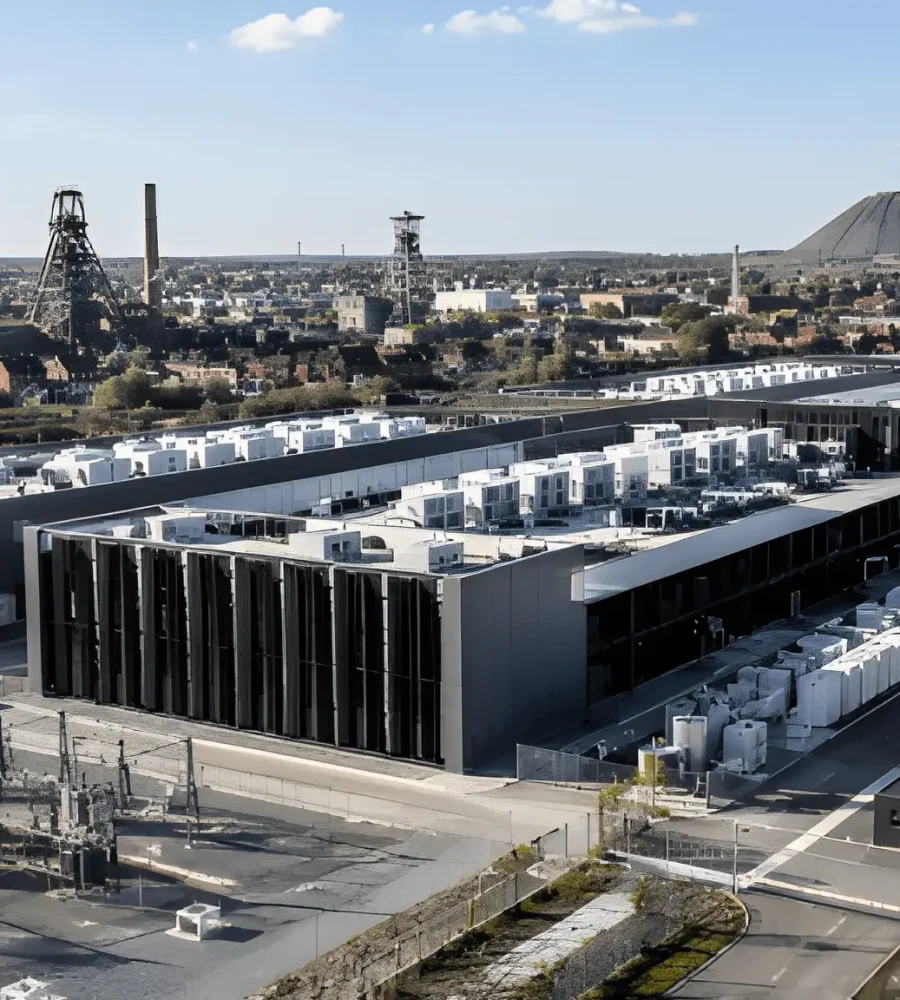
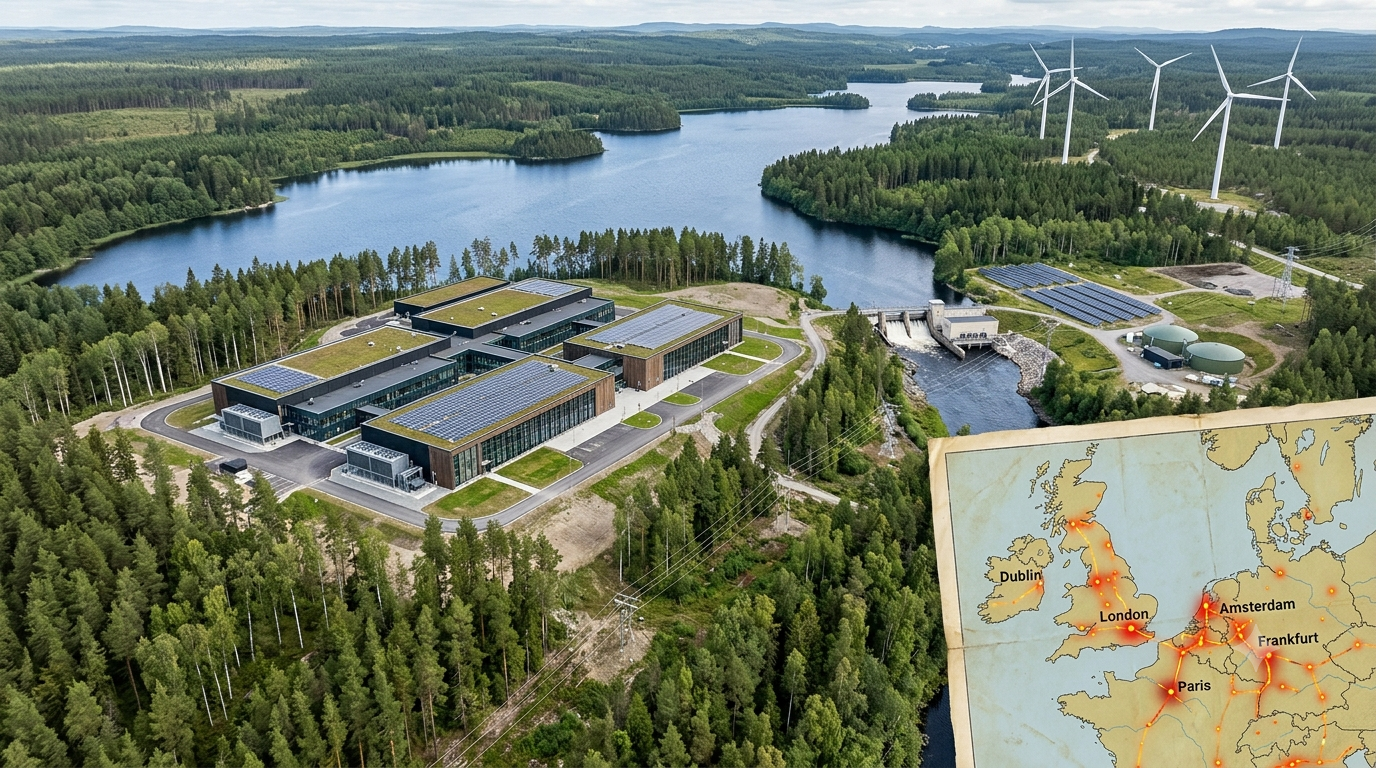
For more than a decade, Europe’s digital infrastructure industry revolved around five dominant markets: Frankfurt, London, Amsterdam, Paris, and Dublin. Together known as FLAP-D, these cities attracted hyperscalers, cloud providers, colocation operators, and enterprise workloads because they combined connectivity, capital, and proximity to customers. The AI era is changing that equation. Power availability has become the primary constraint on data center development, overtaking land, financing, and even permitting in many cases. Developers increasingly face a situation where facilities can be designed, financed, and constructed long before electricity becomes available. As a result, capital is beginning to flow toward a new generation of European markets that offer something increasingly scarce: access to power.
The FLAP-D Advantage Is Becoming a Liability
For years, the FLAP-D markets benefited from dense fiber networks, cloud regions, internet exchanges, and established ecosystems of infrastructure providers. Those advantages remain important, but AI workloads have introduced a new requirement. Large-scale AI facilities demand hundreds of megawatts of electricity, often delivered within timelines that existing transmission networks cannot support. Grid operators across Europe now face connection requests that exceed available capacity, creating waiting periods measured in years rather than months. The challenge has become so severe that power availability now plays a larger role in site selection than traditional location advantages.
The scale of the bottleneck is significant. Industry data shows that grid connection lead times in major European hubs have reached seven to ten years, while some highly congested locations face delays extending to thirteen years. Amsterdam faces average waits approaching a decade, while new large-scale grid connections in Dublin remain heavily restricted. Amazon executives have publicly identified grid connection certainty as one of the most important factors shaping European investment decisions. For many developers, the constraint is no longer whether capital is available but whether electricity can be delivered within a commercially viable timeframe.
AI Is Accelerating the Shift Away From Traditional Markets
Artificial intelligence is amplifying infrastructure pressures across Europe. Training clusters and inference environments consume substantially more power than conventional cloud deployments, creating demand for larger campuses and higher-density facilities. According to CBRE, AI-focused capacity transactions in Europe tripled during 2025, reflecting rapid expansion among cloud providers and AI infrastructure operators. Demand growth continues to outpace the ability of traditional hubs to add new capacity.
This mismatch is forcing operators to reconsider where future capacity can realistically be deployed. Infrastructure planners increasingly evaluate regions based on grid access, renewable energy availability, cooling conditions, and long-term scalability rather than proximity to existing hubs. The result is a gradual redistribution of investment across Europe. Instead of concentrating development inside a handful of metropolitan regions, operators are expanding into locations that can support large AI campuses without facing decade-long power delays.
Scandinavia Is Emerging as Europe’s New Hyperscale Frontier
The clearest beneficiary of this shift is the Nordic region. Finland, Sweden, Norway, Denmark, and Iceland offer a combination of advantages that are increasingly difficult to find elsewhere in Europe. Abundant renewable energy, colder climates, available land, and relatively uncongested electricity networks make these countries attractive destinations for AI infrastructure. Unlike traditional enterprise workloads, AI training environments often prioritize power availability over latency, making remote locations more viable.
Recent investments illustrate the trend. Earlier this year, AI infrastructure company Nebius announced plans for a $10 billion data center development in Lappeenranta, Finland. The 310 MW facility will rank among Europe’s largest AI-focused campuses and was specifically attracted by Finland’s low-cost renewable power and favorable cooling conditions. Similar developments are emerging across Sweden and Norway, where operators increasingly view energy resources as strategic assets rather than supporting infrastructure.
The Next Wave of European Data Center Cities
The most important story may not be the rise of entire countries but the emergence of specific secondary cities. Locations such as Lappeenranta and Mäntsälä in Finland, Borlänge in Sweden, and several Norwegian energy corridors are attracting serious attention from hyperscalers and AI infrastructure developers. These locations combine access to renewable generation with available industrial land and expanding connectivity infrastructure.
Outside Scandinavia, markets such as Zaragoza in Spain, Milan in Italy, and parts of Eastern Europe are also attracting interest. Improved fiber connectivity and growing renewable energy capacity are making previously overlooked locations viable for large-scale deployments. Developers increasingly prioritize power certainty over geographic proximity to traditional internet exchanges. As connectivity becomes more distributed, the historical advantages of FLAP-D markets become less decisive for many AI workloads.
Power Has Become the New Currency of Digital Infrastructure
Europe’s data center industry is undergoing a structural transformation. For much of the cloud era, infrastructure decisions revolved around connectivity, customer proximity, and real estate availability. The AI era has elevated electricity to the top of the hierarchy. Regions capable of delivering hundreds of megawatts of reliable power are increasingly attracting the industry’s largest investments. Markets unable to expand grid capacity risk losing future projects regardless of their historical importance.
This shift is reshaping investment strategies across the continent. Developers, investors, utilities, and governments now recognize that AI competitiveness depends as much on energy infrastructure as on computing hardware. The ability to secure power may determine which regions become Europe’s next hyperscale hubs. As grid constraints persist across FLAP-D markets, the winners of the next infrastructure cycle are likely to be regions that can deliver electricity, renewable energy, and expansion capacity at scale.