
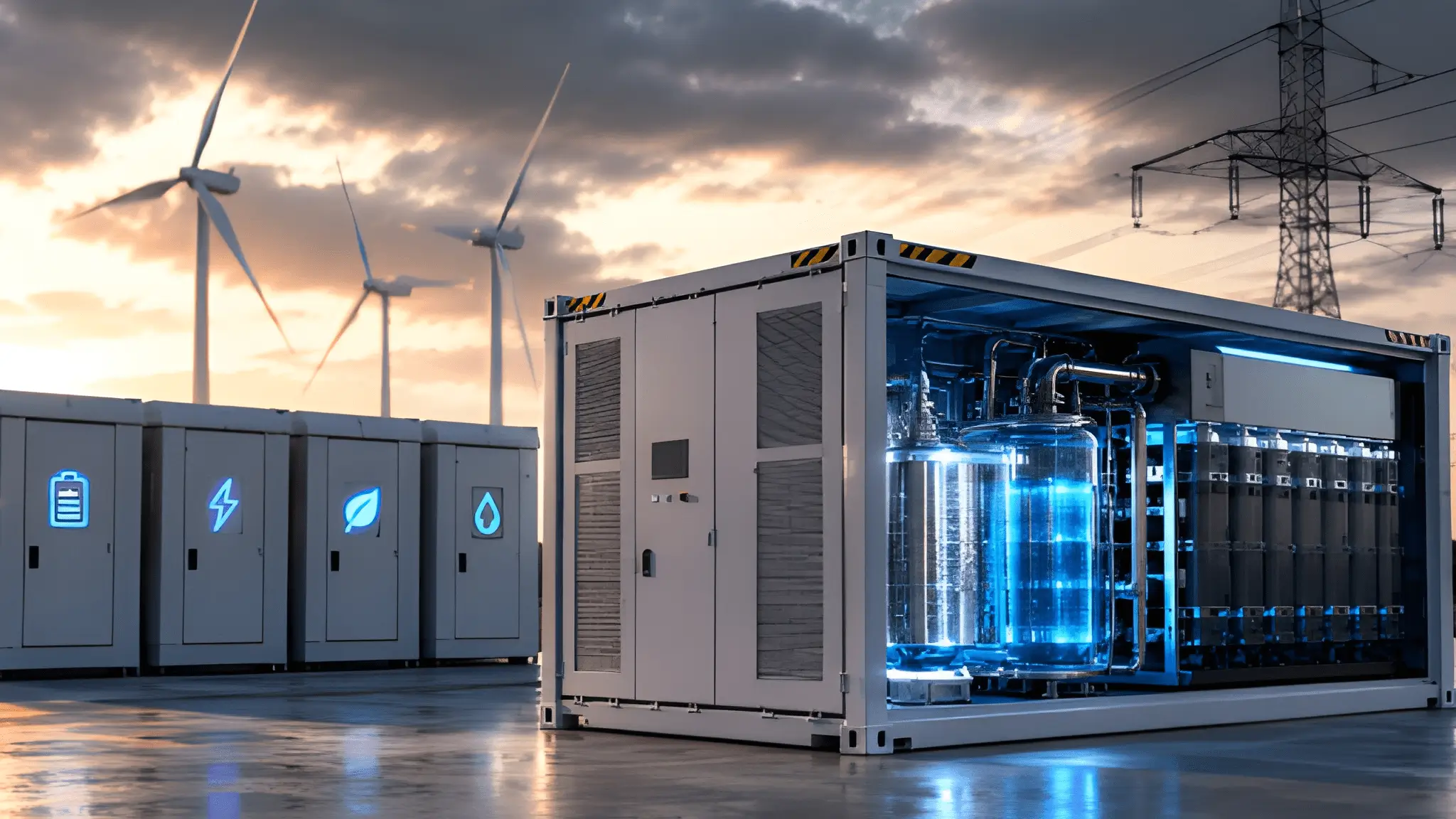
Europe’s long-duration energy storage market has taken a significant step toward commercialization after Dutch startup Ore Energy secured a 1 GWh deployment agreement with Budget Thuis, one of the Netherlands’ largest energy suppliers. The deal marks the largest iron-air energy storage offtake announced in continental Europe and the first such agreement involving a European energy retailer. The partnership begins with a committed 400 MWh deployment phase scheduled for 2028. It also signals growing confidence among utilities that multi-day storage technologies may become critical infrastructure as renewable generation expands across the continent.

The agreement arrives at a time when European power systems are grappling with a new challenge. Wind and solar generation continue to increase, yet periods of low renewable output can still leave grids dependent on gas-fired generation. While lithium-ion batteries have become a standard solution for short-duration balancing, they often struggle to economically address energy shortages lasting several days. Ore Energy believes its iron-air platform fills that gap by storing renewable electricity during periods of excess generation and releasing it when supply tightens.
Why Multi-Day Storage Is Moving Into the Utility Mainstream
Budget Thuis sees the project as part of a broader strategy to improve electricity affordability and reliability for customers as renewable penetration rises. The company expects multi-day storage to smooth price volatility and reduce exposure to fluctuations in fossil fuel markets. As energy suppliers search for new ways to manage risk in increasingly renewable-heavy grids, long-duration storage is evolving from a niche technology into a strategic asset.
The economics behind that transition are becoming harder to ignore. Short-duration battery systems continue to expand across Europe, creating greater competition for the same intraday market opportunities. Consequently, energy suppliers are shifting their focus beyond hourly balancing and toward technologies that can move renewable power across multiple days. Multi-day storage can preserve renewable energy that operators might otherwise curtail while reducing reliance on gas-fired backup generation during extended periods of low renewable output.

Ore Energy’s Iron-Air Technology Targets 100-Hour Storage
Ore Energy’s technology relies on iron, water, and air rather than lithium, cobalt, or other critical minerals commonly used in battery systems. The company says its systems can store electricity for up to 100 hours, enabling energy shifting across several days rather than several hours. The storage architecture is built around containerized 40-foot units that can be configured for durations ranging from 24 to 100 hours. This modular approach allows utilities and energy suppliers to tailor deployments based on grid requirements and market conditions. The company also highlights supply chain advantages. Because the technology uses widely available materials and can be manufactured through a European supply chain, it reduces dependence on imported battery materials.
“European grids are already curtailing clean power at scale, wasting electricity that costs billions to generate, while we stay dependent on fossil fuels to cover the gaps. Short-duration batteries alone can’t fix this. They shift solar by a few hours, but wind-heavy European grids need storage that works across days, not hours. Our long-duration iron-air batteries are built for exactly that: they capture wind when it blows and make it available when it doesn’t, displacing the gas plants that fill those multi-day gaps today and using a supply chain that Europe controls,” said Aytaç Yilmaz, Co-Founder and CEO of Ore Energy.
“We’ve shown our iron-air chemistry works in a European utility setting, and this deployment is the next step in commercialisation: meaningful volume, tied to a real project, with an energy supplier that understands what multi-day storage means for its business. We believe iron-air will become as important for wind as lithium-ion has been for solar.”
Energy Suppliers Search for New Hedging Tools
The agreement reflects a wider transformation taking place across European electricity markets. Renewable generation now represents a larger share of supply, creating both opportunities and operational challenges for retailers. Energy suppliers increasingly need assets capable of managing volatility across longer timeframes rather than simply balancing hourly fluctuations.
For companies such as Budget Thuis, multi-day storage offers a mechanism to store low-cost renewable electricity and deploy it during periods of scarcity. This capability could improve pricing predictability while limiting exposure to wholesale power spikes and gas market disruptions. Moreover, it creates a pathway for suppliers to offer cleaner electricity portfolios without relying as heavily on conventional backup generation.
“Delivering affordable, reliable energy to our customers is at the core of what we do, and multi-day storage gives us a way to store clean electricity when it is abundant and deliver it when it is most valuable,” said Annemarie Buitelaar, CEO of Budget Thuis.
“Iron-air is especially compelling because it is designed for the long-duration use cases that conventional batteries are not built to cover, with a cost structure suited to multi-day storage. For us, this is about reducing exposure to volatile fossil fuel prices while giving customers access to cleaner and more predictable electricity over time. Ore Energy has demonstrated the technology and has the expertise to deploy it, which is why we are committing to 1 GWh across our portfolio, starting with a 400 MWh first phase.”
Commercial Momentum Builds After European Pilots
The Budget Thuis agreement follows a series of operational milestones for Ore Energy. Earlier this year, the company completed a grid-connected pilot deployment with EDF in France, which it described as Europe’s first iron-air long-duration storage pilot operating under utility conditions. The project ran between August and November 2025 and demonstrated the ability to store and discharge electricity for up to four days.
Before the EDF deployment, Ore Energy also operated a grid-connected installation in Delft, validating integration with existing European distribution infrastructure. Those projects provided technical evidence that the technology could function within real-world utility environments. The Budget Thuis agreement now moves the company from pilot-scale validation toward commercial deployment at meaningful volume. For Europe’s energy sector, the project may offer an early indication of whether iron-air batteries can become a foundational component of a renewable-powered grid.











