
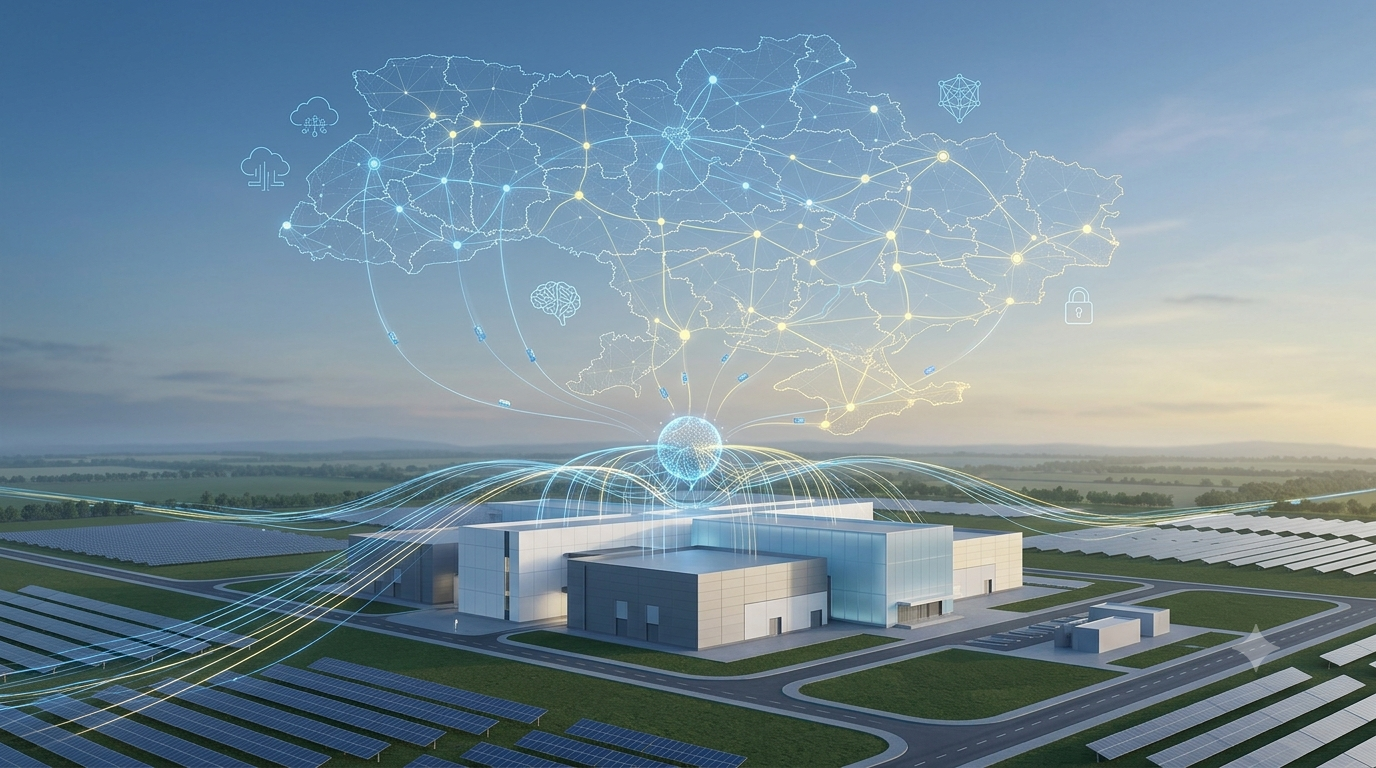
Artificial intelligence is rapidly changing how countries approach digital infrastructure. Governments are no longer focused solely on semiconductor production or cloud services. Increasingly, the ability to deploy large-scale AI data centers has become a strategic national priority. Japan is now taking another step in that direction by reviewing long-standing building regulations that many industry leaders believe are slowing the construction of next-generation data centers. A government panel has recommended easing certain building standards to support AI infrastructure expansion while maintaining safety and resilience. The proposal reflects a broader shift in Japan’s industrial strategy as it seeks to attract AI investment, strengthen domestic compute capacity, and remain competitive with the United States, South Korea, and other major AI economies.
Why Japan Is Reviewing Its Building Standards
Japan’s Ministry of Land, Infrastructure, Transport and Tourism convened an expert panel to examine whether existing building regulations remain suitable for modern data centers. Many of today’s AI facilities differ significantly from traditional commercial buildings. They contain densely packed GPU clusters, advanced cooling equipment, backup power systems, and heavy electrical infrastructure. These characteristics often require unique architectural designs that existing regulations were not originally intended to accommodate. The panel concluded that certain rules governing floor area calculations, equipment placement, and building design could be updated without compromising structural integrity or disaster resilience.
AI Is Changing What a Data Center Looks Like
Traditional enterprise data centers primarily supported corporate applications and cloud storage. AI facilities serve a different purpose. Large language models, inference platforms, scientific simulations, and AI training require significantly higher rack densities, increased electrical capacity, and sophisticated liquid cooling systems. These facilities dedicate more space to mechanical and electrical equipment than conventional office buildings. Consequently, developers often find that building codes designed for commercial real estate create unnecessary complexity for AI infrastructure. Equipment floors, cooling systems, and utility spaces may count toward floor-area restrictions even though they do not serve occupants in the traditional sense. Updating these rules could allow operators to optimize building layouts while improving operational efficiency.
Recommendation Goes Beyond Faster Construction
The proposed changes are not simply about reducing bureaucracy. Japan recognizes that AI infrastructure has become part of national economic competitiveness. Countries capable of deploying AI compute quickly are attracting hyperscalers, sovereign AI projects, semiconductor investments, and advanced manufacturing. Relaxing specific construction standards could shorten development timelines, reduce design constraints, and improve investment certainty. Faster project approvals may encourage both domestic operators and international cloud providers to expand capacity within Japan rather than selecting competing markets across Asia. This policy direction complements Japan’s broader efforts to strengthen semiconductor manufacturing, expand renewable power integration, and modernize digital infrastructure.
Competing for AI Investment Across Asia
Japan is entering an increasingly competitive regional market for AI infrastructure. South Korea recently announced gigawatt-scale AI cloud initiatives with NVIDIA, while Singapore continues expanding high-density data center capacity through more sustainable designs. Malaysia has emerged as a preferred destination for hyperscale campuses, and countries across the Middle East are investing billions in sovereign AI infrastructure. Against this backdrop, regulatory efficiency has become almost as important as access to electricity and fiber connectivity. Investors increasingly evaluate permitting timelines, construction certainty, and policy stability before committing billions of dollars to new facilities. Modernizing building regulations allows Japan to strengthen its position without compromising engineering quality or disaster preparedness.
Balancing Flexibility With Earthquake Resilience
Unlike many competing markets, Japan cannot simply relax engineering requirements without considering seismic risk. Earthquakes remain one of the country’s defining infrastructure challenges. Data centers must continue operating even during significant seismic events because they support financial services, communications, cloud platforms, and increasingly AI workloads. The expert panel therefore focuses on easing standards that affect building efficiency rather than reducing structural safety. Japan’s internationally respected seismic engineering framework is expected to remain intact while regulations surrounding equipment layouts and floor-space calculations become more flexible. Maintaining this balance will be critical. Investors require confidence that facilities can withstand natural disasters while also remaining economically viable to construct.
AI Infrastructure Requires Different Building Economics
The economics of AI facilities differ substantially from conventional real estate developments. Mechanical systems, electrical distribution equipment, backup generators, cooling infrastructure, batteries, and network hardware occupy a much larger share of total building volume. Developers argue that treating these technical spaces the same way as occupiable commercial floors creates inefficiencies. Every square meter dedicated to cooling or electrical equipment ultimately supports computing capacity rather than human occupancy. Adjusting building standards to recognize these differences could improve overall facility utilization while lowering development costs. As rack densities continue increasing, efficient building design will become even more important for maintaining economic competitiveness.
Supporting Japan’s Semiconductor and AI Strategy
Building regulations represent only one piece of Japan’s broader AI strategy. The government has already committed significant investments toward domestic semiconductor manufacturing through partnerships involving TSMC, Rapidus, and other industry participants. AI infrastructure complements those efforts by creating domestic demand for advanced chips while supporting cloud providers, research institutions, and enterprise AI deployment. Expanding compute infrastructure also aligns with Japan’s digital transformation agenda, which seeks to improve economic productivity through greater adoption of AI across manufacturing, healthcare, finance, logistics, and public administration. A stronger domestic data center ecosystem may therefore generate benefits extending well beyond the technology sector itself.
Infrastructure Policy Is Becoming AI Policy
Only a few years ago, building codes rarely appeared in discussions about artificial intelligence. Today, permitting rules, zoning regulations, environmental approvals, and construction standards increasingly determine how quickly AI capacity can reach the market. Governments worldwide are recognizing that digital competitiveness depends not only on algorithms and software but also on physical infrastructure. Data centers, transmission networks, substations, cooling systems, and semiconductor supply chains have become strategic national assets. Japan’s proposal reflects this changing reality. Rather than treating data centers as ordinary commercial buildings, policymakers increasingly view them as critical infrastructure supporting national innovation and economic resilience.
A Small Regulatory Change With Larger Strategic Implications
The recommendation to ease certain building standards may appear technical, but its implications extend far beyond architecture. Faster construction timelines, more efficient facility designs, and improved investment certainty could strengthen Japan’s ability to attract the next generation of AI infrastructure projects. Competition for AI leadership increasingly depends on how quickly countries can build compute capacity. That race is influenced not only by GPUs and semiconductors but also by planning regulations, engineering standards, and infrastructure policy. Japan’s proposed reforms acknowledge that reality. If implemented effectively, they could help position the country as one of Asia’s most attractive destinations for hyperscale AI investment while preserving the engineering excellence and resilience that have long defined Japanese infrastructure.











