 Skip to content
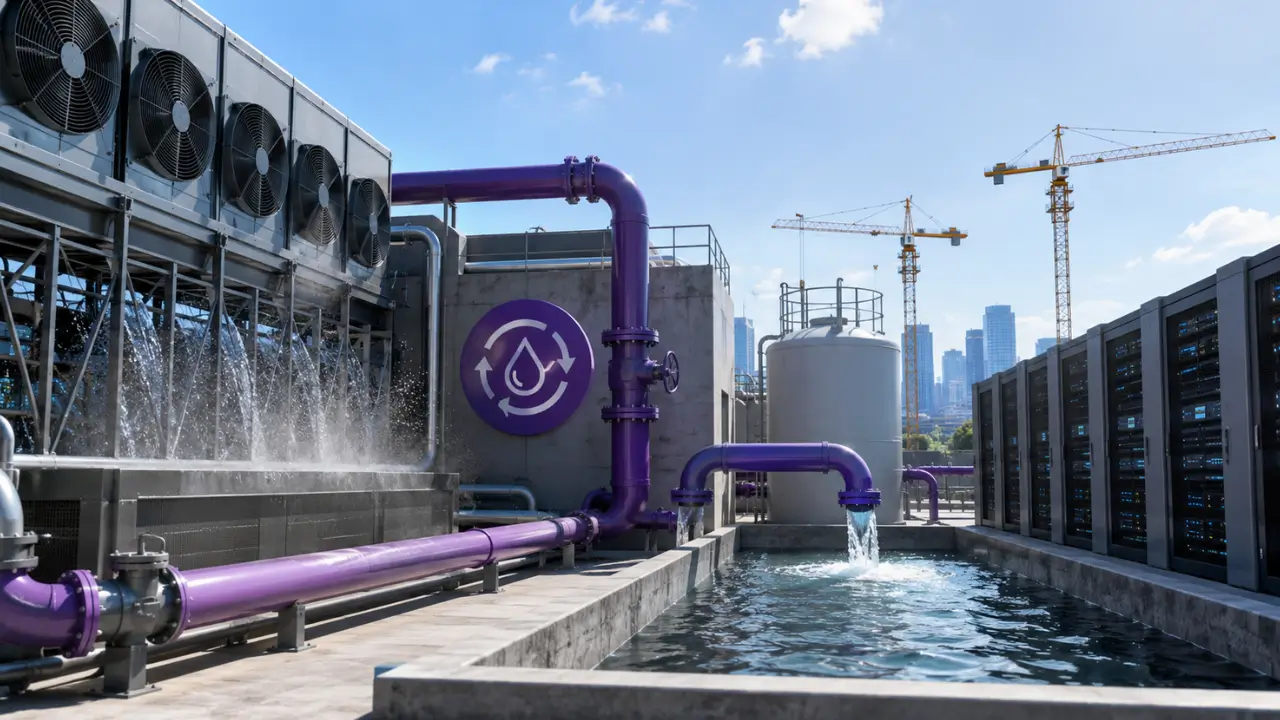
Water availability was once treated as a straightforward site-selection input for data center projects, where developers assessed municipal connections, tanker backup options, and operational demand before moving into design decisions, but Indian metros are changing that equation by redefining what qualifies as usable water for large-scale digital infrastructure. The question is no longer only whether a site can receive a water connection, because regulators, environmental reviewers, and local authorities are increasingly examining whether the source aligns with conservation expectations and reuse obligations. This shift has changed the meaning of “available” water from physical accessibility to regulatory acceptability, where treated sources and recycling systems now influence whether a location remains viable. Colocation developers are therefore reassessing older assumptions around cooling design because water strategy has become linked with approval processes rather than remaining an isolated engineering decision.

Water definitions are becoming part of site feasibility
Indian metropolitan regions are approaching water management through increasingly structured reuse frameworks, and this can influence how data center projects evaluate cooling requirements before construction begins because local water availability, reuse policies, and approval conditions vary by jurisdiction. Cities such as Mumbai, Bengaluru, Hyderabad, and Chennai have developed different approaches toward treated wastewater, recycled water usage, and non-potable applications, creating a regulatory environment where developers cannot apply one national assumption across every location. A water source that may support one type of commercial development may require additional treatment verification when used for cooling-related applications in another jurisdiction. Local authorities increasingly distinguish between potable supply, treated wastewater, and other non-potable sources because each category may carry different expectations around quality requirements, monitoring practices, and permitted applications depending on local regulations.
The earlier approach of treating municipal water access as a stable operational assumption has become less reliable because urban water planning now focuses more strongly on conservation, recycling, and demand management. Data center developers reviewing older feasibility models may find that previous assumptions no longer reflect current approval expectations, particularly where local authorities require alternative water strategies for high-consumption developments. Cooling infrastructure decisions made years earlier often relied on predictable freshwater availability, but newer projects increasingly evaluate whether reclaimed water systems, treatment partnerships, or alternative cooling technologies can reduce regulatory exposure. This does not mean every location applies identical restrictions, but it does mean that water planning has moved closer to the core compliance discussion. The modern colo assessment process therefore treats water as a regulated operational resource rather than a simple utility input.
The audit trail begins before the cooling system starts
Water-recycling mandates are therefore changing the decision framework for Indian colocation projects because they redefine what developers must prove before a site can support long-term digital infrastructure growth. The traditional checklist of power, connectivity, and land availability is expanding to include water sourcing, treatment capability, and regulatory alignment. This evolution reflects a broader change in urban resource management, where large infrastructure projects are expected to demonstrate responsible resource planning from the start. Data center operators working across multiple Indian metros must navigate different local expectations while maintaining consistent operational standards. The strongest designs will not simply reduce water use but will also create clearer compliance pathways through better alignment between engineering systems and regulatory requirements. Water has become part of the infrastructure approval conversation, not an operational detail added later.

Greywater Pipelines Aren’t a Perk. They’re a Permit Condition
The growing importance of treated wastewater networks is changing how data center projects approach construction approvals because recycled water availability is increasingly connected with development permissions. In many urban areas, authorities encourage or require non-potable applications to move away from freshwater dependency, especially for large developments with significant operational requirements. For colocation projects, this creates a direct relationship between local water infrastructure and the ability to complete regulatory milestones. A site may have sufficient land, power access, and connectivity options, but the absence of a reliable recycled water pathway can create additional planning considerations or approval requirements where local regulations include wastewater reuse expectations. The role of greywater and treated wastewater is increasingly moving from an environmental enhancement toward a practical compliance consideration as cities strengthen wastewater reuse policies and resource management practices. Developers must evaluate whether local reuse infrastructure can support the operational model before committing to a location.
Treated water connections are becoming planning requirements
Modern urban development rules increasingly focus on reducing dependence on freshwater for applications that do not require drinking-quality supply, and this principle directly affects cooling strategies for large computing facilities. Treated wastewater systems help cities manage demand by redirecting processed water toward suitable non-potable uses, including applications where proper treatment can achieve required quality standards. For data centers, this creates an opportunity to reduce freshwater exposure while aligning with regulatory expectations around reuse. However, the availability of treated water depends on local infrastructure maturity, pipeline access, treatment capacity, and operational agreements. A project located in an area without dependable recycled water infrastructure may face a different compliance pathway compared with a project located near established reuse networks. This makes water infrastructure mapping an essential part of site evaluation.
The connection between water recycling and approvals becomes more significant when projects move from planning into execution because authorities review whether proposed systems match the commitments made during approval processes. A developer that identifies recycled water usage as part of the project design may need to demonstrate how that source will secure, monitor, and maintain the supply throughout operations. The responsibility does not end after commissioning because operational continuity depends on maintaining treatment standards and supply reliability. This creates a situation where water-recycling infrastructure becomes part of the operating model rather than a separate environmental initiative. The compliance pathway continues across the entire lifecycle of the asset, from planning documents to ongoing reporting practices.
Water dependency becomes an operational risk
The reliance on external water systems introduces a new operational dimension because treatment infrastructure itself becomes part of the dependency chain supporting cooling operations. Colocation operators traditionally focus on power redundancy, network resilience, and equipment reliability, but water systems are becoming another area requiring structured risk planning. A disruption in treated water availability may create operational pressure if cooling systems depend heavily on that source. This means developers need to evaluate supply agreements, backup strategies, and monitoring processes alongside traditional infrastructure planning. The discussion is no longer limited to whether recycled water exists, but whether the supply arrangement can support continuous operations under changing urban conditions.
Water-recycling mandates are also influencing the relationship between developers and local authorities because compliance now requires stronger coordination around infrastructure availability and long-term resource management. Projects cannot assume that future water access will remain unchanged throughout the operational life of the facility. Urban water priorities can evolve, and regulatory expectations may become more detailed as cities manage increasing demand. For colocation operators, this reinforces the need to design systems that remain adaptable under changing compliance conditions. The ability to demonstrate responsible water management is becoming part of operational credibility.
The move toward recycled water-based planning represents a broader change in how Indian metros evaluate large infrastructure developments. Water is no longer considered only a utility requirement but a regulated resource connected with environmental commitments, approval pathways, and operational resilience. Data centers entering these markets must consider whether their cooling strategy fits within the future direction of local water governance. This does not create a single solution for every location, but it does require a more detailed understanding of regional conditions. The projects that align water planning with technical design will be better positioned to manage compliance expectations over the asset lifecycle.
Adiabatic Ticks the Box, Water-Cooled Triggers the Paperwork
Cooling architecture has become one of the clearest points where water regulation meets engineering strategy because different systems create very different compliance journeys throughout the operational lifecycle. Traditional water-cooled designs have supported large-scale computing environments for years because they can deliver strong thermal performance, but they also require continuous attention toward water sourcing, treatment quality, discharge management, and monitoring obligations. Adiabatic and mist-assisted air-cooled approaches follow a different compliance pathway because they reduce dependence on constant water circulation while still using controlled evaporation principles during certain operating conditions. The difference is not simply about reducing consumption because regulators increasingly examine the operational evidence behind every resource used at a site. A cooling system that depends on extensive water infrastructure creates a larger documentation footprint compared with systems designed around lower water dependency.
Water-cooled systems typically involve a broader operational record because the cooling process depends on maintaining water quality, managing chemical treatment, controlling scaling risks, and ensuring responsible handling of associated discharge streams. Each of these activities requires defined procedures because poor water management can affect equipment performance and regulatory compliance at the same time. Cooling towers, for example, require continuous attention toward operating conditions because water quality directly influences reliability, efficiency, and maintenance cycles. The compliance process therefore extends beyond the cooling equipment itself and may include supporting systems such as water treatment, monitoring processes, and maintenance controls that help maintain reliable operation. For large colocation projects, this creates a connection between mechanical design and environmental reporting requirements. A design decision made during construction can influence the amount of operational documentation required years later.
Cooling choices now create different audit responsibilities
Adiabatic systems create a different operational profile because they use evaporative assistance during selected conditions rather than depending entirely on continuous water-based cooling infrastructure. The compliance impact comes from reduced water dependency and a different operational management approach, although these systems still require appropriate monitoring, maintenance practices, and adherence to applicable water quality requirements. Operators must still manage water quality where mist or evaporative components exist, but the frequency and nature of these activities can differ from traditional cooling tower operations. This creates a different audit posture where the focus may move toward controlled usage, testing records, and equipment performance rather than extensive water circulation management. The technology does not remove regulatory responsibility, but it can reshape how that responsibility appears during reviews.
The difference between these approaches becomes especially relevant when colocation providers prepare documentation for multiple stakeholders who evaluate environmental performance differently. Regulators may focus on compliance with local water rules, while customers may review sustainability reporting and operational resilience. A cooling system that reduces dependence on external water infrastructure can simplify parts of this reporting process because fewer water-related variables require management. However, operators still need transparent records showing how the system performs and how resource use remains controlled. The strongest compliance strategies combine engineering design with accurate operational reporting rather than relying on technology claims alone. Water management therefore becomes a measurable operational discipline connected with cooling selection.
Audit preparation is moving from equipment checks to resource visibility
The evolution of environmental reporting is changing what auditors expect from large digital infrastructure sites because resource usage is increasingly reviewed as part of operational governance. Earlier assessments often concentrated on equipment reliability, electrical performance, and safety processes, but modern evaluations increasingly examine how infrastructure interacts with resource constraints. Water-related information is becoming part of this wider operational picture because it reflects both environmental responsibility and long-term resilience. Cooling systems that require complex water management structures may demand more detailed records to demonstrate compliance. Air-cooled and adiabatic approaches can change the nature of these records by reducing certain dependencies while introducing different performance monitoring requirements.
This shift does not mean one cooling technology automatically satisfies every regulatory expectation because compliance depends on location, design, operating conditions, and approval requirements. A water-efficient system still requires disciplined management because poor implementation can create operational problems regardless of the technology selected. The difference appears in the type of risks that operators must manage and the evidence they must maintain. A water-cooled facility may spend significant effort demonstrating responsible water circulation and discharge management, while an adiabatic facility may focus more on controlled water application and equipment performance verification. The audit conversation changes because the underlying resource dependency changes.
Compliance Is Now Measured in Water Risk, Not Just Efficiency Ratios
The changing regulatory environment is pushing developers to evaluate cooling technologies through a broader lens where efficiency, compliance, and operational simplicity overlap. The question is no longer only whether a cooling method can support the required thermal load because the supporting compliance framework has become equally important. Projects designed for future regulatory conditions need to consider how easily their operational practices can adapt to evolving water policies. This approach places greater importance on designs that reduce unnecessary complexity while maintaining reliability. The result is a shift where cooling architecture becomes part of compliance planning from the earliest stages of development.
For many years, data center performance discussions focused heavily on efficiency indicators because metrics around power usage helped operators compare different facilities and cooling approaches. Water considerations existed within sustainability conversations, but they often remained secondary compared with electrical performance, uptime, and capacity planning. Indian metros are changing this balance because water availability, reuse requirements, and environmental approvals are becoming more connected with infrastructure decisions. A facility can achieve strong energy performance while still facing greater regulatory attention if its water dependency creates additional compliance exposure. This is changing how developers and operators evaluate technical choices because resource efficiency is no longer limited to electricity consumption. Water risk has become part of the operational equation.
Water intensity is entering the infrastructure conversation
The increasing attention toward water management reflects a broader shift in how digital infrastructure measures sustainability performance. Operators are examining not only how efficiently systems consume power but also how effectively they manage water resources throughout the operational cycle. This creates a more complete view of infrastructure impact because cooling requirements can influence both environmental reporting and regulatory discussions. Water-related measurements help stakeholders understand whether a facility depends heavily on external resources or whether it has built systems that reduce exposure. The focus is moving toward understanding the complete resource profile of a site rather than relying on a single efficiency indicator.
For colocation operators, this means water planning increasingly affects how facilities are evaluated by customers, investors, and regulatory bodies. A design with similar energy performance to another facility may still create a different compliance profile if the water dependency is significantly different. This distinction matters because water availability varies widely across Indian metropolitan regions, and local conditions influence long-term operational risk. A facility located in a water-stressed area may require stronger resilience planning than one operating in a region with more stable resources. The evaluation framework is therefore becoming more location-aware and resource-focused.
The shift toward water-focused evaluation also changes how future capacity planning decisions are made because expansion is no longer based only on electrical and physical availability. Developers must consider whether the supporting water strategy can scale alongside computing demand. Large facilities require careful planning because increasing capacity can also increase resource dependency if the underlying cooling approach relies heavily on water. This creates a situation where future growth depends on how well infrastructure decisions anticipate regulatory expectations. Water management becomes part of scalability planning rather than a separate sustainability discussion.
Design decisions are becoming compliance decisions
The relationship between cooling design and compliance is becoming stronger because every technical choice creates operational consequences that appear throughout the facility lifecycle. Selecting a cooling system influences maintenance procedures, monitoring requirements, reporting obligations, and potential regulatory interactions. This means engineering teams must consider compliance implications during early design discussions instead of treating them as post-construction requirements. A design that simplifies water management may provide greater flexibility when regulations evolve or when local resource conditions change. The future of colocation design is therefore moving toward systems that balance performance with adaptability.
The importance of this shift becomes clearer as Indian cities continue developing stronger approaches toward resource management and environmental planning. Cooling technologies that reduce water dependency may become more attractive because they align with broader urban priorities around conservation and reuse. However, the decision cannot rely on one factor because every site has different operational conditions, regulatory expectations, and infrastructure availability. The most effective designs will evaluate the complete lifecycle impact rather than focusing only on initial efficiency performance. Compliance is becoming a design characteristic, not simply an administrative process.
The next generation of colocation facilities will likely approach water planning with the same seriousness traditionally given to power architecture and redundancy strategies. Water systems, treatment arrangements, and cooling technologies will increasingly influence how developers evaluate risk before construction begins. This evolution reflects the changing role of data centers within urban environments where resource management is becoming closely connected with infrastructure growth. Operators that understand this relationship can design facilities that remain adaptable as expectations change. The future competitive advantage will come from creating infrastructure that performs reliably while remaining aligned with evolving compliance frameworks.
When a Sewage Treatment Plant Becomes Your Uptime Dependency
The connection between recycled water systems and data center cooling introduces a dependency that was rarely considered in early infrastructure planning because treatment systems were often viewed as supporting utilities rather than operational components. As water-recycling requirements become more integrated into urban development approvals, sewage treatment plants and tertiary treatment networks increasingly influence how reliably a facility can maintain its cooling operations. This does not mean every site faces the same level of exposure because the impact depends on cooling architecture, local water arrangements, and the reliability of the supporting infrastructure. The important shift is that water supply resilience now extends beyond municipal availability and into the performance of treatment systems that prepare water for non-potable applications. A cooling system that depends on treated water requires confidence not only in the source but also in the processes that maintain quality and continuity.
Sewage treatment plants have traditionally supported broader urban water management objectives, and their role can become more operationally significant when developments depend on treated output for processes that require consistent water quality and availability. Data centers using recycled water for cooling must consider whether the treatment system can consistently provide water that meets required quality parameters. Variations in treatment performance, maintenance schedules, or supply interruptions can influence how operators manage cooling operations. This creates a need for stronger coordination between facility teams and external water infrastructure providers because cooling reliability depends on more than the equipment installed inside the site boundary. The operational model must account for the complete water pathway from source to final use.
Treatment infrastructure is becoming part of operational design
The dependency becomes more visible during periods when urban water systems experience additional pressure because treatment infrastructure may face higher demand, maintenance requirements, or changing operating conditions. A data center that relies on reclaimed water cannot treat that supply as an unlimited resource because the quality and availability depend on upstream processes. This requires planning around service agreements, backup arrangements, and internal water management practices. The objective is not to eliminate external dependencies but to understand and manage them properly. Similar to electrical planning, water planning requires visibility into potential failure points.
For colocation operators, this introduces a different way of thinking about resilience because traditional uptime discussions have focused mainly on power and network continuity. Water-related resilience requires understanding how treatment infrastructure performs during operational stress and whether alternative arrangements exist when supply conditions change. The facility design must consider whether cooling systems can continue operating during temporary disruptions or whether additional controls are required. This approach expands the definition of infrastructure preparedness because water availability becomes connected with operational continuity.
Service agreements and redundancy become part of water strategy
The increasing reliance on recycled water creates a stronger need for structured agreements between developers, operators, and water service providers. These arrangements define expectations around supply quality, availability, communication procedures, and response processes when issues occur. A data center cannot rely only on the existence of a recycled water pipeline because the operational requirement depends on consistent performance over time. Clear responsibilities become important because cooling operations require predictable conditions. The same principles applied to other critical infrastructure dependencies increasingly apply to water systems as well.
Water redundancy strategies may involve multiple approaches depending on site conditions, including alternative supply arrangements, storage planning, and cooling systems that reduce dependence during temporary constraints. The appropriate approach depends on the facility design and local regulatory environment rather than following a universal model. The important consideration is that water availability must be evaluated as part of operational risk management. A facility that understands its water dependency can prepare better responses than one that treats water as a background utility. This creates a more mature approach to infrastructure resilience.
State Pollution Boards Are Reading Your Makeup Water Meter
The growing focus on recycled water dependency also changes how future data center projects evaluate locations because proximity to treatment infrastructure may influence long-term operational confidence. A site with strong digital connectivity but limited access to reliable treated water may present different challenges compared with a site that has established reuse networks. Developers must therefore consider the broader infrastructure ecosystem supporting the facility. The future of colocation planning requires a more integrated understanding of energy, connectivity, land, and water systems. Water has become another layer of infrastructure strategy.
The role of environmental regulators is expanding beyond traditional discharge monitoring because water intake patterns are becoming increasingly relevant in assessing how industrial and commercial developments manage resources. For data centers, this means the focus is gradually moving from only what leaves the site to also understanding what enters the site and how that resource is used. Cooling systems, treatment arrangements, and recycling claims create operational records that reveal the relationship between water sourcing and consumption. State Pollution Control Boards are therefore becoming more interested in the complete water cycle associated with large infrastructure projects. This changes the compliance conversation because responsible water management requires transparency from intake to discharge. The water meter is becoming a record of operational behaviour rather than only a measurement device.
Intake monitoring is changing compliance expectations
Environmental approvals traditionally concentrated on emissions, waste management, and discharge controls, but resource consumption patterns are increasingly becoming part of broader environmental reviews. Water-intensive operations attract attention because consumption levels, source selection, and reuse practices influence regional resource management. Data centers with significant cooling requirements must demonstrate that their water strategy aligns with applicable regulations and approval conditions. This requires accurate tracking because unsupported claims around recycling or closed-loop operation can create compliance challenges. Monitoring systems therefore become essential tools for demonstrating operational transparency.
The concept of a closed-loop cooling approach also requires careful interpretation because no operational system eliminates all forms of water management responsibility. Cooling equipment may still require monitoring, maintenance, treatment processes, and periodic adjustments depending on the technology used. Regulators increasingly examine whether operational practices match stated sustainability commitments. This encourages developers to maintain stronger documentation around water sources, treatment processes, and consumption patterns. The emphasis is shifting from making environmental claims toward proving operational performance.
For colocation facilities, this creates a stronger connection between engineering teams and compliance teams because water data must be collected, managed, and reported accurately. Mechanical systems generate operational information that can become part of regulatory documentation and sustainability reporting. The quality of this information depends on how well monitoring systems are integrated into facility operations. A strong water management approach therefore requires both appropriate technology and disciplined reporting practices. Compliance increasingly depends on visibility.
Consent renewals are becoming more resource focused
Operational approvals are not static because environmental expectations can evolve as cities face changing resource conditions and regulatory priorities. A facility that received approval under earlier assumptions may face different expectations when renewing operational permissions or expanding capacity. This creates the need for ongoing compliance readiness rather than a one-time approval mindset. Data center operators must understand how their water systems perform over time and whether they can adapt to changing requirements. Long-term compliance depends on maintaining alignment between operational reality and regulatory expectations.
Water intake records provide regulators with insight into how facilities manage dependency on local resources, particularly in regions where water availability remains a major planning concern. This does not mean every project will face identical restrictions, but it highlights why accurate measurement and reporting are becoming more important. Developers that maintain transparent water management practices are better positioned to respond when regulatory frameworks evolve. The ability to demonstrate responsible resource use can influence operational confidence among multiple stakeholders.
The future compliance landscape for Indian data centers will likely place greater emphasis on complete resource accountability because infrastructure growth must operate within broader urban resource limits. Water management will continue moving closer to the centre of environmental review processes as cooling demand grows and cities refine conservation approaches. Operators that integrate monitoring, reporting, and efficient design principles will have stronger foundations for long-term operation. The water meter represents more than consumption tracking because it reflects how infrastructure interacts with its surrounding environment.
Designing for Drought Declarations: The Clause in Your Environmental Clearance
Water stress is becoming a stronger consideration in how large infrastructure projects are planned because environmental approvals increasingly reflect local resource conditions rather than only project-level requirements. For data centers, this means environmental clearance decisions can influence cooling strategy, water sourcing plans, and operational flexibility before the first server rack becomes active. A facility designed around high water dependency may face different regulatory considerations compared with one that limits dependence through alternative cooling approaches. The difference becomes important in regions where water availability changes seasonally or where authorities introduce additional conservation measures during periods of shortage. These conditions do not automatically prevent development, but they require projects to demonstrate that their operational model can function responsibly within local constraints. Water planning is therefore becoming part of environmental risk planning rather than a separate sustainability exercise.
Environmental clearance processes increasingly consider the relationship between industrial growth and regional resource availability because large developments can influence surrounding infrastructure demand. Data centers require careful evaluation because cooling systems, depending on their design, can create different levels of water dependency throughout the operating cycle. A project located in a water-sensitive region must demonstrate that its resource strategy aligns with applicable environmental expectations. This creates a stronger connection between early design decisions and future operational responsibilities. The environmental approval process therefore becomes a point where technical choices and resource management priorities meet.
Environmental approvals are reflecting local water realities
The inclusion of water-related considerations in environmental approvals reflects a broader movement toward preventive planning, where projects are expected to address potential resource challenges before operations begin. Instead of responding to shortages after infrastructure becomes dependent on certain systems, developers are encouraged to design with future conditions in mind. For colocation facilities, this means cooling architecture must be evaluated alongside long-term water availability assumptions. A system that performs efficiently under current conditions may require additional planning if future regulations introduce restrictions or conservation measures. The strongest designs consider adaptability as part of the original engineering approach.
Adiabatic cooling systems supported by reclaimed water strategies can provide additional flexibility in areas where freshwater dependency creates greater regulatory exposure. These systems still require careful design because water quality, treatment processes, and operating conditions must remain controlled. However, their reduced reliance on continuous water consumption can change the compliance profile of a facility. Instead of managing large-scale water circulation systems, operators may focus on controlled usage, monitoring, and maintenance procedures. The regulatory advantage comes from reducing certain dependencies rather than avoiding responsibility entirely.
The changing approval landscape also affects how developers communicate project resilience because environmental documentation increasingly represents future operating conditions rather than only construction commitments. A data center built today may operate for decades, meaning its resource strategy must remain practical under changing urban conditions. Water availability, regulatory expectations, and municipal planning priorities can evolve during the operating life of the asset. Designing for flexibility therefore becomes essential because compliance requirements may expand over time.
Cooling systems must account for future restrictions
The relationship between drought conditions and cooling design becomes more significant when authorities introduce temporary or long-term measures to manage regional water pressure. Large infrastructure projects must understand whether their cooling systems can continue operating under changing availability conditions without creating additional regulatory challenges. A water-dependent design may require stronger contingency planning because restrictions can affect operational assumptions. This does not make water-cooled systems unsuitable in every situation, but it highlights the importance of matching technology choices with regional realities. Site-specific planning becomes more important than selecting a cooling approach based only on technical performance.
For colocation operators, the challenge is balancing operational reliability with compliance readiness because cooling systems must support continuous computing demand while remaining aligned with environmental expectations. This requires collaboration between engineering, compliance, and planning teams throughout the project lifecycle. Water strategy cannot be isolated from infrastructure design because cooling performance depends on the availability and quality of the supporting resource. A resilient facility considers how external conditions may affect internal operations. This approach moves water planning closer to traditional infrastructure risk management.
The future of data center development in water-sensitive regions will depend on designs that recognise resource constraints as part of normal operating conditions. Environmental approvals are increasingly reflecting this reality by encouraging projects to consider water efficiency, reuse opportunities, and alternative approaches before construction begins. Cooling technology decisions therefore carry regulatory implications that extend beyond mechanical performance. The industry is moving toward infrastructure models where compliance and engineering decisions are developed together. Water resilience is becoming part of the foundation of future-ready data center design.
Compliance Isn’t a Retrofit
The move away from traditional cooling tower dependence is not based on a single factor because developers still evaluate performance, reliability, efficiency, and operating conditions together. However, compliance requirements are becoming a stronger influence because water availability and reuse expectations affect how facilities are approved and operated. A design that reduces dependency on complex water systems can simplify certain aspects of environmental management while providing greater flexibility in regions facing resource pressure. This creates a different approach where infrastructure choices are evaluated through a broader operational lens. The future facility is not simply built to perform but also built to remain adaptable under changing regulatory conditions. Large-scale colocation projects require long operational lifecycles, which means decisions made during construction can influence compliance obligations for many years.
A cooling approach that creates extensive water management requirements may require continued monitoring, reporting, and operational controls throughout the facility’s life. Alternative approaches can shift this burden by reducing some dependencies and changing the type of monitoring required. This does not eliminate operational responsibility because every cooling system requires disciplined management. The difference lies in the nature of the compliance pathway created by the technology choice. The increasing importance of water strategy demonstrates that future data center design will involve more than selecting the most efficient mechanical solution available. Developers must consider how cooling systems interact with local regulations, environmental commitments, and operational resilience requirements. This creates a more integrated design process where resource management becomes part of infrastructure planning. Water considerations are becoming comparable to other critical design factors because they influence both approval processes and long-term operation. Compliance is becoming embedded into the physical design of the facility.
The next generation of facilities will be built around resource resilience
The future direction of Indian colocation development suggests that cooling architecture will continue evolving as cities refine their approaches toward water management and sustainable infrastructure growth. The pressure is not only coming from regulators because customers, investors, and internal governance teams increasingly evaluate how infrastructure manages environmental dependencies. A facility that demonstrates strong resource planning can provide greater confidence across multiple stakeholder groups. This encourages developers to consider technologies that reduce unnecessary complexity while maintaining the reliability required for digital infrastructure. Resource resilience is becoming a defining characteristic of modern facility design.
The long-term direction of colocation design will depend on how effectively operators balance capacity growth with responsible resource management. Water strategy will continue influencing site selection, engineering choices, and operational planning as Indian metros manage increasing infrastructure demand. Cooling systems that reduce dependency on constrained resources may provide greater flexibility as regulations continue to evolve. The future data center will not only deliver computing capacity but also demonstrate how advanced infrastructure can operate within environmental boundaries. Compliance is becoming part of the building itself rather than a requirement added after completion.










