Skip to content
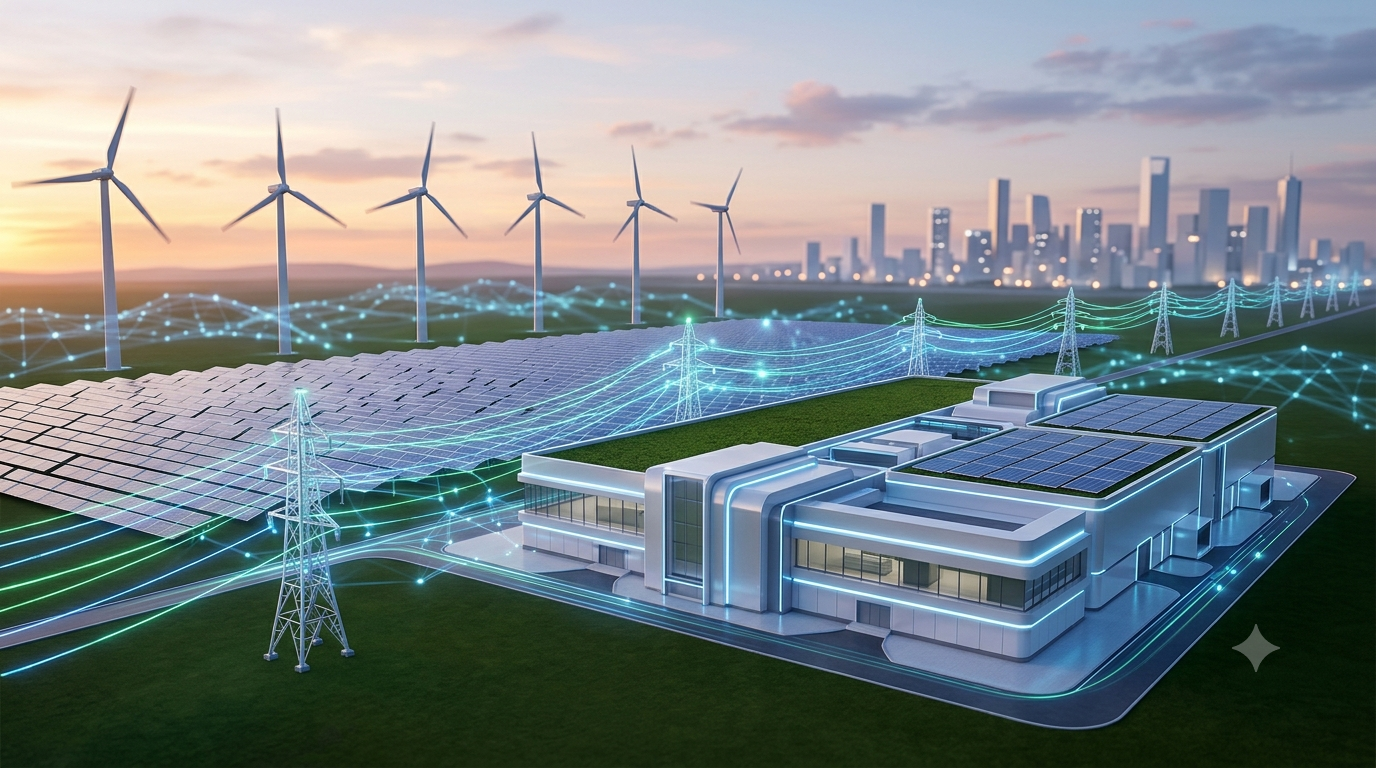
India’s artificial intelligence infrastructure expansion is creating opportunities well beyond data center construction. As hyperscale operators race to deploy AI-ready facilities, demand for reliable electricity is emerging as one of the country’s biggest investment themes. Global investment giant Brookfield believes this transformation will reshape India’s renewable energy landscape over the coming years. The firm expects AI adoption to accelerate demand for data centers while simultaneously driving investments in large-scale clean power infrastructure. That combination places digital infrastructure and renewable energy at the center of India’s next investment cycle. Rather than viewing data centers as standalone assets, Brookfield sees them as major long-term electricity consumers that can support new renewable generation. The strategy reflects a broader shift occurring across global infrastructure markets, where power availability has become just as important as computing capacity.

AI Adoption Is Reshaping India’s Infrastructure Needs
Artificial intelligence workloads consume significantly more electricity than traditional cloud applications. Every new AI cluster requires continuous access to high-capacity power, advanced cooling infrastructure, and resilient grid connectivity. Consequently, energy planning has become an essential component of every large-scale AI deployment. India is witnessing a rapid increase in enterprise AI adoption across financial services, healthcare, manufacturing, retail, and government sectors. Cloud providers are simultaneously expanding regional capacity to support domestic digital transformation. These trends continue to increase demand for AI-ready infrastructure across major metropolitan markets.
Unlike previous digital infrastructure cycles, the current expansion requires both computing facilities and dedicated energy ecosystems. Operators increasingly evaluate locations based on available power instead of simply land availability. That reality is encouraging infrastructure investors to think beyond conventional real estate strategies and focus on integrated energy solutions. Brookfield believes this changing landscape creates a long-term opportunity that combines renewable generation, transmission assets, and digital infrastructure into a single investment ecosystem. As AI adoption accelerates, electricity demand is expected to grow alongside computing capacity rather than independently.
Renewable Energy Becomes a Strategic Advantage
Brookfield expects renewable energy to play a central role in supporting India’s expanding data center ecosystem. Large hyperscale campuses increasingly seek access to low-carbon electricity to meet corporate sustainability commitments while controlling long-term operating costs. Renewable projects also offer greater flexibility for companies planning multi-year infrastructure deployments. Long-term power purchase agreements provide predictable electricity pricing while helping operators reduce dependence on conventional energy markets. That stability has become increasingly valuable as AI infrastructure investments continue growing worldwide. Additionally, renewable generation aligns with India’s national energy transition objectives. Government policies continue encouraging investments across solar, wind, battery storage, and transmission infrastructure. These initiatives create favorable conditions for investors capable of developing integrated infrastructure platforms. Brookfield believes the combination of renewable energy and digital infrastructure offers attractive long-term returns.

India’s AI Market Continues Expanding
India has emerged as one of the world’s fastest-growing digital economies. Rising cloud adoption, increasing internet usage, enterprise modernization, and government digital initiatives continue supporting infrastructure demand. Artificial intelligence is now adding another growth layer to this expansion. Global hyperscalers have announced significant investments across Mumbai, Chennai, Hyderabad, Bengaluru, and other emerging markets. Domestic operators are also expanding capacity to accommodate enterprise cloud workloads and AI applications. Together, these investments continue strengthening India’s digital infrastructure ecosystem.
At the same time, enterprises increasingly require AI-ready facilities capable of supporting advanced compute clusters and accelerated workloads. Modern facilities must deliver higher power densities, improved cooling systems, and enhanced network connectivity. These requirements significantly increase electricity consumption compared with conventional enterprise data centers. Brookfield expects AI deployment to sustain infrastructure demand over the coming decade. Rather than representing a short-term technology cycle, the company views artificial intelligence as a structural driver of long-term capital investment across multiple infrastructure sectors.
Brookfield Expands Its Infrastructure Vision
Brookfield has invested extensively across renewable energy, utilities, transport, digital infrastructure, and real estate worldwide. The firm’s latest outlook reflects growing confidence that these sectors will become increasingly interconnected as AI adoption accelerates. Instead of focusing solely on data center ownership, Brookfield aims to participate across the broader infrastructure value chain. Renewable generation, transmission networks, and electricity distribution all become essential components of supporting future AI deployments. The company also expects India’s economic growth to reinforce long-term infrastructure demand. Rising digital adoption continues creating opportunities for cloud providers, telecommunications companies, enterprise software vendors, and infrastructure developers. Renewable energy investments naturally complement these expanding digital ecosystems. Moreover, integrated infrastructure strategies may reduce deployment risks by improving coordination between energy supply and computing demand. Investors capable of managing both sides of the equation could gain competitive advantages as project scale continues increasing.
AI Infrastructure and Clean Energy Are Becoming Inseparable
The global AI race increasingly depends on energy availability as much as computing hardware. Countries capable of delivering reliable electricity alongside modern digital infrastructure will likely attract larger AI investments over the coming decade. India appears well positioned to capitalize on this transition. Continued investments in renewable energy, transmission infrastructure, and digital connectivity create a favorable environment for large-scale AI deployments. Brookfield believes these developments will reinforce each other as enterprise AI adoption accelerates. For the broader industry, the company’s outlook reflects a significant market shift. Data centers are no longer viewed only as digital infrastructure assets. They are becoming anchor customers for renewable energy ecosystems capable of supporting future economic growth. As artificial intelligence transforms industries across India, electricity infrastructure will become an equally important competitive advantage. Brookfield’s strategy suggests the next phase of AI expansion may be powered as much by renewable energy as by advanced computing itself.
Renewable Energy and AI Infrastructure Are Becoming Interconnected
The relationship between renewable energy and AI infrastructure continues to strengthen worldwide. Hyperscale operators increasingly prioritize locations that can provide abundant clean electricity alongside scalable digital infrastructure. As AI workloads become more power intensive, energy sourcing has become a strategic business decision rather than an operational consideration. Major technology companies already procure renewable electricity through long-term power purchase agreements to support sustainability goals and stabilize operating costs. Consequently, investors increasingly view renewable generation as a critical component of future AI infrastructure development. Brookfield expects this trend to accelerate as enterprises deploy larger AI clusters across emerging markets.
India offers several structural advantages in this evolving landscape. The country continues expanding solar and wind generation while modernizing transmission infrastructure. These developments create favorable conditions for powering AI-ready data centers with cleaner energy sources. Furthermore, renewable capacity additions can help support the sustained electricity demand generated by hyperscale campuses over the coming decade. Instead of treating energy generation and digital infrastructure separately, investors increasingly prefer integrated platforms. Such strategies improve project coordination while enhancing long-term returns. Brookfield believes combining renewable assets with digital infrastructure creates stronger investment opportunities as AI adoption accelerates across industries.
Infrastructure Investment Extends Beyond Data Centers
Building an AI-ready facility involves much more than constructing server halls. Every hyperscale campus requires extensive supporting infrastructure before operations can begin. Developers must secure reliable electricity, strengthen transmission networks, deploy fiber connectivity, and install advanced cooling systems capable of supporting high-density computing. Consequently, each new AI data center creates demand across multiple sectors simultaneously. Electrical equipment manufacturers, renewable developers, transmission companies, engineering firms, and networking providers all benefit from expanding infrastructure investment. This multiplier effect significantly increases the broader economic impact of AI deployment.
Brookfield expects these interconnected investments to become increasingly common as India’s AI ecosystem matures. Instead of isolated projects, future developments are likely to emerge as integrated digital infrastructure campuses supported by dedicated energy assets. Such facilities improve operational resilience while providing greater certainty around long-term electricity availability. Additionally, integrated planning can reduce future bottlenecks that have delayed projects in other global markets. Early coordination between energy providers and infrastructure developers allows projects to scale more efficiently while minimizing deployment risks. This approach could become increasingly important as AI computing demand continues rising.
India Strengthens Its Position in the Global AI Race
India has become one of the world’s fastest-growing destinations for digital infrastructure investment. Rising cloud adoption, favourable demographics, expanding enterprise digitisation, and supportive government policies continue to attract hyperscale operators and institutional investors. Artificial intelligence is adding another powerful growth driver to this momentum. Organizations across financial services, manufacturing, healthcare, retail, and public administration increasingly require AI computing resources to improve productivity and automate complex workloads. These requirements continue expanding demand for high-performance infrastructure nationwide.
Brookfield believes India possesses many characteristics needed to support long-term AI growth. Strong renewable energy potential, a rapidly growing digital economy, improving connectivity, and increasing enterprise technology adoption create a compelling investment environment. As a result, the country is emerging as one of Asia’s most attractive markets for AI infrastructure deployment. Global investors are recognizing this opportunity. Alongside Brookfield, several international infrastructure funds, cloud providers, and data center developers continue expanding their presence across major Indian metropolitan regions. This sustained capital inflow reinforces confidence in India’s long-term digital infrastructure outlook.
Brookfield’s Strategy Reflects a Broader Market Shift
Brookfield’s outlook mirrors an increasingly common perspective among global infrastructure investors. AI has evolved beyond a software opportunity into a capital-intensive infrastructure cycle requiring significant investments across multiple industries. Previously, investment strategies often focused on individual asset classes such as real estate, utilities, or telecommunications. Today, successful AI deployments depend on coordinated investments spanning renewable energy, electricity transmission, networking, cloud infrastructure, and hyperscale facilities. Each component strengthens the overall ecosystem.
This integrated approach allows investors to participate across several layers of AI infrastructure simultaneously. Renewable generation powers data centers, transmission networks deliver electricity, fiber connectivity supports cloud services, and digital campuses provide computing capacity. Together, these assets create a more resilient infrastructure platform capable of supporting future AI demand. Brookfield appears well positioned to capitalize on this transition because of its diversified infrastructure portfolio. Its experience across energy and digital assets provides flexibility as customer requirements continue evolving. Rather than pursuing isolated opportunities, the company aims to benefit from the broader convergence of AI infrastructure and renewable energy investment.