
Artificial intelligence infrastructure is entering a period where computing demand is rising faster than traditional data center designs can adapt. The expansion of AI workloads has increased pressure on operators to rethink the systems that manage heat, power consumption, and resource use. Cooling has become one of the biggest operational challenges because high-density computing equipment generates intense heat inside facilities built for continuous operation. Aquifer cooling systems are being studied as a potential approach that could reshape how operators manage thermal loads by using underground water resources as a thermal energy storage mechanism. The concept reflects a wider industry shift toward infrastructure strategies that combine efficiency improvements with long-term environmental planning. As AI data center demand increases, researchers and infrastructure planners are increasingly examining alternative cooling methods beyond conventional systems.

Researchers at the Prairie Research Institute at the University of Illinois Urbana-Champaign are examining how underground geological conditions could support this transition. Their work focuses on aquifer thermal energy storage, a system that uses groundwater and stable subsurface temperatures to manage heat generated by large computing facilities. The research proposes that certain regions across the United States could use existing underground resources to reduce cooling-related electricity consumption. The approach does not replace conventional cooling automatically but offers another pathway for facilities seeking lower operational demands. The study, published in the journal Groundwater, highlights how geological assets could become part of the future data center design conversation. This development places the relationship between computing infrastructure and natural systems at the center of the next phase of data center planning.
Underground Thermal Storage Creates A New Cooling Model
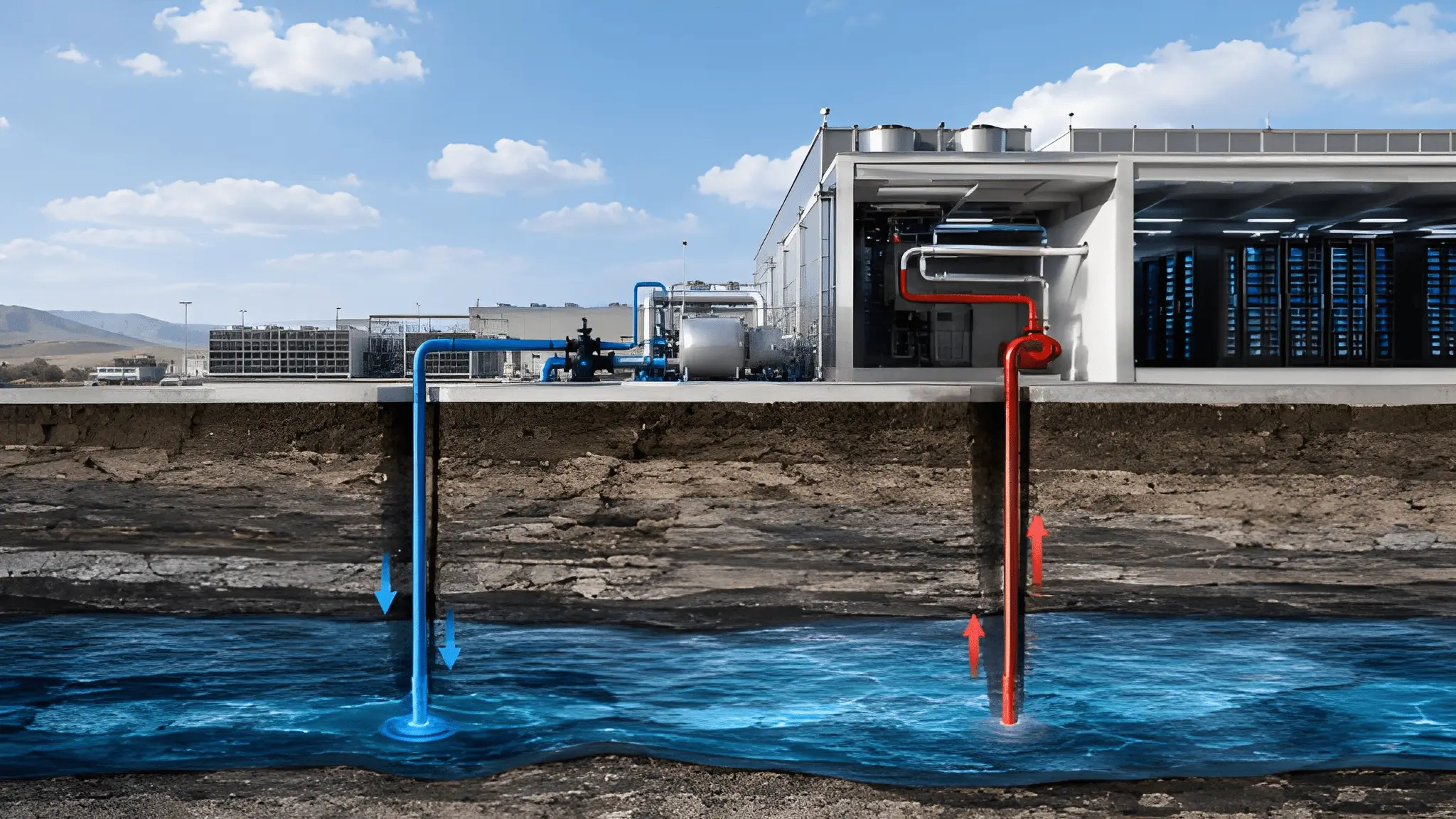
The principle behind aquifer thermal energy storage relies on the Earth’s ability to maintain relatively stable temperatures below the surface. Instead of constantly fighting extreme outdoor temperatures, facilities can use groundwater systems that remain closer to a consistent thermal range throughout the year. The system pumps groundwater through underground pathways and transfers heat from data center operations through a heat exchanger. After absorbing heat, the warmer water returns underground, where the aquifer stores that thermal energy for future use. During colder periods, operators can recover stored heat to support heating requirements, while cooler underground water can support future summer cooling needs. This creates a seasonal cycle where the same resource helps manage both cooling and heating requirements across different periods.
“Data centers use large amounts of electricity, and 10 to 40% of that energy can go just to cooling, depending on the design,” Upassana Pandey said. “They also consume tremendous volumes of water, often through cooling methods where water is evaporated and effectively lost from the local supply.” The statement highlights a growing challenge across the digital infrastructure sector as operators attempt to balance computing expansion with resource management. Cooling systems that rely heavily on electricity or water consumption face increasing scrutiny as AI workloads continue to grow. The aquifer approach aims to address both sides of the water-energy equation by using underground storage rather than relying only on conventional cooling methods. The researchers believe this could create a more balanced model for future data center development.
The proposed integration of aquifer thermal energy storage could support direct cooling or work alongside existing cooling infrastructure. Operators could use the underground system as a primary thermal management solution in suitable locations or as a supplemental technology that reduces pressure on current equipment. The flexibility matters because data centers differ widely in design, location, and operational requirements. Therefore, the technology could become part of a broader portfolio of cooling options rather than a single replacement for every facility. The research points toward a future where site selection decisions consider underground conditions alongside electricity availability and network connectivity. For AI infrastructure developers, the physical characteristics beneath a data center site may become as important as the infrastructure above ground.
Illinois Study Highlights The Potential Of Geology-Driven Efficiency
Illinois provides an example of how regional geology could influence data center cooling strategies. The researchers identified several advantages that make the state suitable for aquifer-based cooling applications. Seasonal temperature changes create opportunities to store thermal energy during different parts of the year. The availability of aquifers provides access to groundwater systems that can support heat transfer processes. Subsurface materials, including glacial deposits in central Illinois, offer conditions that can improve thermal exchange when combined with water movement. The combination creates conditions where underground systems could potentially support more efficient cooling operations under suitable geological and operational conditions. Meanwhile, the researchers emphasize that these conditions vary by location and require detailed geological assessment before deployment.

“In places like Illinois where we experience seasonality, and when the subsurface geology is ideal, instead of constantly trying to moderate the outdoor temperatures that swing from 90°F in summer to minus 10°F in winter, we can tap into the Earth’s near-constant temperature,” Andrew Stumpf said. “You’re no longer adjusting from 90°F to 70°F; you’re adjusting from about 55°F to 70°F. That’s a huge energy savings.” The explanation reflects the core advantage of using underground thermal stability as part of data center design. Traditional systems must respond to changing external conditions, while aquifer systems can leverage a more predictable environment below the surface. This difference could influence how developers evaluate locations for future AI infrastructure projects. The approach shifts attention from only managing heat after it appears to designing facilities around natural thermal advantages.
The researchers also noted that drinking water is not necessary for these systems, which expands the possible applications. Deeper saline aquifers, contaminated groundwater sources, and water-filled abandoned mines could potentially provide alternative options for thermal storage. This distinction matters because data center growth has raised concerns about competition for freshwater resources in some regions. Using non-potable water sources could reduce pressure on local supplies while allowing operators to explore additional cooling strategies. Additionally, the use of existing underground resources could create opportunities in areas that already have industrial or energy-related infrastructure. The broader objective is to identify cooling systems that improve efficiency without creating new resource challenges.
The Water-Energy Balance Becomes A Strategic Infrastructure Issue
The rise of AI computing has created a complex relationship between energy consumption and water management. Data centers require significant power for servers, but cooling systems also influence how efficiently those facilities operate. Reducing energy demand often requires different cooling approaches, yet some alternatives can increase water usage depending on the technology. The Illinois research examines this challenge by treating water and energy as connected parts of one infrastructure system. The researchers suggest underground thermal storage could help address both water and energy challenges through an integrated approach. This perspective reflects a wider industry movement toward integrated infrastructure planning.
“Data centers sit at the center of the water-energy nexus: If you try to reduce energy use, you often use more water, and if you reduce water use, you may need more energy. Our work looks for solutions that address both together,” Yu-Feng Lin said. “Water is a magic material in this context because it has high heat capacity and can be a good thermal carrier with flow. That combination is rare, and in groundwater, we can tap those same properties for energy storage.” The comments underline why cooling has become a major focus area for future computing infrastructure. AI expansion has changed the scale of thermal management challenges, pushing companies to evaluate solutions beyond traditional mechanical systems. The research presents groundwater as a resource that could support more efficient digital infrastructure growth.
However, the path toward wider adoption depends on economics, planning timelines, and regional suitability. Aquifer systems require higher initial investment because projects need geological analysis, drilling, and specialized engineering. Many infrastructure decisions focus on shorter financial evaluation periods, while underground thermal systems often deliver value across decades. The researchers argue that a longer view could reveal stronger benefits from these technologies. Data centers typically operate for many years, making long-term efficiency improvements increasingly important. The challenge is not only proving technical feasibility but also aligning investment decisions with infrastructure lifecycles.
Long-Term Data Center Planning May Move Underground
The research suggests that workforce barriers may not represent the largest challenge for aquifer thermal storage adoption. Many required skills already exist within industries involved in drilling, groundwater management, and subsurface engineering. This creates a potential pathway for expanding the technology without developing an entirely new workforce ecosystem. The larger challenge involves connecting data center developers, energy planners, and geological experts early in the design process. Site planning decisions made before construction can determine whether underground cooling options remain available. As AI infrastructure expands, early-stage planning could become a defining factor in achieving efficiency targets.
Future data center planning may increasingly consider how digital infrastructure can integrate with physical resource strategies. Cooling systems represent one of the most important areas where this integration can occur. The idea of using underground thermal storage challenges the traditional view that cooling depends only on mechanical equipment and electricity supply. It introduces geology as another infrastructure layer that can support computing growth. The approach could become especially valuable in regions where climate conditions and underground resources create favorable conditions. The next generation of AI facilities may evaluate land not only for power access but also for what exists beneath it.
Aquifer-based cooling does not represent a universal solution for every data center location. Geological conditions, water availability, regulatory requirements, and project economics will determine where the technology makes sense. Yet the research demonstrates that future infrastructure planning may require broader thinking about available resources. As AI demand accelerates, companies are exploring solutions that reduce operational pressure while maintaining computing performance. The underground environment offers a largely untapped opportunity in this search. The question for the industry is no longer only how to build more computing capacity, but how to build it with systems that can support decades of growth.
The emergence of aquifer thermal energy storage highlights a shift in the data center sector toward resource-aware design. The technology connects artificial intelligence expansion with the physical realities of energy, water, and climate management. For developers and operators, cooling efficiency will remain a critical factor in determining where and how future facilities are built. The ground beneath suitable sites could become an additional factor in future data center cooling strategies. As AI workloads continue to expand, innovations that combine engineering with environmental intelligence may shape the next era of compute infrastructure.











