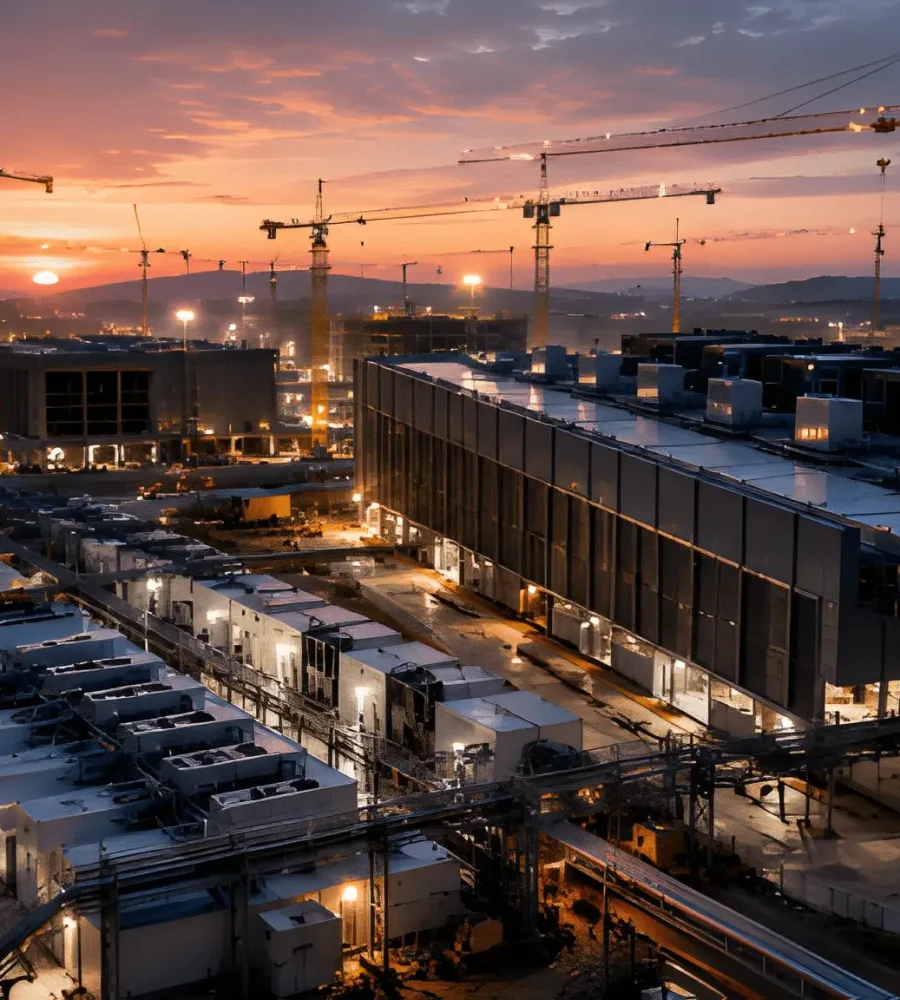

The rapid expansion of artificial intelligence has pushed developers to secure electricity, fiber networks and land at an unprecedented pace, yet one of the industry’s most closely watched project withdrawals suggests those traditional ingredients no longer guarantee a successful deployment. QTS’s decision to abandon its long-contested Digital Gateway campus in Virginia marks more than the conclusion of a single development proposal because it exposes how investment priorities are evolving as AI infrastructure scales into increasingly complex regulatory environments. The project once represented one of the largest proposed data center campuses in the United States, carrying expectations of almost $30 billion in private investment and millions of square feet of future compute capacity. The withdrawal also provides one of the clearest indications yet that developers increasingly weigh execution certainty alongside the scale of a project’s ambition when evaluating where capital can be deployed most effectively.
Why the Digital Gateway Project Reached Its End
Prince William County introduced the Digital Gateway initiative in 2022 through a Comprehensive Plan amendment designed to establish a technology corridor along Pageland Lane, highlighting existing high-voltage transmission infrastructure, fiber connectivity and substantial developable land. Local officials envisioned the corridor as a centerpiece for long-term economic development that could attract some of the world’s largest cloud and artificial intelligence operators while strengthening Northern Virginia’s leadership in digital infrastructure. Momentum continued when the Board of County Supervisors approved key rezonings in December 2023 despite recommendations for denial from planning staff and the Planning Commission. Courts later invalidated those approvals after determining procedural deficiencies had occurred during the county’s approval process, extending a legal dispute that had already become increasingly contentious. QTS continued defending the development through multiple appeals before withdrawing those appeals before the Virginia Supreme Court on July 2, effectively bringing the Digital Gateway proposal to a close.
QTS has not publicly detailed the factors behind its withdrawal despite defending the project throughout years of litigation. Court filings continue to emphasize the project’s anticipated economic contribution and reaffirm the company’s commitment to Virginia while stating only that the decision followed “careful consideration.” The absence of a detailed explanation has prompted industry observers to examine broader structural forces affecting hyperscale development rather than focusing exclusively on the legal proceedings themselves. That perspective reflects the reality that artificial intelligence infrastructure now advances within an environment where capital allocation decisions increasingly depend on execution speed alongside engineering feasibility. Developers face growing pressure to prioritize projects capable of reaching construction within predictable timelines because delays can create significant financial opportunity costs. The withdrawal therefore raises questions extending well beyond one Virginia project and into the strategic frameworks guiding future hyperscale investments.
Permitting Certainty Is Becoming as Valuable as Power Availability
The Digital Gateway withdrawal has prompted infrastructure analysts to reconsider the hierarchy of factors that determine where artificial intelligence capacity gets built. For years, developers concentrated primarily on electrical capacity, fiber connectivity and available land because those assets formed the foundation of every hyperscale campus. Those requirements remain indispensable, yet the commercial environment surrounding AI deployment has changed as project timelines become increasingly compressed and investment cycles accelerate. Developers now commit billions of dollars within competitive markets where delays may affect technology roadmaps, customer commitments and infrastructure utilization simultaneously. Meanwhile, regulatory predictability has emerged as a strategic asset because uncertainty can prevent even well-positioned sites from progressing toward construction. The changing balance suggests that site selection has evolved from an engineering exercise into a broader assessment of legal, political and community resilience.
Neil Osnato, founder of Persistence Analytics Group, believes the Digital Gateway outcome reflects this broader transformation rather than weakening enthusiasm for artificial intelligence infrastructure. “Permitting certainty, litigation risk, community opposition, transmission burden, water availability, local political durability, and public-cost exposure now have to be treated as core site-selection criteria,” said Neil Osnato, founder of Persistence Analytics Group. “The pace of AI deployment has changed the tolerance for delay. If a site gets trapped in years of litigation, public opposition, or uncertain infrastructure obligations, developers may decide that capital is better deployed elsewhere.” His assessment places execution certainty alongside physical infrastructure as a defining investment consideration rather than a secondary planning issue. That perspective aligns with the increasingly competitive environment in which developers allocate finite construction resources across multiple markets. Capital now seeks locations capable of delivering compute capacity with the fewest obstacles instead of simply offering abundant infrastructure assets.
Developers Now Measure Opportunity Cost Differently
Independent strategist Ihab Osman argues that the withdrawal should not be interpreted as evidence of declining AI demand because the industry’s underlying expansion remains exceptionally strong. “I don’t think it’s evidence that AI infrastructure demand is weakening,” he said. “It is more about the developers becoming less willing to carry sites where the entitlement path, litigation risk, and public legitimacy risk remain unresolved for too long.” His observation reflects a broader shift in how developers assess long-term capital efficiency across increasingly competitive infrastructure portfolios. Projects no longer compete solely on technical specifications because management teams must also determine whether prolonged uncertainty justifies continued financial commitment. Investment decisions increasingly revolve around maximizing deployment speed while minimizing exposure to variables that remain outside direct operational control. That strategic recalibration changes how developers compare potential campuses long before construction begins.
Osman further argues that competition within the AI infrastructure ecosystem now extends far beyond attracting customers or raising capital because developers must simultaneously secure utility access, specialized equipment, construction labor and energization windows. “If a site is stuck in a multiyear political or legal fight, the opportunity cost is no longer just a schedule delay. It can become a capacity risk. The developer may be better off moving capital to a site where the path to power, permits, and public acceptance is clearer.” His assessment highlights the interconnected nature of modern hyperscale development, where every delayed project may influence broader deployment strategies across multiple regions. Artificial intelligence infrastructure depends on synchronized execution across utilities, engineering firms, manufacturers and public authorities rather than isolated project milestones. The Digital Gateway decision therefore illustrates how opportunity cost increasingly shapes investment behavior within the hyperscale market.
Community Support Has Become a Strategic Infrastructure Asset
John Dinsdale, chief analyst at Synergy Research Group, believes those evolving priorities reflect a gradual shift rather than a sudden change in industry practice. “Availability of power and the support of local communities have become ever more important decision criteria,” he said, adding that the cancellation does not signal a slowdown in AI infrastructure investment. His assessment recognizes that developers have always balanced multiple variables when selecting sites, but the relative importance of those variables continues to evolve as AI infrastructure grows in scale and visibility. Larger campuses require broader stakeholder engagement because they often influence transportation planning, utility expansion, environmental reviews and local economic development simultaneously. That dynamic encourages developers to integrate public engagement earlier within project planning instead of treating it as a procedural obligation after major investment decisions have already been made.
QTS itself maintained throughout its legal filings that the Digital Gateway project represented the product of extensive planning, technical analysis and public review before receiving county approval. The company also reiterated that the campus would have delivered tens of billions of dollars in capital investment, significant recurring local tax revenue and thousands of long-term jobs had construction proceeded. Those assertions reflect the economic rationale that continues to drive large-scale AI infrastructure development across many regions. Even so, the withdrawal demonstrates that projected economic benefits alone may not overcome prolonged legal uncertainty once project momentum begins to slow. Investors increasingly seek confidence that development pathways remain stable over the full duration of multibillion-dollar infrastructure programs rather than during only the initial approval stages. The experience therefore highlights the growing importance of aligning economic opportunity with procedural certainty and durable public legitimacy.
The AI Infrastructure Playbook Is Entering a New Phase
Whether Digital Gateway becomes an isolated case or an early indicator of broader industry change will depend on how future projects navigate increasingly complex development environments. Artificial intelligence demand continues to accelerate as cloud providers, enterprise technology companies and model developers expand computing capacity to support larger workloads and more sophisticated applications. Nothing in QTS’s withdrawal suggests that appetite for hyperscale infrastructure has weakened or that investment in AI facilities is approaching a structural slowdown. Instead, the episode points toward a more disciplined approach in which developers prioritize certainty, execution speed and long-term project resilience alongside traditional engineering requirements. The industry’s competitive advantage may increasingly belong to jurisdictions capable of combining robust infrastructure with predictable governance and constructive stakeholder engagement. In that environment, the most attractive development sites will likely be those that reduce uncertainty as effectively as they provide electrical capacity.
The broader lesson extends beyond Northern Virginia because AI infrastructure has entered a period where execution determines competitive advantage as much as technical capability. Every hyperscale developer now operates within a market defined by limited utility capacity, constrained construction resources, specialized supply chains and aggressive deployment schedules. Those pressures reward projects capable of advancing through approvals without prolonged interruption while increasing the financial penalty associated with extended legal or political disputes. Site-selection models will therefore continue expanding beyond traditional engineering metrics toward comprehensive assessments of regulatory durability, institutional stability and community alignment. That evolution reflects a maturing industry adapting to unprecedented levels of capital deployment rather than retreating from growth. As Osman put it, “AI data centers no longer compete only for megawatts. They compete for permission to turn those megawatts into compute.”