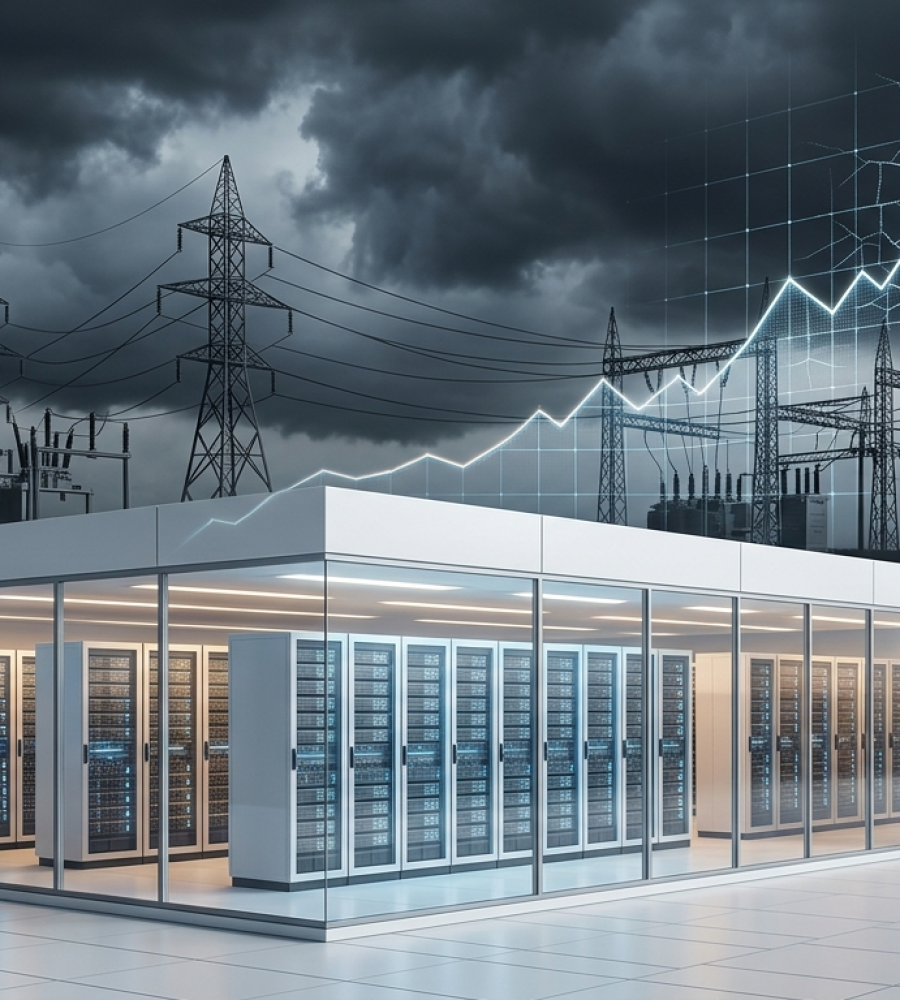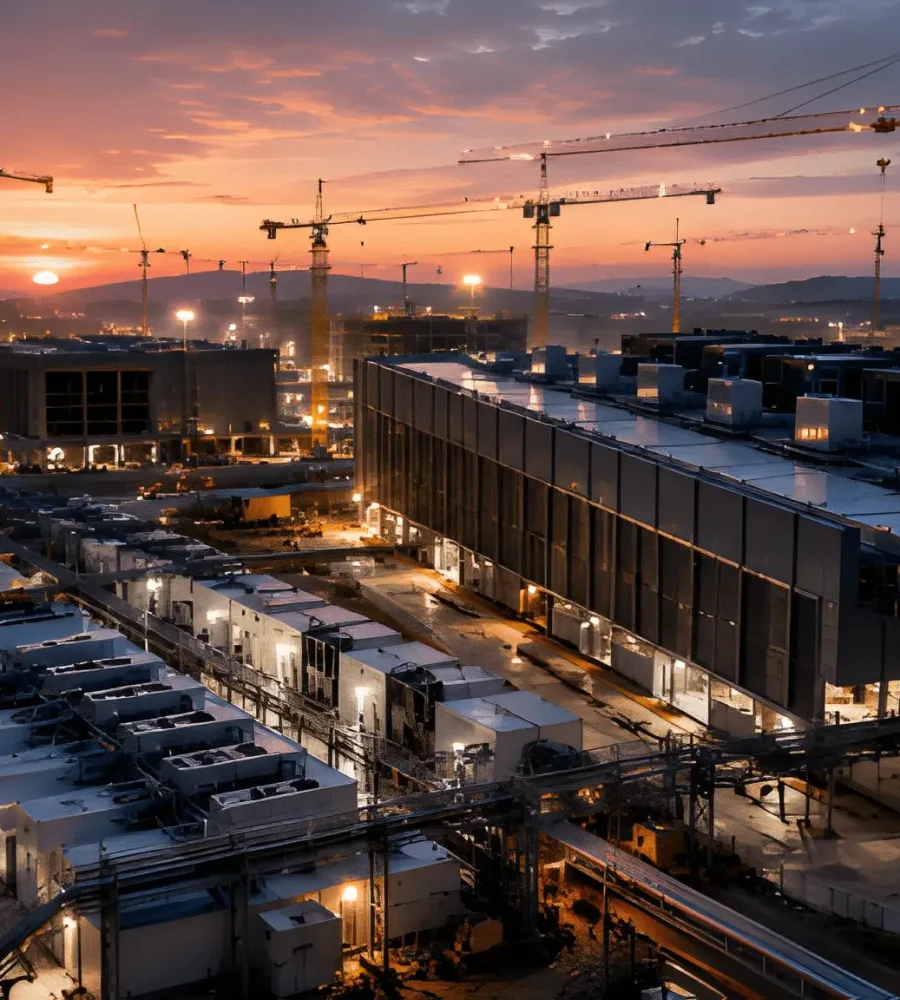
Modern AI infrastructure discussions often revolve around power procurement, GPU availability, transmission capacity, and liquid cooling readiness. Those variables certainly influence deployment schedules, yet they no longer represent the first engineering question during many large-scale site evaluations. Structural engineers now participate alongside electrical, mechanical, and civil teams during the earliest feasibility stages of many high-density AI infrastructure projects because structural suitability can influence whether proposed equipment densities remain achievable under applicable building code requirements. That shift reflects the growing influence of seismic design requirements on infrastructure intended for extremely dense computing environments. Rather than constraining only traditional construction practices, earthquake engineering now shapes how much computational density developers can physically install inside a building envelope. Large AI clusters have changed the physical characteristics of modern data halls in ways that earlier generations of digital infrastructure never anticipated.
Heavy liquid-cooling distribution systems, larger busway assemblies, reinforced containment structures, and increasingly massive rack configurations concentrate structural loads into relatively small floor areas. Those concentrated loads create engineering problems that cannot always be solved through additional investment because local building codes establish minimum life-safety requirements rather than optional performance targets. Structural compliance therefore becomes a fixed design boundary instead of another line item within construction budgets. The resulting constraint rarely appears in public announcements announcing new AI campuses because it lacks the visibility of power agreements or semiconductor supply chains. Nevertheless, structural limitations increasingly influence where high-density AI deployments ultimately reach production. Several regions with excellent network connectivity and established digital ecosystems encounter engineering hurdles that less seismically active states simply avoid. Geography therefore affects computational density through structural mechanics as much as through electricity markets or land availability.
The Pound-Per-SSquare-Foot Ceiling You Can’t Buy Your Way Out Of
Traditional colocation facilities generally distributed equipment weight across numerous cabinets containing comparatively modest server populations. AI infrastructure reverses that design philosophy because modern accelerator clusters consolidate far more computational capability inside each rack while simultaneously increasing cooling equipment mass. Liquid cooling manifolds, coolant distribution units, reinforced pipework, power shelves, and battery-backed components collectively increase dead loads beyond assumptions embedded within many existing commercial structures. Engineering teams increasingly evaluate structural capacity alongside electrical distribution and mechanical cooling requirements during early project planning because all three disciplines collectively determine whether proposed AI deployments remain technically feasible. That sequence reflects the reality that insufficient structural capacity cannot be corrected through operational adjustments after construction concludes. Building owners consequently face hard engineering limits instead of flexible optimization opportunities.
Earthquake design further complicates that load path because seismic forces amplify inertial effects according to both equipment weight and elevation within the building. Additional rack mass therefore increases not only gravity loading but also lateral demand during seismic events. Structural engineers must verify that every supporting component remains within allowable design parameters under combined loading scenarios established by applicable codes. That verification process frequently determines the practical ceiling for AI deployment density before procurement activities even begin. Modern AI deployments therefore expose a difference between available floor space and usable floor capacity that many early feasibility studies overlook. A large empty data hall may visually appear capable of accepting another row of high-density racks despite lacking adequate structural reserve for concentrated equipment loading. Mechanical upgrades, electrical expansion, or networking improvements cannot compensate once structural calculations identify insufficient capacity within primary framing systems.
H3: Why Structural Capacity Differs From Available Floor Space
Many commercial buildings constructed before today’s AI expansion reflected assumptions associated with conventional enterprise computing, telecommunications equipment, or mixed office occupancy. Those original design assumptions emphasized distributed loading patterns rather than concentrated point loads generated by modern liquid-cooled accelerator cabinets. Renovation projects therefore begin with detailed structural investigations instead of relying upon historical architectural drawings that rarely capture every modification performed throughout a building’s operational history. Engineers frequently commission slab scanning, reinforcement mapping, material testing, and finite element analysis before approving high-density equipment layouts. That investigative work establishes whether existing structures retain sufficient reserve capacity under both gravity and seismic loading combinations. The resulting assessment often influences project feasibility more directly than utility availability or fiber connectivity. Concentrated rack loading introduces localized stress conditions that differ substantially from uniformly distributed floor occupancy considered during many original structural designs.
Earthquake design reinforces that system’s perspective because lateral forces travel continuously through diaphragms, collectors, braces, foundations, and supporting soils. Individual component upgrades must therefore complement overall structural behavior instead of creating new load concentrations elsewhere. Developers increasingly recognize that structural due diligence deserves the same priority historically reserved for power procurement studies or environmental assessments. Early engineering investigations reduce the likelihood that advanced design efforts collapse after discovering inadequate floor capacity during permit review. Investment committees also gain a clearer understanding of structural risk before committing capital toward architectural planning and equipment procurement. That disciplined sequencing reflects an industry adapting to infrastructure whose physical characteristics continue evolving faster than much of the existing building inventory. The practical consequence remains straightforward because every pound added above a floor ultimately travels through an engineered load path that seismic codes require designers to verify without exception.
When Bracing Steel Costs More Than the Racks It Holds
AI rack deployments designed around liquid cooling and extremely high electrical densities have fundamentally altered the role of seismic restraint systems inside modern data halls. Earlier generations of equipment frequently relied on standardized anchorage details that accommodated relatively uniform cabinet weights without extensive customization. Contemporary AI environments instead require project-specific restraint calculations because each rack configuration combines unique equipment mass, coolant volumes, manifold assemblies, and power distribution hardware. Structural engineers therefore collaborate with mechanical, electrical, and equipment manufacturers much earlier in the design process than they did for conventional enterprise deployments. Every restraint component must satisfy applicable seismic provisions while remaining compatible with cooling distribution, maintenance access, and future equipment replacement strategies. That level of coordination transforms bracing systems into integral infrastructure rather than simple accessories installed near project completion.
Seismic Restraint Systems Are Now Core Infrastructure Rather Than Secondary Hardware
Seismic restraint extends far beyond anchoring cabinets to concrete slabs because every connected component contributes to system behavior during ground motion. Pipe supports, overhead cable trays, busway assemblies, coolant manifolds, containment structures, and suspended mechanical equipment all require coordinated restraint that reflects their interaction during dynamic loading. Designers cannot evaluate those elements independently because differential movement between interconnected systems may introduce stresses exceeding component design capacities. Structural coordination therefore focuses on maintaining compatibility throughout the complete load path instead of strengthening isolated hardware. Inspection authorities also review installation quality carefully because improperly installed anchors or restraint assemblies can undermine otherwise compliant engineering designs. Construction quality consequently becomes as important as engineering calculations once seismic compliance enters the execution phase.
Installation complexity further increases because restraint hardware frequently competes for the same physical space required by cooling distribution, electrical routing, and service clearances. Designers must resolve these conflicts before construction begins because field modifications often invalidate previously approved structural calculations or interfere with equipment maintenance procedures. Minor routing adjustments that appear insignificant on installation drawings can substantially alter brace geometry, anchor demand, or load transfer mechanisms under seismic conditions. Coordination meetings therefore involve structural specialists throughout construction instead of limiting their participation to permit documentation. Successful execution depends upon preserving engineering intent from design through final installation without introducing undocumented field changes. The cumulative result is that seismic restraint evolves into a multidisciplinary engineering exercise rather than a straightforward procurement activity.
Retrofit Economics Shift Faster Than Construction Budgets
Many existing West Coast data centers entered service before current AI hardware significantly increased rack weights, cooling requirements, and structural loading expectations. Their primary structural systems often continue performing exactly as originally designed while no longer matching the concentrated loading patterns associated with accelerator-driven computing environments. Owners therefore encounter an engineering dilemma because upgrading structural performance frequently extends beyond localized reinforcement and into comprehensive building modifications. Additional braces may require foundation strengthening, while enhanced anchorage can increase demand on surrounding structural members that previously remained well within acceptable limits. Every intervention therefore triggers another layer of engineering review before construction teams can begin physical work. Retrofit planning consequently becomes an iterative structural exercise instead of a predictable construction sequence.
Moment-frame enhancements, collector strengthening, slab reinforcement, and anchor verification collectively introduce project complexity that extends beyond direct construction expenditures. Engineering teams must coordinate structural modifications with uninterrupted electrical distribution, active cooling infrastructure, fire protection systems, and operational maintenance schedules. Existing buildings rarely provide unused space for additional structural members, forcing designers to work within congested environments where each modification influences adjacent systems. Construction sequencing therefore becomes increasingly constrained because temporary support measures, phased installation, and operational continuity all require careful planning. Those indirect engineering considerations often shape project feasibility just as strongly as material quantities or fabrication timelines. Structural upgrades consequently affect deployment schedules alongside overall capital planning.
Height Limits Nobody Puts in the Sales Deck
Rack height has traditionally reflected operational efficiency rather than structural necessity because operators preferred maximizing vertical equipment density within available white space. AI deployments have altered that balance by substantially increasing equipment mass across every elevation inside a cabinet, particularly where liquid-cooling hardware, power shelves, and accelerator trays occupy upper rack positions. Structural engineers therefore evaluate not only the total cabinet weight but also how that weight distributes vertically because center-of-gravity location directly affects seismic response. A taller cabinet containing heavier upper sections develops larger overturning moments during earthquake loading than an equivalent cabinet whose mass remains concentrated closer to the floor. That relationship emerges directly from structural mechanics rather than operational preference or vendor design philosophy. Height therefore becomes an engineering variable instead of merely a space-planning decision. Modern seismic design provisions require engineers to consider how anchored nonstructural equipment behaves under dynamic lateral acceleration throughout a building.
Engineers therefore analyze rack stability using detailed calculations instead of assuming that heavier equipment simply requires larger anchors. Increasing cabinet height without corresponding structural redesign can produce load combinations exceeding allowable capacities even when floor loading remains acceptable. Structural geometry consequently becomes just as influential as structural weight when evaluating AI deployments in seismic regions. Equipment manufacturers increasingly recognize these constraints by collaborating with structural engineers during cabinet development rather than treating seismic qualification as a final certification exercise. Product layouts now consider component placement, frame stiffness, anchorage compatibility, and maintenance accessibility simultaneously because every design choice influences dynamic structural behavior. A modest reduction in cabinet height can substantially improve stability without altering computational capability when heavier components shift closer to the structural base. Those engineering refinements often remain invisible within marketing literature because they reflect compliance optimization instead of computational performance.
H3: Center of Gravity Has Become a Commercial Constraint
Conventional infrastructure planning often emphasizes the amount of equipment that fits within a given floor area while overlooking how equipment configuration affects structural performance. AI environments expose the limitations of that perspective because cabinets carrying identical computational capacity may generate markedly different seismic demands depending upon internal component arrangement. Cooling manifolds, coolant reservoirs, electrical distribution hardware, and accelerator modules each contribute differently to overall center-of-gravity location within the cabinet frame. Engineers therefore examine equipment layout with the same attention historically reserved for power distribution and airflow optimization. Structural acceptability increasingly depends upon where mass resides rather than simply how much mass exists. Those considerations now influence procurement decisions well before equipment reaches manufacturing. Operational teams occasionally assume that replacing existing racks with denser hardware represents a straightforward modernization project because the physical footprint changes very little.
Building owners must also verify that adjacent structural elements continue satisfying code requirements after equipment characteristics change. Those reviews extend beyond the cabinet itself because seismic force transfers through anchors, slabs, framing members, and foundations before reaching supporting soils. Every modification therefore requires engineers to evaluate the complete structural load path rather than isolated equipment upgrades. These engineering realities influence commercial outcomes because usable cabinet height directly affects the amount of deployable computing capacity inside each approved floor area. A project requiring lower cabinet profiles to satisfy seismic criteria may occupy additional floor space to achieve equivalent computational output, reducing spatial efficiency despite identical electrical infrastructure. Developers consequently assess structural implications during conceptual planning instead of treating rack selection as a procurement-stage decision. Equipment vendors likewise coordinate more closely with engineering consultants because structural compatibility increasingly determines whether products reach deployment within certain geographic markets.
Why Retrofit Math Fails at 3,000 Pounds Per Rack
Many data centers commissioned during the previous decade continue operating reliably because their original structural systems still satisfy the design assumptions that governed conventional computing environments. Those buildings typically anticipated distributed equipment layouts, moderate cabinet weights, and cooling systems whose mechanical components imposed comparatively predictable structural demands. AI infrastructure changes those assumptions by concentrating substantially greater mass into smaller footprints while introducing liquid-cooling assemblies that increase both permanent and operational loading conditions. Structural engineers therefore begin retrofit evaluations by comparing original design criteria with present equipment requirements instead of assuming that existing buildings retain sufficient reserve capacity. Archived drawings provide an important starting point, yet they rarely eliminate the need for detailed field investigations because buildings often undergo undocumented modifications throughout their service life. Engineering confidence consequently depends upon verifying actual structural conditions rather than relying exclusively on historical construction documentation.
Legacy Structural Designs Were Never Intended for AI-Class Concentrated Loads
Field assessments frequently reveal conditions that influence structural performance in ways impossible to identify through design drawings alone. Concrete strength may differ from original specifications because construction practices, material variability, and decades of service can affect measurable structural characteristics. Reinforcing steel placement occasionally varies from construction documents, while previous tenant improvements may have introduced slab penetrations or equipment anchorage that alters available structural capacity. Engineers therefore employ material testing, reinforcement scanning, and nondestructive evaluation before completing analytical models used for retrofit design. Those investigations reduce uncertainty and ensure that proposed strengthening measures reflect actual building conditions rather than theoretical assumptions. Accurate engineering begins with verified structural information because analytical precision depends entirely upon the quality of field data supporting the calculations.
Retrofitting an operational building also requires engineers to preserve existing structural continuity while introducing new reinforcement that behaves predictably during future seismic events. Strengthening one beam or slab segment without evaluating adjacent framing can unintentionally transfer additional demand into members never intended to resist those forces. Structural systems function through interconnected load paths, making localized reinforcement only one part of a much broader engineering solution. Designers therefore model the building as an integrated framework where gravity loads, lateral forces, and foundation responses interact continuously under combined loading scenarios. Successful retrofit strategies enhance overall structural behavior instead of solving isolated deficiencies that create new vulnerabilities elsewhere. That systems-based approach explains why retrofit planning demands extensive engineering coordination long before construction activities begin.
Structural Reinforcement Eventually Reaches Practical Limits
Every reinforcement strategy introduces additional material into a building that already operates within established architectural, mechanical, and operational constraints. New steel members occupy ceiling space shared with electrical distribution, liquid-cooling networks, fire suppression systems, and maintenance access routes that remain essential throughout the building’s service life. Foundation strengthening may require excavation around active utility corridors, while slab enhancement often interferes with existing equipment layouts and phased operational schedules. Construction teams therefore coordinate structural modifications alongside numerous building systems whose continued functionality cannot simply pause during renovation. Engineering feasibility consequently depends upon integrating reinforcement with existing infrastructure rather than evaluating structural capacity in isolation. Retrofit complexity therefore expands well beyond the structural calculations themselves. Permit reviews introduce another dimension because structural alterations within seismically active jurisdictions undergo detailed examination before approval for construction.
Approval therefore depends upon comprehensive engineering justification supported by recognized design methodologies instead of simplified reinforcement concepts. Regulatory oversight reinforces the importance of treating structural modernization as a complete engineering exercise rather than an incremental maintenance activity. Project teams often compare extensive structural rehabilitation with new construction because each option presents different engineering, operational, and long-term adaptability considerations that depend upon the condition of the existing structure and the intended AI deployment. Purpose-built facilities allow engineers to coordinate foundations, framing systems, floor assemblies, cooling infrastructure, and electrical distribution around contemporary equipment characteristics from the beginning of the design process. Existing buildings instead require every improvement to respect inherited structural geometry that cannot always accommodate evolving deployment requirements efficiently. Investment decisions therefore extend beyond immediate construction costs toward considerations of adaptability, permitting certainty, operational continuity, and future expansion capability.
The Quiet Exodus to “Stable Ground” States
The geography of AI infrastructure has begun reflecting structural engineering realities that extend well beyond traditional discussions surrounding power availability, fiber connectivity, and tax incentives. Project teams increasingly begin site evaluations by determining whether prospective locations can efficiently accommodate the concentrated equipment loads expected from next-generation AI deployments without introducing extensive structural modifications. That change reflects the growing recognition that structural suitability affects every subsequent engineering discipline involved in data center development. Mechanical, electrical, and network systems can evolve during design, yet inadequate structural capacity often requires fundamental project reconsideration before detailed planning progresses. Engineering due diligence therefore starts beneath the finished floor instead of inside equipment schedules or electrical one-line diagrams. Site selection increasingly follows structural practicality because every major infrastructure decision ultimately depends upon the building’s ability to support safely installed computing equipment.
Site Selection Has Shifted From Regional Preference to Structural Feasibility
States with comparatively lower seismic design requirements can provide greater flexibility when engineers evaluate concentrated rack loading, structural framing strategies, equipment anchorage, and future expansion scenarios because seismic design demands differ across jurisdictions. Structural designers still follow rigorous building codes because every jurisdiction requires safe construction practices, yet lower seismic demand simplifies several aspects of framing design, equipment anchorage, and lateral force resistance. Reduced seismic loading does not eliminate engineering responsibilities, but it can broaden the range of structural solutions available during conceptual planning. Designers therefore gain additional flexibility when balancing equipment density, cooling integration, maintenance accessibility, and long-term adaptability within the same structural envelope. Those advantages influence project schedules because simplified structural coordination often reduces design iterations required before permit submission. Geographic preference increasingly reflects engineering efficiency rather than purely commercial considerations.
That evolution does not imply that earthquake-prone regions can no longer support advanced AI infrastructure because numerous highly resilient facilities continue operating successfully within those markets. Instead, the engineering effort required to achieve comparable deployment density frequently differs according to local structural design conditions and applicable seismic provisions. Developers therefore compare locations through a broader technical lens that includes structural complexity alongside energy availability, environmental permitting, transportation access, and workforce considerations. Early feasibility assessments increasingly integrate geotechnical specialists, structural engineers, and construction planners before architectural concepts become fixed. Those multidisciplinary evaluations improve decision quality because they identify engineering constraints while project flexibility remains high. Structural feasibility has therefore become one of the earliest differentiators separating viable AI development sites from technically challenging alternatives.
Permitting Certainty Is Becoming as Valuable as Infrastructure Availability
Large AI developments depend upon predictable engineering timelines because equipment procurement, utility coordination, and construction sequencing require long-term synchronization across multiple technical disciplines. Structural uncertainty introduces schedule variability when additional analyses, redesign efforts, or supplemental investigations become necessary to satisfy seismic compliance requirements. Project teams therefore place increasing value on jurisdictions where structural review proceeds through well-understood engineering pathways supported by site conditions compatible with intended infrastructure density. Predictability allows designers to coordinate foundation work, superstructure construction, and equipment installation with greater confidence throughout the project lifecycle. Engineering certainty consequently contributes to deployment planning as much as physical infrastructure availability. That relationship has become increasingly important as AI hardware continues evolving more rapidly than conventional construction schedules. Geotechnical investigations also play a more prominent role during regional comparisons because subsurface conditions directly influence structural foundation performance under both gravity and seismic loading.
Favorable soil conditions simplify certain engineering decisions, while more challenging subsurface environments require additional foundation design measures to achieve equivalent structural reliability. Those technical differences influence project planning even before excavation begins because foundation strategies affect construction sequencing and structural integration. Site evaluations increasingly recognize that geological conditions shape engineering feasibility alongside above-ground infrastructure considerations. Developers continue investing across diverse regions because infrastructure strategy depends upon balancing numerous technical, regulatory, environmental, and operational considerations unique to every project. Structural simplicity nevertheless represents a growing competitive advantage where future equipment generations are expected to increase cabinet weight, cooling integration, and concentrated loading characteristics. Engineering teams therefore examine whether today’s design choices will remain adaptable as AI hardware continues advancing over successive deployment cycles. Long-term structural resilience has become a planning objective rather than merely a compliance requirement because infrastructure longevity increasingly depends upon maintaining flexibility under evolving computational demands.
Slab Thickness Is the New Site Selection Filter
AI infrastructure planning increasingly begins with engineering questions that would have appeared secondary only a few years ago. Development teams have traditionally prioritized electrical capacity, transmission access, and network connectivity during early planning, while contemporary high-density AI projects increasingly evaluate structural investigations in parallel because foundation performance, slab capacity, electrical infrastructure, and cooling systems collectively determine whether advanced computing hardware can be deployed safely and efficiently.Structural engineers therefore participate during the earliest stages of feasibility assessments alongside geotechnical specialists instead of joining projects after conceptual layouts have already matured. Their evaluations establish whether the intended deployment density aligns with the physical capabilities of the supporting structure under applicable building code requirements. Early structural validation has consequently become an essential prerequisite for informed investment decisions rather than a routine engineering milestone completed during detailed design.
Structural Foundations Now Shape AI Infrastructure Before Power Planning Begins
Concrete slabs perform far more than a simple load-bearing function because they distribute concentrated equipment forces into beams, foundations, and ultimately the supporting soil beneath the structure. Their behavior depends upon thickness, reinforcement configuration, material properties, joint placement, and interaction with the surrounding structural system rather than any single design characteristic. Engineers therefore evaluate slab performance through integrated structural analysis that considers gravity loading, equipment anchorage, dynamic seismic response, and long-term serviceability requirements simultaneously. Localized strengthening may improve one area while introducing unintended force redistribution elsewhere unless the complete structural load path receives corresponding evaluation. Design teams consequently avoid viewing slab modifications as isolated construction activities because successful structural performance depends upon coordinated behavior throughout the building framework. That systems-based perspective increasingly influences site selection before architectural planning advances beyond preliminary concepts.
Developers increasingly commission comprehensive structural investigations before committing significant resources toward land acquisition or adaptive reuse opportunities. Core sampling, reinforcement mapping, nondestructive testing, and detailed engineering analysis provide a more reliable understanding of existing structural capability than historical documentation alone. Those investigations reduce uncertainty by identifying conditions that may influence future AI deployment long before procurement schedules or construction contracts become finalized. Engineering teams can therefore compare candidate sites using verified structural information instead of relying upon assumptions regarding slab capacity or foundation performance. Early structural certainty improves planning quality because major infrastructure decisions reflect measured engineering evidence rather than optimistic projections. Slab performance has consequently become one of the first technical filters determining whether a location remains viable for high-density AI development.
Geotechnical Reports Have Become Strategic Infrastructure Documents
The supporting soil beneath a building increasingly influences AI infrastructure planning because every structural load ultimately transfers into geological conditions that engineers must understand thoroughly before design begins. Geotechnical investigations evaluate soil composition, groundwater characteristics, settlement behavior, bearing performance, and other subsurface factors that directly affect foundation engineering decisions. Those findings establish the parameters within which structural designers develop foundation systems capable of supporting concentrated computing infrastructure throughout the intended service life of the building. Engineers therefore integrate geotechnical recommendations with structural analysis from the earliest design stages instead of treating soil investigations as isolated regulatory requirements. The relationship between foundation design and subsurface conditions has consequently become more significant as equipment loading continues increasing across successive AI hardware generations. Geological understanding now supports infrastructure planning with the same importance historically assigned to electrical or telecommunications studies.
Engineers therefore avoid applying standardized foundation approaches across multiple developments without validating local geotechnical conditions through comprehensive investigation. That disciplined methodology improves structural reliability while reducing the likelihood of costly redesign during later project phases. Design flexibility often depends as much upon favorable subsurface conditions as upon above-ground structural geometry or available construction space. Geotechnical analysis has therefore evolved into a strategic planning tool that informs broader infrastructure decisions rather than merely supporting permit documentation. Project teams increasingly recognize that structural adaptability represents a long-term competitive advantage as AI hardware continues evolving toward greater density and integrated cooling architectures. Buildings designed around well-understood foundation behavior and verified structural reserve provide greater flexibility when future equipment generations introduce new loading characteristics or installation requirements. Engineering decisions made during site evaluation therefore influence operational resilience long after construction reaches completion because structural limitations become progressively harder to modify once infrastructure enters production.
The Next AI Cap Isn’t Digital, It’s Geological
Discussions surrounding AI infrastructure frequently emphasize semiconductor production, electrical transmission, water availability, and network expansion because those subjects visibly influence deployment timelines across major computing markets. Structural engineering receives considerably less public attention despite determining whether many proposed facilities can physically accommodate increasingly dense computing environments under applicable safety requirements. Every generation of AI hardware introduces new demands that propagate through rack assemblies, anchorage systems, floor structures, foundations, and supporting soil before engineers can approve installation. That progression reflects the reality that computational advancement ultimately depends upon buildings capable of carrying the associated physical infrastructure safely throughout their operational life. Structural capacity therefore represents an enabling condition rather than a downstream construction consideration. Engineering limitations beneath the equipment increasingly shape how rapidly advanced AI infrastructure can expand across different geographic regions.
Structural Engineering Is Emerging as a National Capacity Constraint
Earthquake engineering illustrates this relationship particularly well because seismic design requires engineers to evaluate complete structural systems instead of focusing exclusively on individual equipment components. Cabinet anchorage, lateral restraint, framing continuity, diaphragm performance, foundation integrity, and soil interaction collectively determine whether a building satisfies the life-safety objectives established by modern building codes. Designers therefore approach AI infrastructure as an integrated structural ecosystem where every engineering discipline contributes to overall performance during both normal operation and seismic events. Increasing computational density consequently influences far more than cabinet design because every additional structural demand propagates through interconnected building systems. Successful deployment depends upon maintaining balanced engineering across the entire structural load path rather than strengthening isolated components independently. Geological conditions therefore influence digital infrastructure through measurable engineering principles instead of abstract regional preferences.
National AI expansion increasingly depends upon identifying locations where structural adaptability aligns with evolving hardware characteristics over successive deployment cycles. Engineers now evaluate whether proposed buildings retain sufficient flexibility to accommodate future cooling technologies, heavier equipment architectures, and revised infrastructure layouts without requiring fundamental structural reconstruction. That long-term perspective improves investment resilience because infrastructure decisions increasingly extend across multiple generations of computing hardware rather than a single deployment phase. Structural planning therefore focuses on preserving engineering optionality instead of merely satisfying immediate compliance objectives. Buildings capable of adapting efficiently provide strategic advantages as technological evolution continues accelerating beyond traditional construction cycles. Structural engineering has consequently become an important determinant of future computational capacity even though it rarely appears within broader public discussions surrounding AI growth.
Future AI Deployment Will Depend on Where Engineering and Geology Align
The relationship between geology and digital infrastructure will likely strengthen as AI systems continue increasing in computational capability and corresponding physical density. More advanced cooling architectures, integrated power distribution, and evolving rack configurations will require engineers to evaluate structural performance with even greater precision before construction begins. Those developments do not suggest that technological progress faces insurmountable barriers, yet they reinforce the importance of designing buildings whose structural characteristics evolve alongside computing hardware rather than lag behind it. Engineering disciplines therefore become increasingly interconnected because architectural planning, structural analysis, geotechnical investigation, mechanical integration, and electrical design now influence one another from the earliest project stages. AI infrastructure planning has entered a period where physical engineering constraints increasingly shape digital capability. Long-term competitiveness will therefore depend upon integrating those engineering realities into infrastructure strategy from the beginning rather than addressing them after design decisions become fixed.
Geology has quietly assumed a larger role in determining where advanced computing infrastructure can develop efficiently because every building ultimately depends upon the physical characteristics of the ground supporting it. Structural engineering translates those geological realities into practical design decisions that govern foundations, framing systems, equipment anchorage, and long-term operational reliability throughout the building lifecycle. Future deployment strategies will increasingly reflect that balance because physical infrastructure must evolve alongside rapidly advancing digital systems without compromising structural safety or long-term adaptability. The next competitive advantage will not emerge solely from faster processors or larger electrical connections but from engineering environments capable of supporting continual technological evolution with confidence. Where concrete, structural design, and geological conditions align most effectively will increasingly influence where the next generation of AI capacity can be deployed at scale.