 Skip to content
The Reality of the AI Power Bottleneck
The global technology sector is undergoing a profound structural shift that threatens to destabilize federal and corporate climate mandates. For nearly a decade, hyperscalers led the corporate world in renewable energy procurement, utilizing virtual power purchase agreements to subsidize vast wind and solar farms. However, the explosive emergence of generative artificial intelligence has fundamentally altered the thermodynamic requirements of digital infrastructure. High-density AI clusters demand a continuous, uninterrupted baseload supply of electricity that intermittent renewable assets cannot reliably deliver.

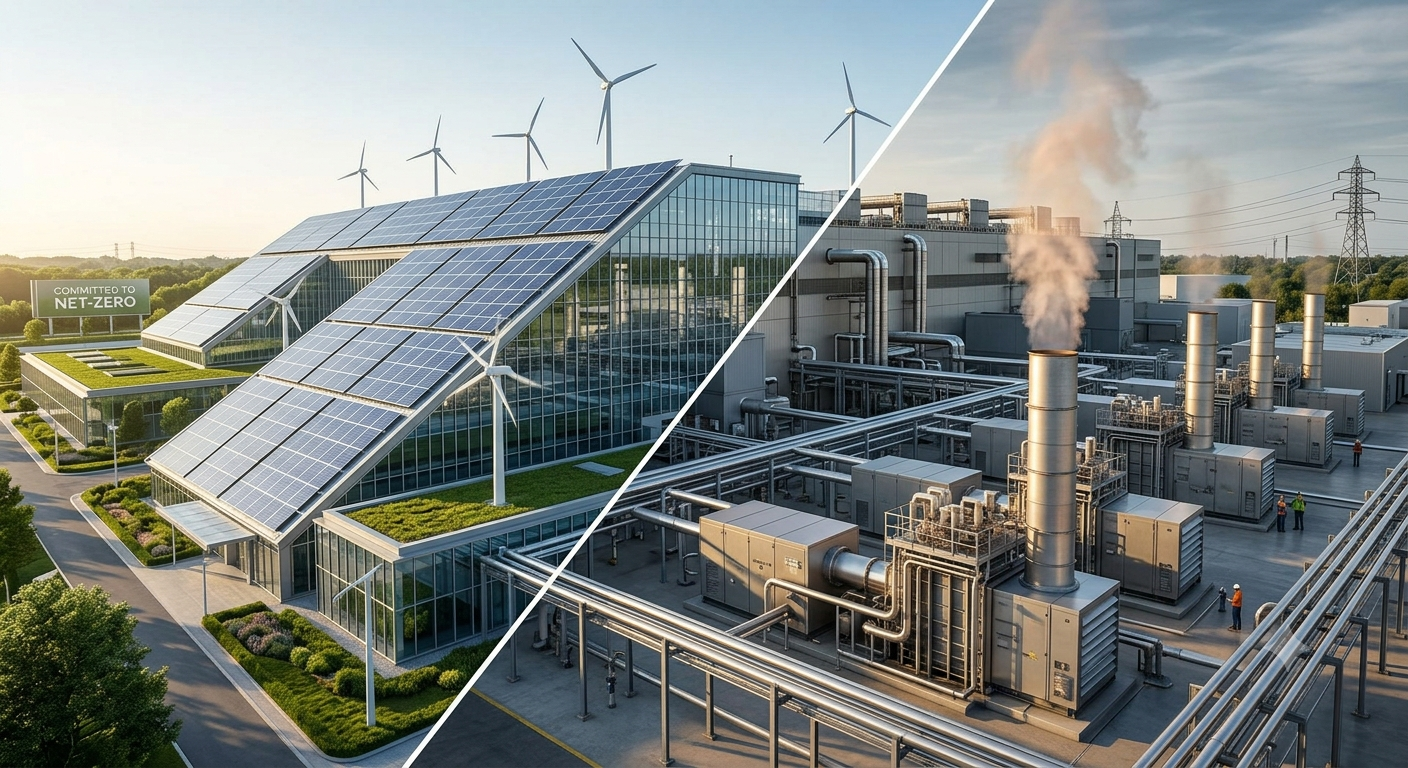
Consequently, a growing rift has emerged between the public sustainability marketing of Silicon Valley and the physical execution of its engineering teams. To secure immediate access to power, developers are turning toward data center natural gas microgrids. This pivot represents a pragmatic response to an overburdened domestic energy grid, but it introduces an immediate surge in localized carbon emissions.
The primary driver behind this fossil fuel resurgence is the structural failure of the American electrical grid infrastructure. Interconnection queues across major regional transmission organizations now feature wait times stretching from seven to 12 years. For tech conglomerates locked in a hyper-competitive race for computational supremacy, waiting a decade for a utility connection is strategically unviable. Speed to market determines corporate valuation and market share in the cloud ecosystem. Therefore, operators are bypassing traditional utility infrastructure entirely. By developing behind-the-meter, on-site generation facilities, technology firms can deploy massive computational campuses in a fraction of the time required for traditional grid integration.
Behind-the-Meter Execution and Corporate Transactions
Recent transactional data highlights the scale of this infrastructure realignment. Microsoft has moved aggressively into alternative power structuring, securing an arrangement with Nscale in West Virginia to support an eight-gigawatt infrastructure cluster starting in 2027. This specific deployment heavily utilizes natural gas microgrid architecture to insulate the campus from local grid constraints. Furthermore, Microsoft has explored a separate 2.5-gigawatt proposal in Texas alongside Chevron and investment firm Engine No. 1. These transactions reflect a broader industry realization that achieving absolute uptime for training next-generation large language models requires substantial fossil-fuel infrastructure nearby.
Meanwhile, other technology firms are deploying similar stopgap measures to ensure operational readiness. In Memphis, Tennessee, xAI installed more than 30 natural gas turbines to provide daily operational power for its massive Colossus data center campus. Local environmental assessments and community disclosures reveal that these units operate continuously, rather than serving as emergency backup assets. While these companies continue to emphasize their long-term commitments to nuclear energy, geothermal power, and advanced battery configurations, the immediate capital expenditure clearly favors readily available gas turbines. The physical assembly lines for natural gas equipment can fulfill orders within months, whereas utility-scale clean energy projects remain bottlenecked by regulatory approvals and transmission line shortages.
The Thermodynamic Dilemma of Modern Compute Workloads
The structural engineering of an AI data center makes natural gas an ideal fuel source from a purely operational perspective. Traditional cloud computing workloads experience cyclical peaks and valleys, allowing operators to modulate power usage throughout the day. Conversely, AI training workloads run at maximum capacity continuously for weeks or months at a time. A single modern hyperscale facility can consume as much energy as 100,000 residential homes. When multiplied across hundreds of planned campuses, the cumulative demand threatens to outpace the total clean energy capacity added to the domestic grid over the last decade.

Faced with this consumption curve, developers face an engineering vacuum. Solar infrastructure operates at a limited capacity factor, and wind generation fluctuates based on atmospheric conditions. Grid-scale battery storage solutions can bridge short-term gaps, but they cannot sustain a multi-gigawatt computing cluster through multi-day weather anomalies. Alternative baseload options, such as small modular nuclear reactors, remain unproven at commercial scale and face protracted regulatory timelines that extend past 2030. Gas turbines offer superior power density, continuous baseload capability, and rapid ramping characteristics, enabling operators to protect delicate hardware from voltage fluctuations.
The environmental implications of this infrastructure pivot are drawing intense scrutiny from climate scientists and energy economists. Analytical data indicates that the ongoing data center buildout will inject millions of additional metric tons of greenhouse gases into the atmosphere annually. So far, Google stands out as the lone major cloud provider attempting to mitigate this trend by integrating carbon capture technology into its natural gas purchase frameworks. However, the vast majority of planned on-site gas installations across the United States lack carbon abatement mechanisms, threatening to reverse years of progress in power-sector decarbonization.
Fragmenting the Architecture of Corporate Accountability
This operational shift is fundamentally fracturing the established frameworks of corporate climate accounting. Historically, technology firms balanced their environmental ledgers by purchasing environmental attribute certificates and renewable energy certificates. These accounting mechanisms allowed companies to claim net-zero carbon status while consuming standard fossil-fuel energy from the public grid. However, the physical realities of on-site natural gas combustion cannot be mitigated through standard accounting maneuvers. Direct, behind-the-meter combustion produces scope 1 emissions that appear explicitly on local air quality registries and national carbon inventories.
This reality complicates the sustainability portfolios of enterprise customers who build applications on top of these cloud architectures. When a business utilizes an AI model hosted within a gas-powered facility, its own scope 3 supply chain emissions rise proportionally. Texas has emerged as the epicentre of this dilemma, accounting for a massive share of the planned natural gas power capacity currently in development nationwide. Estimates indicate that nearly 40 gigawatts of planned gas capacity in Texas will directly fuel digital infrastructure infrastructure, transforming the state into a haven for high-emission computing.
Ultimately, the infrastructure sector faces a critical contradiction between temporal necessity and ecological targets. The immediate financial rewards of AI deployment mandate rapid execution, which only natural gas can deliver under current grid conditions. Yet, every turbine anchored to a data center foundation pushes national net-zero goals further out of reach. Until federal regulators streamline transmission line permitting or clean baseload technologies achieve commercial scale, the physical backbone of the digital frontier will remain tethered to the carbon economy. Big Tech may project an automated, post-carbon future, but the current engine room of artificial intelligence runs on gas.












