
The Queue That Looks Full But Isn’t
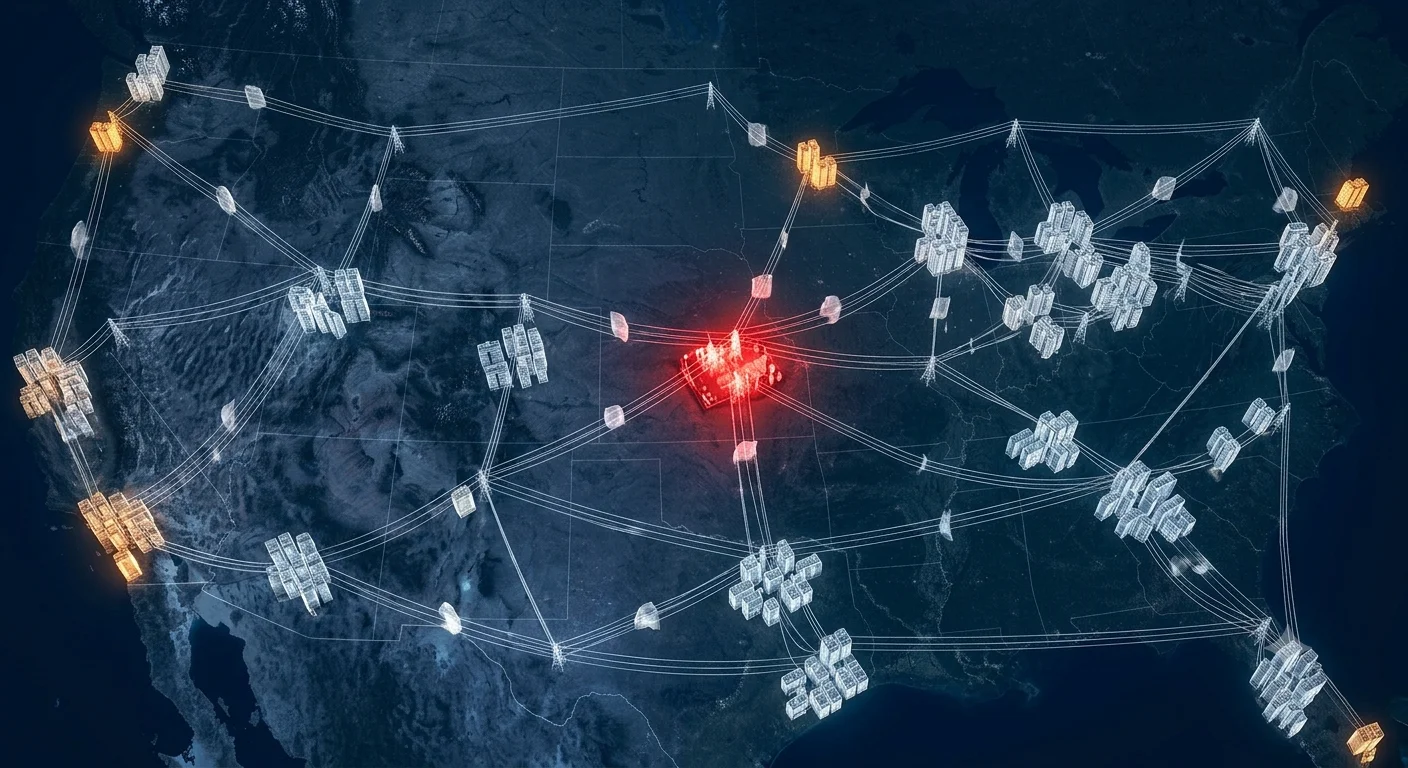
Something structurally strange is happening inside America’s electricity grid. The interconnection queue has swelled beyond anything in the system’s history. Across ERCOT alone, roughly 143 gigawatts of data centers sought connection as of late 2025. Meanwhile, ERCOT’s highest-ever total demand peaked at under 86 gigawatts in August 2024. The math does not reconcile. A queue nearly twice the size of the actual grid’s peak demand is not a capacity problem. It is a data problem, and the data is being generated deliberately. AI and high-density data center developers routinely submit large-load requests to multiple utilities simultaneously while they finalize site selection. Each application represents a live megawatt count in that utility’s queue. However, only one site will ever get built. The others remain as phantom entries until formally withdrawn, and formal withdrawal is not always guaranteed. Therefore, every serious gigawatt in the system sits alongside an unknown volume of speculative ones, and nobody outside the filing company knows which is which.

How the Phantom Mechanism Actually Works
The mechanics are straightforward, though the consequences are not. A developer planning a large AI facility does not file a single interconnection request and wait patiently. Instead, the developer files with several utilities across multiple states for what is functionally the same project. Each utility then studies that request as if it were real, confirmed demand. Each utility begins modeling transmission upgrades, capacity additions, and long-range infrastructure investments around that assumed load. Consequently, when the developer eventually selects one site and abandons the rest, the utilities that lost the bid have spent considerable planning and engineering resources on infrastructure that nobody needs. Moreover, the withdrawal triggers what grid engineers call a cascade, forcing those utilities to restudy every subsequent project in the queue. That restudy cycle causes further delays for genuinely committed projects. As a result, serious developers waiting for honest approvals end up penalized by speculative ones who filed first.
The Demand Signal That Misleads Everyone
The downstream consequences extend far beyond inconvenience for individual utilities. Grid operators use interconnection queue data to build regional demand forecasts. Those forecasts drive decisions about generation investment, transmission expansion, and long-range capacity planning. When the queue overstates real demand by a material degree, every layer of planning built on top of it inherits that distortion.Utilities have begun saying so publicly.
Senior leaders at American Electric Power and Dominion Energy described the dynamic in earnings calls and regulatory filings, with Dominion’s leadership detailing the internal screening it now applies to distinguish serious requests from speculative ones. However, individual utility screening is not a systemic fix. It is each operator trying to build its own filter for a problem that requires grid-wide coordination to solve properly. Meanwhile, phantom demand is actively displacing real industrial investment. Power allocated to a semiconductor plant near Columbus, Ohio, shifted to a data center instead. A major industrial megasite in Virginia designed for large manufacturers now fills with data centers because power-ready land carries too much value to sit idle. Other industries, with longer planning cycles and more modest political leverage, absorb the consequences of a queue they did not distort.

When Speculative Applications Become Structural Damage
The grid system was not built for this behavior. The Federal Energy Regulatory Commission’s original interconnection framework operated on a first-come, first-served basis that was essentially free to enter. That design made sense in an era of modest, predictable demand growth. However, it created an obvious perverse incentive once demand growth became large and unpredictable. Developers flooded the queue with speculative applications to fish for the most advantageous interconnection cost outcome. By the early 2020s, the queue had swollen past 2,000 gigawatts of pending generation requests — more than the entire installed generating capacity of the country. FERC’s Order 2023 began addressing that specific dysfunction for power generation projects. Critically, however, it applied only to generators, not to large loads. AI data centers, therefore, inherited precisely the dynamic that Order 2023 was designed to eliminate, except now on the demand side of the ledger rather than the supply side.
What Commitment-First Planning Changes
The regulatory response is now catching up, though the gap remains wide. FERC’s proposed rulemaking on large load interconnection explicitly models itself on Order 2023’s core philosophy: shift the system from first-come-first-served to commitment-first. Under this framework, developers must demonstrate site control, pay meaningful deposits, and accept financial penalties for withdrawal before their application enters the formal study process. Several grid operators moved independently before federal guidance arrived. Texas mandates that large-load users fund infrastructure upgrades and disclose duplicate applications. Ohio requires new data centers to pay for at least 85% of their projected energy use upfront. Virginia locked large-load customers into 14-year contracts. ComEd in Chicago now charges a seven-figure entry fee for any load request above 50 megawatts. Each of these reforms reflects the same underlying logic: make speculative applications expensive enough that only serious developers file them.
Transparency as Infrastructure, Not Regulation
There is a counterintuitive argument here that the industry has been slow to make. Stricter transparency requirements do not harm serious developers. They protect them. A commitment-first system with mandatory deposit requirements and duplicate-application disclosure does something valuable for operators with genuine projects: it clears the queue of phantom competition, shortens study timelines, and produces approval decisions that accurately reflect real regional demand. Demand verification genuinely improves transmission planning and reduces the risk of overbuilding around speculative requests. That outcome directly benefits the developers whose projects are real.
Moreover, it stabilizes regional energy pricing for the communities absorbing the cost of utility overbuilding. Ratepayers in states with the heaviest data center concentration already see electricity prices rise as utilities invest in infrastructure for demand that may never materialize. Transparency fixes that externality at the source. Furthermore, the energy transition itself depends on accurate demand signals. Renewable generation investment, battery storage siting, and transmission corridor planning all use grid queue data as a primary input. A queue distorted by phantom AI applications generates a distorted energy transition plan. Correcting the demand signal is not a concession to regulators. It is the precondition for building the right infrastructure in the right places at the right time.
The Credibility the Industry Needs to Build
AI infrastructure developers face a moment of collective choice. The speculative queue strategy made sense as an individual competitive tactic in a period of regulatory ambiguity. However, it has accumulated a body of systemic damage that the industry now owns, whether or not any individual developer intended it. Grid operators are questioning publicly whether all of the demand pipeline is real. Regulators are building frameworks that will impose commitment costs regardless of whether the industry cooperates voluntarily.
Other industries are losing access to power-ready land that phantom applications have priced them out of. Ratepayers are funding transmission upgrades for demand that may never show up. The industry’s best available response is not to wait for mandatory disclosure requirements and comply minimally. Instead, it is to move ahead of that curve. Developers who embrace commitment-first planning, disclose duplicate applications proactively, and engage with grid operators as genuine partners rather than queue-gaming adversaries will build the regulatory relationships that accelerate genuine approvals. The phantom queue distorts the energy transition for everyone, including the serious developers caught inside it. Fixing it is not a regulatory burden. It is the price of being taken seriously.











