 Skip to content
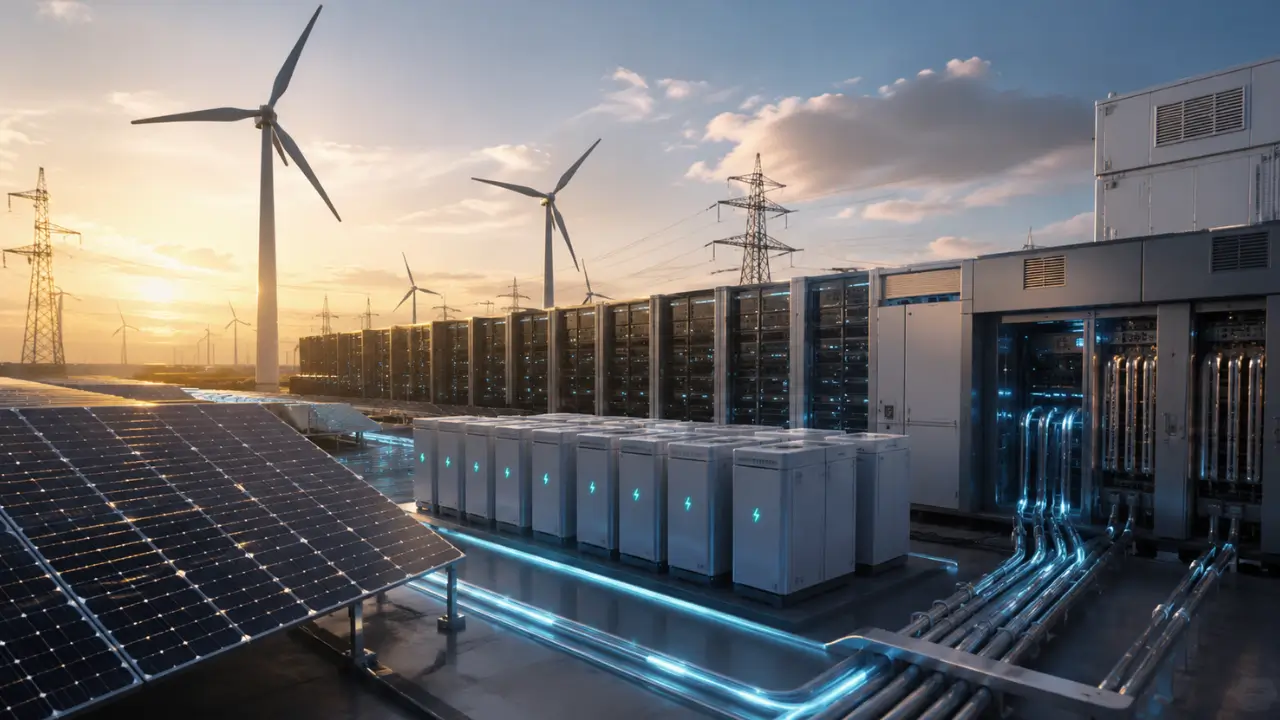
Artificial intelligence is reshaping the economics of electricity faster than many utilities anticipated, creating a new competitive frontier for renewable energy developers seeking long-term growth. Across China, wind, solar and energy storage companies are repositioning themselves to supply data centers directly rather than relying solely on traditional grid-based power markets. That shift reflects mounting demand for AI computing capacity alongside Beijing’s dual-carbon ambitions, encouraging companies to redesign how electricity reaches digital infrastructure. Dedicated renewable supply projects, policy support and falling electricity costs are accelerating commercial adoption across several regions. Consequently, developers increasingly view AI campuses not only as major electricity consumers but also as strategic partners capable of underpinning multi-decade renewable investments. The result is a rapidly evolving market where electricity pricing, grid flexibility and computing capacity have become deeply interconnected.

AI Computing Push Creates New Renewable Energy Market
Electricity has become one of the defining operating constraints for next-generation AI infrastructure. While semiconductor advances continue to attract headlines, the availability of abundant, affordable and clean electricity increasingly dictates whether large-scale computing facilities remain economically viable over time. Renewable energy companies have responded by expanding beyond conventional generation businesses into integrated energy solutions designed specifically for hyperscale data centers. These strategies combine renewable generation, storage assets and energy management technologies to create predictable electricity supplies that support continuous AI workloads. As operators seek to lower operating costs while meeting sustainability targets, renewable developers see an opportunity to secure stable demand from customers whose electricity consumption rarely fluctuates. That combination is rapidly transforming data centers into anchor customers for China’s expanding clean energy sector.
Industry participants increasingly describe electricity as the defining competitive factor in the AI era because energy costs influence nearly every aspect of data center profitability. The expansion of large language models, AI inference services and cloud computing platforms has significantly increased electricity demand across digital infrastructure. Renewable energy developers argue that traditional fossil fuel supply chains face structural limitations, particularly as regional resource availability differs considerably across China. Direct renewable supply offers operators an alternative that reduces dependence on conventional wholesale electricity markets while improving environmental performance. Therefore, the conversation has shifted beyond renewable adoption toward building entirely new energy ecosystems around computing clusters. This evolution places renewable electricity at the center of long-term AI infrastructure planning.
Direct Renewable Supply Changes Data Center Economics
Developers pursuing direct renewable supply are deploying two primary commercial structures to serve growing AI electricity demand. The first involves dedicated transmission infrastructure connecting renewable generation assets directly with data center campuses, bypassing traditional electricity purchasing arrangements wherever regulations permit. The second relies on long-term power purchase agreements executed through electricity trading platforms, allowing renewable generators and computing operators to establish stable pricing without constructing physical transmission links. Physical connections generally suit hyperscale facilities with large and continuous electricity requirements, while contractual arrangements offer greater flexibility for smaller operators. Each model aims to provide more predictable electricity costs than conventional grid procurement while supporting renewable energy integration. Together they represent complementary approaches rather than competing strategies within China’s evolving energy market.
Renewable energy companies are also adapting their business models to capture value beyond electricity generation alone. One Shenzhen-listed operator, previously focused on solar power stations and associated energy storage operations, is leveraging its renewable assets to provide integrated solar, storage and computing node services. Company executives indicated that weaker utilization at some solar facilities coincided with growing demand for distributed computing capacity, encouraging the business to redefine its infrastructure strategy. Rather than constructing traditional renewable plants exclusively for electricity sales, the company is developing what it describes as “computing power stations” that transform locally generated renewable electricity into digital processing capacity. This transition reflects broader efforts to align renewable generation with stable industrial electricity demand. It also demonstrates how AI infrastructure is reshaping investment decisions across the renewable energy industry.
Landmark Projects Move From Planning to Deployment
Several large-scale projects entering operation this year illustrate how direct renewable supply is moving beyond concept into commercial deployment. One of the most significant developments is China Datang’s 500-megawatt solar power station serving the Zhongwei Cloud Base in Ningxia, widely regarded as China’s first major computing-power synergy renewable supply project. The facility combines dedicated renewable transmission with long-term electricity purchase agreements to support AI infrastructure. Electricity supplied through the project is priced at approximately 0.36 yuan per kilowatt-hour, representing nearly half the average cost paid by many customers purchasing grid electricity in eastern China. Earlier this year, the first phase of the Qingyang green power aggregation pilot project in Gansu, developed by TBEA, also entered operation as part of China’s East Data West Computing strategy. The project combines 750 megawatts of wind generation with 250 megawatts of solar capacity, creating one gigawatt of renewable generation dedicated to supplying computing infrastructure.

Qingyang has become one of eight national computing hub nodes, attracting 28 major projects with cumulative investment totaling 45.4 billion yuan. China Energy Engineering’s partially operational data center within the cluster has achieved a renewable electricity supply rate exceeding 80% alongside a power usage effectiveness rating as low as 1.25. Those operational metrics demonstrate how renewable integration can improve both sustainability and efficiency simultaneously. Inner Mongolia has also become a testing ground for next-generation renewable-powered computing infrastructure through collaboration between Envision Group and Tencent. Their Chifeng facility is described as the world’s first data center operating entirely on direct green power supply, reducing comprehensive energy costs by more than 40% while lowering annual carbon emissions by roughly 180,000 metric tons. Envision Group Chief Executive unveiled the Mission Gobi initiative in June, targeting construction of five gigawatts of high-proportion green power direct-supply data centers across global Gobi Desert regions by 2030.
Policy Support Accelerates Commercial Expansion
Regulatory developments have become equally important in supporting direct renewable supply because infrastructure investment depends heavily on clear market rules. China’s National Development and Reform Commission together with the National Energy Administration has introduced policies permitting dedicated transmission lines for renewable electricity supply, removing barriers that previously complicated direct delivery arrangements. These measures provide greater certainty for renewable developers considering large capital commitments while expanding options available to computing operators seeking lower electricity costs. Investors increasingly regard policy alignment as a catalyst capable of accelerating deployment across multiple provinces. Additionally, clearer rules encourage utilities, renewable developers and technology companies to coordinate infrastructure planning more effectively. Regulatory certainty therefore strengthens confidence throughout the emerging ecosystem. Industry estimates indicate that self-developed renewable generation or long-term direct renewable supply agreements can reduce electricity expenses by approximately 20% to 30% compared with conventional grid purchases.
Those savings become particularly meaningful for hyperscale AI facilities where electricity represents one of the largest recurring operating costs. Lower power expenses improve project returns while helping operators manage rapidly expanding computational workloads. Renewable electricity certificates generated through these projects may also provide additional commercial value as sustainability requirements become stricter. Cost competitiveness has consequently become a major driver behind accelerating renewable investment. Jinko Power echoed that direction during an institutional research meeting in March, stating that as local rules governing green power direct connections continue to take effect, the company is actively preparing and applying for related projects. The company also indicated that data centers represent one of the primary load categories expected to benefit because policy requires new computing facilities within national hub nodes to achieve green power utilization exceeding 80%.
Computing and Electricity Become a Single Strategic System
Competition across the renewable supply market continues to intensify as companies pursue different technological approaches to serving AI infrastructure. Businesses including Envision Group, JinkoSolar, and Mingyang Smart Energy are exploring multiple pathways ranging from dedicated physical transmission systems to power distribution innovation and intelligent computing dispatch. These efforts reflect a broader shift away from viewing electricity simply as an operational input toward treating it as an actively managed strategic resource. AI infrastructure increasingly requires coordination between renewable generation, storage assets, electricity networks and computing operations rather than isolated infrastructure investments. As a result, technology differentiation now extends well beyond hardware into sophisticated energy management capabilities. Companies capable of integrating these elements efficiently may secure lasting competitive advantages.
Industry executives say demand from downstream computing customers remains robust while technical innovation continues expanding the range of commercial solutions available. Renewable energy companies are no longer competing solely to generate electricity; they are also designing integrated systems that optimize when, where and how computing workloads consume renewable power. That transition represents a significant departure from traditional infrastructure development models focused primarily on electricity generation capacity. Instead, renewable developers increasingly position themselves as long-term infrastructure partners supporting AI growth through integrated energy ecosystems. Ultimately, the convergence of renewable electricity and advanced computing is reshaping investment priorities across China’s digital economy. The race to deliver affordable clean power may therefore become as strategically important as the race to build faster AI systems.












