 Skip to content
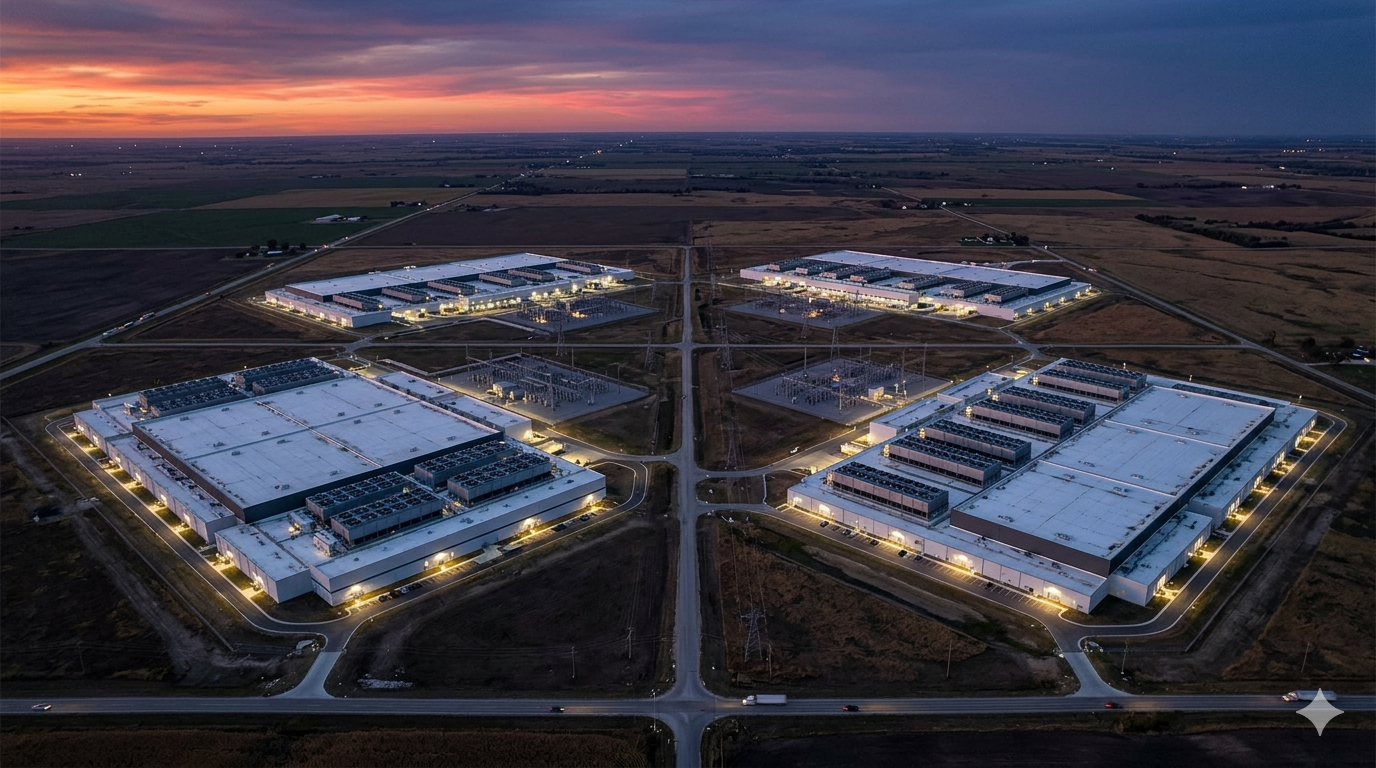
The AI infrastructure market entered 2026 with a widely held assumption. Capital would remain broadly distributed. Neoclouds would carve out durable niches. Independent developers would build differentiated positions. Enterprise operators would retain meaningful autonomy over their compute environments. The market would be competitive, dynamic, and structurally diverse. That assumption is now under severe pressure. The four largest hyperscalers are consolidating control across every layer of the AI infrastructure stack at a pace and depth that no previous technology buildout has matched. The implications for every other participant in the market are more consequential than the industry has yet fully acknowledged.

The numbers alone signal the scale of what is happening. Amazon, Microsoft, Alphabet, and Meta collectively committed to nearly $700 billion in capital expenditure in 2026, the overwhelming majority directed at AI infrastructure. That figure represents roughly four times what the entire US energy sector spends annually on exploration, extraction, and delivery. It exceeds the GDP of most countries. At this spending level, hyperscaler AI infrastructure consolidation is not a competitive dynamic playing out over years. It is a structural transformation happening in real time, and the window for other market participants to establish durable positions is narrowing with every quarter that passes.
The Stack Is Consolidating Layer by Layer
The hyperscaler consolidation of AI infrastructure is not happening through a single mechanism. It is happening simultaneously across every layer of the infrastructure stack, with each layer’s consolidation reinforcing the others in ways that compound the competitive advantage of the dominant players. Understanding the consolidation requires examining each layer separately before examining how they interact.
At the compute layer, hyperscalers are moving aggressively beyond GPU procurement into custom silicon development. Google’s TPU program, Amazon’s Trainium and Inferentia families, Microsoft’s Maia accelerator, and Meta’s MTIA chip all represent significant investments in hardware that the hyperscaler controls entirely, from design through deployment. Custom silicon gives hyperscalers hardware optimized for their specific workloads, independence from the pricing and allocation constraints of Nvidia’s supply chain, and a technical differentiation that competitors using commodity hardware cannot match.

As the custom silicon programs mature and scale, the performance and cost advantages they generate will compound, deepening the compute layer consolidation that is already underway. The capital required to develop and manufacture custom AI accelerators at competitive performance levels is not accessible to neocloud operators or independent data center developers. That capital threshold functions as a structural barrier that locks the compute layer consolidation in place regardless of what happens at other layers of the stack.
The Nvidia Relationship Under Pressure
The hyperscaler relationship with Nvidia is evolving in ways that reflect this consolidation dynamic directly. Nvidia remains the dominant supplier of AI accelerators and will remain so for the foreseeable future. However, the hyperscalers’ custom silicon programs are creating an alternative supply that reduces their dependence on Nvidia at the margin and gives them negotiating leverage that pure GPU buyers cannot access. The Amazon-Anthropic deal, in which Anthropic committed to running its models on Trainium for the next decade, demonstrates how hyperscalers are using their model developer relationships to drive adoption of their custom silicon. As explored in our analysis of AI inference cost in enterprise infrastructure, the inference workload segment is where custom silicon is advancing most rapidly, because inference performance requirements are more predictable and more amenable to hardware specialization than training requirements.
The implications for the neocloud sector are significant. Neoclouds built their business models around Nvidia GPU capacity. Their competitive position depends on maintaining hardware quality at least comparable to what hyperscalers offer enterprise customers. As hyperscaler custom silicon advances in the inference segment and potentially in training over time, the hardware parity that neoclouds can point to will erode in ways that are difficult to counter without their own silicon investment programs. The capital requirements of custom chip development place those programs out of reach for all but the largest operators. The neoclouds that survive the next phase of competition will be those that find differentiation in software, services, and operational capabilities rather than hardware performance alone. Those that rely on GPU hardware as their primary competitive argument will find that argument weakening as hyperscaler custom silicon scales.
Why Commodity Hardware Alone Is Not Enough
The broader hardware commoditization dynamic amplifies this pressure. As Nvidia’s GPU architecture becomes more widely available through secondary market channels, financing programs, and new entrants building GPU clusters, the scarcity premium that early neocloud operators captured will erode. A new entrant building a GPU cluster in 2026 faces a very different competitive environment than one that built in 2023. The supply that was genuinely scarce in 2023 is now substantially more available, the hyperscalers have built their own massive GPU capacity, and the pricing dynamics of the spot and contract GPU markets have shifted accordingly. Neocloud operators competing purely on hardware availability are discovering that the market has moved past the conditions that made that strategy viable.
The Power Layer Is the New Competitive Frontier
The consolidation dynamic at the power layer is less visible than at the compute layer but ultimately more consequential. Hyperscalers are not merely buying electricity from utilities. They are increasingly acquiring direct ownership of generation assets, signing nuclear power agreements that lock in firm clean power for decades, and investing in grid infrastructure upgrades that secure their power positions against competitors who lack the capital to make comparable commitments.
Meta’s nuclear energy partnerships, Amazon’s renewable energy portfolio spanning multiple gigawatts across dozens of markets, Microsoft’s agreement with Constellation Energy to restart Three Mile Island, and Google’s collaboration with Kairos Power on advanced nuclear development all represent hyperscaler moves to own or control generation assets rather than simply purchase power from them. This strategy transforms power from a commodity input that any well-funded operator can access into a competitive asset that the hyperscalers are systematically locking up. An independent data center developer trying to site a new facility in a power-constrained market is now competing not just with other developers for available grid capacity but with hyperscalers who have already reserved capacity years in advance or who are building their own generation assets to bypass the grid entirely.
The Supply Chain Dimension
The power layer consolidation extends to the equipment supply chains that grid infrastructure requires. As documented in our analysis of transformer and substation supply chains, transformer lead times now stretch to five years for the largest units. Hyperscalers with the procurement scale to place multi-year orders and the financial strength to commit capital years before construction are securing equipment allocations that smaller operators cannot access. The supply chain consolidation at the power equipment layer is invisible in hyperscaler earnings presentations but visible in the order books of transformer manufacturers, where hyperscaler commitments are crowding out capacity for independent operators trying to execute their own development timelines.
The combination of generation asset ownership, grid capacity reservations, and equipment supply chain commitments is creating a power infrastructure moat that compounds over time. Each commitment the hyperscalers make now reduces the available capacity for other operators in the future, making each subsequent commitment by a hyperscaler more competitively impactful than the one before it. An independent operator entering a market where Microsoft, Amazon, or Google has already secured the available grid capacity and placed the orders for available transformer manufacturing slots has no path to power access on commercially viable timelines. The market they are trying to enter has effectively already been claimed.
The Behind-the-Meter Advantage
The hyperscaler move toward behind-the-meter generation assets adds another dimension to the power layer consolidation that is difficult for independent operators to replicate. A hyperscaler that co-locates generation on its campus eliminates the grid interconnection queue problem entirely for that facility. It removes the regulatory uncertainty of grid connection timelines from its development schedule. It captures the full economic value of the generation asset rather than paying a utility margin on power it could produce itself. The economics of behind-the-meter generation at hyperscaler scale, where the capital cost of generation can be spread across hundreds of megawatts of load, are substantially more favorable than those available to smaller operators considering the same strategy. The power layer consolidation is therefore self-reinforcing in a way that smaller operators cannot break through by simply committing to the same strategy at smaller scale.
Real Estate and Geography Are Being Redefined
The hyperscaler consolidation of AI infrastructure is also reshaping the geography of where compute gets built and who controls the land and facilities that house it. Hyperscalers are moving beyond leasing colocation space and building owned campuses at scales that dwarf previous data center developments. Meta’s 1 GW Indiana campus, Microsoft’s Texas expansion, Google’s Wilbarger County campus, and Amazon’s campus developments across multiple US states all represent the construction of hyperscaler-owned infrastructure that removes those capacity positions from the market available to other operators.
The scale of hyperscaler campus development is creating geographic lock-in that mirrors the power infrastructure dynamics. When a hyperscaler builds a 500 MW owned campus in a specific market, it reserves land, grid capacity, labor, and contractor relationships that are not available to subsequent developers in that market. The first-mover advantages of hyperscaler real estate development compound across the development cycle in ways that make it increasingly difficult for independent operators to establish comparable positions in the most strategically important markets. Secondary markets that hyperscalers have not yet entered remain available to independent operators, but the total addressable market for independent development is shrinking as hyperscaler campus programs extend into more geographies each year.
The International Dimension
The consolidation dynamic is extending internationally at a pace that few observers anticipated. Microsoft’s $10 billion Japan commitment, Google’s India climate and AI investment, Meta’s European expansion, and Amazon’s Middle East buildout all reflect hyperscalers establishing owned infrastructure positions in international markets before independent operators or regional players can consolidate those markets. As examined in our earlier coverage of Meta’s expanding CoreWeave commitment, even the neocloud relationships that hyperscalers maintain are structured to advance hyperscaler strategic positions rather than to create independent competitive alternatives to them.
The international dimension of hyperscaler consolidation also has sovereign implications. Governments pursuing sovereign AI infrastructure strategies face the reality that the most advanced AI compute in their markets will likely be owned by foreign hyperscalers unless they invest heavily in domestic alternatives. The sovereign AI infrastructure competition that is now emerging globally is in significant part a response to the recognition that hyperscaler consolidation, left unchecked, would give US-headquartered companies control over the AI compute infrastructure of most major economies. That geopolitical dimension of hyperscaler consolidation is creating political pressure for regulatory intervention and sovereign investment programs that would not exist in a more distributed market structure.
The Labor and Contractor Market
A less visible dimension of the real estate consolidation is its effect on the labor and contractor markets that data center development requires. Hyperscaler campus programs at the scale of hundreds of megawatts require enormous workforces of skilled construction workers, electrical engineers, commissioning specialists, and data center operators. When a hyperscaler commits to a large campus development in a regional market, it absorbs a significant fraction of the available skilled labor in that market for the duration of the project. Independent developers trying to execute their own projects in the same market at the same time face labor shortages, wage inflation, and contractor availability constraints that the hyperscaler’s scale and financial strength does not impose. The skilled labor shortages in data center construction and commissioning that 2026 capex levels are generating compound the power and equipment constraints independent operators already face.
The Model Developer Relationships Are the Keystone
The most strategically significant element of hyperscaler AI infrastructure consolidation is not the physical infrastructure itself but the model developer relationships that the physical infrastructure secures. Anthropic’s commitment to spend more than $100 billion on AWS over the next decade, in exchange for Amazon’s $25 billion investment, is not primarily an infrastructure transaction. It is a strategic lock-in that ties one of the most capable AI model developers in the world to Amazon’s infrastructure for a decade. Microsoft’s OpenAI relationship performs the same function for Microsoft’s infrastructure position. Google’s DeepMind and its investments in external model developers perform the same function for Google’s infrastructure position.
These relationships create a flywheel that compounds hyperscaler consolidation across every other layer. Model developers commit compute to a specific hyperscaler’s infrastructure. The hyperscaler builds custom silicon optimized for that model developer’s workloads. Enterprise customers who want access to those models must use that hyperscaler’s cloud services. The revenue from enterprise customers funds further infrastructure investment. The infrastructure investment enables more model developer commitments. Each turn of the flywheel deepens the consolidation and raises the barriers that competitors face in challenging the hyperscaler’s position.
The Enterprise Customer Position
Enterprise customers are navigating this consolidation in ways that reflect both its depth and its speed. Enterprises that want to deploy the most capable AI models available are increasingly finding that those models are accessible primarily or exclusively through the cloud services of the hyperscaler that funded their development. The optionality that enterprises expected to have across multiple cloud providers and AI model sources is narrowing as model developer commitments lock the most capable models into specific hyperscaler ecosystems. This dynamic is reshaping enterprise procurement decisions in ways that benefit the consolidated hyperscalers and disadvantage the independent compute operators, colocation providers, and neoclouds that enterprises previously used as alternatives.
The enterprise position within hyperscaler consolidation is not uniformly disadvantaged. Enterprises that commit early to a specific hyperscaler’s infrastructure ecosystem gain preferential access to new model generations, custom silicon optimized for their workloads, and pricing structures that reflect the value of long-term committed spend. Those that maintain multi-cloud strategies to preserve optionality pay a premium in the form of integration complexity, suboptimal silicon utilization, and reduced negotiating leverage with each individual provider. The consolidation is forcing enterprises to make strategic choices about their AI infrastructure relationships that will constrain their options for years.
What Smaller Model Developers Face
The model developer relationship dynamic creates a particular challenge for smaller AI companies that lack the scale to negotiate hyperscaler investment and committed infrastructure relationships. A frontier model developer like Anthropic can extract $25 billion in investment and $100 billion in committed infrastructure from Amazon precisely because it is one of a small number of companies capable of building models that represent genuine competitive alternatives to the models that hyperscalers develop internally. A smaller model developer working in a specific vertical or on a specialized model architecture has far less leverage. It must pay commercial rates for compute that its larger competitors receive at effectively subsidized terms through their investment relationships. That structural cost disadvantage makes it increasingly difficult for smaller model developers to compete with frontier labs on training runs that require massive sustained compute commitments.
What This Means for the Rest of the Market
The hyperscaler consolidation of AI infrastructure does not eliminate opportunities for other market participants. It reshapes where those opportunities exist and what they look like. The segments of the market that hyperscalers are consolidating around their own infrastructure are the segments where independent operators face the most severe competitive pressure. The segments where independent operators can build durable positions are those where hyperscaler infrastructure cannot serve effectively or where the regulatory, sovereignty, or compliance requirements of specific customer segments demand alternatives to hyperscaler provision.
Sovereign AI requirements represent the most significant structural carve-out from hyperscaler consolidation. Governments that require domestic infrastructure under domestic operational control for their most sensitive AI workloads cannot be served by hyperscaler infrastructure regardless of its technical quality. Regulated industries in markets with strict data sovereignty requirements represent a similar carve-out. Enterprises with workloads that require the physical control, custom configuration, or operational independence that hyperscaler clouds cannot provide by definition represent a third carve-out. These segments will support a viable independent market, but they are substantially smaller than the total AI infrastructure opportunity that existed before hyperscaler consolidation accelerated. The independent operators who will build durable businesses in this environment are those who define their positioning precisely against the gaps in hyperscaler coverage rather than those who attempt to compete directly with hyperscaler infrastructure on cost, scale, or hardware quality.
The Regulatory Response
The pace and depth of hyperscaler AI infrastructure consolidation is beginning to attract regulatory attention that may ultimately constrain its trajectory. The concentration of AI compute in four companies’ infrastructure raises questions about competition, data sovereignty, and systemic risk that regulators in the US, EU, and major Asian markets are increasingly examining. The European AI Act, emerging US proposals around AI infrastructure oversight, and the sovereign AI strategies of multiple governments all reflect a recognition that hyperscaler consolidation at this scale creates risks that market competition alone will not address.
The regulatory response is unlikely to reverse the consolidation that has already occurred. Hyperscaler infrastructure positions built through years of capital investment cannot be restructured by regulatory fiat without enormous economic disruption. The more plausible regulatory outcomes are requirements for interoperability, constraints on exclusive model developer arrangements, and mandates for access to hyperscaler infrastructure by competing operators at regulated terms. Each of these interventions would reduce the competitive moat that consolidation has built without eliminating the structural advantages that come from operating at hyperscaler scale.
The Endgame Nobody Is Discussing
The trajectory of hyperscaler AI infrastructure consolidation points toward a market structure that the industry has not yet explicitly confronted. If the current pace continues, the global AI infrastructure market will within five years be dominated by four or five vertically integrated platforms that control compute, power, real estate, model development, and enterprise access simultaneously. Every other participant in the market will operate as a vendor to, tenant of, or niche alternative to those platforms. The independent data center sector, the neocloud sector, and the enterprise private cloud sector will all exist, but they will exist in a fundamentally different relationship to the hyperscaler platforms than they do today.
That outcome is not inevitable. Regulatory intervention, sovereign AI strategies, technological disruption from new compute paradigms, or the economic limits of hyperscaler capital intensity could all alter the trajectory before it reaches that endpoint. The capital intensity of hyperscaler AI infrastructure spending, with some hyperscalers now dedicating forty-five to fifty-seven percent of revenue to capital expenditure, creates financial sustainability questions that could constrain the consolidation if AI revenue growth does not materialize at the pace that spending levels imply. However, the default trajectory, absent these interventions, is consolidation of a kind that the technology industry has not experienced since the early years of the internet. The time to understand and respond to that trajectory is now, not after the consolidation has run its course and the alternatives have closed.












