 Skip to content
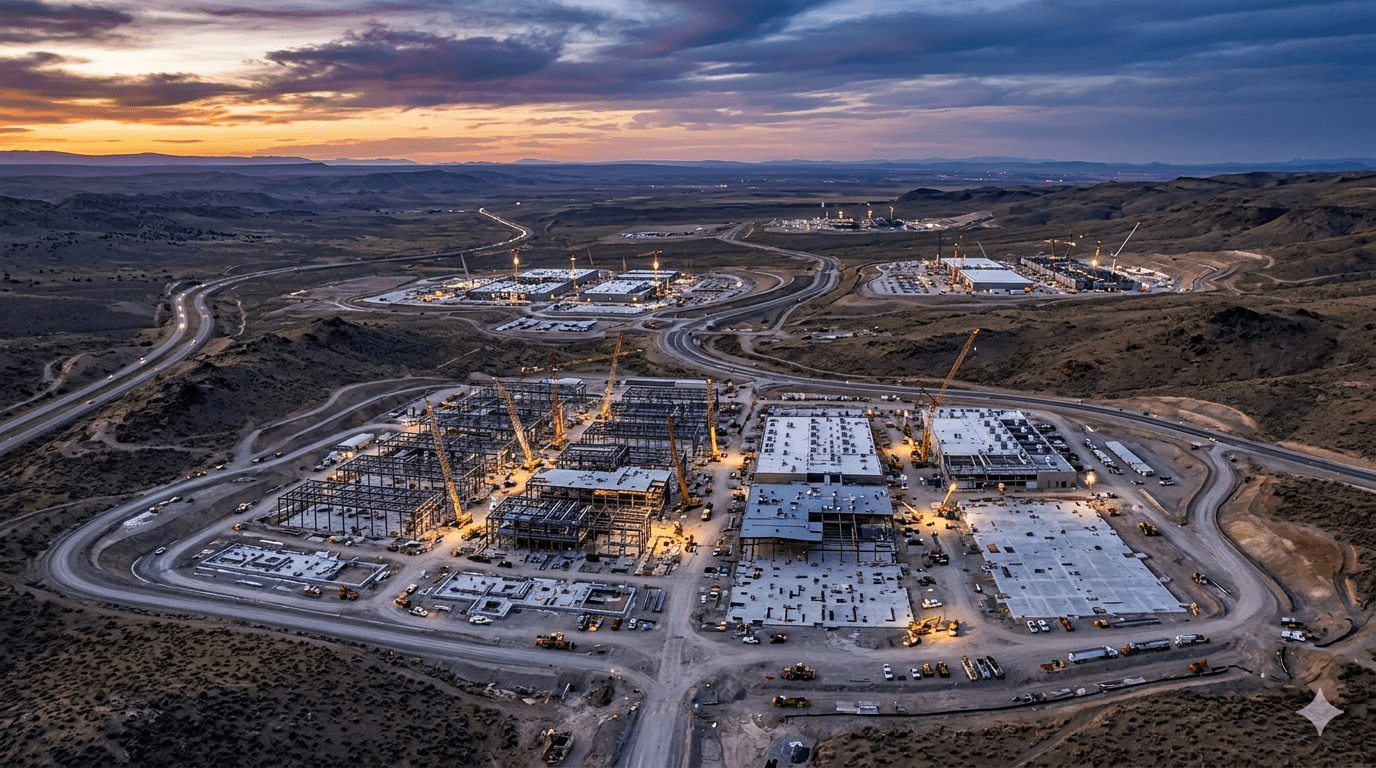
TrendForce revised its combined capital expenditure forecast for the world’s top nine cloud service providers upward to approximately $830 billion in 2026, raising the projected annual growth rate from 61% to 79%. The revision follows upward guidance adjustments from all four major US hyperscalers in their most recent earnings cycles. Microsoft raised its 2026 capex outlook to $190 billion, implying approximately 130% year-on-year growth, with around $25 billion attributable to rising component costs. Google raised its guidance from a prior range of $175 to $185 billion to $180 to $190 billion, with growth exceeding 100%. Meta revised its capex range upward from $115 to $135 billion to $125 to $145 billion, representing approximately 85% year-on-year growth.

The combined capex of the top nine providers — which include Google, AWS, Meta, Microsoft, Oracle, ByteDance, Tencent, Alibaba, and Baidu — now exceeds the annual GDP of all but the two largest economies in the world.
TrendForce noted that the pace of capex expansion among North American cloud service providers exceeds the global average, with investment increasingly concentrated in high-performance GPU cluster deployment, in-house ASIC development, and next-generation data center facilities designed for high-power-density computing. TrendForce projects AI servers will surpass general-purpose servers in total electricity consumption in 2026 due to significantly higher power draw per unit. Further jumps in power consumption will follow in 2027 and 2028 as platforms including Nvidia’s GB300 and Rubin architectures and ASIC-based AI servers enter mass production, supporting sustained growth in high-voltage DC power systems and liquid cooling infrastructure.
What the Revised Forecast Signals for Infrastructure Supply Chains
The upward revision reflects demand acceleration that is outrunning the infrastructure supply chain on multiple dimensions simultaneously. As of the end of 2025, the top five North American cloud service providers had deployed 800 to 900 data centers globally, with AWS accounting for the largest share. The revised capex trajectory implies a construction and commissioning pace that the transformer, switchgear, and power distribution supply chains cannot currently absorb without continued lead time extension. As covered in our analysis of the time-to-power crisis as AI’s hidden scaling ceiling, the gap between committed capital and operational infrastructure is the defining risk of the current AI buildout cycle. A revised forecast of $830 billion in annual capex does not change the physical delivery timelines that govern when that capital translates into live compute capacity.

The Chinese CSP Dimension
Among Chinese cloud service providers, Alibaba and ByteDance are the primary drivers of expansion in the TrendForce forecast, though their strategies diverge materially. Alibaba is focusing on localised nodes and sovereign cloud offerings to penetrate emerging markets, having established new cloud regions in Brazil, France, South Korea, and Malaysia since announcing its expansion plans in 2025. ByteDance is concentrating its infrastructure investment domestically, with a $5.6 billion commitment to Huawei Ascend chips reflecting the structural shift away from Nvidia hardware that US export controls have accelerated. Tencent and Baidu round out the Chinese CSP contribution to the $830 billion aggregate. Together, the Chinese CSPs represent a meaningful share of total capex that is being deployed on hardware architectures, software stacks, and cloud platforms that are increasingly distinct from the US-aligned ecosystem — a bifurcation dynamic that the aggregate forecast number obscures but does not resolve.












